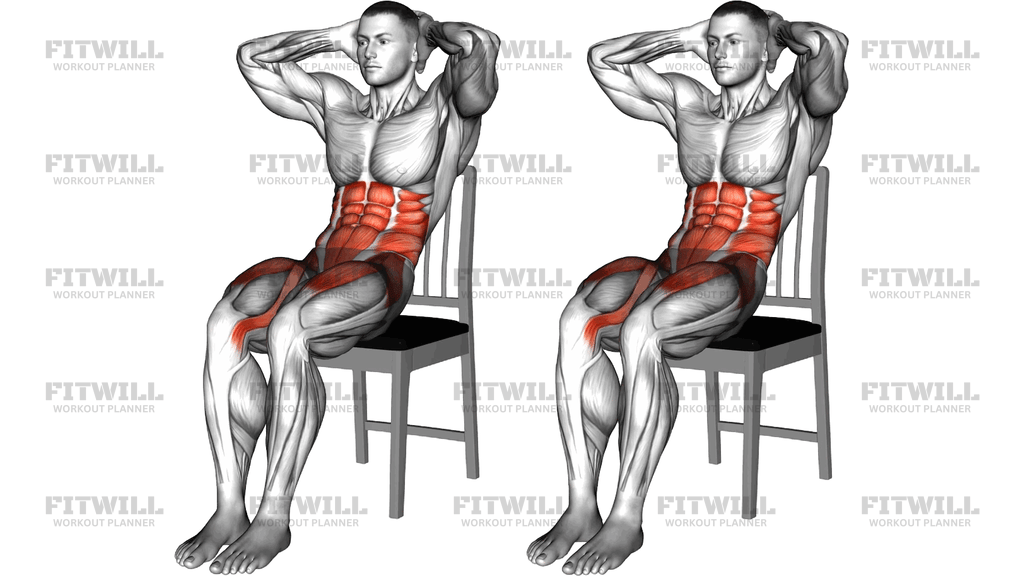
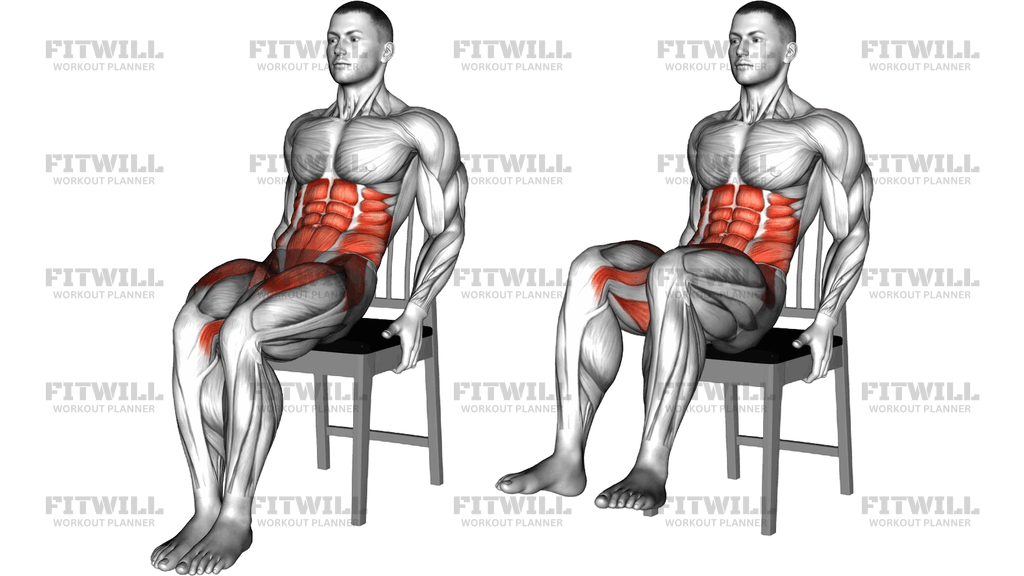
Seated Leg Kick On A Chair
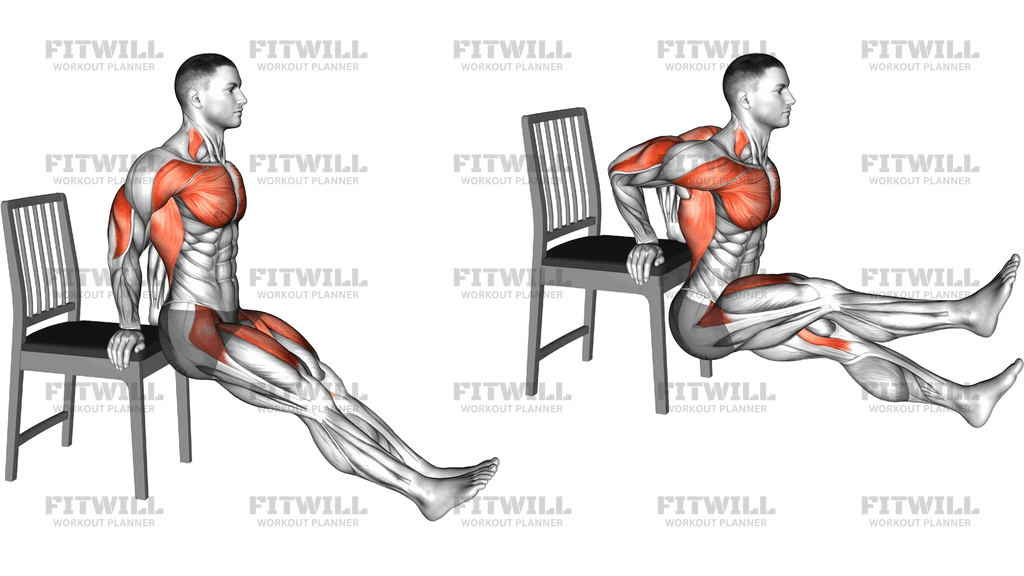
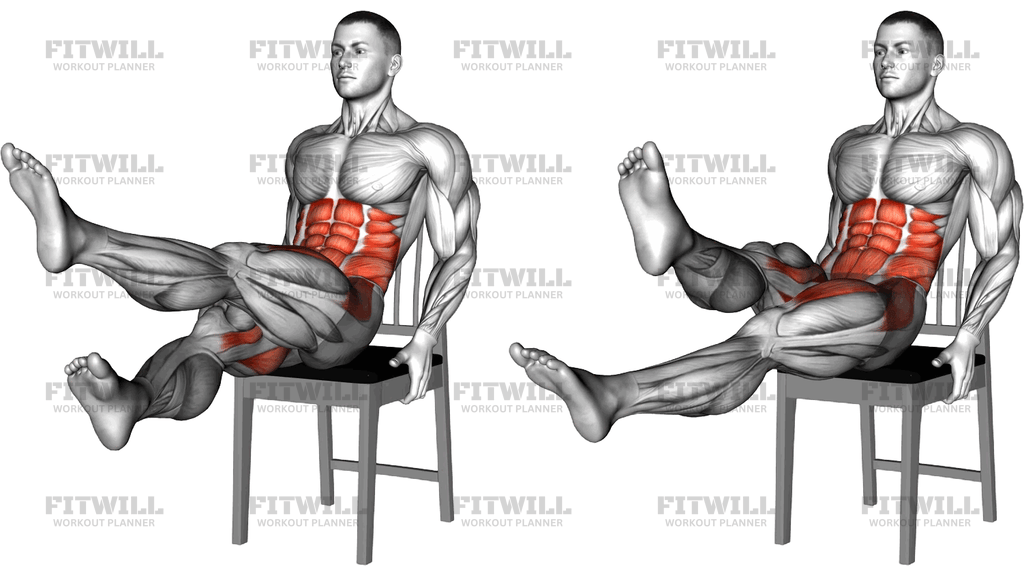
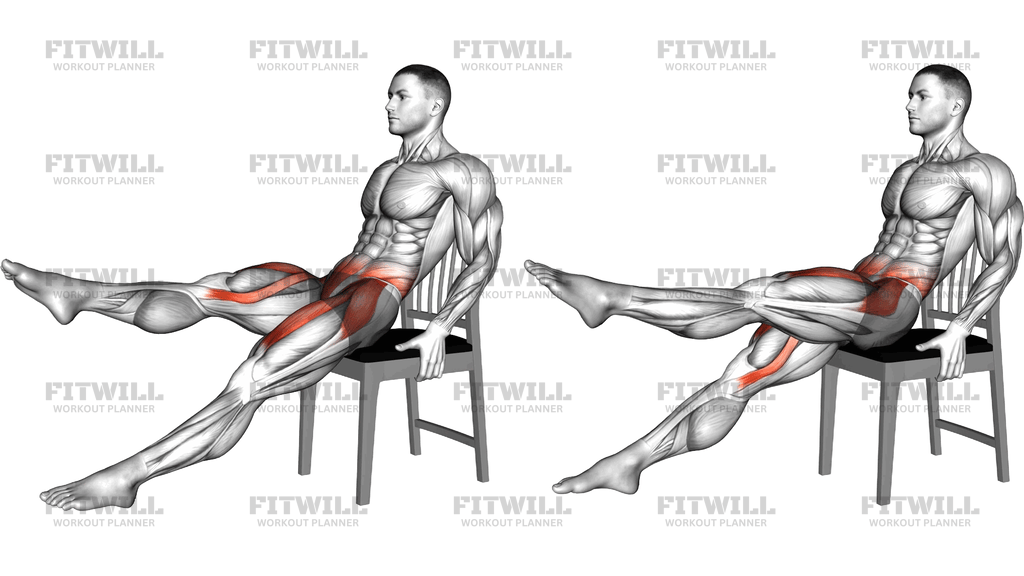
Seated Leg Kick On A Chair is a bodyweight hip flexor exercise performed from the edge of a sturdy chair. You grip the sides of the seat, lean your torso back slightly, and extend both legs straight out in front of you with the feet close to the floor. From there, you kick the legs forward and downward in small, alternating scissor-style movements, keeping the knees locked out the entire time.
The main work falls on the hip flexors, the group of muscles at the front of the hip that lift and drive the thighs. Because the legs stay straight, the quadriceps, especially the rectus femoris which crosses both the hip and the knee, work hard to hold the knees extended while the kick happens. The lower abdominals contract isometrically to keep your pelvis from tipping forward and your lower back from arching as the legs move.
This is a low-load, high-control movement, which makes it a good fit for beginners building hip flexor strength, office workers who spend long hours sitting and want to wake up sleepy hip flexors, and older adults who need a safe seated alternative to floor-based leg raises. It is also a useful warm-up drill before sprinting, kicking sports, or any heavy lower body session, since it primes the hip flexors without fatiguing them.
Setup matters more than it looks. Sitting too far back on the chair removes the leverage you need and turns the drill into a lazy leg swing; sitting too far off the edge makes you grip and shrug to stay balanced. Aim for your sit bones on the front third of the seat, hands gripping the seat edges beside your hips, and a tall torso tilted back just enough that your legs can extend freely without your heels dragging.
To execute it well, keep the kicks small and quick but controlled, roughly the height of your shin off the floor. The temptation is to swing big from the lower back, which does nothing for the hip flexors and loads the spine instead. If you feel your lower back taking over, shorten the range and tighten your brace. Progress by adding time under tension, slowing the tempo, or pausing briefly at the bottom of each kick rather than chasing bigger swings.
[ Workout Log & Planner ]
Put your next workout in Fitwill
Keep your plan and training log ready when you are.


Instructions
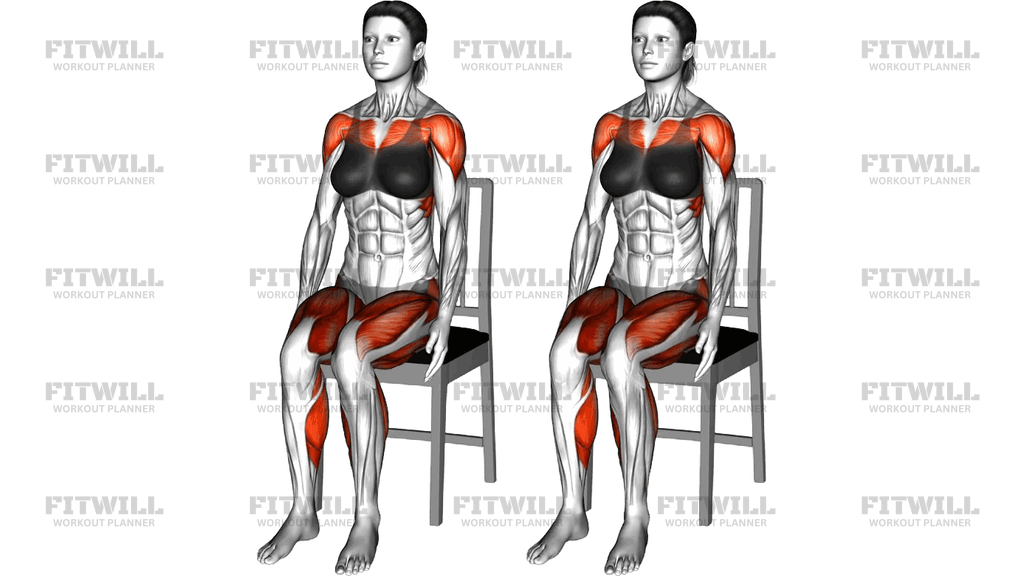
- Sit on the front edge of a sturdy chair with your sit bones on the seat and your feet flat on the floor.
- Place your palms on the seat on either side of your hips and grip the edge of the seat for support.
- Lean your torso back slightly, keep your chest tall, and brace your abdominals to protect your lower back.
- Extend both legs straight out in front of you so your heels hover a few centimeters above the floor and your knees are locked out.
- Kick one leg forward and down in a small, controlled pulse while the other leg holds its position, then switch legs.
- Continue alternating in a steady scissor rhythm, keeping both knees straight and the movement coming from the front of the hip, not the lower back.
- Exhale on each kick and inhale as you switch legs, keeping the breath rhythm steady.
- Keep your shoulders relaxed and away from your ears; if you feel yourself pulling or shrugging, the torso is leaning back too far.
- When the set is done, lower both heels to the floor together, release your grip, and sit upright to reset before the next set.
Tips & Tricks
- If your heels scrape the floor, raise the starting height of your legs slightly or lean the torso back a touch more — dragging heels usually means the chair is too high or your hip flexors need a shorter range.
- Watch for the lower back arching and the pelvis tipping forward as fatigue sets in; this is the most common fault in this movement, so stop the set and shorten the range rather than grinding through it.
- Do not let the knees bend as the set gets hard. A soft knee turns the drill into a quad swing and takes tension off the hip flexors, which defeats the purpose.
- Point your toes gently forward rather than flexing the feet upward; it keeps the kick smooth and stops the ankles from clunking together.
- Grip the seat for balance, not for lifting. If you feel your shoulders doing the work, shift your weight slightly back onto your sit bones.
- Start with short sets of 15 to 20 seconds. This drill becomes much harder than it looks once the legs stay straight, and quality beats duration.
- A padded chair or placing a folded towel on the seat edge makes the grip far more comfortable for longer sets.
- Breathe continuously instead of holding your breath during the fast alternating kicks; breath-holding tends to spike tension in the neck and shoulders.
- If the alternating rhythm feels uncoordinated at first, practice holding both legs extended still for a few sets before adding the kick.
Frequently Asked Questions
Which muscles does Seated Leg Kick On A Chair work?
The hip flexors at the front of the hip drive the kicks, while the quadriceps, particularly the rectus femoris, hold the knees straight. The lower abdominals work isometrically to keep the pelvis stable.
Is Seated Leg Kick On A Chair good for beginners?
Yes. It is low-impact, requires no equipment beyond a stable chair, and the load is easy to adjust by changing the height of the legs or the size of the kicks, which makes it approachable for most beginners.
How far back should I lean when gripping the seat?
Lean back only enough that your straight legs can extend and kick freely without your heels hitting the floor. Leaning too far back shifts the work from the hip flexors to the lower back and shoulders.
Why do my lower back and shoulders feel this more than my hips?
This usually means you are swinging too big from the spine or leaning back too far and muscling yourself up with your arms. Shorten the kicks, tighten your abdominal brace, and make sure the seat is supporting your weight.
Can I do Seated Leg Kick On A Chair every day?
In most cases yes, since the resistance is your own legs and the volume is easily controlled. If you feel lingering soreness at the front of the hip, take a day off before the next session.
What kind of chair should I use?
Use a stable chair without wheels that will not tip or slide, ideally one with a firm seat edge you can grip comfortably. A folding chair or office chair on casters is not a safe choice for this movement.
How is this different from lying leg raises or scissors on the floor?
The seated position reduces the leverage demands on the core and keeps the torso supported, so it places more of the emphasis directly on the hip flexors and is easier on the lower back than floor versions.
How can I make Seated Leg Kick On A Chair harder?
Slow the tempo, pause briefly at the bottom of each kick, extend the set duration, or lower the starting height of your legs so the hip flexors work through a longer range.
Should my knees stay locked out the whole time?
Yes, keeping the knees straight is what forces the quadriceps to work and keeps the kicking action happening at the hip. If you cannot hold them straight, shorten the set rather than bending the knees.
Is this a good warm-up before running or sport?
It works well as a light activation drill for the hip flexors before sprinting, kicking sports, or leg training. Keep the sets short and the effort moderate so you prime the hips without tiring them.