Standing Hamstring Calf Stretch
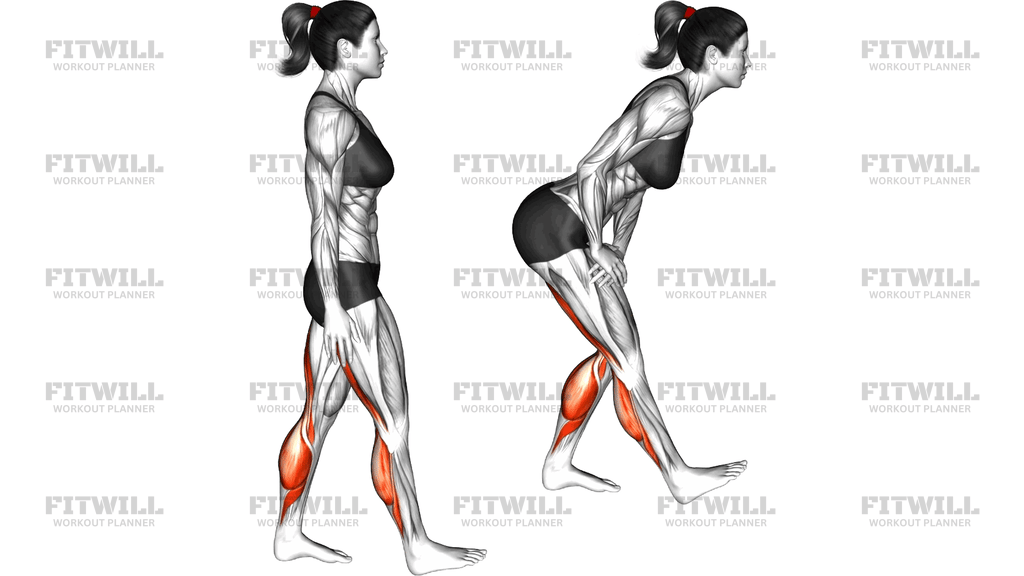
The Standing Hamstring Calf Stretch is a simple body-weight stretch performed in a staggered stance, where one leg reaches forward with the heel planted and the toes pulled up while the hips hinge back and the torso leans over the extended leg. The position lengthens the hamstring group along the back of the thigh and the gastrocnemius along the back of the calf at the same time, which is why it works so well as a combined lower-leg flexibility drill. Because it needs no equipment and almost no space, it fits easily into a warm-up, a cool-down, or a mid-day reset at a desk job.
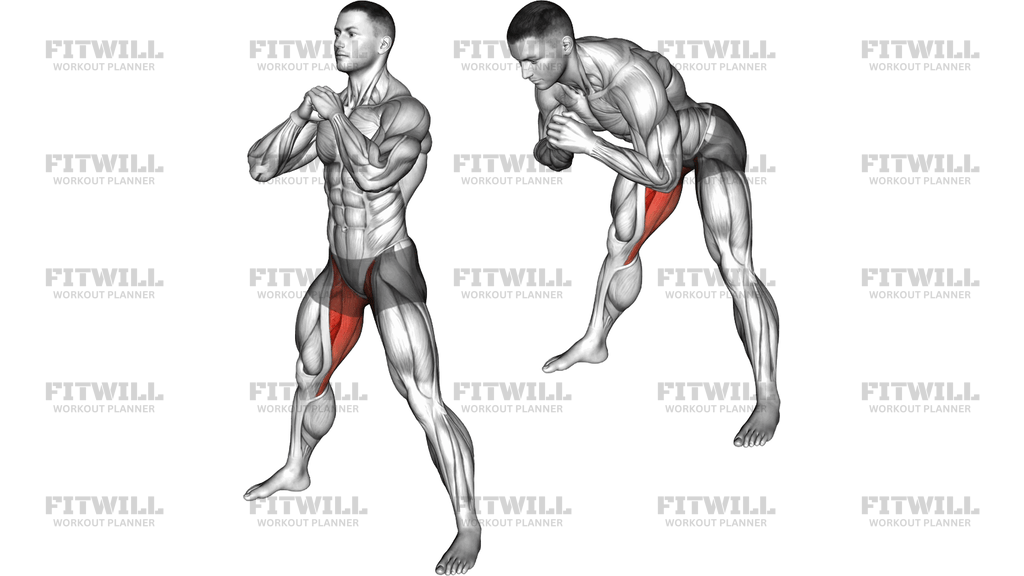
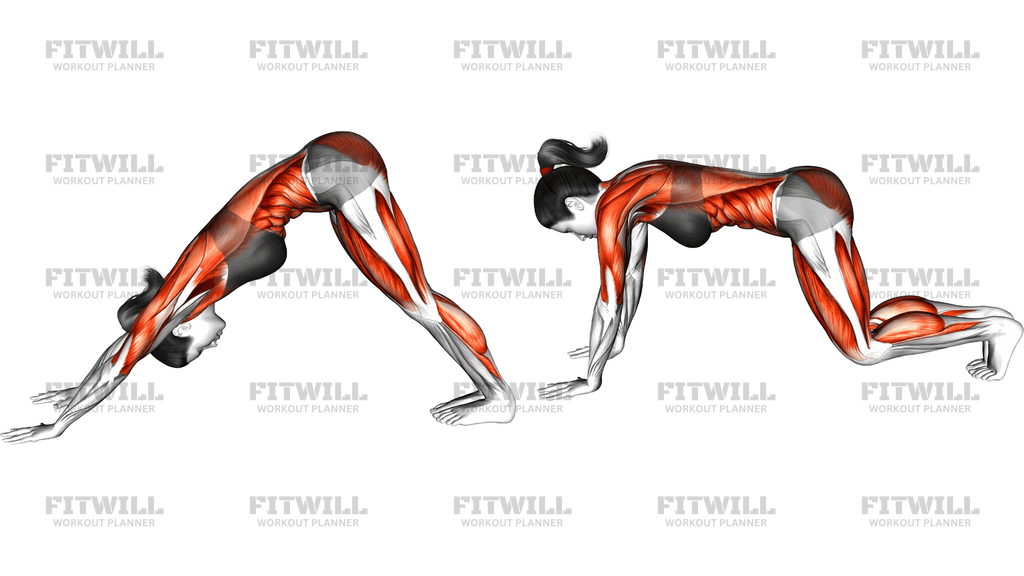
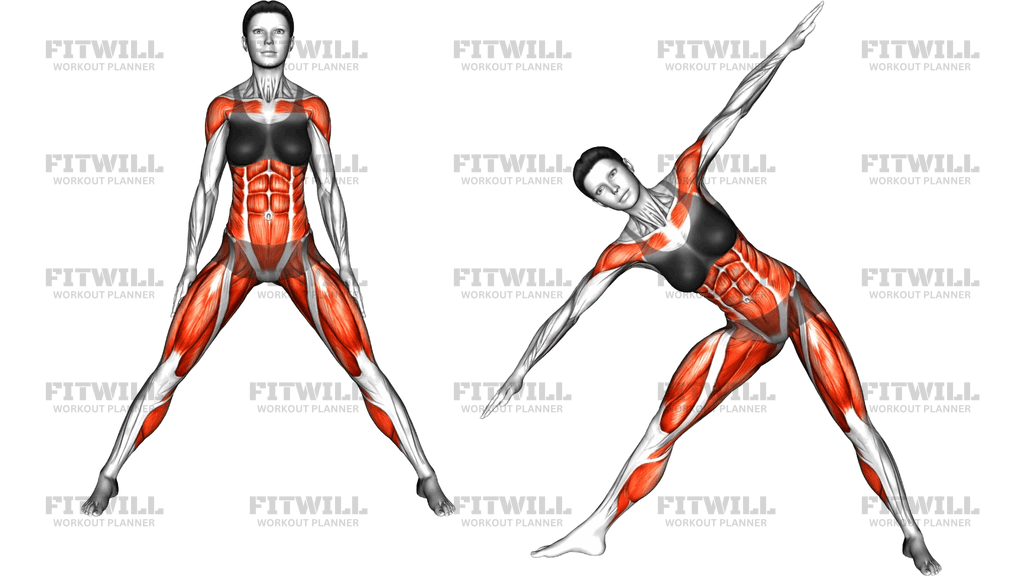
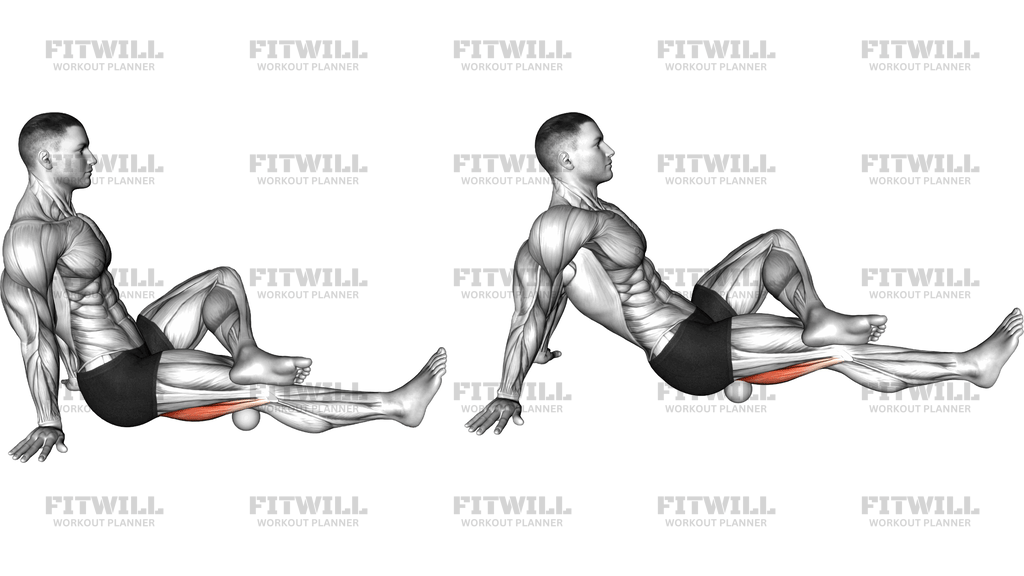
This stretch is especially useful for runners, cyclists, and anyone who spends long hours sitting, since tight hamstrings and calves are among the most common complaints in those groups. It also suits lifters who want better hip hinge mechanics for deadlifts and squats, and older adults looking to maintain ankle and hip range of motion for everyday walking and stair climbing. The image shows the classic execution: the front heel stays anchored, the back knee softens, and the hands rest on the front thigh for balance as the chest tips forward.
Setup matters more than depth here. The distance between your feet determines how much tension reaches the hamstring versus the calf, and keeping the front knee nearly straight with the toes drawn toward the shin is what loads the calf muscles into the stretch. If the front foot is too close to the back foot, you lose the lengthening effect; if it is too far forward, your lower back rounds and the stretch shifts away from the leg.
To execute it well, hinge at the hips rather than rounding through the spine. Your back stays relatively long and flat, your weight shifts slightly toward the back leg, and you let the front hamstring dictate how far you lean. Most people only need a modest forward tilt to feel a strong pull along the back of the thigh and behind the knee. Hold the position for 20 to 30 seconds, breathe steadily, and let the tissue release gradually instead of forcing range.
A common mistake is bouncing or cranking deeper with the hands, which tends to provoke the very muscles you are trying to relax. Keep the movement patient and static, and switch legs to keep both sides even. If you feel sharp pain behind the knee, in the calf, or in the lower back, ease off the lean and reduce the distance between your feet until the sensation is a comfortable, tolerable stretch rather than a strain.
Fitwill
Log Workouts, Track Progress & Build Strength.
Achieve more with Fitwill: explore over 9600 exercises with images and videos, access built-in and custom workouts, perfect for both gym and home sessions, and see real results.
Start your journey. Download today!




Instructions
- Stand tall with your feet together, then step one foot forward so your heels are roughly one and a half to two foot-lengths apart.
- Keep the front leg nearly straight and plant the heel firmly into the floor, drawing the toes up toward your shin.
- Allow the back knee to bend slightly so your hips can shift back and your weight settles into the rear leg.
- Place both hands on the front thigh just above the knee for support and balance.
- Brace your core lightly and hinge forward from the hips, keeping your back long instead of rounding through the spine.
- Continue leaning only until you feel a steady stretch along the back of the front thigh and behind the knee, running down into the calf.
- Hold the end position for 20 to 30 seconds, breathing slowly and letting the tension ease with each exhale.
- To come out, press through the back foot and slowly lift your chest back to standing, keeping the front heel down until you are upright.
- Switch legs and repeat, matching the hold time on both sides.
- Perform two to three rounds per leg, deepening the lean slightly only as the first round's tightness releases.
Tips & Tricks
- If you feel the stretch only behind the knee and not in the thigh or calf, lengthen your stance slightly by moving the front foot farther forward.
- Rounding the lower back is the most common fault in this stretch; it shortens the path the hamstring needs to lengthen and dumps tension into the spine. Keep your chest proud and hinge from the hips instead.
- Pulling the front toes up toward the shin is what keeps the gastrocnemius involved; letting the toes relax toward the floor shifts most of the work to the hamstring alone.
- Keep a soft bend in the back knee. Locking the rear leg limits how far your hips can sit back and flattens the stretch.
- Use your hands on the thigh for balance only, not as a lever to force yourself deeper.
- If your calf cramps, shorten the stance and reduce the toe flexion for a few breaths before easing back in.
- Warm legs stretch better than cold ones, so save the deeper holds for after training or a short walk rather than the first thing in the morning.
- Both sides usually differ in flexibility; match the hold time on each leg rather than chasing equal depth.
- Exhale as you settle into the lean. Holding your breath tends to tense the hamstrings and fight the stretch.
Frequently Asked Questions
Which muscles does the Standing Hamstring Calf Stretch target?
It primarily lengthens the hamstrings on the back of the front thigh, with the gastrocnemius and soleus of the front calf working as strong secondary targets. The glutes and lower back are gently involved as the hips hinge.
Why is the front heel kept flat during the Standing Hamstring Calf Stretch?
A planted heel with the toes drawn up keeps the knee extended and the ankle flexed, which is what places the hamstring and calf muscles under length. Lifting the heel releases the calf and reduces the stretch substantially.
Can beginners do the Standing Hamstring Calf Stretch?
Yes, it is one of the most accessible lower-body stretches. Beginners should use a shorter stance, lean only a few degrees forward, and rely on the hands resting on the thigh for balance.
Should the back knee be bent or straight?
A slight bend in the back knee is preferred. It lets the hips shift backward, which helps you hinge at the hips instead of rounding the spine to reach the stretch.
How far forward should I lean in the Standing Hamstring Calf Stretch?
Only until you feel a comfortable, steady pull along the back of the front thigh and calf. For most people that is a modest forward tilt, and depth should increase gradually over weeks, not within a single hold.
What is the most common mistake in this stretch?
Rounding the lower back to force the chest closer to the thigh. This hides the true hamstring range and can leave the back sore, so keep the spine long and let the hips do the hinging.
How long should I hold the Standing Hamstring Calf Stretch?
Aim for 20 to 30 seconds per side, repeated two to three rounds. Longer holds of 45 to 60 seconds can be used after training when the muscles are already warm.
What can I use if I cannot balance in this position?
Stand next to a wall, chair, or rack and rest one hand on it instead of the front thigh. The stretch mechanics stay the same; only the balance support changes.
When is the best time to use the Standing Hamstring Calf Stretch?
It works well after running, leg training, or cycling, and as a gentle mid-day break from sitting. Save long static holds for after activity rather than an intense warm-up.
Is it safe if I feel a pull behind my knee?
A mild stretch behind the knee is normal because the hamstrings cross that joint, but sharp or pinpoint pain is not. Ease out of the lean, soften the front knee slightly, and reduce the toe pull until the sensation settles.