Straight Leg Opposite Sit Up
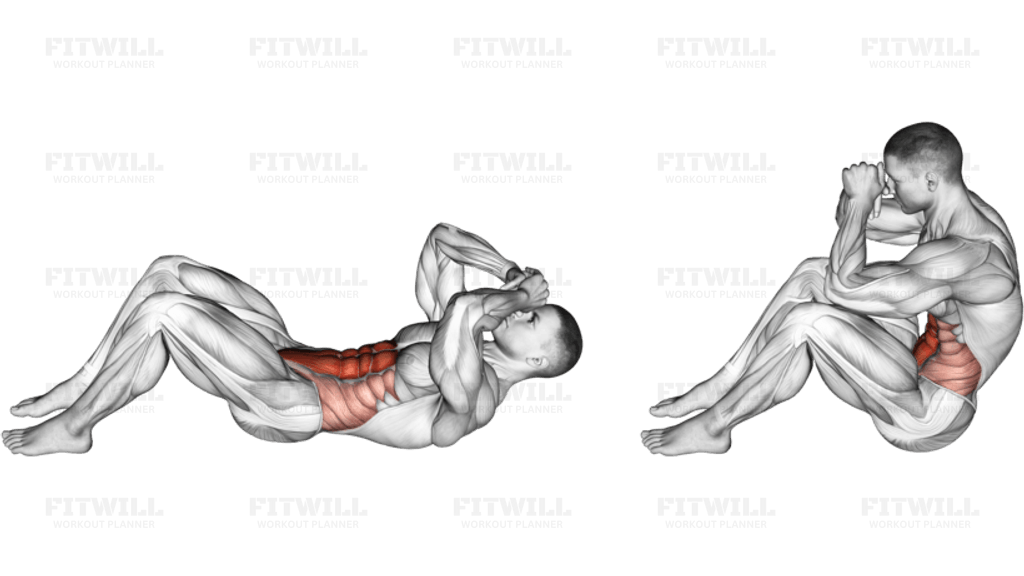
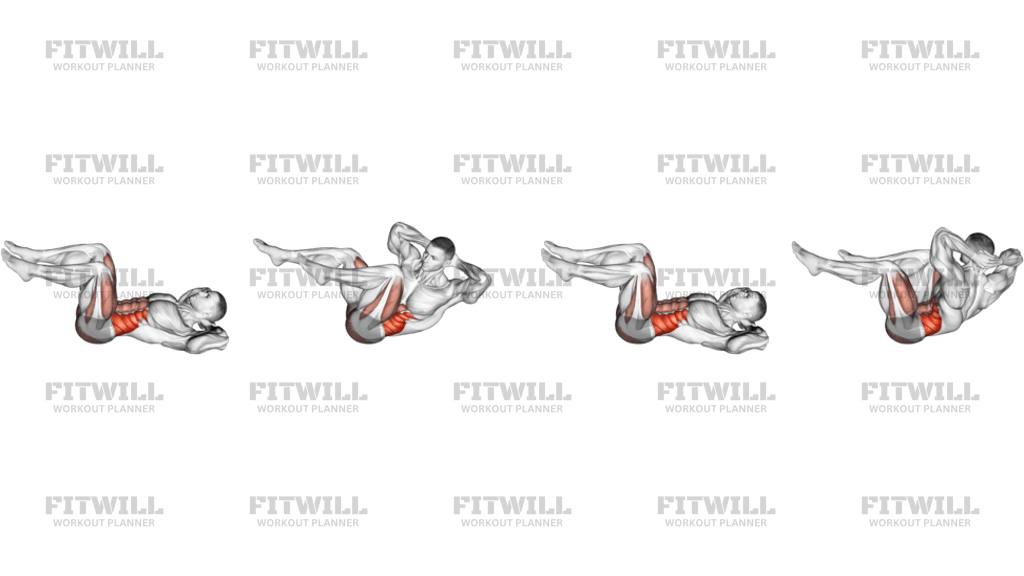
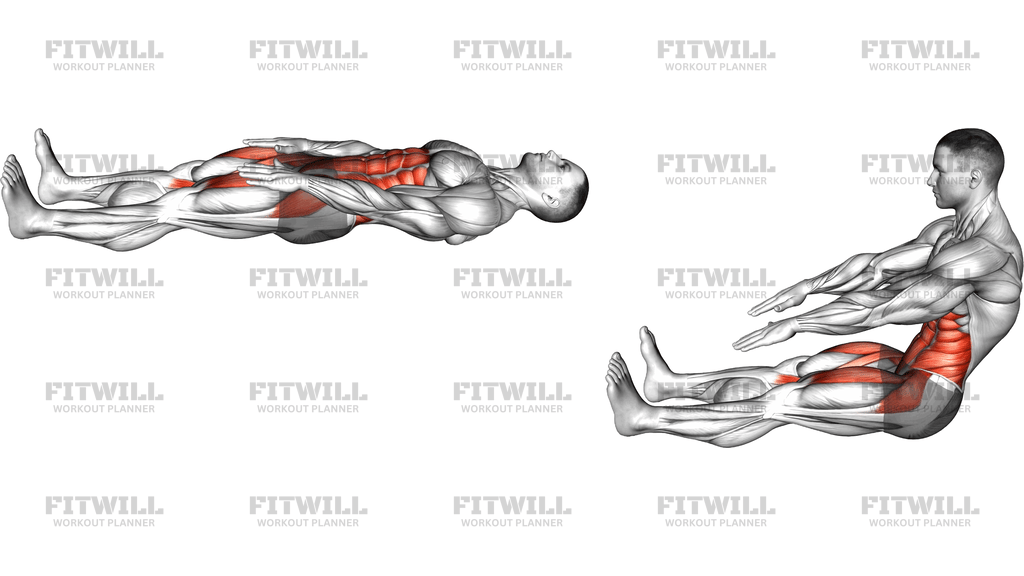
The Straight Leg Opposite Sit Up is a bodyweight abdominal exercise performed lying flat on your back with both legs extended straight on the floor. From that position, you sit up and reach one hand across your body toward the opposite foot, alternating sides on each rep. Because the legs stay straight rather than bent, the lengthened lever from your hips demands more from the abs and hip flexors than a standard bent-knee sit up, and the cross-body reach adds rotation that brings the obliques into the work.
This movement is useful for anyone who wants to train trunk flexion and rotation together without equipment. It fits well into a home core routine, a dynamic warm-up for sports that involve twisting and reaching, or a finisher at the end of a strength session. Gymnasts, martial artists, and field-sport athletes often find it carries over well to movements where they rise or reach across their body from a supine position.
The straight-leg setup is what separates this from an ordinary sit up. With the knees bent and feet anchored, the hip flexors get a mechanical advantage and can take over the lift. With the legs long and relaxed on the floor, your abdominal muscles have to drive the trunk up segment by segment, from the head and shoulders through the mid back. The reach to the opposite foot lengthens the range slightly and encourages the ribs to rotate toward the hip rather than the elbows simply traveling forward.
Execution quality comes down to peeling the torso off the floor under control and avoiding momentum. Press your lower back toward the floor before you start, exhale as you curl up, and lead the movement with the shoulder reaching across, not with the neck craning forward. Lower yourself back down with the same control you used on the way up, one vertebra at a time, before switching sides.
A few practical points will keep the exercise productive. If your hamstrings or lower back feel strained in the straight-leg position, soften the knees slightly or slide your heels a little wider. Keep the working foot relaxed on the floor rather than lifting it to chase your hand. If you feel more hip-front tension than abdominal work, reduce the height you sit up to and focus on the curl rather than reaching as far as possible.
[ Workout Log & Planner ]
Put your next workout in Fitwill
Keep your plan and training log ready when you are.


Instructions
- Lie flat on your back on an exercise mat with both legs extended straight and your feet relaxed, about hip-width apart.
- Rest your arms at your sides or lightly behind your head without pulling, and gently press your lower back into the floor before each rep.
- Brace your abdominal muscles as if preparing for a light punch, and take a breath in.
- Exhale and curl your torso off the floor, leading with your right shoulder as you reach your right hand across your body toward your left foot.
- Squeeze your abs at the top, letting your ribs rotate toward the opposite hip while your left heel stays resting on the floor.
- Lower your torso back down slowly and with control, resetting your shoulders and head to the mat before the next rep.
- On the following rep, reach your left hand toward your right foot and continue alternating sides for the planned number of repetitions.
- Breathe out on the way up and in on the way down, keeping the rhythm steady rather than holding your breath.
- Keep your neck neutral by leaving a fist-sized space between your chin and chest throughout the set.
- After your final rep, hug your knees into your chest briefly to release your lower back before standing up.
Tips & Tricks
- If your heels keep lifting off the floor as you sit up, slow the tempo down; the legs jumping usually means momentum is replacing abdominal work.
- Do not anchor your feet under a couch or bench. Anchoring shifts the load to your hip flexors and takes tension off the abs, which defeats the purpose of the straight-leg position.
- Reach with the shoulder and rotate the ribs rather than jabbing the hand toward the toe. If your arm is doing the work, the obliques are missing out.
- If you feel a pulling sensation at the front of your hips, bend your knees slightly or shorten the range so the curl, not the hip flexors, dominates.
- Avoid yanking your head forward with your hands. Place fingertips lightly behind your ears or cross your arms over your chest if your neck tires before your abs do.
- The lowering phase is half the exercise. If you drop back to the mat between reps, take two full seconds to descend and you will feel the difference immediately.
- Keep both glutes in contact with the floor. Rocking from side to side to gain extra reach usually indicates the rotation is coming from the hips instead of the trunk.
- Progress by pausing for a one-count at the top of each reach before adding reps, rather than rushing through alternating sides.
Frequently Asked Questions
What muscles does the Straight Leg Opposite Sit Up work?
The rectus abdominis does most of the trunk flexion, while the obliques rotate the torso during the cross-body reach. The hip flexors, especially the iliopsoas and rectus femoris, assist in lifting the trunk with straight legs.
Why do my legs stay straight instead of bent like a regular sit up?
Straight legs remove the leverage and foot anchoring that let the hip flexors dominate a bent-knee sit up, forcing the abdominal muscles to control more of the lift. The long-leg position also loads the trunk differently and makes the cross-body reach travel further.
Is the Straight Leg Opposite Sit Up suitable for beginners?
Yes, but beginners can start with slightly bent knees or a shorter curl that only lifts the shoulder blades. As control improves, straighten the legs and extend the reach toward the opposite foot.
Should I reach all the way to my opposite foot?
Only if you can do it without your heel lifting, your hips rocking, or your form collapsing. A controlled reach toward the outside of the opposite knee is better than a straining reach that pulls you out of position.
Why do I feel this more in my hip flexors than my abs?
That usually means momentum or foot anchoring is letting the hip flexors drive the movement. Slow the descent, avoid anchoring your feet, and focus on curling the ribs toward the pelvis before thinking about the reach.
Can I do the Straight Leg Opposite Sit Up every day?
It is a moderate bodyweight movement, so frequent practice is generally fine if your abs recover between sessions. Treat it like any resistance exercise and give the muscles a day of rest after high-rep or high-effort sets.
What can I use instead if I do not have an exercise mat?
Any firm but padded surface works, such as carpet or a folded towel. Avoid very soft beds, because they round your spine and make it hard to press your lower back into a stable position.
How is this different from a standard sit up?
A standard sit up moves straight up and down with both hands together, while the opposite reach adds trunk rotation and slightly alternates the load between sides. The straight-leg position also makes the abs work harder than the typical bent-knee, anchored-feet version.
Is it safe for my lower back?
For most people with a healthy back, yes, as long as you keep the movement controlled and your lower back pressed toward the floor at the start of each rep. If you currently have back pain, get clearance from a qualified professional before adding repeated trunk flexion to your routine.