Standing Cat Cow Stretch
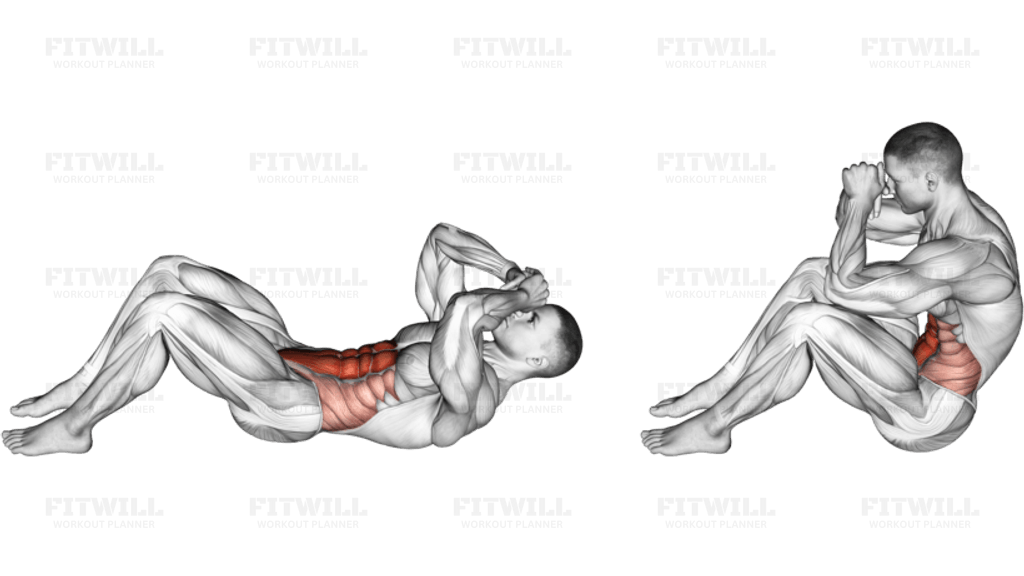
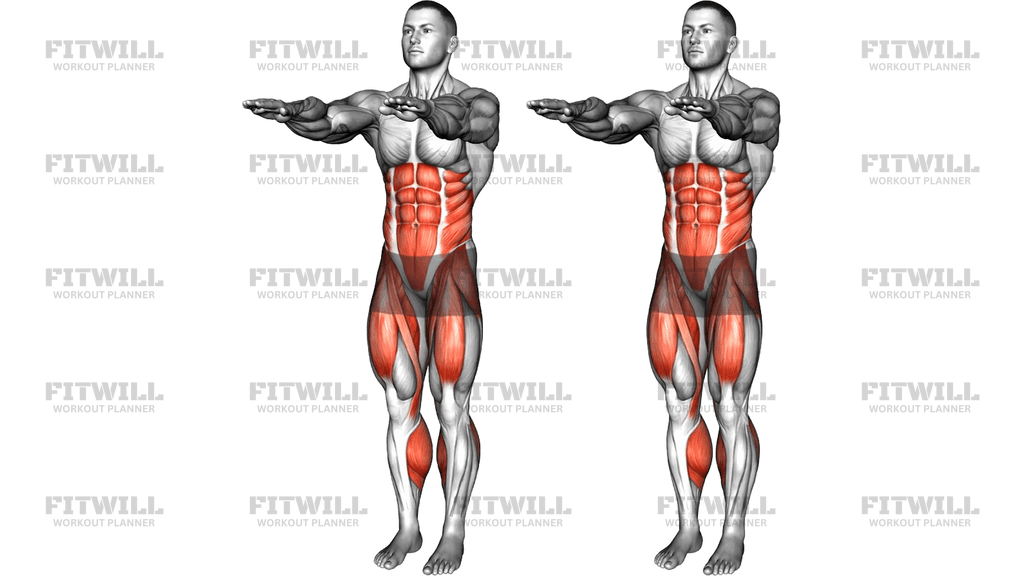
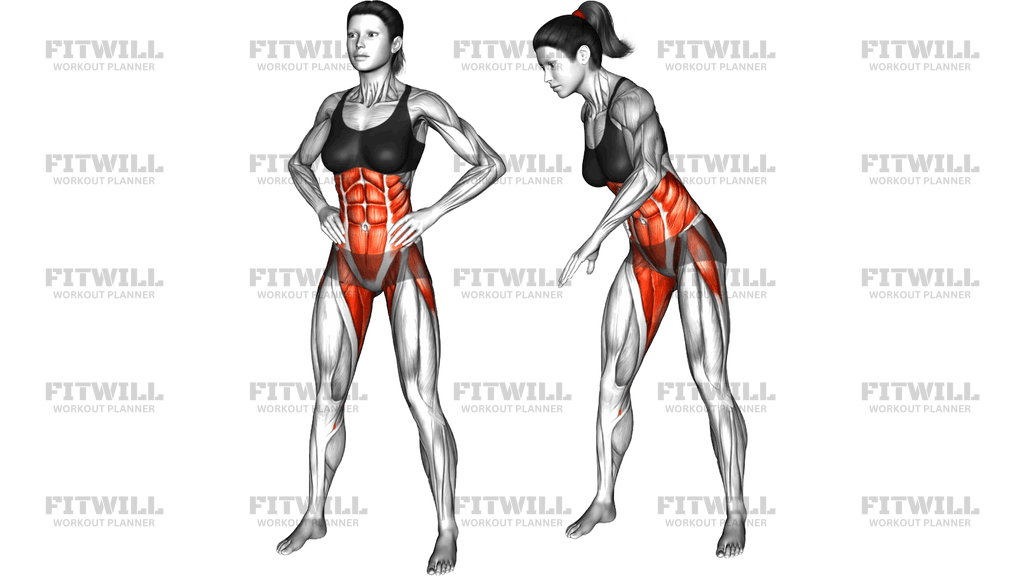
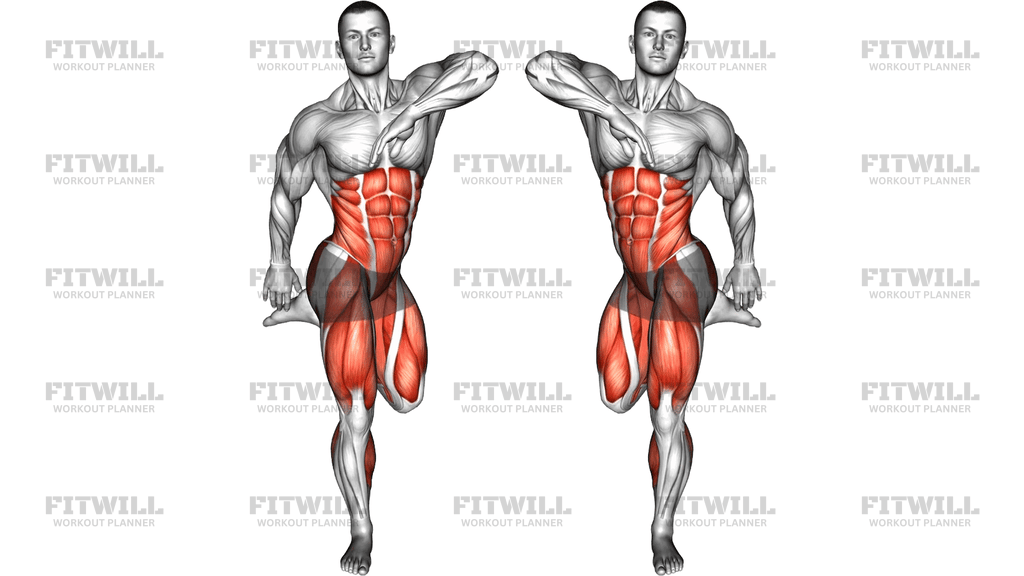
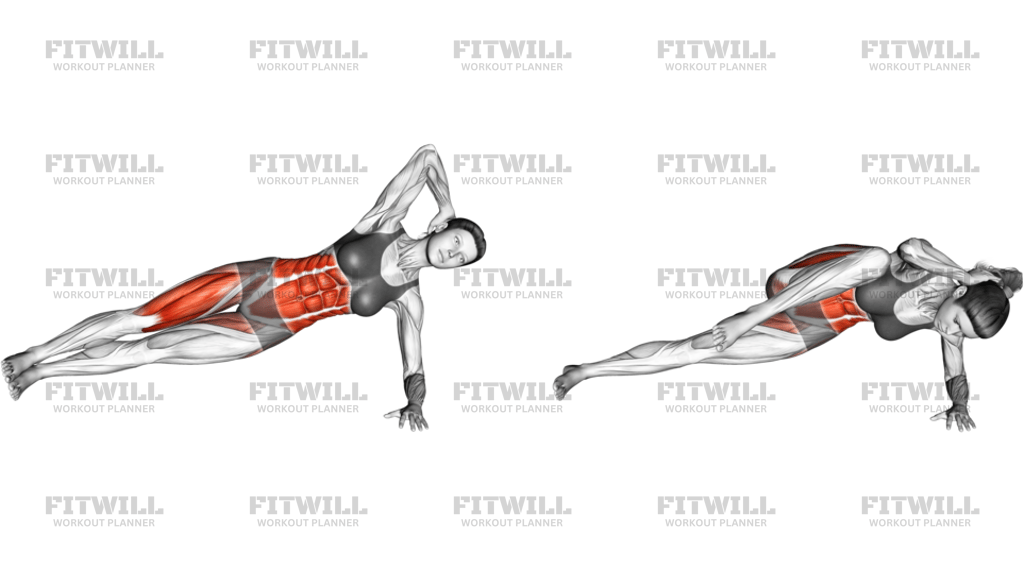
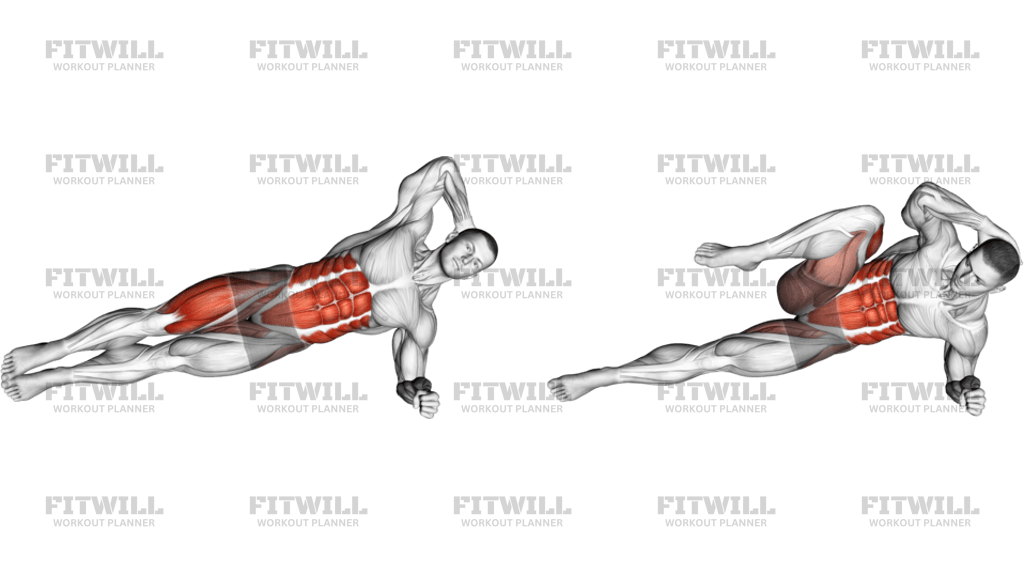
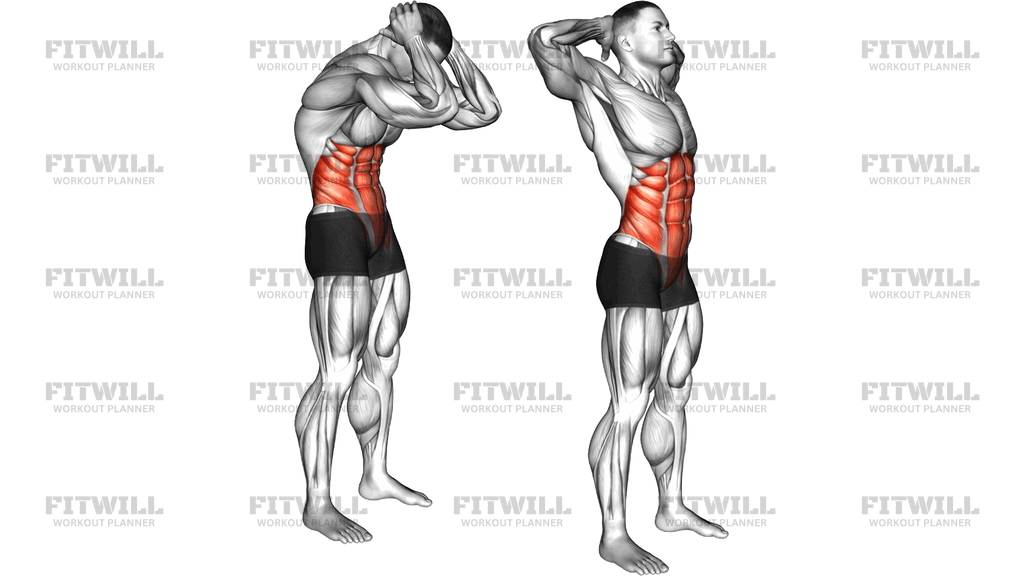
The Standing Cat Cow Stretch takes the familiar floor-based cat cow flow and brings it upright, making it a practical spinal mobility drill you can do anywhere without getting down on a mat. Standing with your feet about hip-width apart and your hands lightly placed behind your head, you rhythmically round your entire spine forward and then arch it back, moving segment by segment through the trunk. The highlighted abdominal wall does much of the work on the rounding phase, while the muscles along the spine lengthen and shorten as you flow between the two shapes.
This version is especially useful for people who spend long hours sitting, since prolonged sitting tends to leave the mid back stiff and the front of the hips shortened. Because you are standing, the hips and legs stay active to stabilize you, and the movement doubles as a light wake-up drill for the core. Office workers, lifters warming up before squats or deadlifts, and anyone who feels locked up first thing in the morning can all benefit from a few slow rounds.
The setup matters more than it might seem. Your hands support the weight of your head rather than pulling on your neck, your knees stay soft rather than locked, and your feet stay planted so the motion comes from the spine instead of from swaying at the ankles. When the base is stable, you can actually feel the rounding and arching travel up and down the torso instead of collapsing only at one segment.
To execute it well, think of exhaling as you curl the ribs down toward the belt line, drawing the belly in and letting the head drop slightly. Then inhale as you lift the chest, draw the elbows back, and let the spine extend into a gentle arch. The transitions, not the end positions, are where the value lives, so keep the pace slow enough that you can feel each part of the spine joining in.
Common use cases include pre-workout warm-ups, mid-day desk breaks, cooldowns after training, and rehabilitation-style mobility routines where floor work is impractical. Keep the range moderate at first; the goal is smooth, pain-free motion through the trunk, not forcing the deepest round or arch you can produce. If you feel pinching, dizziness, or sharp pain anywhere, reduce the range or stop and reset.
Fitwill
Log Workouts, Track Progress & Build Strength.
Achieve more with Fitwill: explore over 9600 exercises with images and videos, access built-in and custom workouts, perfect for both gym and home sessions, and see real results.
Start your journey. Download today!




Instructions
- Stand with your feet about hip-width apart, toes pointing forward, and let your knees stay soft with a slight bend.
- Place both hands lightly behind your head with your fingers spread, supporting the skull without pulling your neck forward.
- Draw your shoulders back and down, engage your core lightly, and find a tall neutral posture before you start moving.
- Exhale as you tuck your pelvis under and round your upper back, letting your head dip slightly and drawing your elbows in toward each other.
- Curl the ribs down toward your hips until you feel your abdominal wall fully shortened, holding the rounded position for a breath at the end range.
- Inhale as you reverse the motion, lifting the chest, opening the elbows out to the sides, and letting the pelvis tilt forward into a gentle arch.
- Reach the end of the arch with your gaze slightly up and ribs forward, again pausing for a full breath without cramming the lower back.
- Continue flowing between the rounded and arched positions for 8 to 12 slow repetitions, letting each vertebra contribute to the wave.
- Keep your feet planted and your weight even across both legs throughout, resisting the urge to sway or lean your whole body.
- On the final repetition, return to a tall neutral spine, lower your hands, and take one settling breath before moving on.
Tips & Tricks
- Support your head rather than yank it. Pulling on the back of the skull to force more range is the most common fault and puts strain on the neck instead of mobilizing the spine.
- If the rounding phase only bends at one spot in your mid back, slow down and imagine curling one vertebra at a time, starting from the pelvis.
- Keep the knees soft. Locked knees during the arch phase tilt the pelvis aggressively and can compress the lower back.
- Match the breath to the motion: exhale on the round, inhale on the arch. Reversing this rhythm makes the trunk feel tight and restricts the range.
- Do not chase depth in the arch. A comfortable, controlled extension with the ribs lifting is more productive than jamming into a maximal backbend.
- Avoid letting the hips shove forward and back. The pelvis tilts, but the overall position of your hips over your ankles should stay roughly constant.
- If your shoulders tire from holding the elbows wide on the arch, reduce how far you open them and focus on lifting the chest instead.
- Move slower than feels necessary. Most people rush this drill; a three-second round and a three-second arch will reveal far more mobility than quick bobbing.
- Use it before heavy lower-body lifting to free up the trunk, but keep the ranges moderate so you do not overstretch the spinal muscles right before loading them.
Frequently Asked Questions
What muscles and areas does the Standing Cat Cow Stretch work on?
It primarily mobilizes the spine while rhythmically contracting and lengthening the abs, especially the rectus abdominis, along with the lower back muscles. The hip flexors and obliques assist as the pelvis tilts through each phase.
Why is the Standing Cat Cow Stretch done with hands behind the head?
The hands support the weight of the head and give the elbows room to open on the arch, which helps the chest lift. They are there for support and feedback, not to pull the neck into deeper range.
Is the Standing Cat Cow Stretch suitable for complete beginners?
Yes, it is one of the most beginner-friendly mobility drills because it needs no equipment and uses a small, controlled range. Start with a shorter range and fewer repetitions, then expand as the motion feels smooth.
How is the Standing Cat Cow Stretch different from the floor version?
The standing version removes the hands-and-knees base, so your legs and hips must stabilize you while the spine moves. This makes it more practical for desk breaks and warm-ups, though the floor version offers more feedback for learning the spinal wave.
How many repetitions of the Standing Cat Cow Stretch should I do?
Eight to twelve slow repetitions is a solid working dose, which takes roughly one to two minutes. For stiff mornings or long sitting days, a second round later in the day often feels better than one long set.
Should my knees be straight or bent during the Standing Cat Cow Stretch?
Keep a soft, slight bend in the knees the whole time. Locked knees push the pelvis into extreme positions during the arch and can compress the lower back.
I only feel the Standing Cat Cow Stretch in one spot in my back. Is that normal?
It is common, especially if part of your spine is stiffer than the rest. Slow the tempo down and consciously initiate the movement from the pelvis so the rounding and arching travel through more segments instead of collapsing at the loosest joint.
Can I use the Standing Cat Cow Stretch as a warm-up before lifting?
Yes, it works well early in a warm-up to restore trunk motion before squats, deadlifts, or overhead work. Keep the range moderate and finish with a return to neutral so your spine is mobile but not freshly overstretched before loading.
When should I avoid the Standing Cat Cow Stretch?
Skip it or scale it back if you feel sharp pain, pinching, or dizziness during the movement, and use extra caution with a recent back or neck injury. A gentle, smaller range is the right starting point, and persistent discomfort should be checked by a qualified professional.