Deep Prisoner Squat
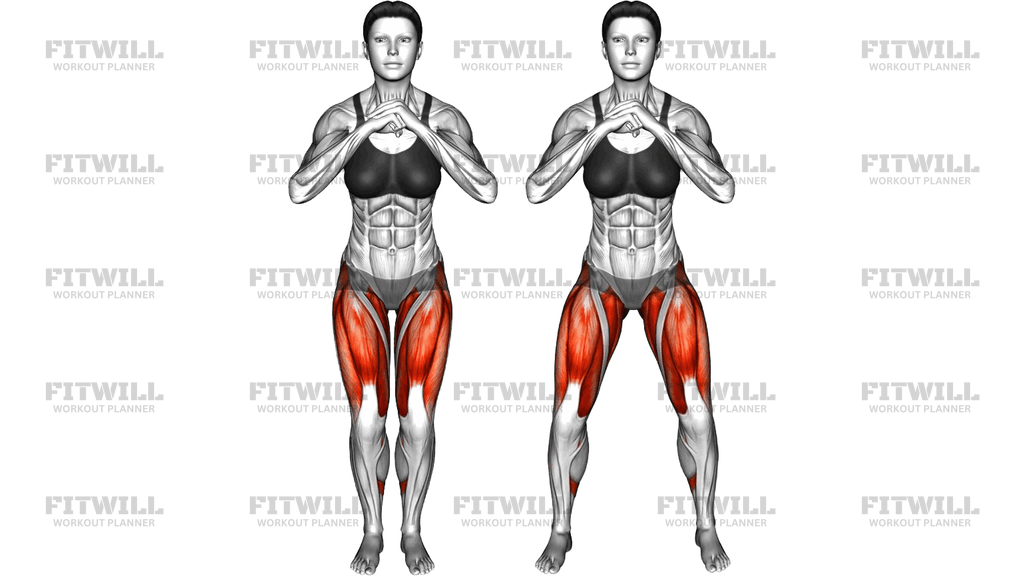
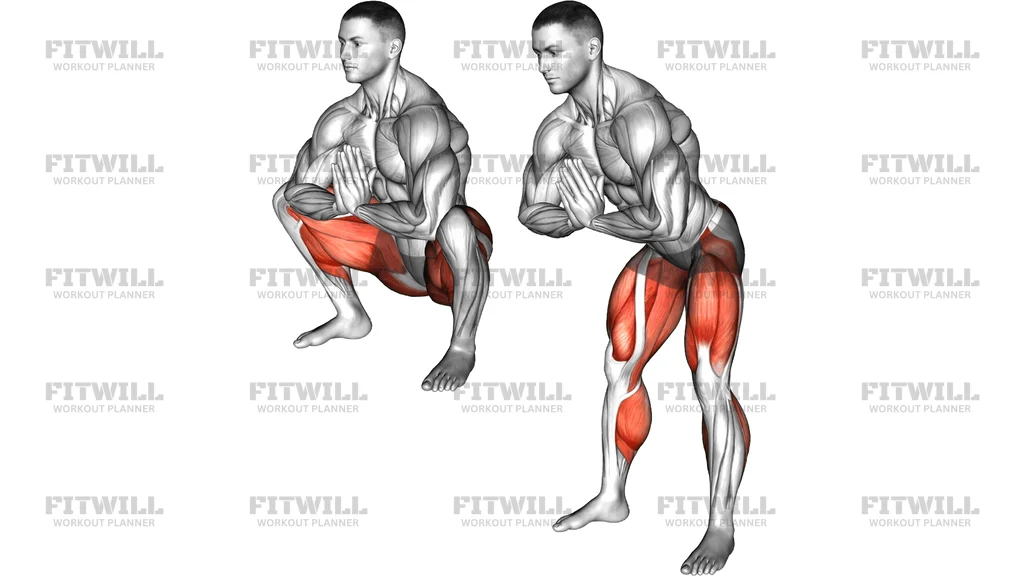
The Deep Prisoner Squat is a full-range bodyweight squat taken well below parallel, with the hands pressed together at the chest so the elbows can sit inside the knees at the bottom. That hand position does two jobs at once: it gives you a counterweight to balance in the deep hole, and it lets you gently push the knees outward with the elbows, opening the hips and teaching you what a stable deep squat actually feels like. Because there is no external load, the focus stays on joint range, control, and positions rather than on moving weight.
This movement is one of the best diagnostic and mobility tools a lifter can own. If you squat with a barbell, deep bodyweight squats expose whether ankle stiffness, tight hips, or weak midline control is limiting your depth. If you sit at a desk most of the day, they gradually restore the hip and ankle range that prolonged sitting takes away. They are also a staple for anyone working toward an comfortable resting deep squat, which is a genuinely useful position for picking things up, playing on the floor, and protecting your lower back in daily life.
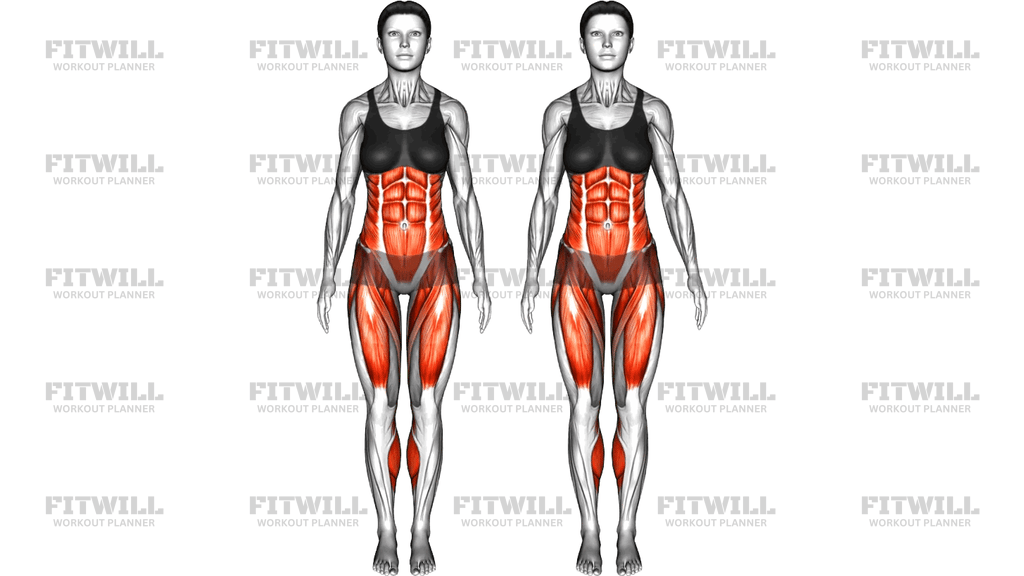
Muscularly, the quads do the bulk of the work as you lower and especially as you drive back up from the bottom, where the knees are deeply flexed. The glutes and adductors control hip depth and keep the femurs tracking over the feet, the hamstrings and calves fine-tune the descent, and the core braces to keep your torso upright as your hips and knees fold completely. The calves and ankle stabilizers work hard in the deep position because the shin has to travel forward over the foot while the heel stays planted.
Setup matters more than people expect. Stand with the feet roughly shoulder-width to slightly wider, toes turned out a comfortable 10 to 30 degrees, and full foot pressure through the floor. Clasp the hands together in front of the chest and keep the elbows pointing down as you descend so they can slide inside the thighs at the bottom. Let the depth come from the hips, knees, and ankles together rather than from rounding the lower back to sink lower.
Execution is about pacing and intent. Sit down between your feet rather than folding over them, keep the chest as tall as your structure allows, and lower until the hamstrings rest on or near the calves. Pause briefly at the bottom, use the elbows to keep the knees tracking over the toes, then push the floor away and stand tall. The whole rep should feel smooth and quiet, not like a crash to the floor and a heave upward.
Use the Deep Prisoner Squat as a warm-up before leg days, as mobility work between upper-body sets, or as a standalone movement in home workouts where no equipment is available. If depth is limited today, hold the bottom position for accumulated time instead of chasing more reps, and let your range improve over weeks rather than forcing it in a session. Keep the heels down at all times; if they lift, your ankles need work and a slightly wider stance or small heel elevation is a fair temporary modification.
[ Workout Log & Planner ]
Put your next workout in Fitwill
Keep your plan and training log ready when you are.


Instructions
- Stand with your feet about shoulder-width apart or slightly wider, toes turned out 10 to 30 degrees, with your weight spread across the whole foot.
- Press your palms together in front of your chest with fingers pointing up, elbows tucked down toward your ribs.
- Brace your midsection lightly, lift the chest, and take a breath in before you descend.
- Shift the hips back and down as the knees bend, keeping the heels flat and the shins drifting forward over the toes.
- Let the elbows travel down between the thighs as you get low so they can gently press the knees outward, tracking over the toes.
- Continue until your hamstrings rest against your calves and your hips are at their lowest controlled point.
- Pause for one to two seconds at the bottom, keeping the chest lifted and the feet fully planted.
- Drive through the mid-foot to stand, letting the elbows separate as the knees extend, and finish with the hips and knees locked out.
- Exhale on the way up, reset your breath and brace at the top, then repeat for the target number of reps.
Tips & Tricks
- If your heels lift at depth, the issue is usually ankle range, not effort. Widen the stance a few centimeters and turn the toes out slightly before considering a small heel wedge.
- A common mistake is dropping straight into a rounded lower back to hit depth. Stop at the point where your spine starts to curl, hold there, and earn the last few centimeters over time.
- Do not let the knees cave inward as you tire. Actively keep the elbow pressure on the outer thighs so the knees track over the middle of the foot.
- Keep the palms pressed together and elbows low; flaring the elbows out to the sides turns the bottom position into a balance problem instead of a hip opener.
- Slow the descent to a three-count. Most people who fall into the bottom position are skipping the eccentric control that actually builds strength and mobility.
- If you feel pinching at the front of the hip, shift the torso slightly more upright and push the hips a touch further back rather than forcing deeper flexion through the pinch.
- Add a two-second pause at the bottom once bodyweight reps feel easy. The paused deep squat builds far more usable range than bouncing reps.
- Barefoot or flat shoes work better than thick-cushioned running shoes here, since soft soles make balance at the bottom noticeably harder.
- Ease out of the bottom position when you finish a set; standing up abruptly after long holds can leave you light-headed.
Frequently Asked Questions
Which muscles does the Deep Prisoner Squat work the most?
The quads are the primary movers, with strong contributions from the glutes and inner thighs, especially at the bottom. The calves, hamstrings, and core work to stabilize the deep position and control the descent.
Why are the hands pressed together at the chest instead of behind the head in the Deep Prisoner Squat?
The pressed-hands position acts as a small counterweight and lets the elbows sit inside the knees at the bottom, which helps push the knees out and open the hips. It also makes balancing in the deep position much easier than an unsupported squat.
Is the Deep Prisoner Squat suitable for beginners?
Yes, it is one of the best first squats to learn because there is no load and you can limit depth to wherever your control ends. Beginners should squat to a box or chair at first and remove it as range improves.
How deep should I go in the Deep Prisoner Squat?
The target is hips as low as they will go with the heels flat and the spine neutral, ideally until the hamstrings meet the calves. Go only as deep as you can control, and let range improve gradually.
What is the most common mistake in the Deep Prisoner Squat?
Rounding the lower back and lifting the heels to sink lower. Both usually point to limited ankle or hip mobility, and forcing them only teaches poor positions rather than improving depth.
Can I use the Deep Prisoner Squat to warm up for barbell squats?
Absolutely. Ten to fifteen controlled reps with a short pause at the bottom prepare the hips, knees, and ankles for loaded squatting and highlight any stiffness you need to address first.
What can I substitute if I cannot reach full depth yet?
Squat to a low box or bench and stand back up, or hold onto a doorframe to assist balance while you build range. A small heel elevation is another reasonable short-term modification.
Is it safe to stay in the bottom position of the Deep Prisoner Squat for long periods?
Holding the bottom for 20 to 60 seconds at a time is generally well tolerated and is a common way to build mobility. If you feel sharp pain, numbness, or pinching rather than a stretch, come out of the position and reduce the depth.
How many reps and sets of the Deep Prisoner Squat should I do?
For mobility and warm-up, 2 to 3 sets of 10 to 15 slow reps work well. As a standalone strength exercise, 3 to 4 sets of 15 to 25 reps with a bottom pause provides plenty of stimulus without equipment.