Sicilian Roll Up
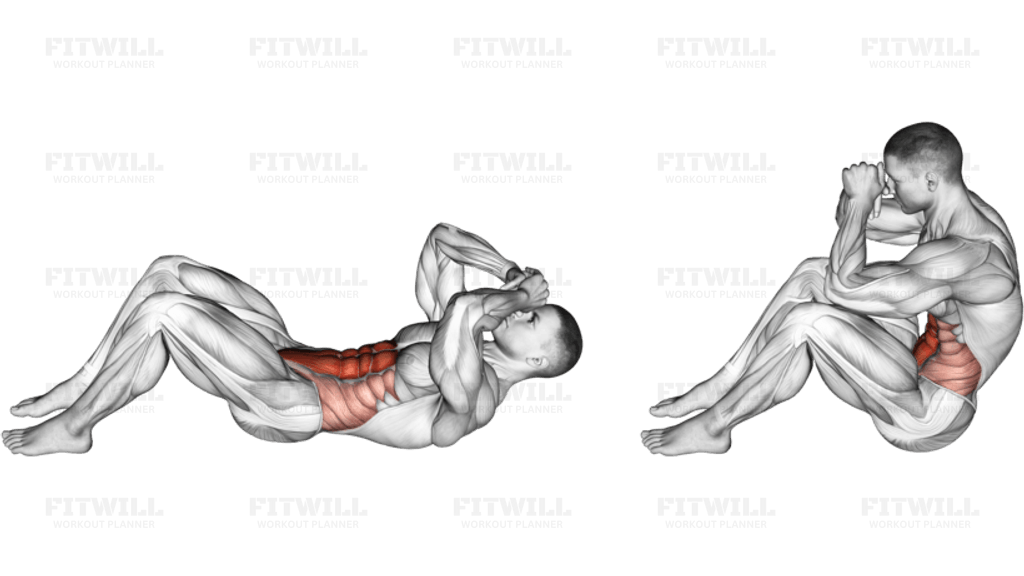
The Sicilian Roll Up is a bodyweight abdominal exercise that takes you from lying flat on your back to a seated position with your arms held straight up toward the ceiling the entire time. Unlike a standard crunch, which only lifts the shoulder blades off the floor, this movement rolls through the full spine, peeling one vertebra at a time off the ground until you are sitting upright with your torso tall and arms vertical. The arms-stacked-over-chest position is what makes it distinct: because your arms never swing forward to generate momentum, your abdominal muscles have to do all of the work of lifting and lowering your trunk.
This exercise is particularly useful for anyone who wants to build segmental control of the spine rather than just brute crunching strength. Because you articulate up and down slowly, it teaches you to feel each section of your abdominals working, which carries over well to Pilates-style training, gymnastics conditioning, and general core development. It also challenges the deep core stabilizers, since you have to keep your ribs down and pelvis neutral while your trunk moves through a large range.
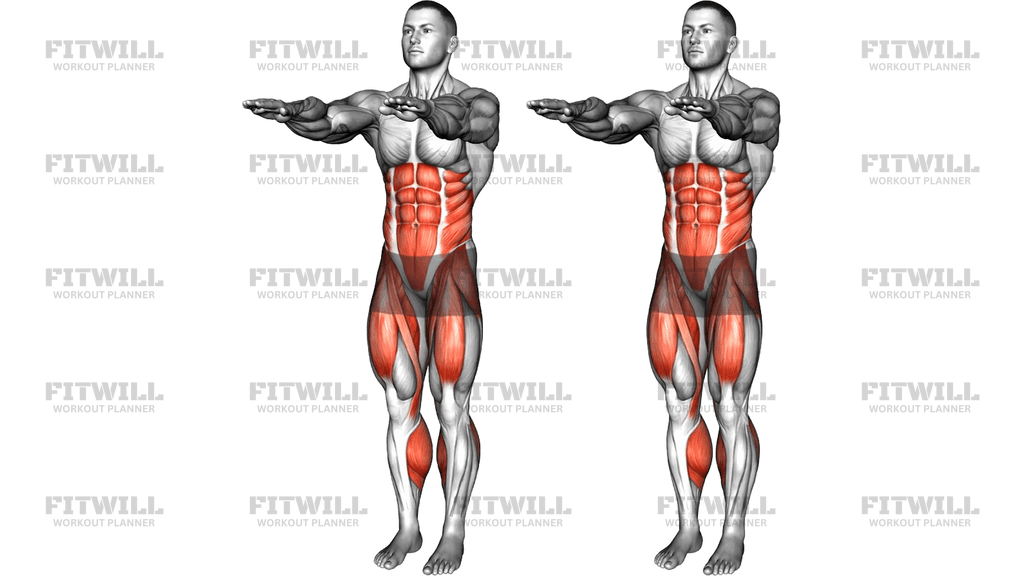
The main muscles worked are the rectus abdominis, the long sheet of muscle running down the front of your belly, with strong support from the obliques as they control rotation-free alignment and the hip flexors as they assist once your torso passes about halfway up. The lower abdominals tend to get the most attention on the way down, when you have to resist gravity and unroll your spine back to the floor without letting your lower back slap down or your legs lift.
Setup matters more than most people expect. Lie on your back with knees bent and feet flat on the floor, and point both arms straight up so your hands sit directly over your chest. If your arms drift toward your knees or behind your head during the rep, momentum and neck tension creep in and the abdominal work drops off. Keeping the arms perpendicular to the floor throughout acts like a built-in form check: if your hands stay stacked, your spine is almost certainly rolling the way it should.
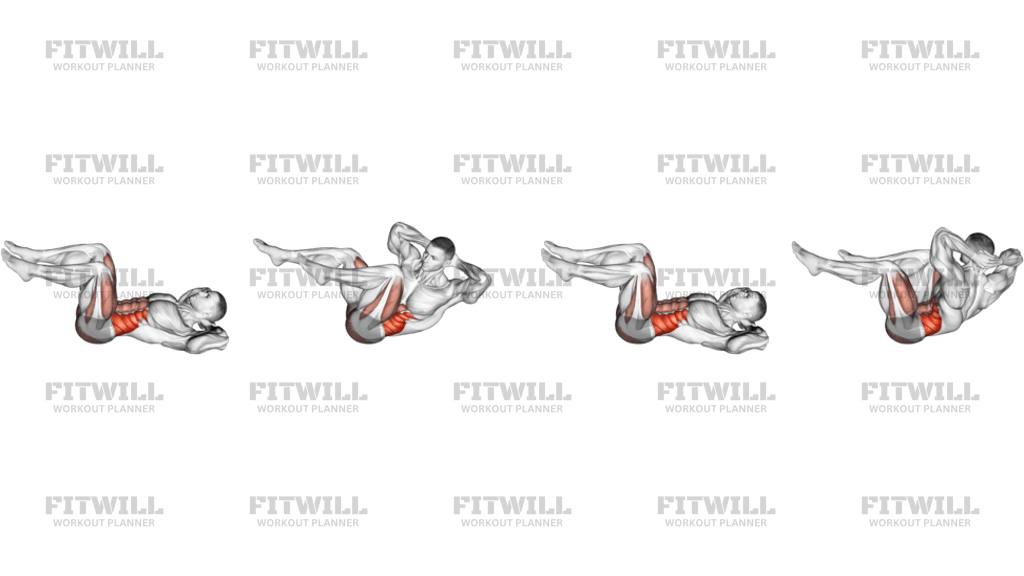
To execute it well, exhale as you nod your chin slightly and curl your head, shoulders, and upper back off the floor first, then continue peeling your middle and lower back up until you are seated. At the top, your torso should be upright or leaning slightly back at an angle, arms still reaching vertically. Pause briefly, then reverse the order on the way down, lowering your lower back first and finishing with your head, and inhale as you return. Expect the lowering phase to be the hardest part; treat it as the working half of the rep rather than a collapse.
The Sicilian Roll Up fits well as a mid-set core builder in strength programs, a warm-up activation drill before heavier lifting, or a standalone ab finisher. Because it requires no equipment beyond a floor or mat, it travels easily and scales naturally: bend the knees less, slow the tempo, or add a pause at the hardest point to make it tougher without adding weight. If you feel it mostly in your hip crease or neck rather than your abs, reduce the range or pause the movement at the halfway point where the abdominal demand is highest.
[ Workout Log & Planner ]
Put your next workout in Fitwill
Keep your plan and training log ready when you are.


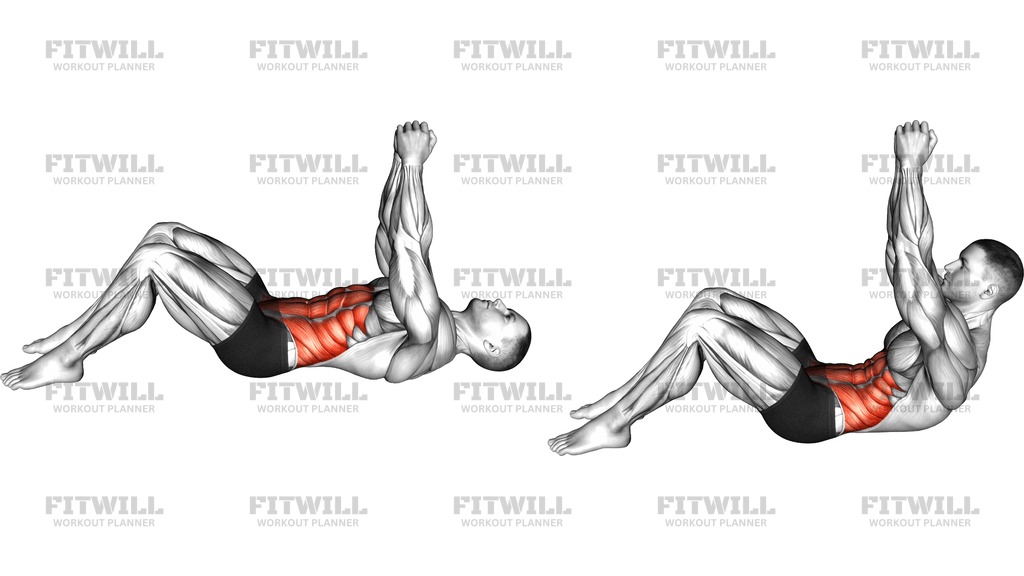
Instructions
- Lie on your back on a mat or the floor with your knees bent and feet flat on the ground, about hip-width apart.
- Extend both arms straight up so your hands are stacked directly over your chest, palms facing forward, with a soft bend or locked elbow — keep this arm position for the whole set.
- Gently draw your ribs down toward your hips and brace your abdominals so your lower back rests close to the floor before you start moving.
- Take a breath in, then exhale as you tuck your chin slightly and curl your head and shoulder blades off the floor, leading with your upper spine.
- Continue rolling upward one section of the spine at a time until you are sitting upright, arms still reaching straight toward the ceiling, torso tall over your hips.
- Pause for one or two seconds at the top with your abdominals fully shortened and your breathing steady.
- Reverse the movement on an inhale, lowering your lower back first, then your mid back, shoulder blades, and finally your head, until your whole spine is back on the floor.
- Reset your rib position and abdominal brace, make sure your arms are still stacked over your chest, then begin the next repetition.
- Keep the tempo slow and even — aim for two to three seconds up and three to four seconds down so momentum never takes over.
Tips & Tricks
- The most common mistake is swinging the arms toward the knees to help the torso up. If your hands drift forward, the exercise turns into a momentum-driven sit-up; imagine your fingertips are balancing a glass of water that must stay level over your chest.
- If your feet lift off the floor as you rise, your hip flexors are dominating. Lightly press your heels down and think of curling your ribs toward your pelvis instead of dragging your chest toward your thighs.
- Jerking the head forward with the hands is impossible here since the arms stay up, but a stiff, jutting chin is common. Let the chin drop toward the chest naturally as the upper spine curls, and keep the neck relaxed.
- Do not drop the last few inches on the way down. The lower-back-to-floor segment is where the lower abdominals work hardest, so lower that part slowly and with control.
- If you cannot reach a full seated position, stop at whatever height lets you keep your arms vertical and ribs down, and gradually increase the range over weeks rather than forcing it.
- Keep your pelvis still and neutral. Tilting the pelvis hard or grinding your lower back into the floor at the start robs the spine of its segmental rolling action, which is the point of the exercise.
- Exhale on the way up and inhale on the way down. Holding your breath is a sign the rep is too fast or the range is too large for your current control.
- To make it harder without equipment, add a three-second pause at the halfway point of the lift, where the lever arm against your abdominals is longest.
- Placing your feet under a couch or having a partner pin them turns this into a hip-flexor-driven sit-up. Keep the feet unanchored so the abs stay the prime mover.
Frequently Asked Questions
What muscles does the Sicilian Roll Up work?
The rectus abdominis is the prime mover, with the obliques stabilizing your alignment and the hip flexors assisting in the second half of the lift. The deep core muscles work to keep your ribs down and pelvis controlled throughout.
How is the Sicilian Roll Up different from a regular sit-up?
In a sit-up your hands usually pull behind your head or swing forward, which adds momentum and hip flexor involvement. In the Sicilian Roll Up your arms stay vertical over your chest, so momentum is minimal and the abdominals must roll the spine up segment by segment.
Is the Sicilian Roll Up good for beginners?
Yes, as long as the range is scaled. Beginners can start by lifting only the head and shoulder blades while keeping the arms stacked over the chest, then gradually extend toward a full seated roll-up as control improves.
Why do my hip flexors feel the Sicilian Roll Up more than my abs?
This usually means you are yanking your chest toward your thighs or your feet are lifting, both signs the hip flexors are taking over. Slow down, press your heels lightly into the floor, and focus on curling your ribs toward your pelvis to bring the work back to your abdominals.
Should my feet be anchored during the Sicilian Roll Up?
No. Anchoring the feet under something heavy or having them held down shifts effort into the hip flexors and turns the movement into a sit-up. Keep the feet free and flat on the floor.
How many repetitions of the Sicilian Roll Up should I do?
Because the tempo is slow, 8 to 15 controlled reps per set is plenty for most people. If you can breeze past 15, add a pause at the halfway point or at the top rather than rushing.
Can I do the Sicilian Roll Up if my lower back bothers me?
The repeated spinal flexion under load-free conditions is generally gentle, but anyone with a sensitive back should keep the range comfortable, move slowly, and stop if symptoms appear. Check with a qualified professional if you are unsure whether flexion-based core work suits you.
What can I substitute for the Sicilian Roll Up?
Slow bodyweight roll-outs of similar style like crunches with arms held vertical, Pilates roll-ups, or half sit-ups with a controlled lowering phase all train the same pattern. The key is keeping momentum low so the abdominals, not momentum, move the torso.
Why do my arms have to stay pointing straight up during the exercise?
The vertical arm position removes any chance of swinging or pulling with the upper body, forcing the trunk itself to do the lifting. It also gives you instant feedback — if your hands drift forward or back, your spine path has broken down.