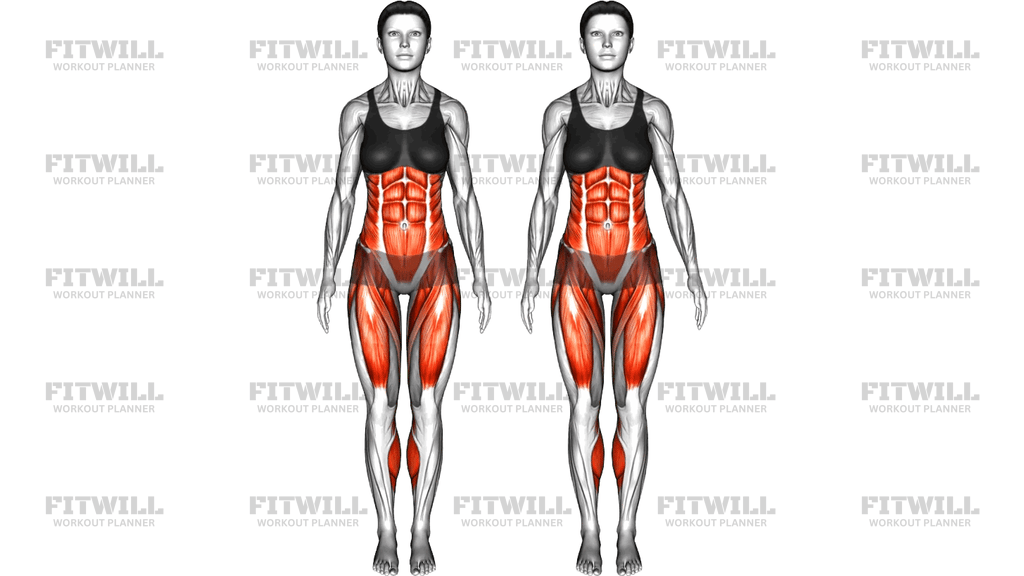
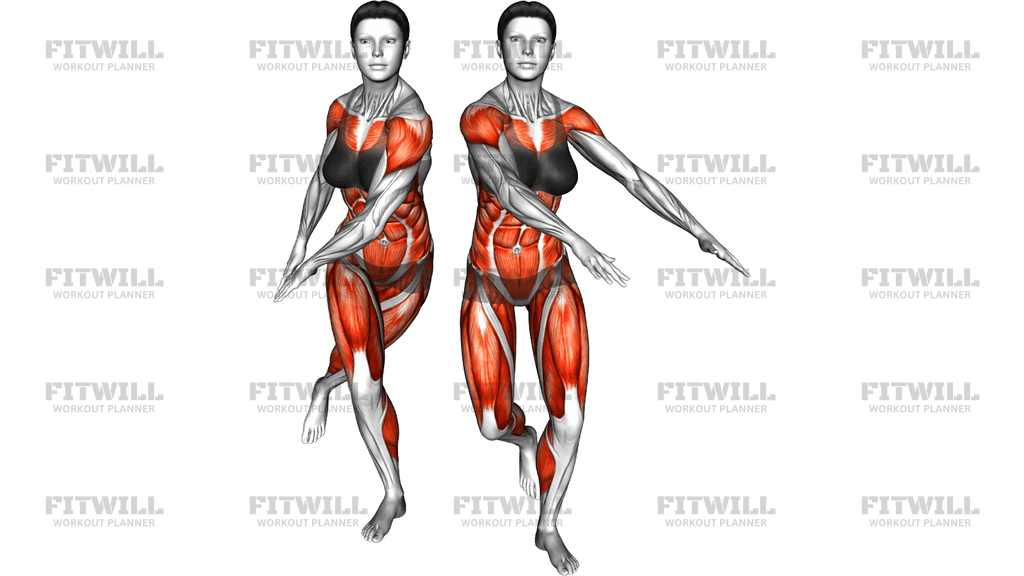
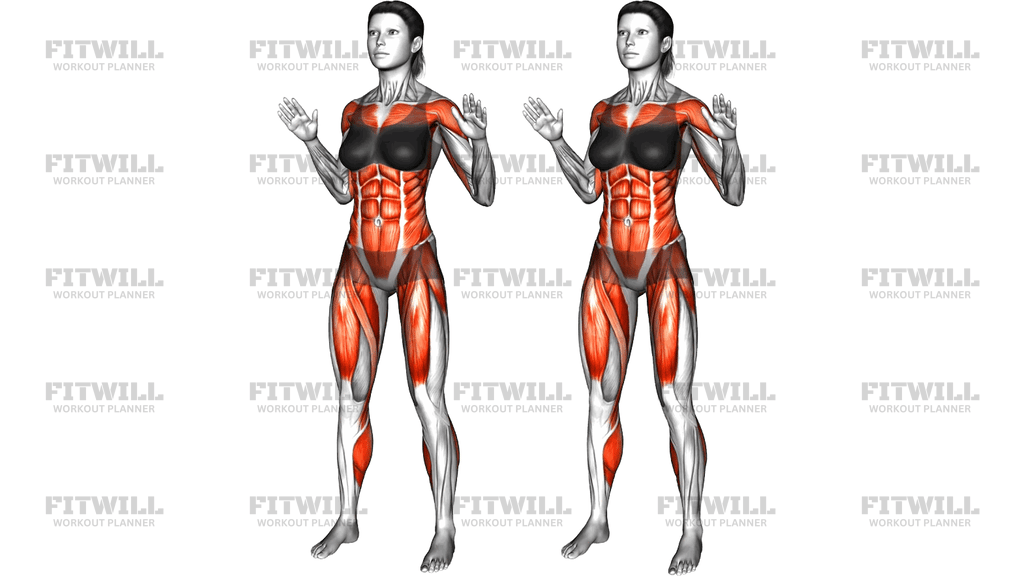
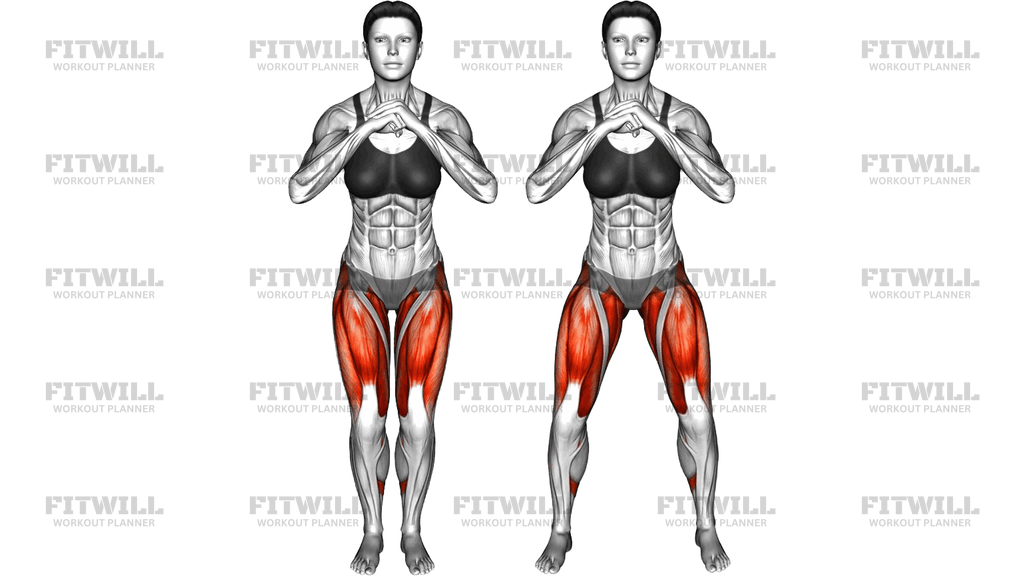
Bodyweight Half Sissy Squat Wall Supported
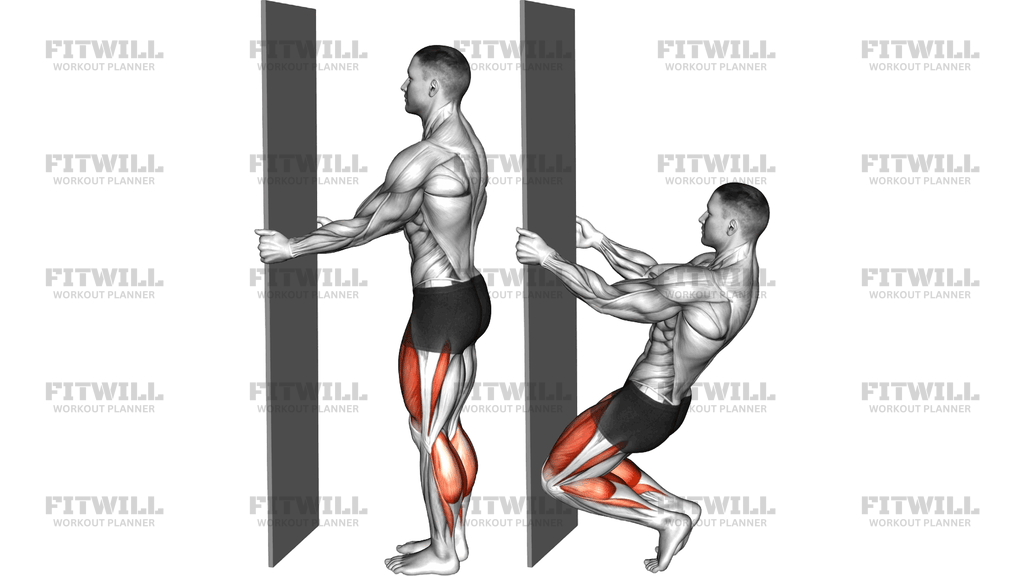
The Bodyweight Half Sissy Squat Wall Supported is a knee-dominant bodyweight exercise that isolates the quads through a partial range of motion while you balance on the balls of your feet and use a wall or door frame for light support. Unlike a regular squat, where the hips travel back and the torso leans forward, the sissy squat keeps your hips extended and your body in one long line from shoulders to knees. That single change shifts nearly all of the workload onto the quadriceps, especially the rectus femoris, which barely gets worked in conventional squatting patterns.
The "half" designation is the key detail here. You descend only partway into the movement — far enough that your knees travel forward past your toes and your heels lift off the floor — but you stop well above the deep knee flexion of a full sissy squat. This makes the exercise far more manageable for most lifters while still delivering a strong quad stretch and contraction. The wall support, held with one or both hands at roughly waist height, gives you just enough counterbalance to control the lean-back without turning it into a balance test.
This exercise is especially useful for people who want to load the quads hard without equipment, for lifters recovering from heavy squatting days who want a low-spine-load pump, and for anyone building toward full sissy squats or advanced knee-dominant progressions. Because the rectus femoris is a two-joint muscle that crosses both the hip and knee, and the sissy squat extends the hip while flexing the knee, it gets stretched and worked simultaneously — something few other bodyweight exercises achieve.
Setup matters because the wall is your only brake. Stand close enough that your supporting hand can reach the wall comfortably, but far enough that your body can lean back as a rigid unit rather than folding at the hips. The movement path is a straight diagonal: your knees travel forward over the toes while your shoulders and hips drift backward and downward together, staying aligned with your thighs.
Executed well, you should feel a deep stretch across the front of the thighs at the bottom of the half range, then a strong pull back up as the quads extend the knees. Keep the descent slow — most people fail here by dropping too fast and losing the heel contact or the straight body line. Two to four sets of eight to fifteen controlled reps works well for most trainees.
Safety-wise, the knees take the brunt of the load, so warm them up first with easier knee-dominant work like bodyweight squats or leg extensions. If you feel pinching at the front of the knee rather than muscular effort in the thigh, reduce the depth or shorten the range further until your quads — not your knee joints — are doing the work.
[ Workout Log & Planner ]
Put your next workout in Fitwill
Keep your plan and training log ready when you are.


Instructions
- Stand facing a wall or door frame at arm's length, feet about hip-width apart, and place one or both palms flat against the wall at roughly waist to chest height.
- Rise onto the balls of both feet so your heels are lifted and your weight sits over the toes; this heel position stays fixed for the whole set.
- Brace your core, squeeze your glutes lightly, and align your body so your shoulders, hips, and knees form one straight line from the side.
- Inhale, then lean your whole body back and down as one rigid unit, letting your knees travel forward over your toes while your hand stays on the wall for balance only.
- Descend until your knees are bent to roughly half depth — you should feel a clear stretch across the front of your thighs — and stop before your knees or shin contact the floor.
- Pause briefly at the bottom, keeping your hips extended and your torso in line with your thighs rather than folding forward at the waist.
- Exhale and drive your hips forward and up, pulling your body back to the tall, heels-lifted starting position under full control.
- Complete all reps on one set without letting your heels drop, then rest and reset your stance before the next set.
Tips & Tricks
- The most common failure point is bending at the hips instead of leaning back as one straight line — if your torso folds toward your thighs, reset and consciously squeeze your glutes before descending.
- If your heels keep dropping to the floor mid-rep, you are going too deep too soon; cut the depth back to a true half range until heel control is automatic.
- Use the wall as a brake, not a pull — if you are dragging yourself up with your hand, the set is over; lighten the effort by reducing depth instead.
- Point your knees in the same direction as your toes; letting the knees cave inward is common because the quads fatigue quickly in this position.
- Slow the lowering phase to two or three seconds — most of the quad stimulus in this exercise comes from the controlled eccentric, not the push back up.
- Shorter, closer-set feet make the movement harder because your balance base narrows; widen slightly or hold the wall with both hands if you wobble.
- Do this exercise after your main lower-body work or as a standalone quad finisher — going in cold usually shows up as knee discomfort rather than muscle effort.
- If you feel the work in your calves rather than your thighs, you may be pushing up through your toes like a calf raise; think about driving your hips forward instead.
Frequently Asked Questions
What muscles does the Bodyweight Half Sissy Squat Wall Supported work?
It primarily targets the quads, with strong emphasis on the rectus femoris because the hip stays extended while the knee flexes. The calves work isometrically to keep you on the balls of your feet, and the core stabilizes the lean-back position.
Why do my heels lift during the Bodyweight Half Sissy Squat Wall Supported?
Heel lift is intentional and built into the exercise. As your knees travel forward past your toes, your weight shifts over the balls of your feet, which increases the stretch and load on the quadriceps.
How deep should I go on the half version?
Descend only until your knees are bent to about half of full depth and you feel a noticeable stretch across the front of your thighs. Stop well before your knee approaches the floor — full sissy squat depth is a separate progression.
Is the Bodyweight Half Sissy Squat Wall Supported safe for beginners?
It can be, as long as beginners use the wall for balance and keep the range shallow. The half range and wall support make it one of the more accessible entry points to sissy squat training.
My knees ache in front when doing the Bodyweight Half Sissy Squat Wall Supported — what should I change?
Reduce the depth, slow the descent, and make sure your glutes stay engaged so your hips are not folding. If discomfort persists rather than muscular fatigue, stop and consult a qualified professional before continuing.
Can I do this exercise without the wall?
Yes, but the unsupported version demands much more balance and typically reduces how much load you can put on the quads. The wall lets you focus entirely on quad effort rather than staying upright.
How does the half sissy squat differ from a regular bodyweight squat?
A regular squat pushes the hips back and lets the torso lean forward, spreading work across the glutes and hamstrings. The sissy squat keeps the hips extended and the body in a straight line, concentrating the load almost entirely on the quads.
What can I use instead if I have no wall to hold?
A door frame, squat rack upright, or the back of a sturdy chair all work as light support. Any stable anchor at waist to chest height that lets you counterbalance the lean-back will do.
How do I progress from the Bodyweight Half Sissy Squat Wall Supported?
Gradually increase depth toward a full sissy squat, slow the eccentric further, or add reps before adding range. Once the full range feels controlled, you can reduce how much you lean on the wall.
Should I hold the wall with one hand or two?
Start with two hands if you are new to the movement or feel unsteady. As your balance and quad control improve, drop to one hand so the wall serves only as a safety net.