Lying Prone Y To T To W
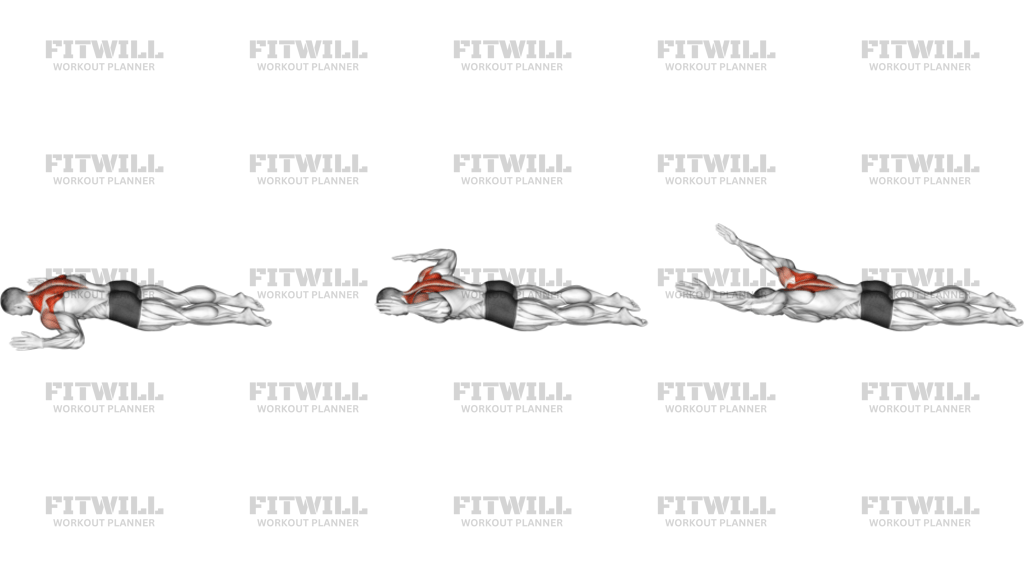
The Lying Prone Y To T To W is a bodyweight shoulder and upper back exercise performed face down on the floor. From a prone position with arms overhead, you lift the arms and chest slightly and trace three arm positions in sequence: a wide Y overhead, a straight T out to the sides, and a W with elbows bent close to the torso. Because each position stresses the scapular muscles from a different angle, one rep cycles through nearly the entire upper back in a single flowing movement.
This drill is especially useful for people who spend long hours sitting, typing, or driving. Those habits tend to slump the shoulders forward and weaken the muscles that pull the shoulder blades together and down. The Y position biases the lower and upper trapezius, the T position targets the middle traps and rhomboids along with the rear shoulders, and the W position emphasizes external rotation and the rotator cuff. The prone position also asks the muscles along the spine to hold the chest lightly lifted, so the movement doubles as gentle back extension work.
Setup matters more than most people expect. Lying flat on the floor with the forehead or nose hovering just above the ground gives you instant feedback: if you arch hard through the lower back or jam the chin up, you will feel it immediately. Keep the legs relaxed, the hips settled into the floor, and let the upper back do the lifting rather than the lumbar spine. Arms should stay straight in the Y and T with the thumbs rotating toward the ceiling where comfortable, then bend cleanly at the elbows for the W.
Execution should feel slow and deliberate. Each arm shape is held for a beat before moving to the next, and the arms lower back toward the floor with control rather than dropping. The movement is driven by the shoulder blades gliding on the ribcage, not by reaching with the hands or shrugging toward the ears. Most people do best with no added weight at first; the arms alone provide enough resistance when the positions are held honestly.
You will see this exercise in warm-ups for pressing and pulling days, in rehabilitation and posture-focused programs, and as accessory work for swimmers, throwers, and overhead athletes who need durable scapular control. It also pairs well with face pulls and rows as a low-load complement that reinforces shoulder blade mechanics without heavy loading.
For safety, keep the range of motion modest: a small lift of the arms and chest is enough, and the neck should stay long and in line with the spine. If you feel pinching at the front of the shoulder or strain in the low back, reduce the lift height or bend the elbows slightly earlier in the sequence. Stop and reassess rather than pushing through discomfort.
[ Workout Log & Planner ]
Put your next workout in Fitwill
Keep your plan and training log ready when you are.


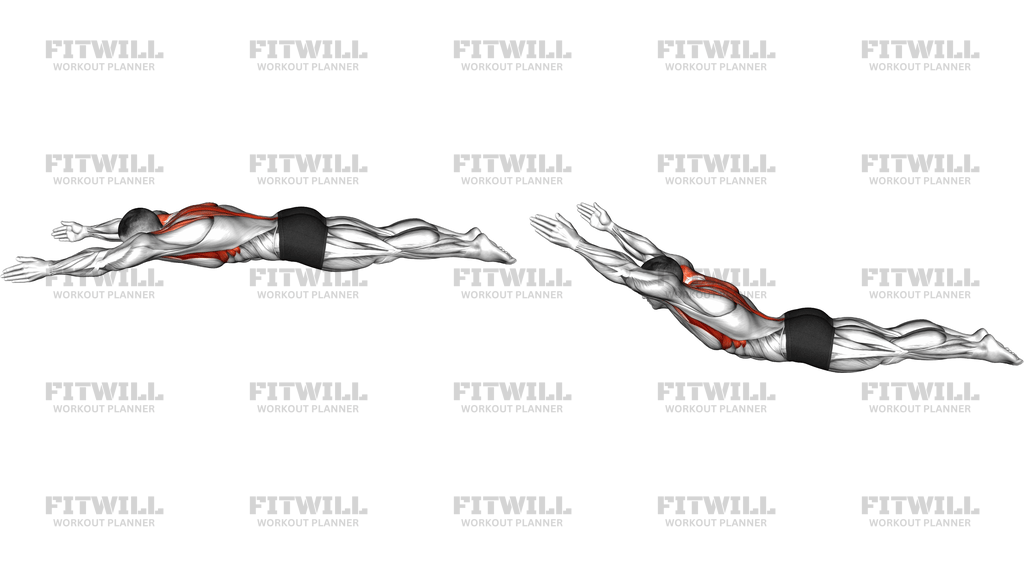
Instructions
- Lie face down on an exercise mat or the floor with your legs extended, feet relaxed, and your forehead hovering just above the ground or lightly touching it.
- Extend both arms straight overhead so your body forms a long line, hands about shoulder-width apart or slightly wider to form the base of the Y, palms facing each other or thumbs turned up.
- Gently brace the abdominal muscles to keep the ribs from flaring, and lengthen the back of your neck as if holding an egg under your chin.
- Exhale and lift both arms and your upper chest a few inches off the floor, squeezing the shoulder blades down and together to hold the Y position for one to two seconds.
- Keeping the lift, sweep the arms straight out to the sides until they are level with your shoulders to form a T, thumbs pointing up, and hold briefly.
- Bend your elbows to about 90 degrees and pull them down toward your ribs so the arms form a W, rotating the shoulders outward and squeezing the blades together for another beat.
- Reverse the path slowly if you want a second pass, or lower the arms and chest back to the floor under control to finish the rep.
- Breathe steadily throughout, exhaling on the lift and inhaling as the arms lower, never holding your breath.
- Reset your neck and hip position at the floor before starting the next repetition, keeping the legs quiet and relaxed the entire time.
Tips & Tricks
- Keep the lift height small. If your chest rises several inches and your low back pinches, you are arching from the lumbar spine instead of extending the upper back.
- Watch for shrugging in the Y position. If your shoulders creep toward your ears, think of pulling the shoulder blades into your back pockets as the arms reach overhead.
- Do not let the hands race ahead of the shoulder blades. The movement should start from the shoulder blades gliding, with the arms simply following.
- If the neck fatigues or aches, rest your forehead on the mat and focus only on moving the arms, or keep the chest on the floor for the first few sessions.
- The T position is where most people lose thumb alignment. Rotate the thumbs toward the ceiling to keep the shoulders externally rotated instead of letting the palms turn down.
- Pause for a full second in each letter. Rushing the Y-to-T-to-W transition turns the drill into a flailing arm swing and robs the trapezius and rear shoulders of tension.
- Start with bodyweight only. Adding light weights too early usually degrades the W position, where the rotator cuff does its finest work.
- Keep the feet and hips heavy on the floor. Lifting the legs turns this into a back extension exercise and shifts work away from the upper back.
- Match reps to quality: once you cannot hold each shape for a beat without shrugging or arching, end the set even if reps remain in the tank.
Frequently Asked Questions
What muscles does the Lying Prone Y To T To W work?
The Y position emphasizes the lower and upper trapezius, the T position hits the middle traps and rhomboids along with the rear shoulders, and the W position targets the rotator cuff. The muscles along the spine also work lightly to hold the chest lifted.
Is the Lying Prone Y To T To W suitable for beginners?
Yes, it is a low-load bodyweight drill that many beginners handle well. Start with a small lift and fewer reps, and keep the chest low if the lower back or neck feels strained.
Why do the arm positions change from Y to T to W?
Each angle biases a different part of the upper back and shoulder. Moving through all three in one rep trains scapular control across a wide range rather than repeating a single fixed path.
Should my palms face down or up during the exercise?
In the Y and T, turning the thumbs toward the ceiling keeps the shoulders externally rotated, which is usually more comfortable and effective. Letting the palms rotate down tends to shift stress forward into the shoulder joint.
My lower back aches when I lift my chest. What should I change?
Reduce the lift height so only the arms rise, keep the ribs braced down, and make sure the hips stay heavy on the floor. If discomfort continues, keep the chest grounded and move only the arms.
Can I add light dumbbells to the Lying Prone Y To T To W?
Yes, once you can hold each position cleanly for a beat with bodyweight. Very light weights, often one to three pounds, are enough because the positions themselves provide the challenge.
How many sets and reps should I do?
Two to three sets of five to eight full Y-T-W cycles works well, either as a warm-up before pressing or pulling or as dedicated upper back work. Quality of the holds matters more than rep count.
What can I substitute if lying on the floor is uncomfortable?
The same Y, T, and W shapes can be done standing or bent over at the hips, or with the chest supported on an incline bench. The prone floor version gives the most feedback, but the positions transfer.
Should I feel this in the front of my shoulders?
No, the work should sit between and behind the shoulder blades and on the back of the shoulders. Pinching or catching at the front usually means the arms are lifting too high or the palms have rotated down, so lower the range and reset the thumb position.
How is the W position different from the T position?
In the T the arms are straight out to the sides, while the W bends the elbows about 90 degrees and draws them toward the ribs. The bend shortens the lever and increases the shoulder's outward rotation, putting more demand on the rotator cuff.