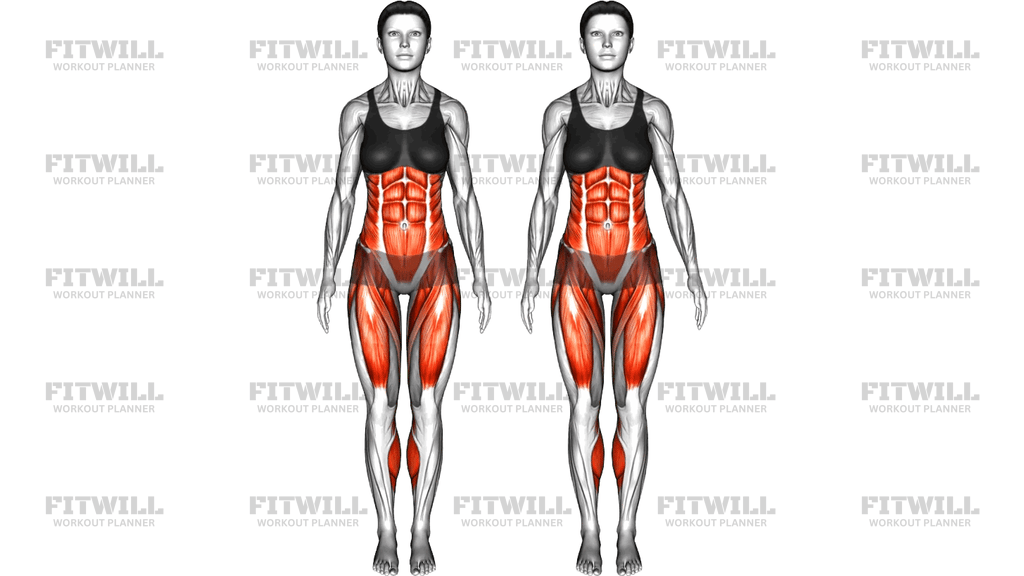
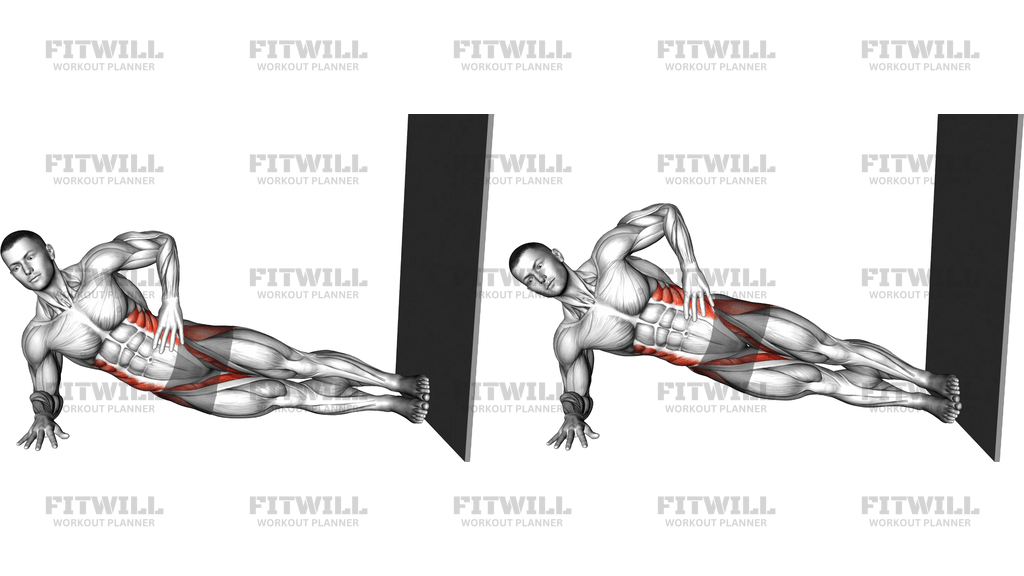
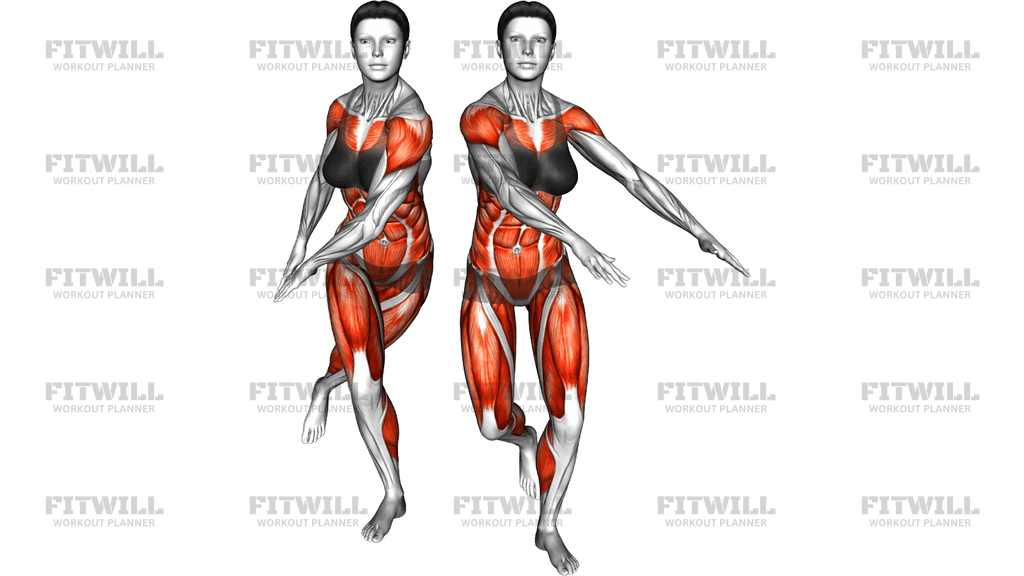
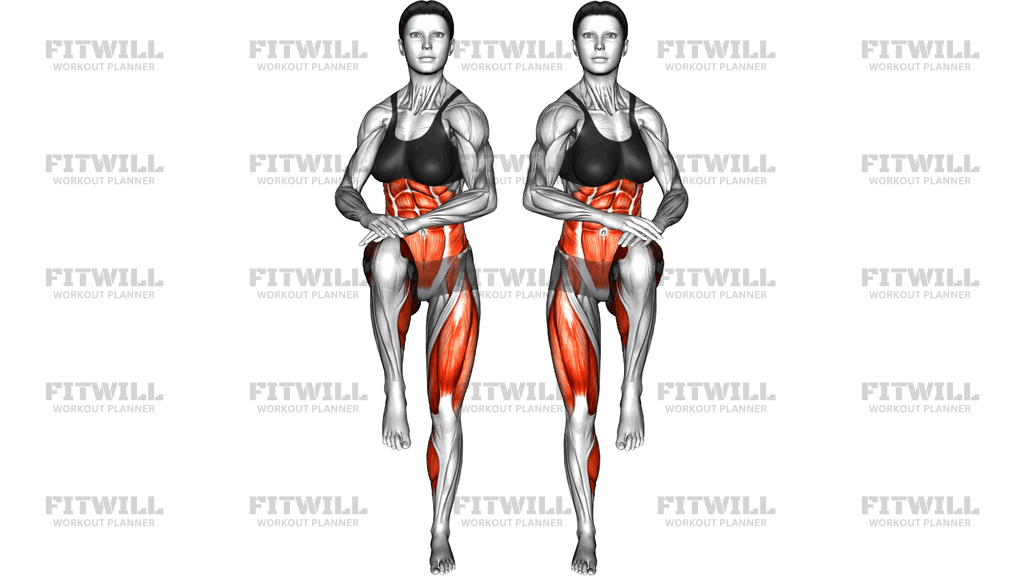
Stand To Squat
Stand To Squat is a bodyweight mobility flow that links two of the most useful positions your hips can produce: a long, straight-legged forward fold and a deep full squat. From standing, you hinge down to place your hands on the floor, drop into a deep squat with your heels down, then straighten the legs again while keeping your hands planted, before rising back to stand. Each repetition moves the hips, hamstrings, inner thighs, and lower back through a complete and demanding range of motion with no equipment required.
This movement is especially valuable for people who feel stuck in one direction. If you can squat but cannot touch your toes, or you can fold forward but fall backward out of a deep squat, this drill forces both capacities to improve together. The deep squat position trains ankle dorsiflexion, hip flexion, and adductor length, while the straight-leg fold loads the hamstrings and the entire posterior chain in a lengthened position. Because you transition between them repeatedly, you also build coordination and confidence in positions most people never visit.
The setup matters more than it looks. Feet are set roughly shoulder-width apart or slightly wider, toes turned out a few degrees, and the heels stay on the floor through both positions. If your heels lift in the squat, the fold will pull you off balance, so the width of your stance and the angle of your toes should be adjusted until the whole flow feels stable. Keeping the hands in contact with the floor between positions gives you a support point that lets you relax into the stretch rather than forcing it.
Execution should be slow and rhythmic. Sink into the squat, let the elbows gently press the knees outward, then straighten the legs and let the hips travel up and back until the hamstrings say stop. The spine can round in the fold here, since the goal is mobility through the posterior chain rather than a loaded lift, but the movement should stay smooth and never bounce. Breathe steadily and let each exhale settle you a little deeper.
Stand To Squat fits naturally into warm-ups before leg training, cooldowns after running or cycling, and short daily mobility routines for anyone who sits for long hours. It is also a practical self-assessment: as your ability to move fluidly between the fold and the squat improves, you have a clear, repeatable marker of hip and hamstring mobility progressing.
Fitwill
Log Workouts, Track Progress & Build Strength.
Achieve more with Fitwill: explore over 9600 exercises with images and videos, access built-in and custom workouts, perfect for both gym and home sessions, and see real results.
Start your journey. Download today!




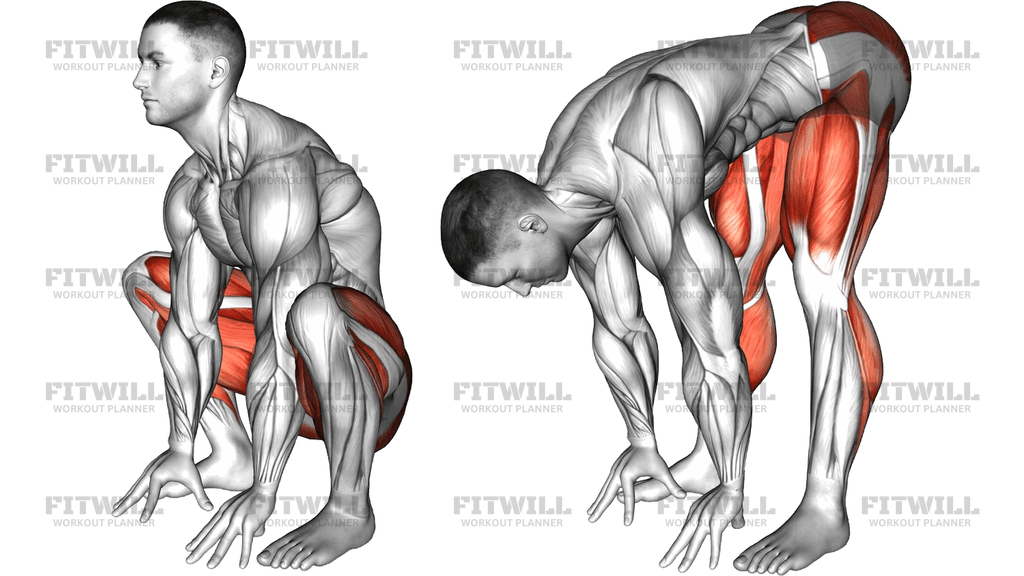
Instructions
- Stand with your feet about shoulder-width apart or slightly wider, toes turned out a few degrees, arms hanging at your sides.
- Hinge forward from the hips and bend your knees as needed to place both palms flat on the floor in front of you, fingertips facing forward.
- From the fold, sit your hips down and back between your heels into a deep squat, keeping your heels on the floor and your chest lifted between your knees.
- In the squat, let your elbows press lightly against the inner knees to open the hips and engage the adductors in a stretched position.
- Pause for one or two breaths at the bottom, then straighten your legs slowly while keeping your hands planted, pushing the hips up and back into a straight-legged forward fold.
- Hold the fold briefly and feel the stretch along the hamstrings and lower back, keeping weight distributed through the whole foot.
- Bend the knees again and lower smoothly back into the deep squat, maintaining hand contact with the floor throughout the transition.
- Inhale as you lower into the squat, exhale as you straighten the legs into the fold, and keep the breathing steady and unhurried.
- Complete the desired repetitions, then rise to standing by bending the knees, releasing the hands, and rolling the spine up one vertebra at a time.
Tips & Tricks
- If your heels lift off the floor in the squat, widen your stance slightly and turn the toes out more before adding repetitions.
- Do not bounce between the fold and the squat; the transition is the stretch, and jerky reps usually mean the hamstrings are being forced past their current range.
- Let the back round naturally in the straight-leg fold. Unlike a deadlift, nothing is being lifted here, so trying to keep a flat chest defeats the purpose.
- If your hands cannot reach the floor from standing, bend the knees generously on the way down rather than straining downward with locked legs.
- Keep your weight evenly spread across the whole foot in the squat. Dumping weight into the toes is the most common reason people tip backward at the bottom.
- Use your elbows against the inner knees only as a gentle opener. Shoving the knees wide aggressively can strain the groin.
- Slow the descent into the squat rather than dropping into it. A controlled three-count descent reveals exactly where your hips or ankles tighten up.
- If the hamstrings cramp while straightening the legs, reduce the range slightly and keep a soft bend in the knees until they adapt.
- Treat this as a flow, not a static hold. Repetition with relaxed breathing loosens the hips faster than forcing a long hold in either position.
Frequently Asked Questions
What muscles does Stand To Squat target?
It primarily mobilizes the glutes, hamstrings, and inner thighs, with the quads and lower back working through the transitions. The deep squat position also challenges ankle mobility.
Is Stand To Squat a strength exercise or a stretch?
It is best treated as a mobility and flexibility drill. The muscles work to control your bodyweight through the positions, but there is no external load, so it functions mainly as a moving stretch.
Can beginners do Stand To Squat?
Yes, and it is one of the better early mobility drills because the hands on the floor provide support. Beginners can bend the knees more in the fold and widen the stance in the squat until the full version feels comfortable.
Why can I touch the floor but not stay in the deep squat?
Deep squatting demands ankle dorsiflexion and hip rotation that forward folding does not. Widen your stance, turn the toes out slightly, and practice the squat portion separately until your ankles and hips open up.
Should my heels stay on the floor the whole time?
Ideally yes. Heels rising in the squat shifts the work away from the hips and ankles and makes the transition to the fold unstable, so adjust your stance width or toe angle before accepting heel lift.
How many repetitions of Stand To Squat should I do?
Five to eight slow, controlled repetitions work well as a warm-up or cooldown. Focus on smooth transitions and steady breathing rather than a high rep count.
Is it okay for my back to round in the forward fold position?
Yes. Because you are not holding a weight, rounding the spine in the fold is acceptable and actually helps lengthen the entire posterior chain. Just move into it gradually and avoid sudden bouncing.
What can I substitute if the full movement is too difficult?
Use a slight knee bend in the fold, rest your hands on a low step or block instead of the floor, or limit the squat depth to a quarter squat. All three regressions keep the same movement pattern intact.
When is the best time to use Stand To Squat in a workout?
It works well as a warm-up before squats, deadlifts, or running, and equally well as a cooldown to restore hip and hamstring range. Avoid forcing deep stretches right before maximal lifting attempts.