Dynamic Knee Drop
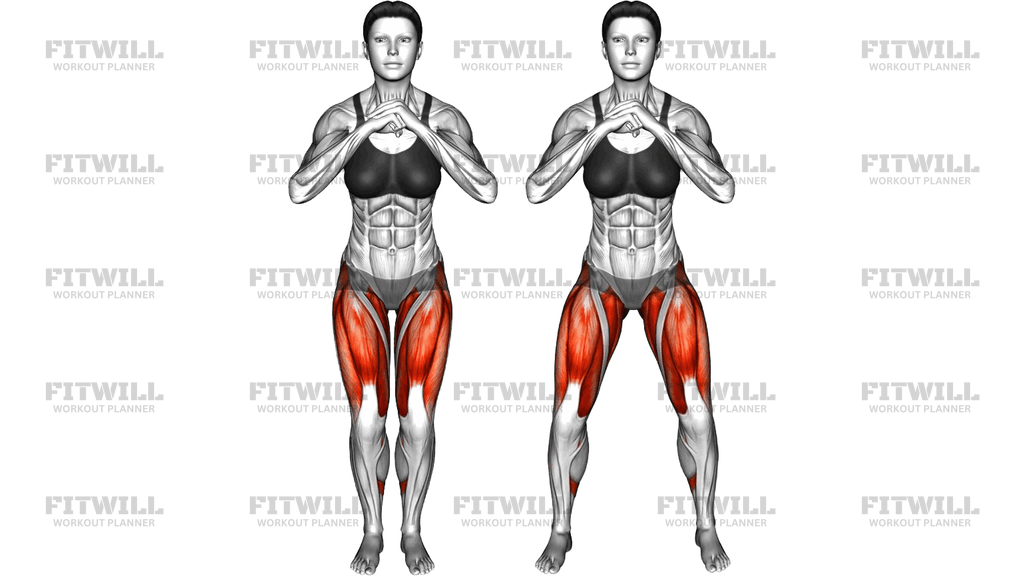
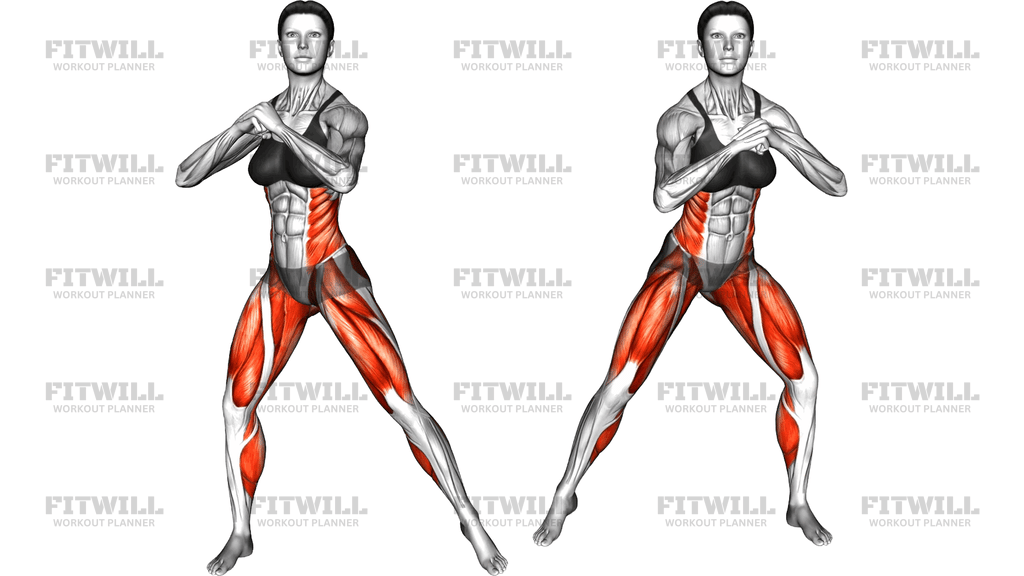
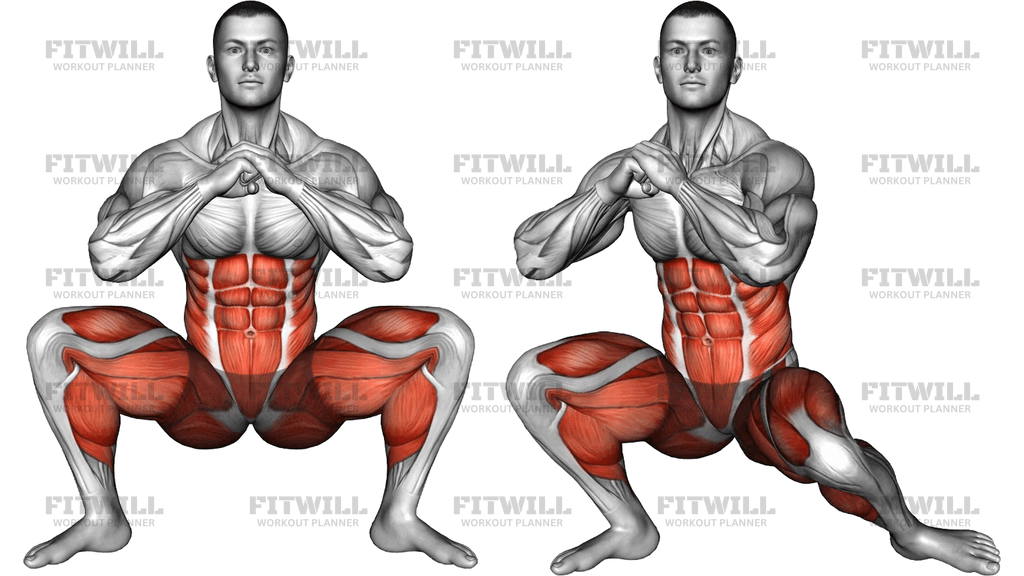
The Dynamic Knee Drop is a bodyweight drill that starts from a deep, wide-stance squat and alternates your weight from one leg to the other in a continuous, flowing rhythm. From the low squat, you shift sideways over one leg while the opposite leg straightens and reaches out to the side, then transition back through the center and repeat on the other side. The hands stay clasped in front of the chest, which helps you stay upright and balanced as you move.
This movement is popular in warm-ups, martial arts conditioning, and general mobility work because it trains exactly what most people are missing: strength and comfort in the bottom of a squat while moving side to side. Most gym exercises happen in a straight-up-and-down plane, so the lateral shift here is what makes it valuable. It loads the quads and inner thighs through a long range, challenges the glutes to control hip rotation, and forces the core to brace as your center of mass travels over a narrow base.
The wide, deep setup is not decoration — it is the whole point of the exercise. Your feet should be noticeably wider than shoulder width with toes turned slightly out, and your hips should settle between your heels rather than sitting above them. If you set up too narrow or too shallow, the shift becomes a shallow side lunge and you lose the inner-thigh and hip work that makes the drill effective. Keep your heels down if you can; if ankle mobility limits you, a slightly wider toe angle or a small heel elevation is a fair compromise.
To execute it well, think of your torso as a column that travels laterally rather than collapsing. As you shift over the left leg, the left knee bends deeper while the right leg extends long, and your chest stays tall with hands clasped at sternum height. Move with control rather than bouncing, especially at first — the temptation is to drop fast and rely on momentum, which robs the legs of the work and can irritate the knees if the tracking drifts inward.
You will see this movement used as a warm-up before squats and lunges, as active recovery between heavier sets, and as a standalone leg and hip conditioner in bodyweight-only programs. Higher reps with smooth transitions build local muscular endurance in the quads and adductors; slower, longer holds on each side shift it toward mobility and positional strength. Either way, it needs no equipment and very little space, which makes it one of the more practical deep-squat variations to program anywhere.
The main safety point is knee tracking. Each working knee should travel in line with its toes as you load it, and the extended leg should straighten from the hip, not from a locked, jammed knee. If you feel pinching at the front of the knee or in the hip crease, reduce the depth, slow the tempo, and rebuild the range over sessions rather than forcing it.
[ Workout Log & Planner ]
Put your next workout in Fitwill
Keep your plan and training log ready when you are.


Instructions
- Stand with your feet roughly one and a half shoulder widths apart and turn your toes out about 15 to 30 degrees.
- Clasp your hands together in front of your chest at sternum height, elbows pointing down, and keep them there for the whole set.
- Sit down into a deep squat between your heels, letting both knees bend fully while your heels stay in contact with the floor.
- Brace your abs and lift your chest so your torso stays upright instead of rounding forward at the bottom.
- Shift your weight sideways over your left leg, bending the left knee deeper as the right leg extends straight out to the side with the foot flexed.
- Pause briefly with the load fully on the left leg, checking that the knee tracks over the toes and does not cave inward.
- Press through the left foot to travel back through the center squat without standing up, keeping the hips low the entire time.
- Continue the same shift to the right side, extending the left leg out as the right knee bends deep.
- Breathe steadily throughout — inhale through the center transition, exhale as you load each side.
- Keep alternating left and right for your target reps, then stand up out of the center squat to finish the set.
Tips & Tricks
- If your heels lift as you shift, widen your toe angle slightly before you widen your stance — losing heel contact usually comes from ankle restrictions, not lack of leg strength.
- The most common mistake is standing up between reps. The drill only works if your hips stay low and you travel laterally, so think 'slide' rather than 'step'.
- Do not let the extended leg's foot flop into a pointed position; keeping it flexed engages the hip and keeps the leg honest as it straightens.
- If your knees drift inward as you load each side, exaggerate spreading the floor with your feet on the working leg side.
- Start with a shorter hold on each side and a moderate tempo. Fast, bouncy drops in the first sessions are where most people aggravate their knees.
- Keep your clasped hands close to your body. Letting the arms drift forward or wide shifts your balance backward and makes the deep position harder to hold.
- If the bottom position is unreachable, elevate your heels on a thin mat or small plate while you build ankle and hip range.
- Count one rep per side rather than per full cycle, so your programming stays clear when you move from 8 reps to 12.
- Expect one side to move better than the other. Add one or two extra shifts to the stiffer side rather than avoiding that direction.
Frequently Asked Questions
What muscles does the Dynamic Knee Drop work?
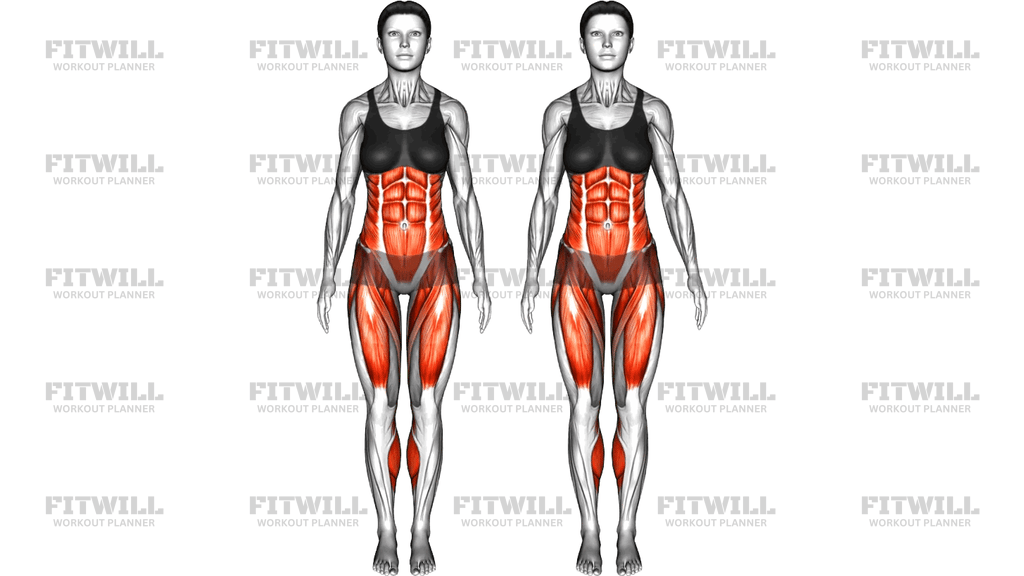
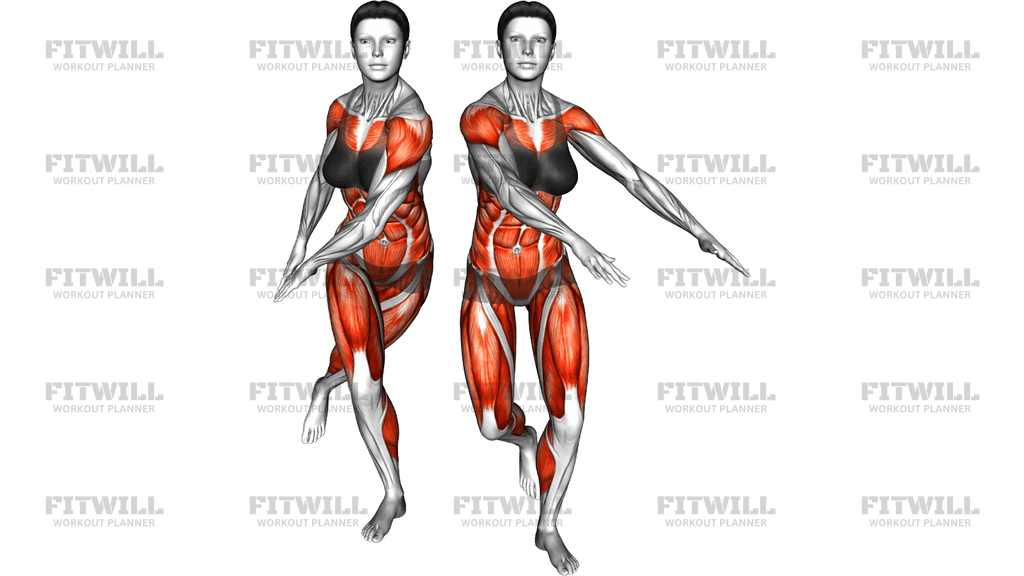
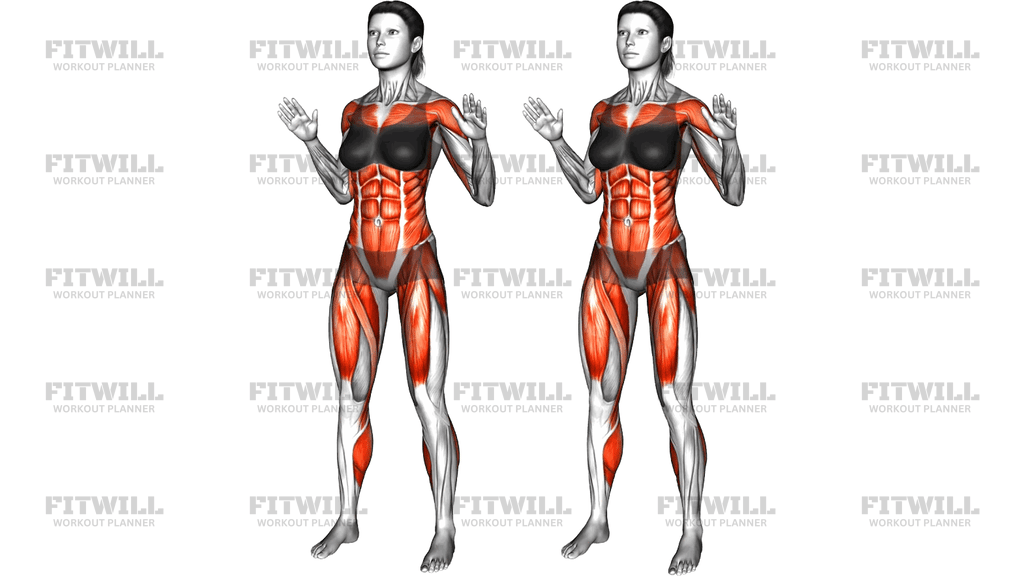
The quads and inner thighs do most of the work, since they load through a deep range as you shift side to side. The glutes stabilize the hips, and the abs work to keep your torso upright while your center of mass travels over one leg.
Is the Dynamic Knee Drop suitable for beginners?
Yes, with modifications. Beginners can reduce the depth of the center squat and use a smaller shift to each side, gradually increasing range as ankle and hip mobility improve. Holding onto a doorframe or rack for light balance support is a fair early progression.
Why are the hands clasped in front of the chest during the Dynamic Knee Drop?
The clasped-hands position acts as a counterweight that helps you sit back and stay upright in the deep squat. It also keeps your arms from swinging, so balance comes from your legs and core rather than momentum.
Should my heels stay flat during the Dynamic Knee Drop?
Flat heels are the goal because they keep the load distributed through the whole foot and protect the knees. If your heels consistently lift, elevate them slightly on a thin surface while working on ankle mobility rather than forcing the flat-footed position.
Is the Dynamic Knee Drop the same as a Cossack squat?
They are closely related. The Dynamic Knee Drop moves continuously through a low center squat from side to side, while a Cossack squat is usually performed as a discrete rep on one side at a time and often loaded deeper. Think of this as the flowing version of that pattern.
How many reps should I do of the Dynamic Knee Drop?
For a warm-up, 8 to 12 controlled shifts per side works well. For conditioning, you can build toward 15 to 20 per side with smooth, uninterrupted transitions, keeping the tempo slow enough that your legs, not momentum, move you.
My knees click or feel tight during the Dynamic Knee Drop — is that a problem?
Painless clicking at the bottom of a squat is common and usually harmless. If you feel sharp pain, pinching, or the knee drifting inward under load, reduce the depth and slow down, and consult a professional if the discomfort persists.
Can I use the Dynamic Knee Drop instead of side lunges?
It covers similar ground for the quads and inner thighs, but without external load. Side lunges with a weight are better for building maximal strength, while the Dynamic Knee Drop is stronger as a mobility drill and higher-rep endurance movement. They complement each other well.
Should I stay low between sides during the Dynamic Knee Drop?
Yes. The value of the exercise comes from traveling laterally with your hips low, passing through the deep squat between shifts. Standing up between sides turns it into alternating side lunges and removes most of the bottom-position work.
When is the best time to program the Dynamic Knee Drop?
It fits best as a warm-up before squatting or lunging sessions, or as active recovery on lighter days. Because it is demanding on mobility but not heavily fatiguing, it is rarely the best choice as the main strength exercise of a session.