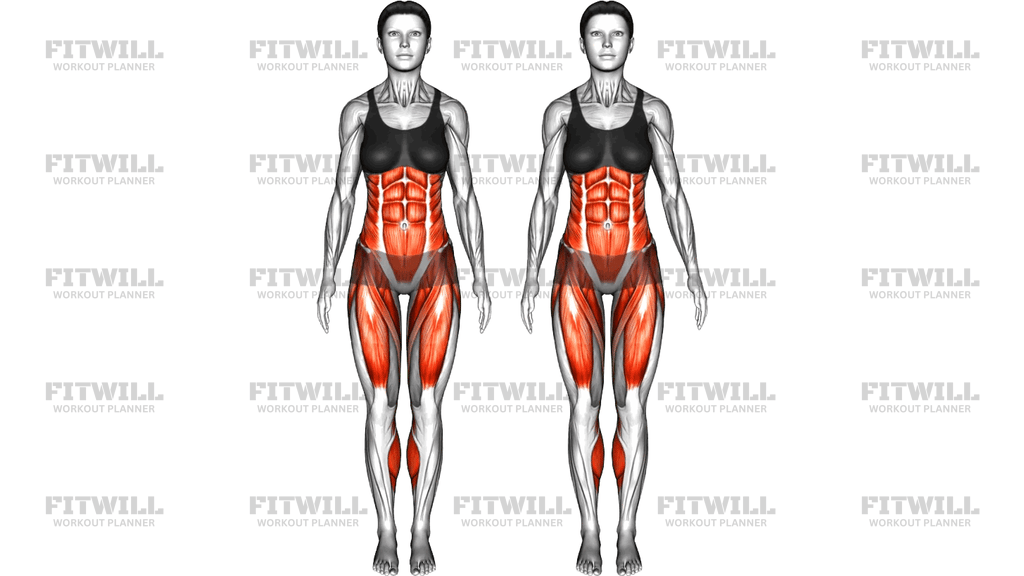
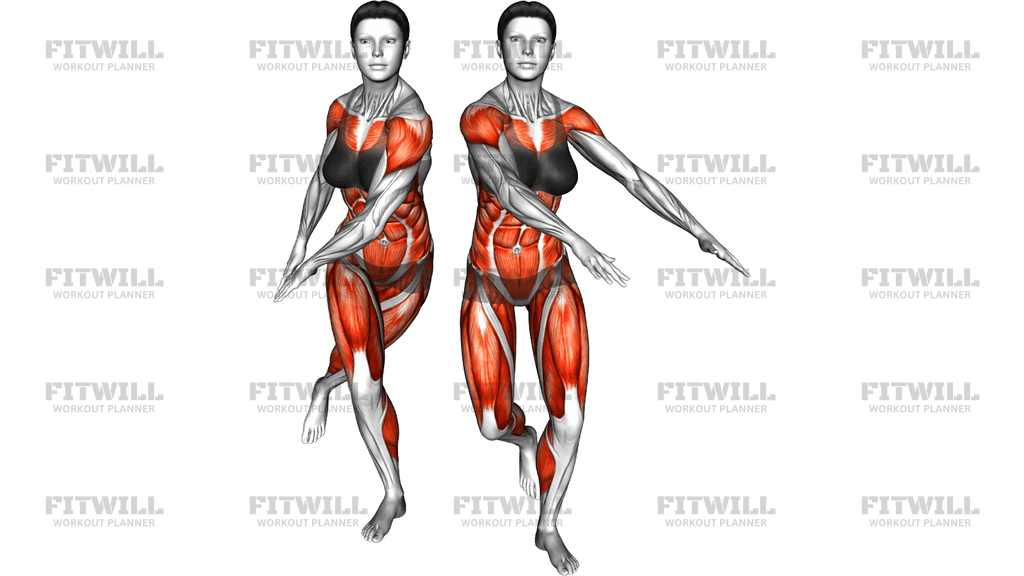
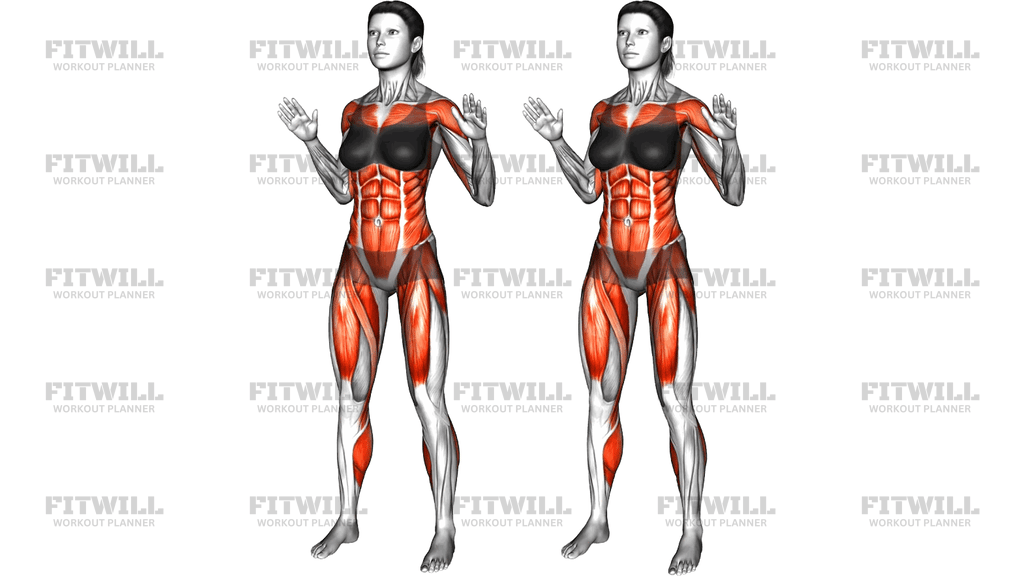
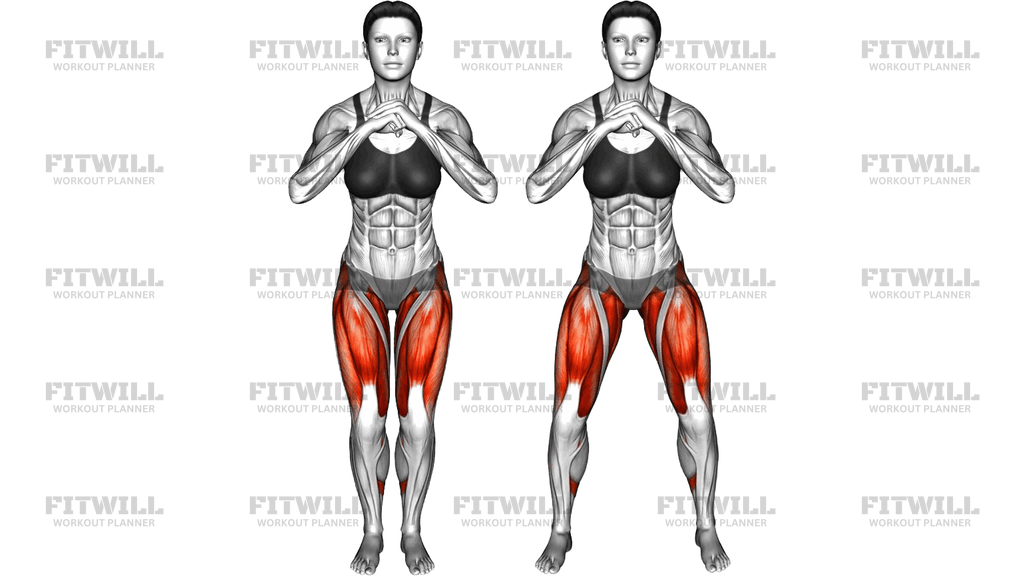
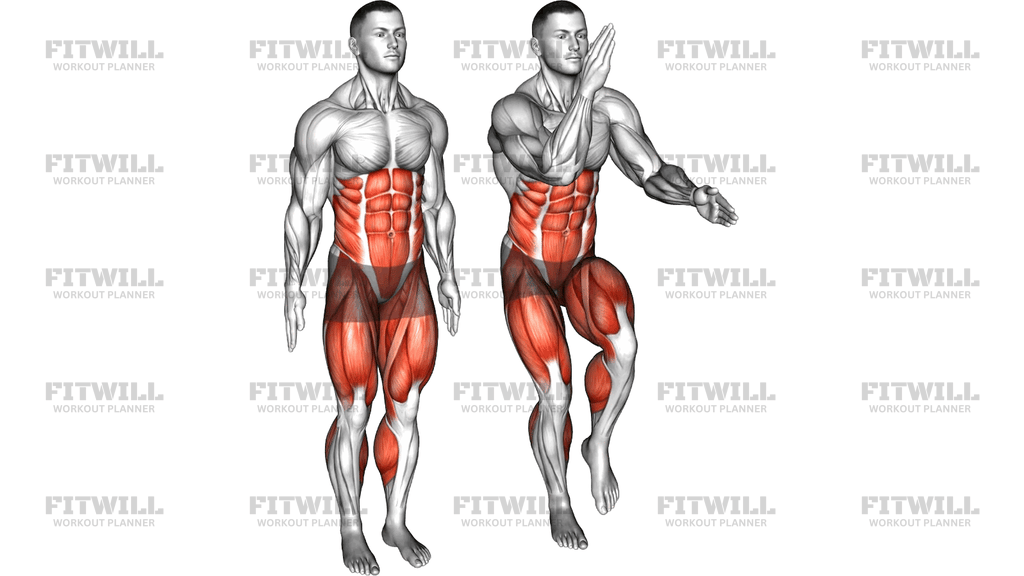
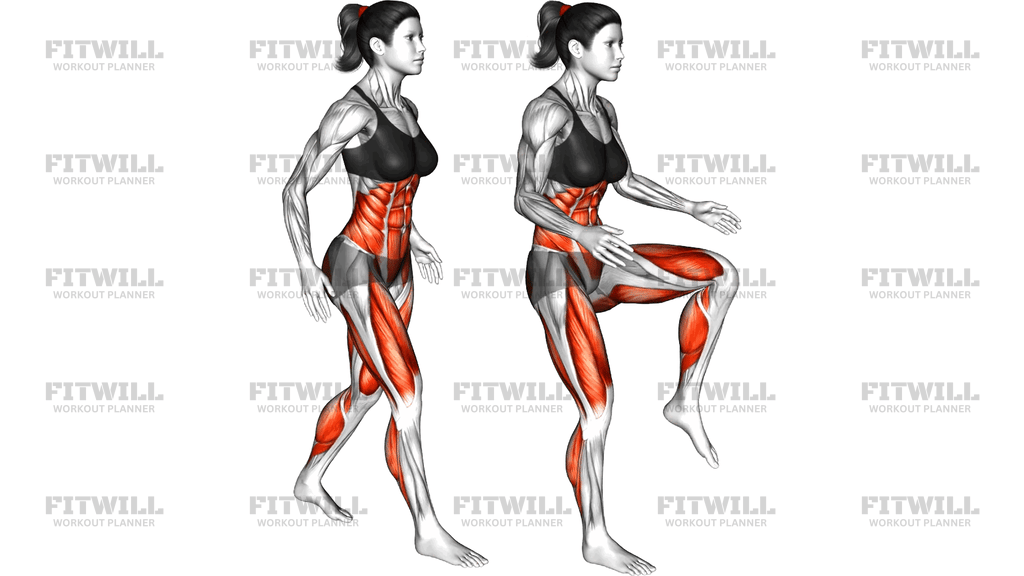
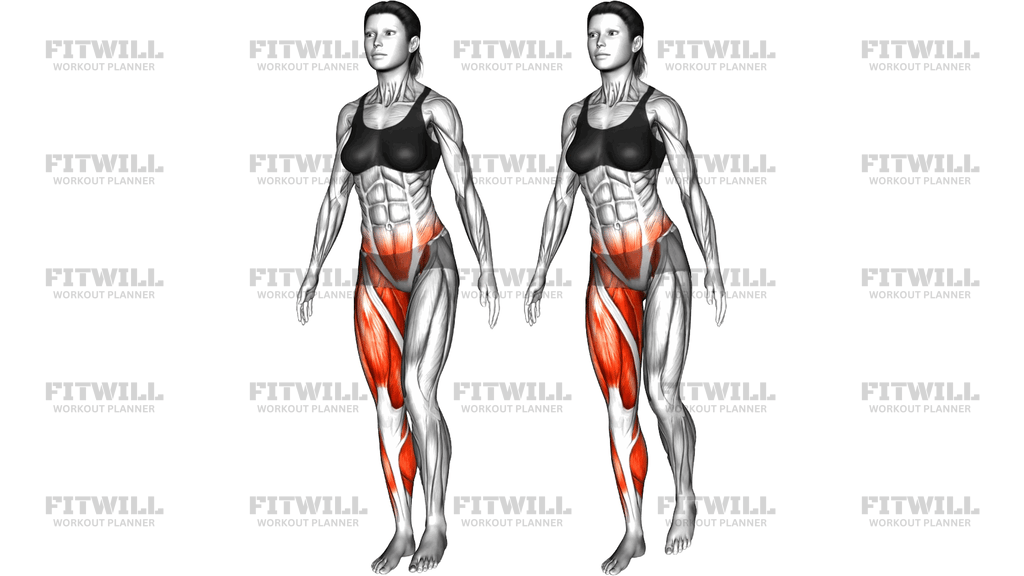
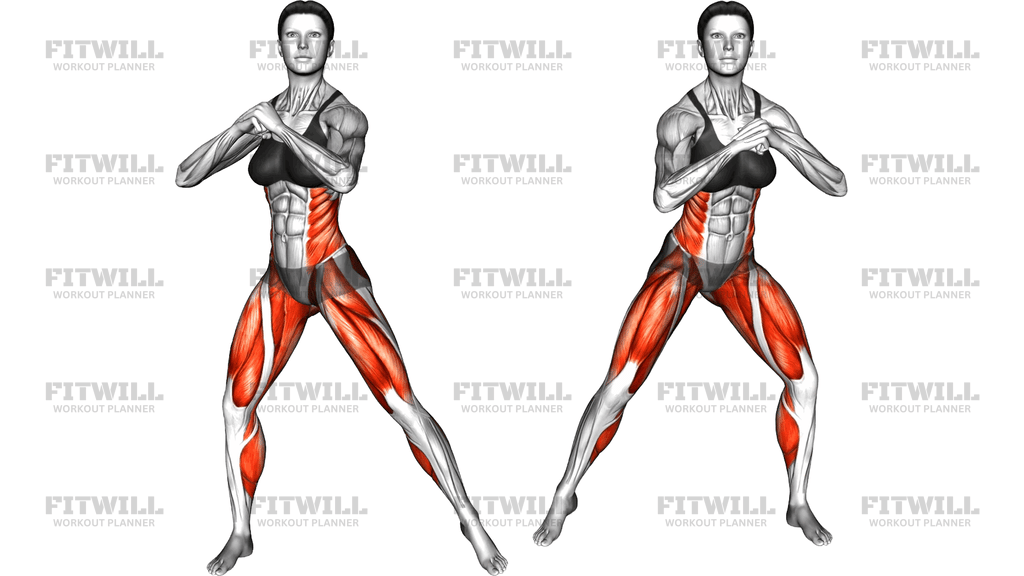
Deep Squat Turn Knee Tap
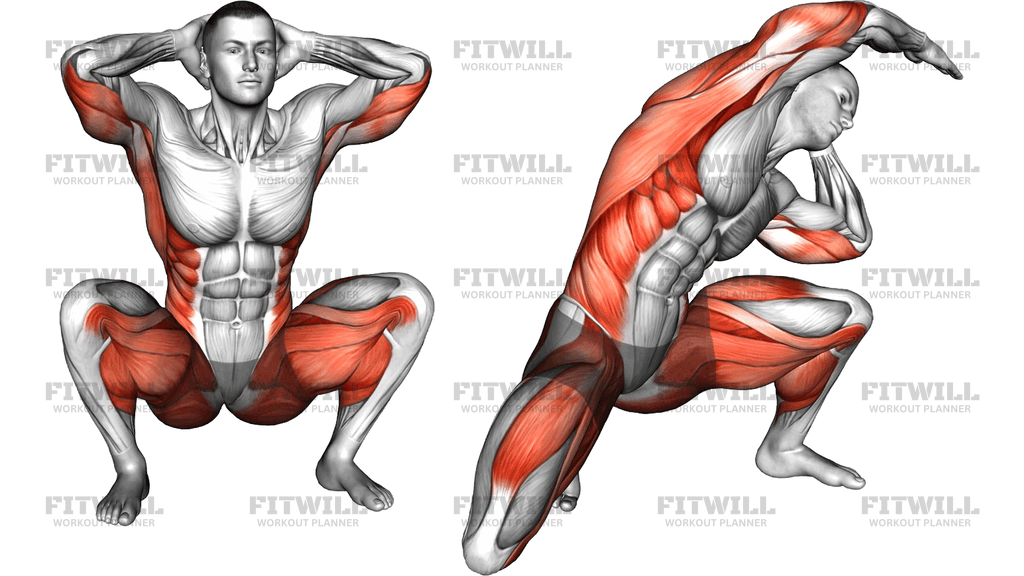
The Deep Squat Turn Knee Tap is a body weight mobility-strength drill that starts from the bottom of a full squat and adds a rotational knee tap to each side. You settle into a deep squat with your hands behind your head, then rotate your torso and drop one knee toward the floor while keeping the opposite foot flat and your chest tall. You return to the center and repeat on the other side, alternating taps for time or reps.
This movement earns its place in warm-ups and hip-health routines because it combines three demands at once: deep knee and hip flexion, controlled spinal rotation, and the strength to move in and out of the bottom position without using your hands for support. The quads, glutes, and adductors work hard to hold and exit the deep squat, while the obliques and deep core control the turn, and the hip flexors and inner thighs lengthen under load as the knee drops toward the ground.
Setup matters more than it looks. Your foot position determines whether the knee can tap cleanly. A stance slightly wider than shoulder width with toes turned modestly out gives the femurs room to sink between the hips. Hands behind the head keep your arms out of the way and force your trunk, not your arms, to do the rotating. If your heels lift or your chest collapses, the tap becomes a lurch, so it is worth spending a few sessions on the static deep squat before adding the turn.
To execute it well, descend until your hips sit close to your heels, brace lightly, and keep your elbows wide. From there, rotate through the ribcage and let one knee drift down and inward until it gently touches or hovers just above the floor. The movement comes from the hip and thorax, not from collapsing sideways. Press the planted foot into the ground, drive back up to standing or back to center, and switch sides with the same rhythm.
This drill fits naturally at the start of lower body sessions, before squats or lunges, as well as in general mobility work for people who sit long hours and have lost comfort in deep hip flexion. It is also a useful assessment tool: if you cannot tap a knee without your heels rising or your torso folding, that tells you exactly where to spend your mobility effort. Move slowly, treat the floor contact as a soft tap rather than a drop, and scale the range to what your hips allow today.
[ Workout Log & Planner ]
Put your next workout in Fitwill
Keep your plan and training log ready when you are.


Instructions
- Stand with your feet slightly wider than shoulder width and turn your toes out about 15 to 30 degrees.
- Place your hands behind your head with your elbows flared wide and your shoulder blades gently pulled back.
- Brace your core lightly and sit straight down into a full squat, letting your hips sink between your heels while keeping your heels flat and chest as upright as you can.
- From the bottom of the squat, rotate your ribcage to one side and let that side's knee drift down and inward toward the floor.
- Tap the knee softly to the ground, or hover just above it if your range stops short, while keeping the opposite foot fully flat.
- Keep the rotating elbow open and your gaze forward so the turn comes from the hips and upper back rather than a sideways slump.
- Rotate back to the center of the squat, re-establishing a tall chest before switching sides.
- Exhale as you rotate into the tap and inhale as you return to center.
- Alternate knee taps for equal reps or time, then drive through your whole foot to stand up out of the bottom position to finish the set.
- Reset your stance and hand position between sets if your feet have drifted inward.
Tips & Tricks
- If your heels lift during the tap, widen your stance slightly or place a thin book or small wedge under each heel until your ankle mobility improves.
- A common mistake is dropping the tap-side hip and folding sideways; instead, think of rotating your ribs around a tall spine so the knee descends while your chest stays up.
- Do not let the planted foot roll onto its outer edge as you turn, press all three contact points of that foot into the floor to protect the knee.
- Treat the floor contact as a controlled touch, a heavy slap of the knee means you are falling into the rotation instead of steering it.
- If your elbows collapse forward during the turn, your upper back is stiff; pause at the top of the squat between reps and consciously widen the elbows again.
- Half reps are fine early on, hover the knee an inch off the floor for a week or two and let the range deepen naturally.
- Keep your weight even between heels and mid-foot; sitting too far back on your heels in the bottom makes the knee tap feel sticky and awkward.
- Breathe steadily and avoid holding your breath at the bottom, a tight breath hold tends to stiffen the hips right when you need them to open.
- If one side taps easily and the other resists, spend an extra two or three reps on the stiff side to balance your range over time.
Frequently Asked Questions
What muscles does the Deep Squat Turn Knee Tap work?
The quads, glutes, and adductors do most of the work of holding and exiting the deep squat, while the obliques and deep core control the rotation. The hip flexors and inner thighs also get a active stretch as the knee drops toward the floor.
Is the Deep Squat Turn Knee Tap suitable for beginners?
Yes, as long as you scale the range. Beginners can hover the knee above the floor instead of tapping it, or hold a doorway or rack for balance until the unsupported deep squat feels stable.
Why are my heels lifting when I try to tap my knee?
Limited ankle dorsiflexion is the usual cause. Widen your stance, turn your toes out a little more, or temporarily elevate your heels on a thin wedge until your ankle mobility catches up.
Should my hands stay behind my head the whole time?
That is the intended position because it removes the temptation to push off your thighs and forces the rotation to come from your trunk. If balance is an issue early on, briefly touch the floor for support rather than abandoning the drill.
How is the Deep Squat Turn Knee Tap different from a regular deep squat hold?
The knee tap adds rotation and an asymmetric hip position, which challenges the obliques and lengthens one hip at a time. The static squat hold builds bottom-position comfort, while the tap actively works through that range.
Where should I put this exercise in my workout?
It works best as an early warm-up drill before squats, lunges, or deadlifts, or as standalone mobility work between sessions. Doing it cold is fine, but a minute or two of light movement first makes the taps smoother.
Is it bad if my knee touches the floor hard?
A firm knock usually means you are falling into the rotation instead of controlling it. Slow the descent, keep tension in the planted leg, and aim for a soft, deliberate tap or a hover just above the floor.
Can I substitute the Deep Squat Turn Knee Tap if the bottom position is uncomfortable?
Try a kneeling hip flexor stretch with a reach, or a cossack squat to a partial range, to open the hips. Revisit the full deep squat version as your ankle and hip range improve.
How many reps should I do?
Five to ten taps per side with slow, controlled turns is plenty for a warm-up. The goal is smooth, repeatable range rather than fatigue, so stop when the taps start feeling sloppy.
Should I feel a stretch in the groin during the tap?
A mild stretch in the inner thigh of the tapping side is normal and expected. Sharp pain in the groin or knee is a signal to reduce the range and rebuild the movement more gradually.