Alternating Hamstring Curl Jack
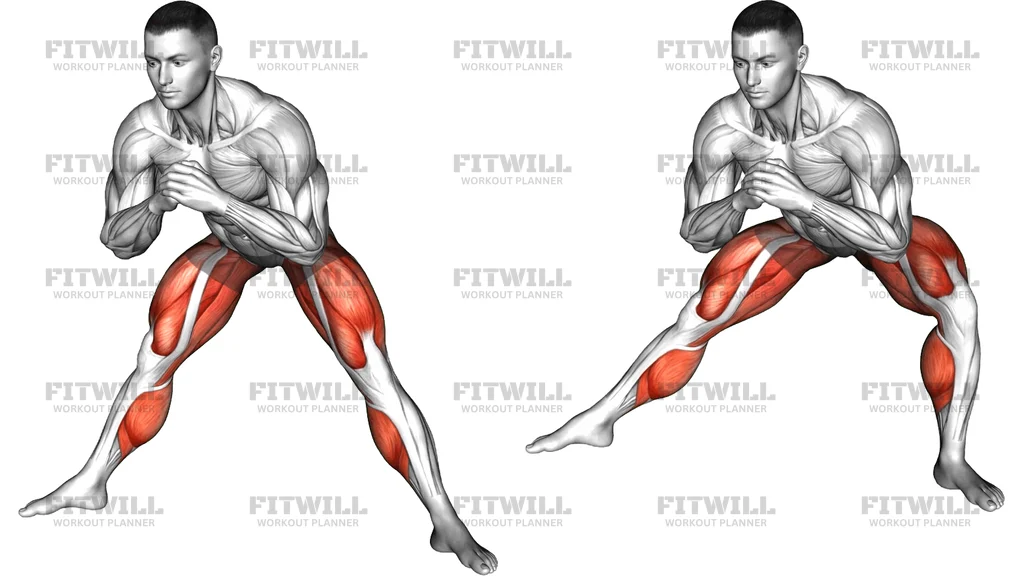
The Alternating Hamstring Curl Jack is a standing bodyweight exercise that combines a hamstring curl with a jack-style leg action, performed one leg at a time. From a wide stance, you shift your weight onto one supporting leg while the free leg bends at the knee, lifting the heel toward the glutes in a curling motion. As you switch sides, the working leg returns to the wide stance while the opposite leg curls. The result is a rhythmic, alternating pattern that trains the back of the thighs while keeping your balance and coordination under constant demand.
This movement is useful for anyone who wants to strengthen the hamstrings without machines, weights, or a prone setup on the floor. Because each curl is performed while standing on a single leg, you also challenge the glutes and stabilizers around the hip and ankle of the support side. The jack component, where the legs open and close through a wide stance, adds light work for the inner thighs and hip muscles and gives the exercise a steady, almost cardiovascular rhythm when repeated continuously.
The setup matters more than most people expect. A genuinely wide stance gives you room for both the curl and the jack action, and keeping your torso tall with a soft bend in the supporting knee protects your balance. If your stance is too narrow, the curling leg will drift forward, your hips will twist, and the hamstring contraction loses its clean line. Start with your feet well outside shoulder width, weight distributed over the whole foot of the supporting leg, and your core braced before the first rep.
Execution is about control rather than speed. Bend one knee and lift the heel back and up toward your glutes, squeezing the hamstring at the top, then lower the foot back to the wide stance as the opposite leg begins its curl. The supporting knee stays soft, the hips stay square to the front, and the upper body stays quiet instead of rocking with each rep. Breathing follows the rhythm: exhale as you curl, inhale as you switch.
You will see this exercise used in warm-ups, home leg circuits, and conditioning workouts where equipment is limited. It also works well as a finisher after heavier lower body training, when you want extra volume for the hamstrings and calves without loading the spine. Beginners can slow the tempo and reduce range; more advanced users can speed up the alternation or add light ankle weights once their balance is solid.
The main safety point is keeping the movement inside your balance. If you find yourself hopping, swinging the torso, or letting the supporting knee collapse inward, slow down and shorten the range until the pattern feels stable. Barefoot or in flat shoes on a non-slip surface both work, and a wall or chair nearby is a fair assist while you build single-leg control.
[ Workout Log & Planner ]
Put your next workout in Fitwill
Keep your plan and training log ready when you are.


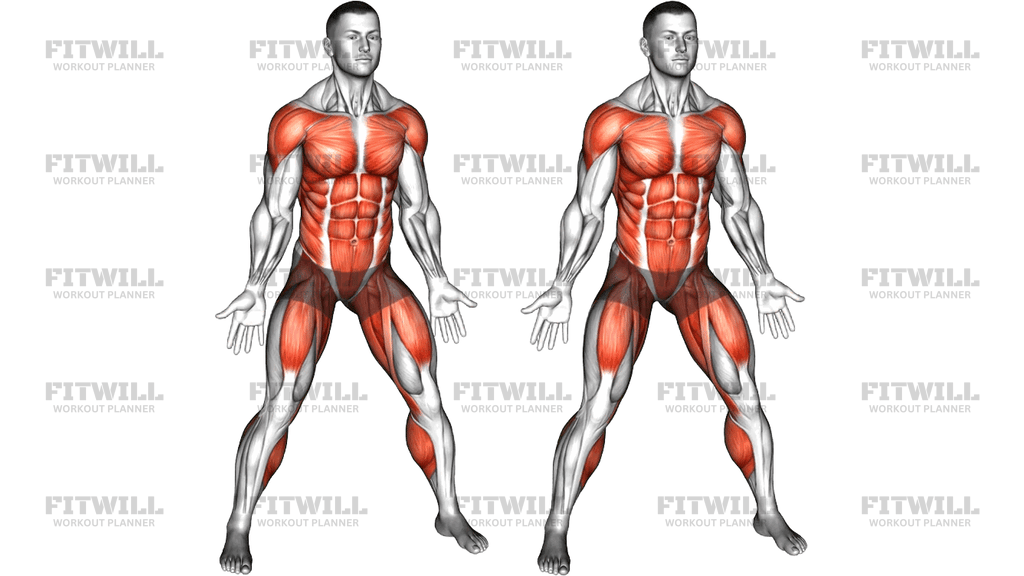
Instructions
- Stand tall with your feet in a wide stance, well outside shoulder width, toes pointing slightly outward.
- Shift your weight onto one leg with a soft bend in the supporting knee, keeping your torso upright and your core braced.
- Bend your free knee and curl the heel up and back toward your glutes, letting the knee point down toward the floor.
- Squeeze the hamstring briefly at the top of the curl, keeping your hips square to the front.
- Lower the curling foot back to the wide stance and immediately shift your weight onto the other leg.
- Curl the opposite heel toward the glutes, continuing the alternating rhythm from side to side.
- Exhale as each leg curls up and inhale as the foot returns to the floor.
- Keep your arms relaxed at your sides or slightly out for balance, without swinging them to generate momentum.
- Maintain a soft knee on the supporting leg throughout so you land each switch quietly and under control.
- Reset your stance and brace before the next set if your balance or form starts to drift.
Tips & Tricks
- Think about pulling the heel to the glutes rather than kicking the foot back; this keeps the hamstring doing the work instead of the lower back swinging the leg.
- If your hips rock side to side with each switch, slow the tempo down and pause for a beat in the wide stance before each curl.
- Keep the curling knee under or slightly behind the hip; letting the knee drive forward turns the movement into a knee raise and reduces hamstring involvement.
- Watch the supporting foot: if the arch collapses or the knee dives inward on the wide stance, spread your toes and gently screw the foot into the floor.
- A slight forward lean is fine, but if your chest drops noticeably each rep, you are chasing range at the cost of balance—reduce the curl height instead.
- Land each leg switch quietly. Loud, slapping foot contacts mean you are dropping the leg instead of lowering it under control.
- Once the bodyweight version feels easy, add tempo by shortening the pause at the top, or add light ankle weights for extra hamstring load.
- If balance is the limiting factor at first, stand near a wall and touch it lightly with one hand until single-leg control improves.
Frequently Asked Questions
What muscles does the Alternating Hamstring Curl Jack work?
The primary muscles are the hamstrings of the curling leg. The glutes and ankle stabilizers of the supporting leg work hard to keep you balanced, and the inner thighs contribute during the wide-stance jack action.
Is the Alternating Hamstring Curl Jack suitable for beginners?
Yes, as long as the tempo is slowed and the range is kept modest. Beginners can hold a wall or chair lightly for balance and build up to the full alternating pattern as single-leg control improves.
Why is a wide stance important for the Alternating Hamstring Curl Jack?
The wide stance creates space for each leg to curl without drifting forward and gives the movement its jack character. A narrow stance forces the hips to twist and makes the balance much harder to manage.
How is this different from a regular standing hamstring curl?
In a standard standing curl you stay balanced on one leg for the whole set. The Alternating Hamstring Curl Jack returns each leg to a wide stance between reps, adding a side-to-side weight shift and extra demand on the hips.
Can the Alternating Hamstring Curl Jack be used as a cardio exercise?
Yes. Performed continuously at a brisk tempo it raises the heart rate noticeably, which is why it often appears in warm-ups and conditioning circuits. Slowing it down shifts the emphasis back toward strength and control.
What is the most common mistake with this exercise?
Rushing the switch and letting the torso swing or hop from side to side. The fix is to lower each foot fully to the floor, re-brace, and curl with a deliberate squeeze rather than bouncing through the reps.
Should the curling knee stay pointing down?
Generally yes—the knee points toward the floor while the heel travels back to the glutes. If the knee drives forward, the hip flexors take over and the hamstring contraction loses its line.
What can I substitute if single-leg balance is too difficult?
Perform slow standing hamstring curls while holding a wall or chair, or lie on your back and perform stability ball or sliding leg curls. Both train the hamstrings with less balance demand.
How many reps and sets should I do?
For strength and control, 2 to 3 sets of 10 to 16 curls per leg at a slow tempo works well. For a conditioning effect, run timed intervals of 20 to 40 seconds with continuous alternation.
Do I need any equipment for the Alternating Hamstring Curl Jack?
No, the exercise is performed entirely with body weight. Non-slip flooring or a mat is helpful, and light ankle weights can be added later for extra resistance.