Bodyweight Side Squat Step
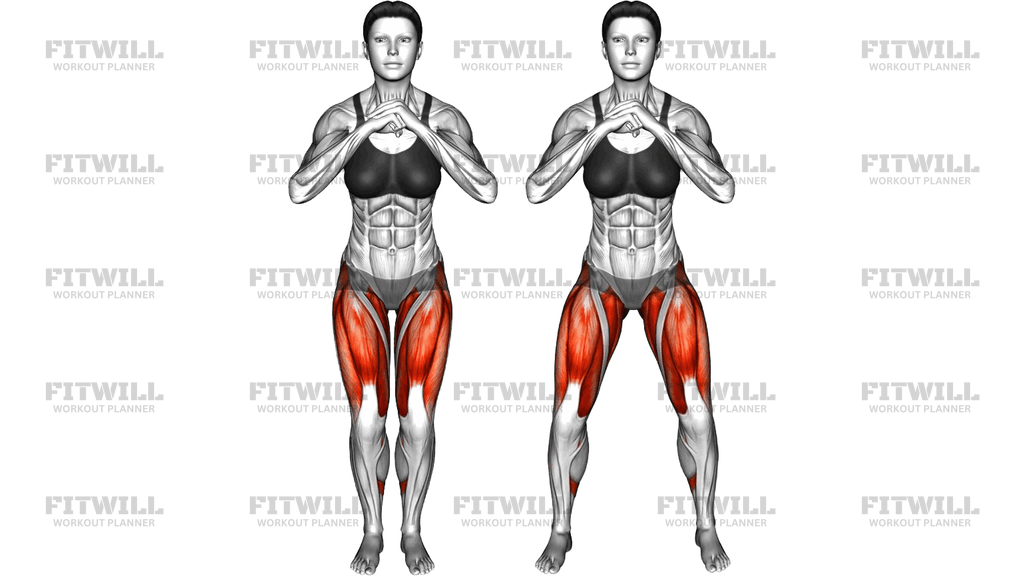
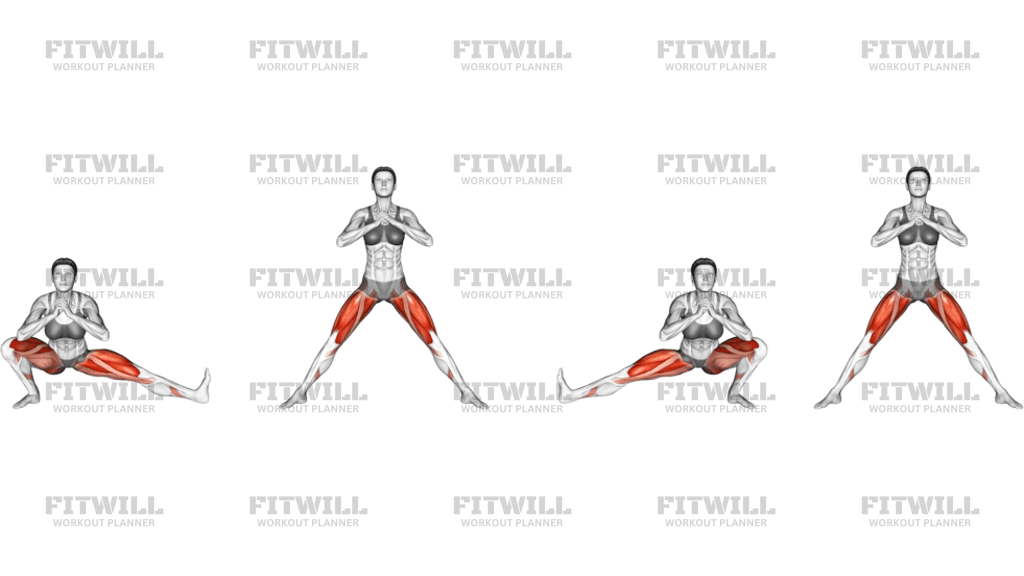
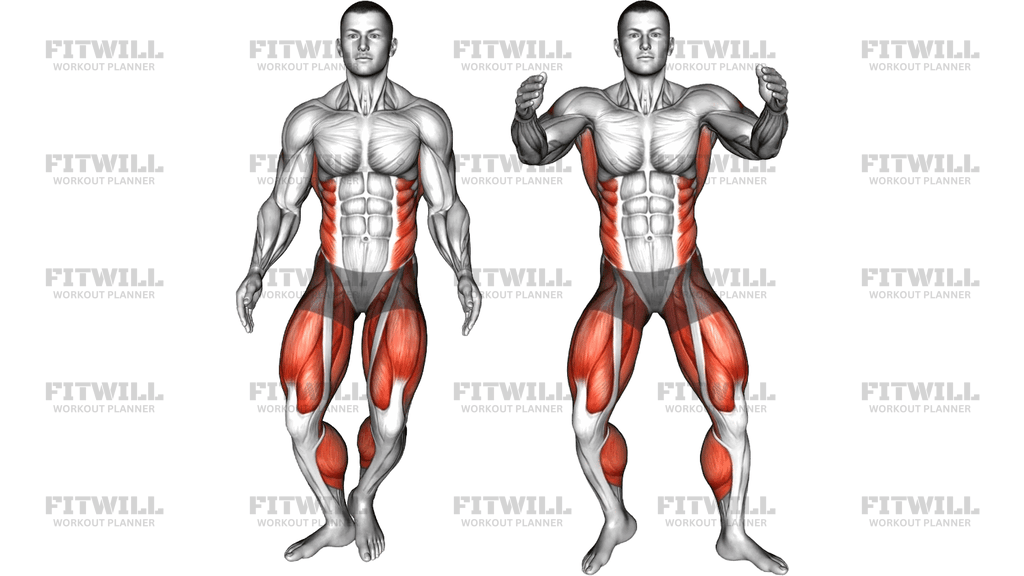
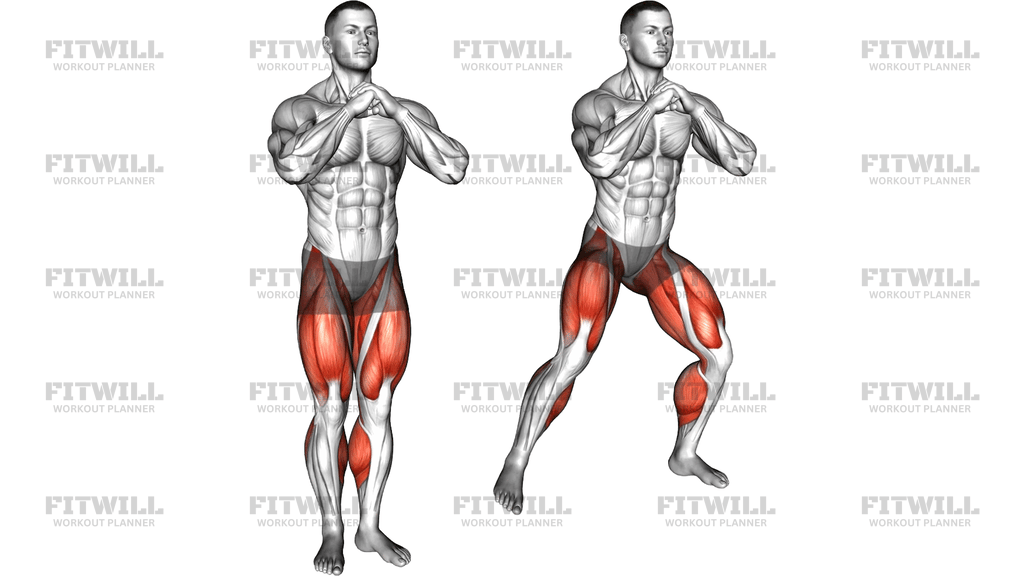
The Bodyweight Side Squat Step is a lateral lower-body movement where you step one leg out to the side and sit into a bent-knee position, then pull yourself back up to standing with the feet together. Unlike a standard forward squat, the movement happens in the frontal plane, so your hips, knees, and ankles have to control motion sideways as well as up and down. Your hands stay clasped at chest height, which gives you a small counterweight and helps you keep your torso upright without holding anything.
This exercise earns its place in a routine because most training lives in the sagittal plane. Walking, squatting, and lunging all move forward, but everyday life and sport constantly ask you to cut, sidestep, reach, and change direction laterally. The Bodyweight Side Squat Step trains that side-to-side control directly, challenging the quads to bend and extend the lead knee while the inner thighs and glutes manage the width of your stance.
Because it requires no equipment and only a couple of feet of floor space, it fits easily into warm-ups, home workouts, and circuit training. It is also a gentle entry point to lateral lunging patterns: the step is shorter and the load is lower than a full side lunge with weight, so you can learn the hip hinge and knee tracking before adding load or depth.
Setup matters more than it looks. Feet start close together, weight spread evenly across the whole foot, and your chest stays tall with the hands at the sternum. If you let your torso dump forward or your heels lift, the knee takes on stress it does not need. A braced trunk and a deliberate step width keep the working knee tracking over the foot instead of collapsing inward.
To execute it well, step one foot out to the side, shift your hips back and down over that leg, and let the opposite leg straighten as a long lever. Drive through the whole foot of the bent leg to return, bring the feet back together, and then repeat to the other side. The tempo should feel controlled on the way out and purposeful on the way back in, not a drop and rebound.
Common use cases include warm-up activation for leg days, rehab-friendly lateral strength work after a coach clears it, conditioning circuits, and building the hip stability needed for running and field sports. Keep the range to a depth you can own with a flat foot and a quiet knee, and progress by stepping wider, sinking lower, or slowing the return.
The main safety points are simple: keep the working knee aligned over the foot rather than caving inward, keep the heel of the bent leg down, and stop the depth where your back starts to round or your foot starts to roll. If a side-to-side comparison reveals one side is noticeably weaker or stiffer, do extra reps on the limited side under control rather than chasing depth you cannot stabilize.
[ Workout Log & Planner ]
Put your next workout in Fitwill
Keep your plan and training log ready when you are.


Instructions
- Stand tall with your feet hip-width apart or slightly closer, arms relaxed, and clasp your hands together in front of your chest at sternum height.
- Point your toes forward or a few degrees outward, spread your weight across the whole foot, and lift your chest so you are looking straight ahead.
- Brace your abdominal muscles lightly and pull your shoulder blades down so your clasped hands stay at chest height without your shoulders riding up.
- Take a deliberate step to the side, roughly shoulder-width to double shoulder-width, planting the full foot flat before you start to descend.
- Push your hips back and down over the leg you just stepped with, bending that knee while the opposite leg straightens and its foot stays flat on the floor.
- Descend until the bent knee reaches a depth you can control with the heel down and the knee tracking in line with the toes; keep your chest as upright as you can.
- Pause briefly in the side squat position, feeling the tension in the quad of the bent leg and along the inner thigh of the straightened leg.
- Drive through the floor with the bent leg, straightening it to lift your torso back to center, and bring the stepping foot back so the feet are together again.
- Exhale as you step out and lower, inhale at the bottom or as you press back up, and keep breathing steadily rather than holding your breath.
- Reset your stance and brace, then repeat the same step-out on the opposite side, alternating sides for the planned number of reps.
Tips & Tricks
- If your bent knee caves inward as you descend, think about spreading the floor with that foot or deliberately steering the knee toward your pinky toe side to restore alignment.
- A short step is the most common setup mistake here; if the straight leg barely lengthens and the move feels like a narrow squat, step wider so the hips actually travel sideways.
- Watch the heel of your bent leg: if it lifts as you sink, you are going deeper than your ankle mobility allows, so reduce the depth or widen the step slightly before lowering.
- Keep your clasped hands at sternum height the whole time; letting them drift forward usually means your chest is tipping forward and your lower back is rounding.
- The straight leg is not passive storage. Press its full foot into the floor and you will feel the inner thigh working to control the step width instead of the knee just drifting out.
- Alternate sides instead of finishing all reps on one leg, especially when you are new to the pattern, so any left-right difference in strength or balance shows up immediately.
- Move with a two-count out and a one-count back rather than bouncing out of the bottom; the return is where the quads and glutes do most of their work.
- If your balance wobbles at the bottom, slow the step itself down before you descend. Most balance issues in this exercise come from rushing the plant of the stepping foot.
- On days when your knees feel cranky, cut the depth to a shallow quarter-range version and prioritize the lateral step and knee tracking over going low.
Frequently Asked Questions
What muscles does the Bodyweight Side Squat Step work?
The main drivers are the quads of the bent leg as you lower and press back up. The glutes extend the hip on the way up, the inner thighs on both legs control the stance width, and the calf muscles stabilize the ankle throughout the step.
Is the Bodyweight Side Squat Step good for beginners?
Yes, and it is one of the friendliest ways to learn lateral leg work. Start with a modest step width and a shallow depth, and only sink lower once you can keep the bent heel down and the knee tracking over the foot.
How wide should I step during the Bodyweight Side Squat Step?
Aim for roughly shoulder-width to double shoulder-width between your feet at the bottom. If your straight leg stays bent and the move feels cramped, you are stepping too narrow; if you cannot keep the bent heel down, try a slightly narrower step or less depth.
Why do I keep bending both knees instead of shifting to one side?
That usually means your hips are dropping straight down instead of moving back and sideways over the stepping leg. Cue yourself to push your hips toward the wall beside you, and let the opposite leg stay long and relatively straight as a support.
How is the Bodyweight Side Squat Step different from a side lunge?
They share the same lateral pattern, but the side squat step stays more upright and the return pulls the feet back together, while a side lunge typically involves a deeper hip hinge and often a longer lunge position with more load. The step version is the easier progression of the two.
Can I use the Bodyweight Side Squat Step as a warm-up?
Absolutely. A set of 8 to 12 controlled reps per side raises the temperature in the legs and rehearses the knee and hip positions you want before heavier squats, lunges, or running. Keep the depth moderate in a warm-up context.
Should my hands stay clasped at my chest the whole time?
Yes, that is the intent of the arm position. Holding the hands at the sternum acts as a small counterbalance and makes it easy to notice when your chest starts to fall forward, which is your cue to re-brace and sit back into the hips.
What should I do if one side feels weaker or less mobile?
Perform the exercise on both sides but add one or two extra controlled reps to the limited side. If the imbalance is large or comes with discomfort, have a qualified coach or clinician look at your pattern before loading it further.
How can I make the Bodyweight Side Squat Step harder without equipment?
Slow the lowering phase to three or four counts, add a two-second pause at the bottom, or step wider and deeper as your control improves. You can also hold the bottom position of each rep and pulse slightly before returning.
Is it safe for my knees?
For most people, yes, as long as the bent knee tracks over the foot, the heel stays down, and the depth stays within a comfortable, controlled range. If you have a current knee issue or pain during the movement, reduce the range or consult a professional before continuing.