Lying Back Opener
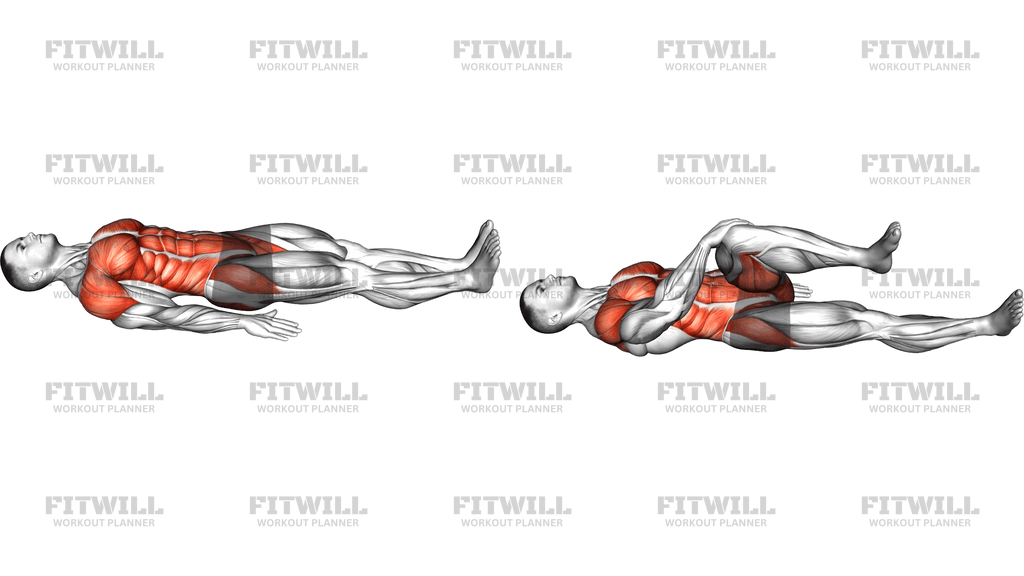
The Lying Back Opener is a floor-based stretch performed from your back, where you extend one leg along the floor and draw the opposite knee across your body with your hand, letting the low back and hips rotate while your shoulders stay grounded. It gets its name from the way the torso opens up and the spine lengthens and rotates through the movement, releasing tension that builds up from sitting, lifting, or long training sessions.
This stretch is especially useful for people with tightness across the lower back and the outside of the hips. Office workers who sit most of the day, lifters who train heavy squats or deadlifts, and runners whose hips get short and stiff from repetitive strides all tend to feel an immediate benefit. Because it is done lying down, the floor fully supports the spine, which makes it easier to relax into the position than standing rotational stretches.
The primary area being stretched is the lower back, specifically the erector spinae group running along either side of the spine, along with the glutes and outer hip of the leg being drawn across. As the knee travels toward the floor on the opposite side, the obliques lengthen as well, and the chest stays open and pressed toward the floor, which gently stretches the pectorals and front shoulders if you keep the arms wide. The extended leg anchoring the far hip is what turns this from a simple knee pull into a genuine opener for the whole back line.
Setup matters more than most people expect. Your starting position determines how the rotation travels through the spine. Keep both shoulders in contact with the floor and stack or square the hips before you begin pulling the knee across. If the shoulder lifts or the extended leg drifts, the stretch loses its focus and the neck or shoulder can pick up strain that the hips should be absorbing.
To perform it well, move slowly into the stretch and let gravity do most of the work. The pulling hand guides the knee; it should not yank it. Breathe steadily and allow each exhale to soften the position a little further. The sensation should sit in the low back, the buttock, and along the side of the waist, never in the knee joint, the neck, or anywhere sharp.
This is a common choice for cool-downs, rest days, and evening routines, and it pairs well after heavy lower-body sessions or long periods of sitting. Hold each side for twenty to forty seconds, and if one side feels noticeably tighter, repeat that side once more rather than forcing a deeper single hold.
[ Workout Log & Planner ]
Put your next workout in Fitwill
Keep your plan and training log ready when you are.


Instructions
- Lie flat on your back on a mat or clear floor space with both legs extended straight and your arms out to the sides at roughly shoulder height, palms facing up.
- Take a few slow breaths and let your whole spine settle against the floor, keeping the back of your neck long and your gaze toward the ceiling.
- Bend your right knee and lift the foot off the floor, keeping the left leg extended and pressing gently down to anchor that hip.
- Place your left hand on the outside of the right knee or thigh to guide it.
- Exhale and slowly draw the right knee across your body toward the floor on the left side, letting the pelvis and low back rotate while both shoulders stay weighted down.
- Stop when you feel a steady stretch through the lower back, the outer hip, and along the side of the waist, and hold there for twenty to forty seconds.
- Keep breathing evenly throughout the hold, letting each exhale release a little more tension instead of forcing the knee lower.
- To come out, use your hand to guide the knee back to center, then extend the right leg and rest briefly with both legs straight.
- Repeat the same sequence on the other side, bending the left knee and guiding it toward the floor on the right.
Tips & Tricks
- The most common mistake is dragging the knee all the way to the floor at any cost, which rolls the top shoulder off the ground. Anchor the shoulder first and accept a smaller rotation.
- If your extended leg keeps sliding or the bottom hip lifts, press the heel or calf of that leg firmly into the floor, or hook the foot under a sturdy object for a stable anchor.
- Do not crank the bent knee with a locked elbow; keep the guiding arm soft so the stretch is controlled by your breath rather than your grip.
- If you feel the stretch mostly in the buttock instead of the back, angle the knee slightly toward the opposite shoulder to bias the lumbar rotation.
- Avoid letting the head turn sharply to the opposite side; keep the neck neutral and facing up to protect it during the twist.
- A folded towel under the head can help if your chin juts toward the chest, and padding under the shoulders is unnecessary but a thin mat improves comfort on hard floors.
- Tightness right after heavy lifting is normal, but if a position provokes sharp or radiating sensations, reduce the range or skip the stretch that day.
- Instead of one long static hold, try two or three gentle cycles of easing in and out for ten seconds before settling into the final hold.
Frequently Asked Questions
What muscles does the Lying Back Opener stretch?
It primarily targets the lower back along the erector spinae, with a strong stretch through the glutes and outer hip of the bent leg. The obliques along the side of the waist also lengthen as the torso rotates.
Is the Lying Back Opener safe for beginners?
Yes, because the floor supports the entire spine and the range is self-controlled by how far you guide the knee. Beginners should start with a small rotation and gradually let the knee travel lower over several sessions.
How far should my knee go toward the floor in the Lying Back Opener?
Only as far as it goes while both shoulders stay in contact with the floor. Once a shoulder lifts, you have passed the useful range and the stretch is no longer focused on the lower back.
Why does the Lying Back Opener feel more in my hip than my back?
That usually means your glute or outer hip is the tighter link, which is common for people who sit a lot. It is still a productive stretch, and angling the knee slightly toward the opposite shoulder will shift more of the sensation into the lumbar area.
Should I do the Lying Back Opener before or after training?
It works best after training or on rest days, when the tissues are warm and the goal is release rather than preparation. Save it for your cool-down rather than a warm-up before heavy lifting.
Can I do the Lying Back Opener on a bed instead of the floor?
A firm surface is strongly preferred because a soft bed lets the spine sink and rotate unevenly, which blurs where the stretch is happening. Use a mat or carpeted floor whenever possible.
How long should I hold each side of the Lying Back Opener?
Twenty to forty seconds per side is a good working range, and repeating the tighter side once is a practical approach. Avoid long forced holds where you are straining to keep the knee down.
What can I substitute if lying down is uncomfortable?
A seated spinal twist or a standing rotation can cover similar ground, though neither supports the spine as completely. If lying on your back is the issue, try a small pillow under the head or knees rather than dropping the stretch entirely.
Is it normal to hear or feel popping in my back during the Lying Back Opener?
Occasional painless clicking during spinal rotation is common and generally harmless. What matters is that the position stays comfortable; sharp pain, numbness, or tingling means you should ease out of the stretch.