Bodyweight Standing Arnold Press
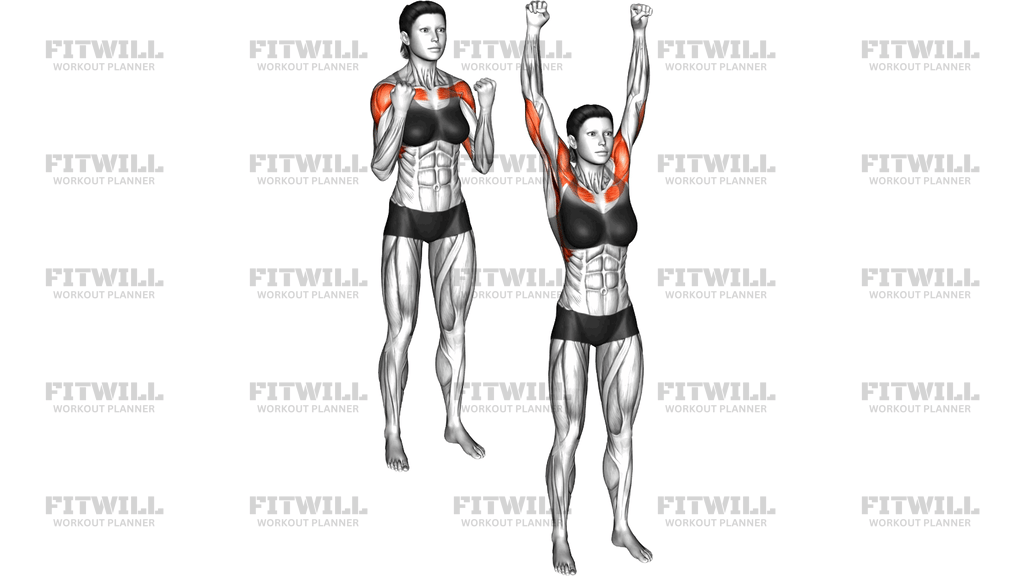
The Bodyweight Standing Arnold Press takes the rotating press pattern made famous by the dumbbell Arnold press and rebuilds it using nothing but your own arms. You start standing tall with your upper arms bent and palms turned in toward your shoulders, then press up overhead while rotating your hands so the palms face forward at the top. Because there is no external load, the challenge comes from actively squeezing the shoulders through the full arc instead of simply moving weight from point A to point B.
This version is useful for several groups. Beginners can learn the Arnold press path and rotation before ever picking up a dumbbell, which makes the transition to loaded versions much smoother. It also works well as a warm-up activation drill before pressing days, as a high-rep endurance movement in circuit training, or as a travel option for anyone training in a hotel room or at home without equipment. Because the arms are relatively light, you can move with more deliberate control than you might with a heavy load.
The main muscles at work are the front delts, which drive the press, and the side delts, which assist as the arms travel up and out. The triceps lock the arms out overhead, the upper chest contributes near the bottom of the range, and the upper traps and serratus engage as the shoulder blades move around the rib cage. Standing rather than seated also asks your core and hips to keep your torso tall and stacked over your feet.
The setup matters more than it might seem. With no weight in your hands, it is easy to rush and let the elbows drift or the shoulders shrug up to the ears. Setting your feet about hip width apart, softening the knees, bracing the midsection, and keeping the ribs down over the pelvis gives the press a stable base. The rotation is the defining feature: the palms turn from facing your shoulders to facing forward as the elbows extend, so the shoulder travels through a slightly different arc than a standard overhead press.
To execute it well, think about driving the elbows up and slightly out while the hands rotate, then reaching tall at the top without leaning back. On the way down, reverse the rotation deliberately so the palms face your shoulders again at the bottom. Move at a pace you can feel the whole time; the temptation with bodyweight pressing is to bounce through the range, and doing so removes most of the benefit.
As for safety, keep the movement in a range where the shoulders stay comfortable and avoid forcing the rotation if your joints feel pinched. Stay upright by bracing the core rather than arching the lower back to press higher. If standing overhead work bothers your shoulders, you can shorten the range slightly and build up over time.
[ Workout Log & Planner ]
Put your next workout in Fitwill
Keep your plan and training log ready when you are.


Instructions
- Stand with your feet about hip width apart, weight spread across the whole foot, and let your arms hang relaxed for a moment before setting up.
- Raise both upper arms until your elbows are bent and tucked slightly in front of the torso, with your hands clenched in loose fists and palms facing in toward your shoulders, roughly at collarbone height.
- Brace your abs, draw the ribs down, and pull your shoulder blades gently down and back so you are not starting in a shrugged position.
- Inhale, then press your fists up toward the ceiling while rotating your hands outward so the palms face forward by the time your elbows extend.
- Keep the elbows moving up and slightly out in an arc, rather than flaring straight sideways or collapsing toward the ears.
- Finish with the arms nearly straight overhead, fists aligned over the shoulders, and reach slightly taller through the top without leaning the torso backward.
- Pause briefly at the top, then reverse the path: rotate the hands back so the palms turn in toward your shoulders as the elbows bend and lower to the starting position.
- Exhale as you press up and inhale as you lower, keeping the breath steady rather than holding it through the set.
- Reset your stance and brace between reps if you feel yourself leaning, then repeat for your target reps.
- Stop the set when the rotation becomes sloppy or your shoulders start to shrug, rather than pushing through fatigue with poor form.
Tips & Tricks
- The most common mistake is pressing straight up without rotating the hands, which turns the exercise into a generic bodyweight press; make the palm rotation the focal point of every rep.
- Watch for the shoulders creeping up toward the ears as you tire; think about reaching the fists away from the shoulders instead of lifting the shoulders toward the fists.
- A common error is arching the lower back to get the arms higher; instead, squeeze the glutes lightly and keep the ribs stacked over the pelvis so the extension comes from the shoulders.
- Do not lock the elbows hard or snap into the top position; end each rep with a firm but controlled reach overhead.
- Slow the lowering phase down, especially since there is no load; a two-second descent with the rotation reversed on the way down dramatically increases the work the delts do.
- If your shoulders feel pinched at the top, angle the press slightly forward so the fists finish in front of the head rather than directly behind it.
- Keep the elbows from flaring fully out to the sides at the bottom; they should sit slightly in front of the torso with the hands near shoulder height.
- Squeeze the fists firmly throughout; even without weight, an active grip increases tension up the forearm and into the shoulder.
- Use this drill before dumbbell Arnold presses as a rehearsal of the same rotation path, with higher reps and lighter effort.
Frequently Asked Questions
What muscles does the Bodyweight Standing Arnold Press work?
The front delts do most of the pressing, with the side delts assisting through the arc. The triceps extend the arms overhead, and the upper traps, serratus, and core stabilize the movement.
How is the Bodyweight Standing Arnold Press different from a regular overhead press?
The defining difference is the hand rotation: the palms start facing in toward the shoulders and rotate to face forward as you press. This shifts the shoulder through a broader arc than a standard press where the palms stay fixed.
Is this exercise good for beginners?
Yes. It is an excellent way to learn the Arnold press rotation before adding dumbbells, since you can practice the exact shoulder path with no load and build control first.
How many reps should I do of the Bodyweight Standing Arnold Press?
Because there is no external resistance, higher reps work best, typically 15 to 25 per set for endurance or 2 to 3 lighter sets as a warm-up before heavier pressing.
Why do my shoulders shrug when I press overhead?
Shrugging usually means the upper traps are compensating for tired delts. Pull the shoulder blades down before each rep and focus on reaching the fists up rather than lifting the shoulders, and stop the set when the shrug returns.
Can I do the Bodyweight Standing Arnold Press with a shoulder injury?
If you have a current or recent shoulder issue, check with a qualified professional first. Many people tolerate a slightly shortened range or a press angled slightly forward of the head better than a full vertical path.
What can I substitute if I want more resistance?
Dumbbell Arnold presses are the direct progression, using the same rotation with added load. Resistance band overhead presses with rotation also work well if you want to keep the standing setup.
Should my elbows stay tucked or flare out during the press?
They should travel an arc in between: slightly in front of the torso at the bottom, then moving up and a little out as you rotate and press. Fully flared elbows or elbows collapsing inward both change the shoulder path unnaturally.
Do I need to clench my fists, or can I keep my hands open?
Either works, but a firm fist helps create tension through the forearm and shoulder, which matters more when there is no external weight. Keep the grip firm without straining the hands.