Bodyweight Standing Front Raise To Open
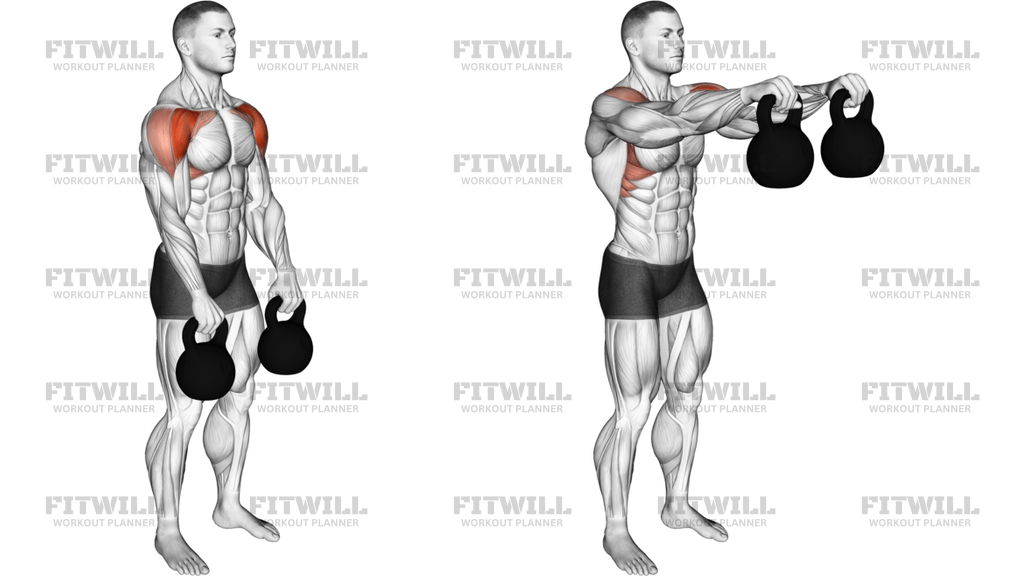
Bodyweight Standing Front Raise To Open is a shoulder-focused movement performed standing with no equipment, using only the weight of your own arms as resistance. From a tall stance with your arms hanging at your sides, you lift both straight arms forward up to shoulder height, then sweep them apart to the sides until they form a wide open position, before reversing the path back down. The two-phase pattern gives the front of the shoulder a long, controlled journey under tension and finishes with the arms working in a completely different plane.
The main work is done by the front delts, which lift the arms forward, with the upper chest assisting on the raise. As the arms open out to the sides, the middle delts and upper traps take over, and the muscles between the shoulder blades engage to control the shoulder blades as the arms travel wide. Because the resistance is just your arms, the exercise lives or dies on tempo — slow, deliberate reps are what make it worthwhile, while rushed reps turn it into empty swinging.
This is a good choice for beginners learning what a shoulder raise should feel like, for warming up before pressing or overhead work, and for anyone training at home or traveling without equipment. It is also a useful low-load option for people who find weighted front raises too demanding on the shoulder joint, since the resistance is gentle and the path can be adjusted instantly.
Setup matters more than it looks. Stand with feet about hip-width apart, weight spread evenly, ribs stacked over the pelvis, and shoulders pulled gently down away from the ears. If you arch your back or shrug as the arms rise, you shift work away from the delts and into the lower back and neck, which is the most common way this movement goes wrong. Bracing the trunk lightly keeps the torso honest while the arms travel.
To execute it well, raise the arms forward with the palms facing each other or down, keep the elbows straight but not locked, and stop when the arms reach shoulder height. Pause briefly, then open the arms out to the sides in a smooth arc until they are fully wide, keeping them at or just below shoulder line. Reverse the arc back to the front, then lower the arms under control to your sides. That full round trip is one repetition.
A realistic set is 10 to 15 controlled reps, or 20 to 30 seconds of continuous tempo when using it as a warm-up. Expect a burn across the front and sides of the shoulders rather than heavy fatigue, and treat that as the intended effect — this movement builds endurance, coordination, and awareness in the shoulder girdle, not maximal strength.
[ Workout Log & Planner ]
Put your next workout in Fitwill
Keep your plan and training log ready when you are.


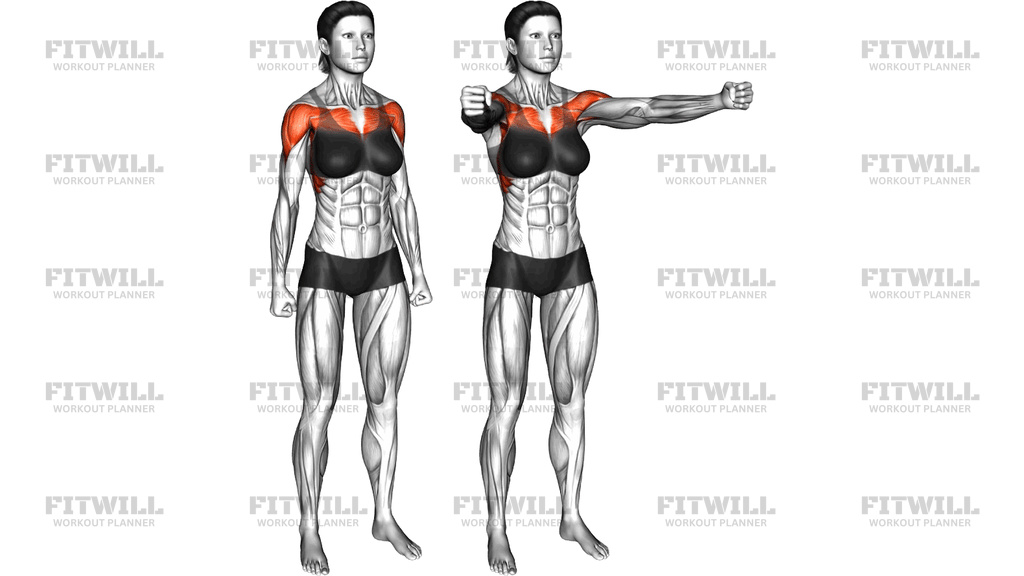
Instructions
- Stand tall with your feet hip-width apart, toes pointing forward, and your weight spread evenly across both feet.
- Let your arms hang straight down at your sides with your hands in relaxed fists, shoulders pulled down away from your ears.
- Brace your trunk lightly, as if bracing for a light push, and keep your ribs stacked over your hips so your lower back stays neutral.
- Raise both straight arms forward and upward in front of your body until they reach shoulder height, palms facing each other or the floor.
- Pause for a beat at the top, keeping your neck relaxed and your shoulders down rather than shrugging toward your ears.
- From the front-raise position, sweep both arms out to the sides in a wide arc until they are fully open, forming a T shape at about shoulder height.
- Reverse the arc to bring the arms back together in front of your body at shoulder height.
- Lower both arms slowly and under control back down to your sides to finish the rep.
- Exhale as the arms rise and open, and inhale as you bring them back together and lower them.
- Reset your posture between reps — stand tall, drop the shoulders, and only start the next rep once your torso is still.
Tips & Tricks
- The most common mistake is leaning the torso backward as the arms rise, because there is no external load to counterbalance. Keep your back pocket long and your ribs down so the delts do the lifting instead of your lower back.
- Watch for shrugging. If your shoulders creep toward your ears at the top of the front raise, lower your arms to just below shoulder height and consciously press your shoulder blades down before continuing.
- Keep a soft, unlocked elbow throughout. Straight arms make the lever longer and the exercise harder, but stiff, locked elbows irritate the joint over long sets.
- Control the opening phase especially. Letting the arms flop out to the sides wastes the portion of the rep where the middle delts and upper back work hardest.
- If you cannot keep the arms at shoulder height during the open position, let them sit slightly lower. A wide arc a few inches below the shoulders with good posture beats a high arc with a shrugged neck.
- Use a slow tempo, roughly two seconds up, one second open, two seconds down. Since your arms are the only load, tempo is your main tool for making the set challenging.
- Your fists should stay relaxed. Squeezing the hands tightly recruits the neck and forearms and adds tension you do not need.
- If one arm tends to drift higher than the other during the front raise, slow down and use a mirror or a wall to your side to check that both hands travel to the same height.
- This works well as the first exercise in a shoulder warm-up before pressing or overhead movements, since it takes the joints through a full, load-free arc.
Frequently Asked Questions
Which muscles does Bodyweight Standing Front Raise To Open work?
The front delts do most of the lifting, with the upper chest assisting on the raise. As the arms open to the sides, the middle delts and upper traps take over, and the muscles around the shoulder blades stabilize throughout.
Is this exercise effective without any weight?
Yes, but only if the tempo is slow and controlled. Your arms are relatively light, so a two-second raise with a pause and a controlled lower is what creates enough tension for the shoulders to feel it.
Should my arms stop at shoulder height during the open phase?
About shoulder height is the target, but slightly lower is fine if keeping them higher forces you to shrug or arch. The priority is a wide, smooth arc with your shoulders staying down.
Can beginners do Bodyweight Standing Front Raise To Open?
It is actually one of the best starting points for shoulder training, because the load is low and the two-phase path teaches you how a raise and a lateral opening should feel before you add dumbbells or bands.
Why does my lower back ache when I do this movement?
That usually means you are leaning back as the arms rise to counterbalance them. Brace your trunk lightly, keep your ribs stacked over your hips, and reduce the height of the raise until your torso stays upright.
What can I use instead if I want more resistance?
Light dumbbells, a resistance band, or even water bottles turn the same front-raise-to-open path into a loaded version. Keep the same arc and tempo, and choose a weight you can lift without shrugging.
How many reps should I do?
Ten to fifteen slow controlled reps works well as a strength-endurance set, or twenty to thirty seconds of continuous tempo if you are using it as a warm-up before heavier shoulder work.
Is it a problem if my shoulders pop or click during the movement?
Painless clicking is common and usually harmless, but if the movement causes discomfort, reduce the height of the raise and keep the arc within a comfortable range. Stop and reassess if any pain persists.
Should my palms face each other or face the floor?
Either works, since the arms stay straight and the hand position does not dramatically change the demand. Palms facing each other is often more comfortable for the shoulder, so start there.
Can I do this every day?
Because the resistance is light, it can be used frequently as a warm-up or mobility drill. If your shoulders feel sore after a session, give them a day of recovery before training them again.