Atomic Sit Up
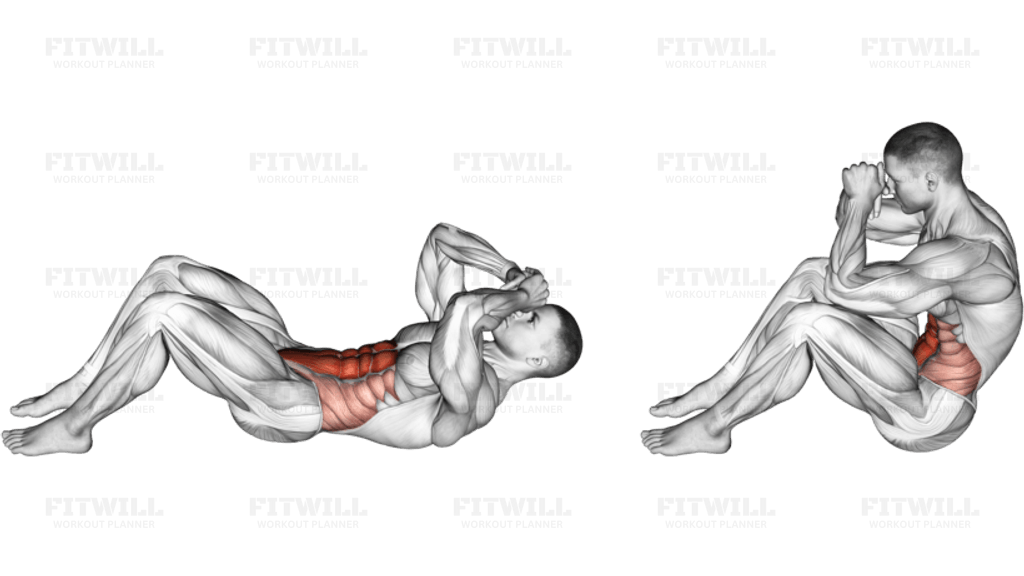
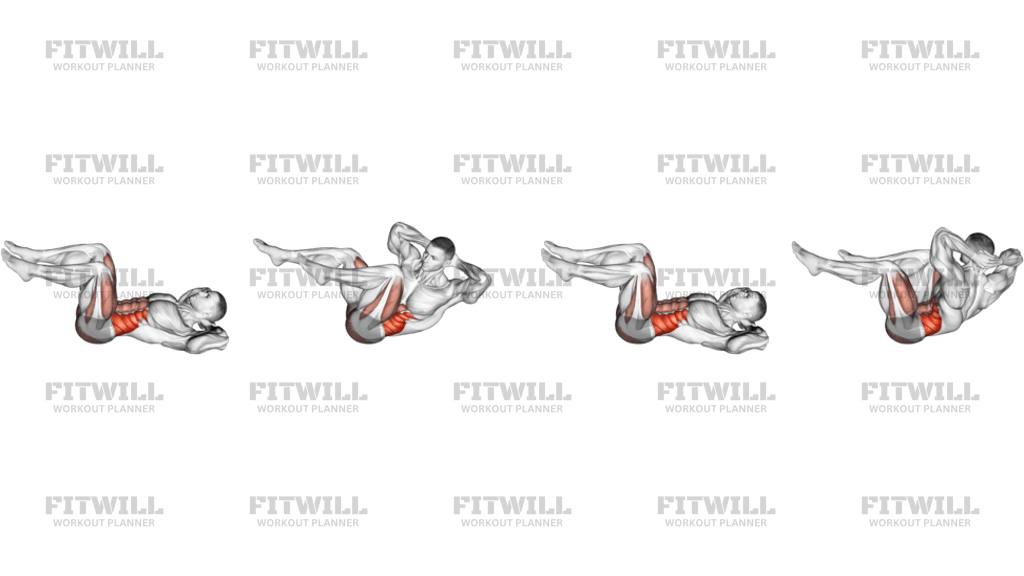
The Atomic Sit Up is a demanding bodyweight core exercise that combines a straight-leg hold with a full sit-up, forcing the abs and hip flexors to work together through a long range of motion. You start lying flat on your back with your legs extended and hovering just off the floor, hands placed lightly behind your head, and from there you curl your trunk up toward your legs under control. Because your legs stay extended rather than bent, your lever arm is much longer than in a standard sit-up, which is exactly what makes this variation feel "atomic."
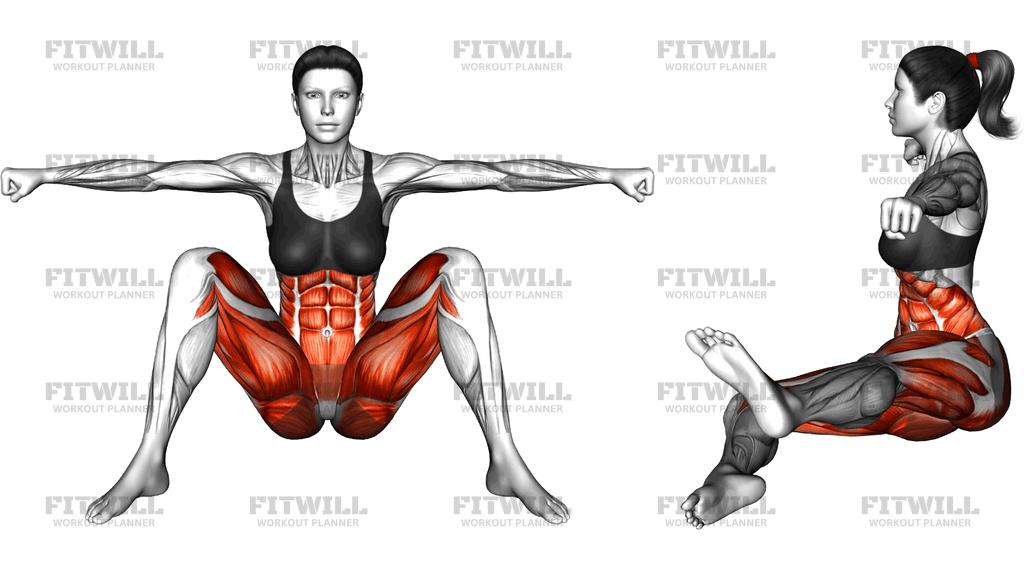
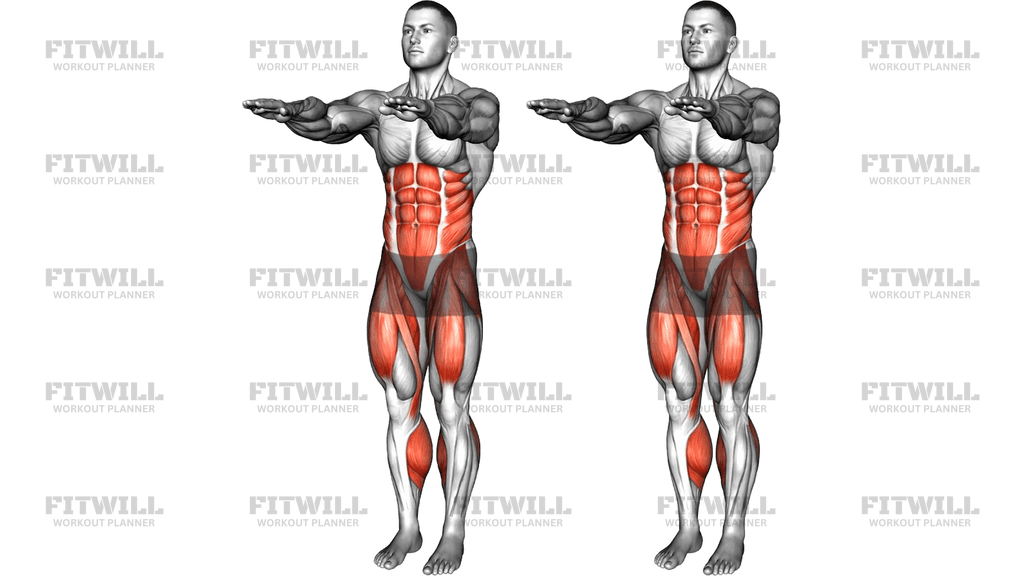
This movement trains the rectus abdominis as the prime mover of the trunk curl, while the hip flexors — especially the iliopsoas and rectus femoris — work hard to keep your straight legs elevated and to assist as you rise. The lower abs take the brunt of the work in the start position, since holding straight legs off the floor while your torso is still down is one of the harder positions to maintain. Your deep core stabilizers stay engaged the entire time to protect your lower back.
The Atomic Sit Up suits intermediate to advanced trainees who already own solid control in leg raises and crunches. If you can perform straight-leg lying leg raises and slow bodyweight crunches with clean form, this is a logical next step. It is a popular choice in calisthenics and combat-sport conditioning because it builds the kind of trunk strength used when folding the body against resistance, and it requires no equipment beyond a floor or mat.
Setup matters a lot here. Lie fully lengthened so your whole torso and legs are in one long line, and place your hands behind your head for support rather than pulling on your neck. The height of your legs at the start is your main intensity dial: the closer they hover to the floor, the harder the hold and the harder the first phase of the sit-up. Raising them slightly higher is a straightforward way to scale the exercise down without changing the movement pattern.
Execution should be a deliberate curl, not a yank. Peel your head and shoulders off the floor first, then round your upper and mid back upward as your ribs travel toward your hips, keeping the legs extended and at a steady height. At the top your trunk should be clearly folded toward your thighs, then you lower back down under control — vertebra by vertebra — until your shoulders and upper back return to the floor while your legs stay hovering.
The most common safety concern is lower back strain from letting the lumbar spine arch off the floor with the legs low, or from bouncing up using momentum. Move only as fast as you can control, and if you feel your lower back lifting or straining, raise your legs a few inches and shorten the range before progressing. Quality reps with a controlled descent will do far more for your midsection than fast, sloppy ones.
[ Workout Log & Planner ]
Put your next workout in Fitwill
Keep your plan and training log ready when you are.


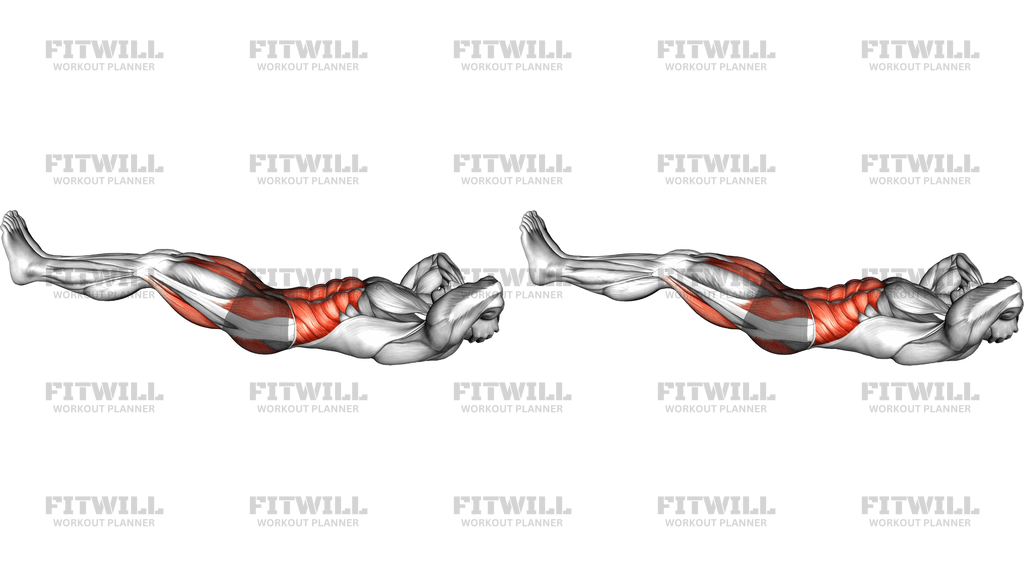
Instructions
- Lie flat on your back on a mat or floor with your legs fully extended and your body in one straight line from head to heels.
- Place your hands lightly behind your head with your elbows flared out to the sides, and lift your straight legs so your heels hover a few inches above the floor.
- Press your lower back gently down toward the floor and brace your core before moving, so your ribs are pulled down and your trunk feels tight.
- Exhale as you curl your head and shoulders off the floor, leading with your chest rather than your chin.
- Continue rounding your upper back upward until your trunk is folded toward your thighs, keeping your legs extended at the same height throughout the rise.
- Pause briefly at the top with your abs fully shortened and your elbows tracking toward your knees.
- Inhale as you lower your torso back down slowly, uncurling from the lower back upward until your shoulders touch the floor.
- Keep your straight legs hovering off the floor as you reset, re-brace, and begin the next rep.
- If you need to rest between reps, set your legs fully down, take a breath, then re-establish the leg hold before continuing.
Tips & Tricks
- The hardest moment is the very start, when your torso is down and your legs are low — if your lower back arches there, raise your heels higher to shorten the lever instead of forcing the flat position.
- Do not pull on your neck with your hands; your fingers are only resting behind your head, and the curl should be driven by your abs.
- If your heels drift toward the floor as you sit up, your hip flexors are fatiguing — either raise the leg height slightly or end the set, since a dropped-leg rep trains nothing useful.
- Avoid launching off the floor with a head whip; a common tell is your chin slamming toward your chest at the beginning of the rep.
- Think of folding ribcage toward hips rather than reaching elbows to knees — this keeps tension on the abs instead of turning it into a hip-flexor yank.
- Control the descent as much as the ascent; dropping your torso back lets momentum replace the eccentric work where much of the strength benefit lives.
- Keep your knees locked straight throughout; any knee bend shortens the lever and quietly turns the exercise into an easier variation.
- Breathe in a steady rhythm — exhale on the way up, inhale on the way down — rather than holding your breath through the whole rep.
- If your hip flexors cramp, that usually means they are doing work your abs should share; slow the curl down and focus on rounding your spine first.
Frequently Asked Questions
Which muscles does the Atomic Sit Up work the most?
The rectus abdominis is the prime mover of the trunk curl, with the hip flexors such as the iliopsoas and rectus femoris working hard to hold your straight legs up and assist the lift. The obliques and deep core stabilizers contribute to keeping your trunk controlled throughout.
Why are the legs kept straight instead of bent in the Atomic Sit Up?
Straight legs create a much longer lever than bent knees, which increases the load on both the lower abs and the hip flexors. That long lever is what separates this exercise from a standard bent-knee sit-up.
Is the Atomic Sit Up suitable for beginners?
It is best treated as an intermediate progression. Beginners should first build competence with bent-knee sit-ups, crunches, and lying leg raises, then work up to this by starting with the legs held higher off the floor.
How high should my legs hover during the Atomic Sit Up?
Start with your heels a few inches off the floor, but keep them at whatever height lets you hold the position without your lower back arching off the ground. Raising the legs higher makes the exercise easier and is the simplest way to scale it.
Why does my lower back feel strained when I do the Atomic Sit Up?
That usually means your lumbar spine is arching off the floor while your straight legs pull on it from the other side. Raise your leg height, shorten the range of the sit-up, and make sure you brace and press your lower back down before each rep.
Should I pull my head forward with my hands?
No — your hands sit behind your head for light support only. Pulling on your neck shifts stress to the cervical spine and lets your arms do work your abs should be handling.
What can I use as a substitute for the Atomic Sit Up?
Straight-leg lying leg raises paired with slow crunches cover the same two phases, and hollow-body holds train the same extended-leg bracing position. A V-up is a good advanced alternative once this movement feels manageable.
How many reps and sets of the Atomic Sit Up should I do?
Because the lever is long and the start position is demanding, work in modest rep ranges of roughly 6 to 12 controlled reps for 2 to 4 sets. Add reps or lower the leg height gradually rather than chasing volume with poor form.
Is it normal for my hip flexors to burn more than my abs?
Some hip-flexor effort is unavoidable with straight legs, but if they dominate completely, you are likely yanking up with momentum instead of curling your spine first. Slow the initial phase down and lead with rounding your upper back.