Side Step L Pose
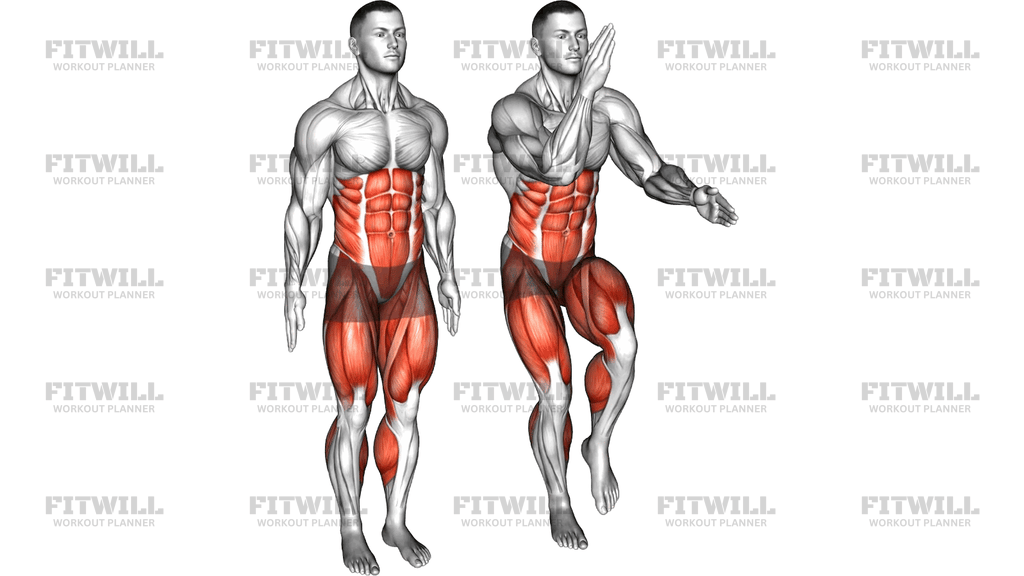
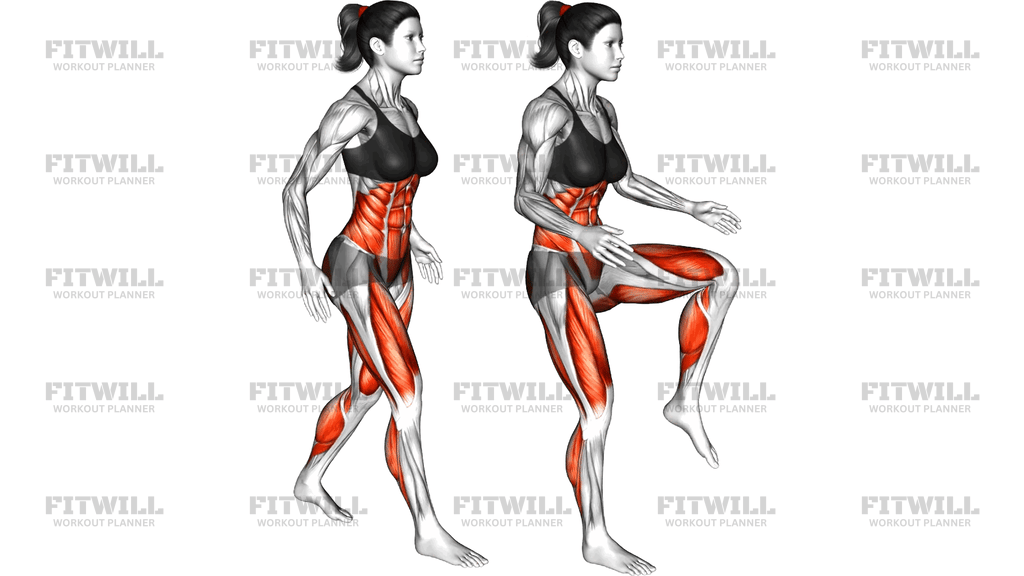
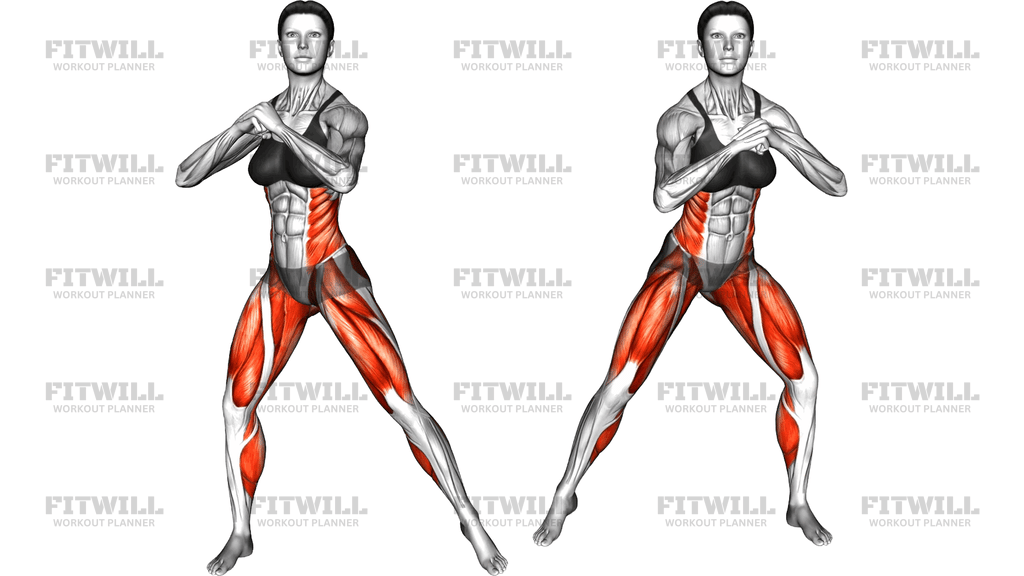
The Side Step L Pose is a bodyweight balance drill that combines a lateral step with a single-leg knee lift. You start standing tall with your feet together and your fists raised to chest height in a guard position, then step one foot out to the side and drive the opposite knee up to hip height so the lifted leg forms a clean L shape — thigh parallel to the floor, shin pointing straight down. After a brief hold on the standing leg, you lower the foot back to the floor with control and repeat on the other side.
This movement is especially useful for martial artists, runners, and anyone who wants better single-leg stability without needing equipment or a lot of space. Because you pause at the top instead of cycling quickly through the rep, it forces the standing leg, hips, and trunk to work together to keep you upright. That makes it a practical addition to warm-ups, cooldowns, or circuit training when you want a low-impact drill that still raises your heart rate.
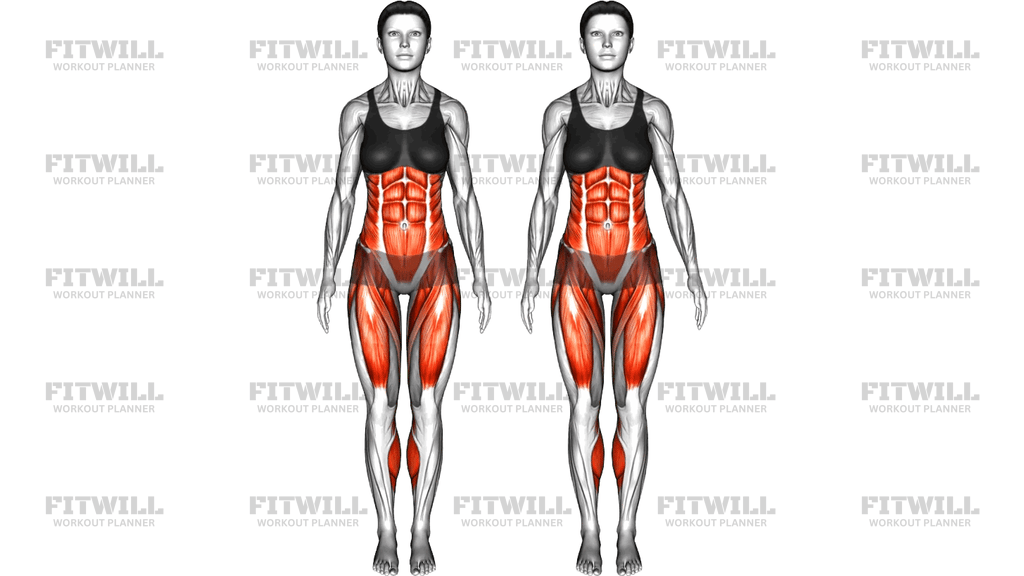
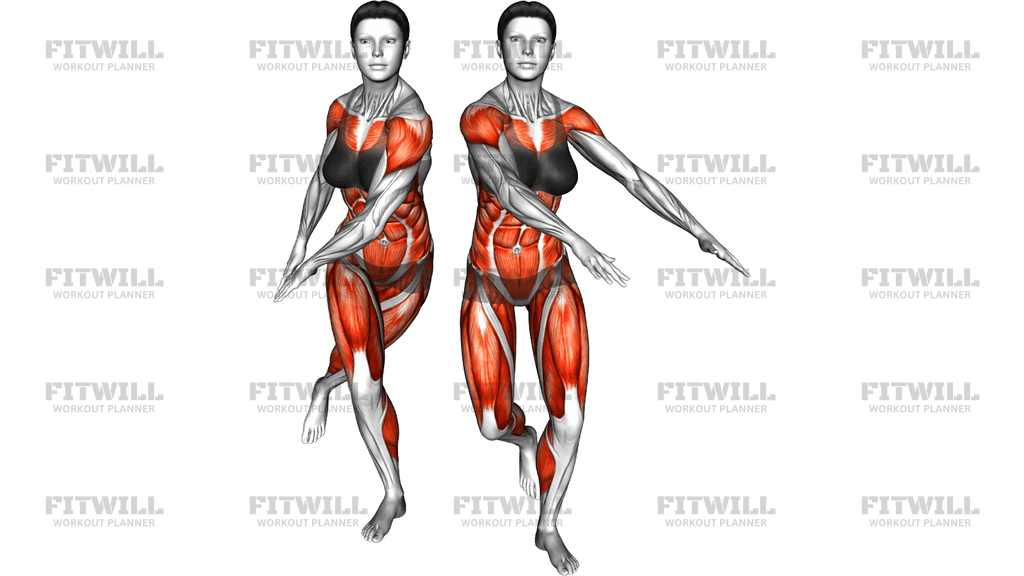
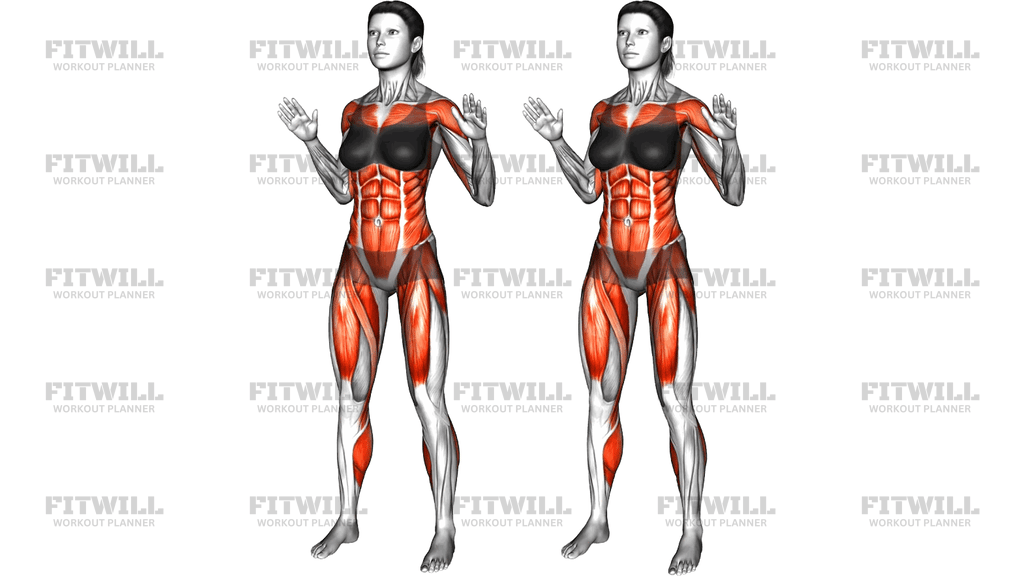
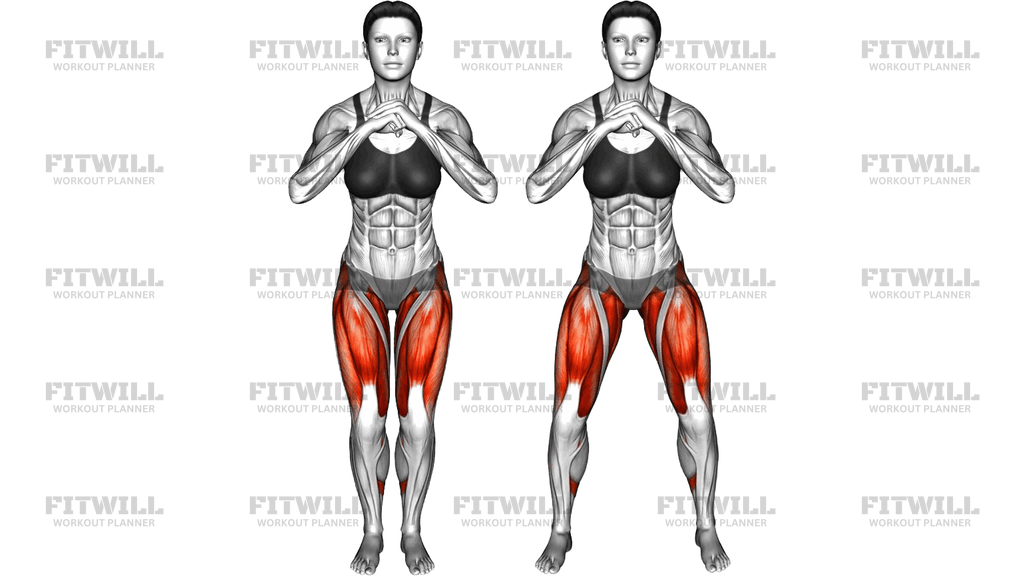
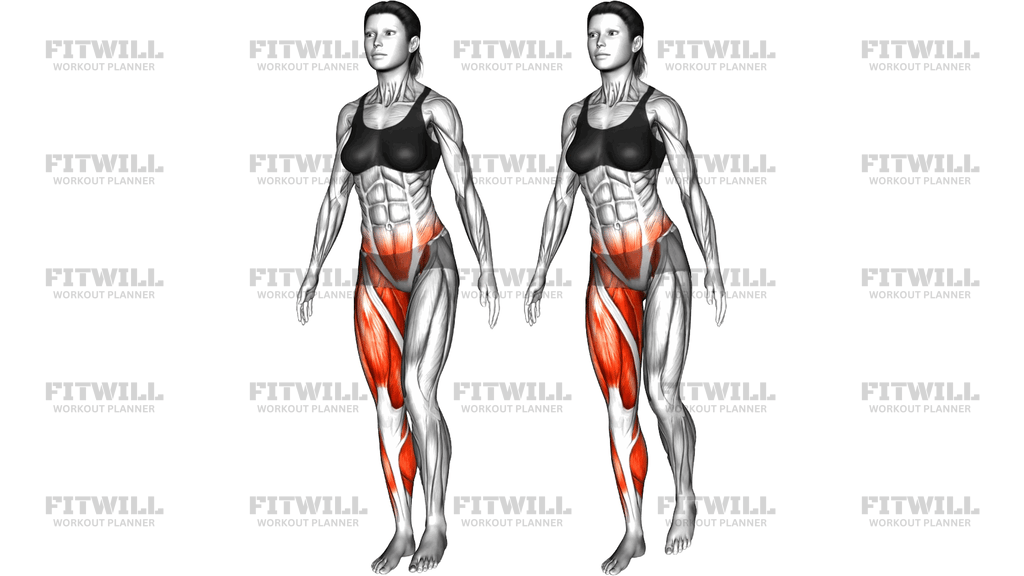
The main work comes from the quadriceps and calf muscles of the standing leg as they hold your body weight over a narrow base. Raising the knee recruits the hip flexors and the quadriceps of the lifting leg, while the obliques and deep core stabilize your ribcage and pelvis so you don't lean or twist. Holding the fists at chest height keeps the shoulders and upper back lightly engaged and gives you a reference point for staying tall through the spine.
Setup matters more than it looks. Starting with the feet together, weight centered over the whole foot, and the chest lifted gives you a stable platform before you shift sideways. If you start with your weight already leaning in one direction or your back rounded, the step and the knee lift turn into a compensation pattern rather than a balance challenge.
To execute it well, move deliberately: shift your weight fully onto one leg, place the stepping foot out to the side, then lift the knee to hip height and pause. The pause is where the benefit lives — one to two seconds is enough to feel the standing hip and core working. Keep the lifted foot relaxed and the shin vertical rather than letting the knee drift forward.
A few practical safety points: if your balance is shaky, stand near a wall or sturdy chair and use a fingertip for support rather than skipping the drill. Avoid hiking the hip of the lifting leg or collapsing the arch of the standing foot, and stop if you feel pinching in the standing knee or hip. Progress by lengthening the top hold, adding more repetitions, or closing your eyes only once the movement feels steady.
[ Workout Log & Planner ]
Put your next workout in Fitwill
Keep your plan and training log ready when you are.


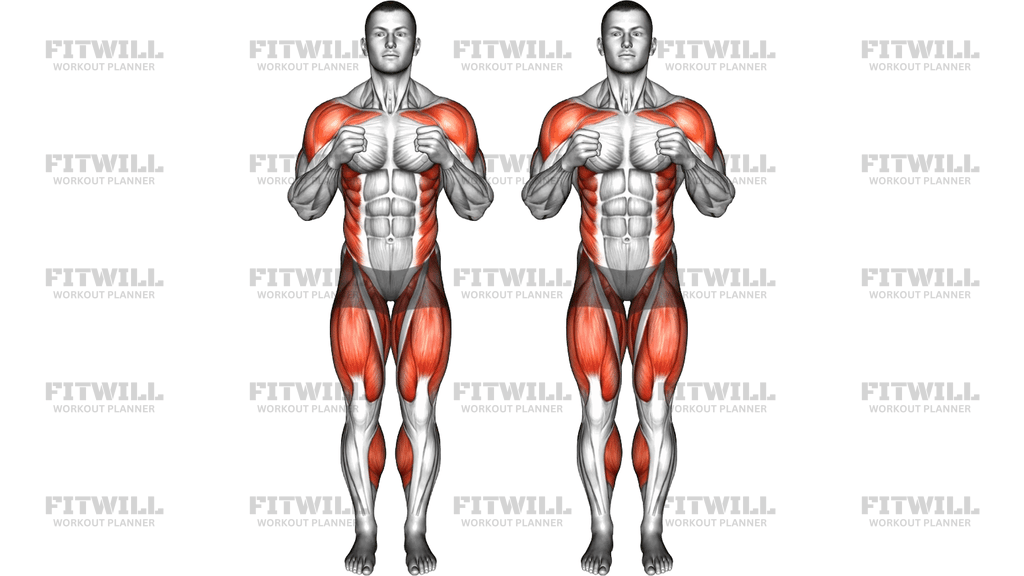
Instructions
- Stand tall with your feet together and your weight spread evenly across both feet.
- Bend your elbows and raise both fists to chest height in a guard position, shoulders relaxed and down.
- Brace your core, soften both knees slightly, and keep your gaze fixed on a point straight ahead at eye level.
- Shift your full body weight onto your left foot, pressing it firmly into the floor.
- Step your right foot out to the side and place it down at about hip-width from the left foot.
- Drive your right knee up to hip height so your thigh is parallel to the floor and your shin hangs straight down, forming an L shape with the leg.
- Pause for one to two seconds on the standing leg, keeping your torso upright and your hips level.
- Lower your right foot back to the floor under control, then bring it in so your feet are together again.
- Breathe out as you lift the knee and breathe in as you lower the foot, never holding your breath.
- Repeat on the left side and continue alternating for your target number of repetitions per side.
Tips & Tricks
- A common mistake is rushing the knee lift and bouncing off the floor — the Side Step L Pose only challenges your balance if you pause at the top, so count a full second before lowering.
- If your torso leans away from the lifting knee, you are usually stepping too wide; narrow the step until you can stay stacked over the standing hip.
- Watch that the standing knee tracks over your toes. If it caves inward, think about pressing the outside edge of the standing foot into the floor and squeezing the glute on that side.
- Hiking the hip of the lifting leg shortens the lift without working the hip flexors harder — keep both hip bones level and lift from the thigh instead.
- If your lower back arches as the knee comes up, tighten your abs and lift the knee slightly lower; the L shape should come from hip height, not from tipping the pelvis.
- Keep the fists at chest height rather than dropping your arms as you fatigue — the guard position keeps your center of mass higher and challenges the shoulders a little longer.
- Look at a fixed point on the wall instead of down at your feet; looking down makes nearly everyone wobble in this drill.
- If your standing calf burns before anything else, that is normal at first — build up with shorter holds of one second before extending the pauses.
- For a regression, place a fingertip on a wall or chair during the knee lift and reduce the hold; remove the support once you can pause steadily for two seconds.
Frequently Asked Questions
Which muscles does the Side Step L Pose work the most?
The quadriceps and calves of the standing leg do most of the stabilizing work, while the hip flexors and quadriceps lift the knee. The obliques and deep core keep your torso upright and your pelvis level throughout the pause.
How high should I lift my knee in the Side Step L Pose?
Aim for hip height, so the thigh is parallel to the floor and the shin hangs straight down to form the L shape. If you cannot reach hip height while staying tall and balanced, lift slightly lower and keep the torso upright.
Is the Side Step L Pose suitable for beginners?
Yes, it is low impact and requires no equipment. Beginners can shorten the hold at the top, reduce the knee height, or rest a fingertip on a wall for balance until the single-leg pause feels steady.
Why are the fists held up at chest height during this exercise?
The guard position keeps your center of mass stacked over the standing leg and lightly engages the shoulders and upper back. It also carries over directly to boxing and martial arts footwork, where the drill is commonly used.
How is the Side Step L Pose different from a regular high knee raise?
The lateral step changes your base before the lift, and the pause in the L position turns it into a balance drill rather than a fast marching movement. The emphasis is on control on the standing leg, not on how many reps you can cycle through.
My standing foot wobbles at the top of the lift. What should I fix first?
Press your whole foot into the floor, especially the big toe and heel, and fix your eyes on a point straight ahead. Most wobbling comes from weight sitting on the outside edge of the standing foot or from looking down.
Can I substitute another exercise if I struggle to balance?
A stationary standing knee raise with a wall nearby is the closest substitute. Once you can hold that position comfortably, add the lateral step back in and progress to the full Side Step L Pose.
How many repetitions should I do per side?
Start with 8 to 10 controlled reps per side with a one to two second hold at the top. When that feels easy, either add reps or lengthen the hold rather than moving faster.
Is it safe for my knees to pause on one leg like this?
For healthy knees, holding on one leg with the knee tracking over the toes is a safe way to build single-leg strength. If you have a knee injury or feel pinching during the hold, reduce the depth of the bend in the standing leg or check with a professional first.
Should I feel this in my lower back?
No, the work should stay in the standing leg, hips, and abdominal area. If your lower back takes over, your pelvis is probably tipping forward as you lift — tighten your abs and lift the knee slightly lower.