Cable Incline Y Raise Wrist Straps With Back Suppo
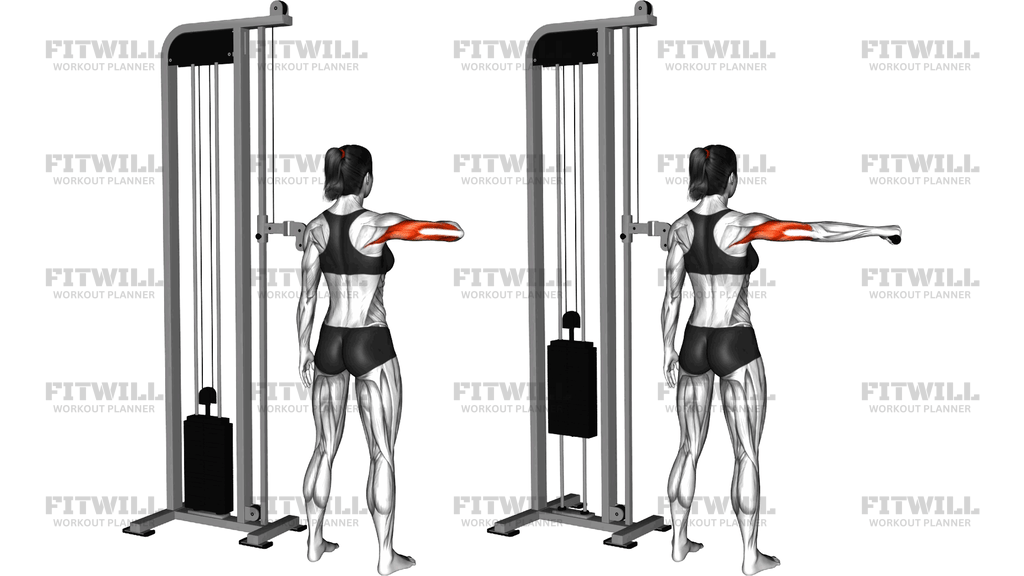
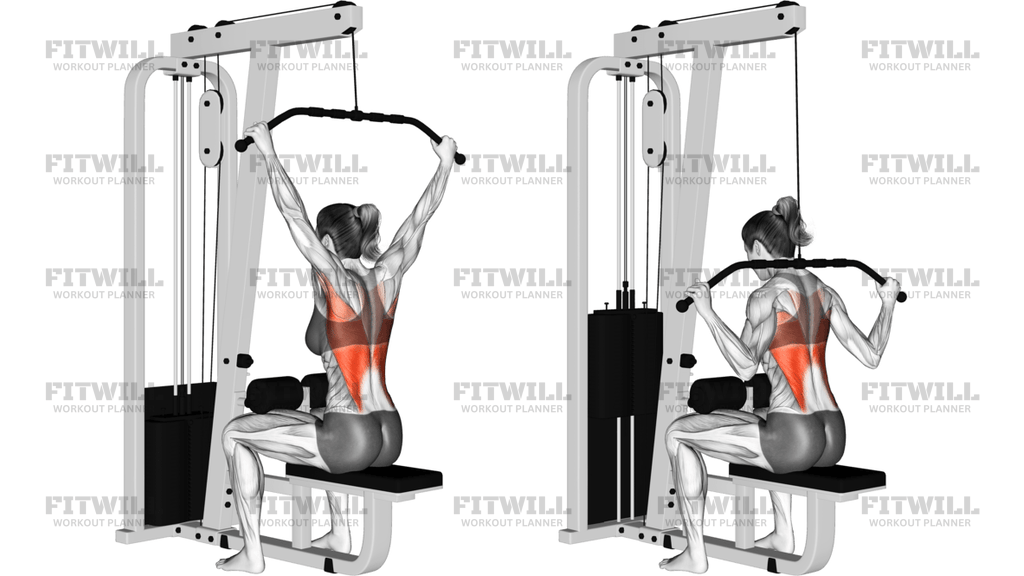
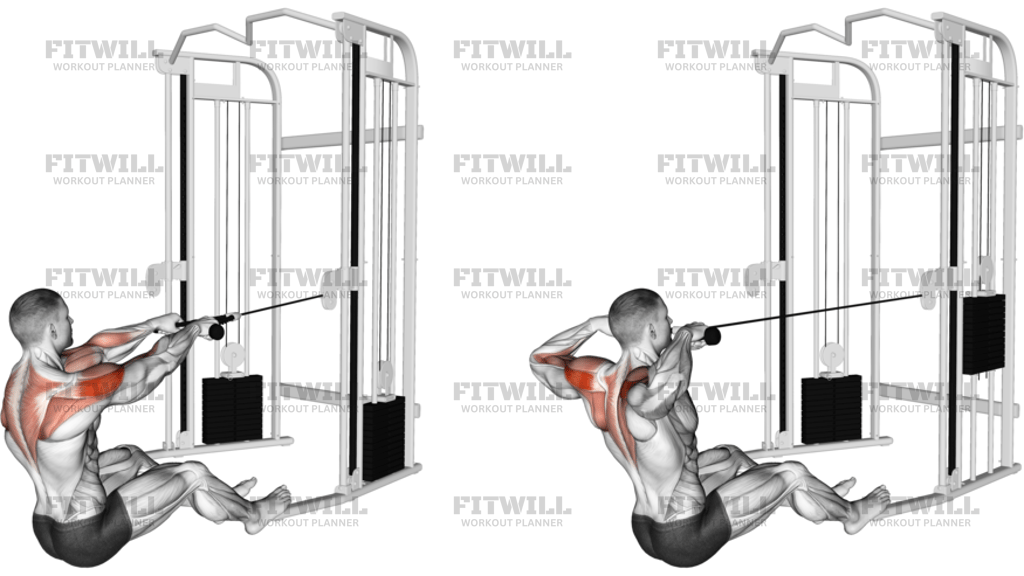
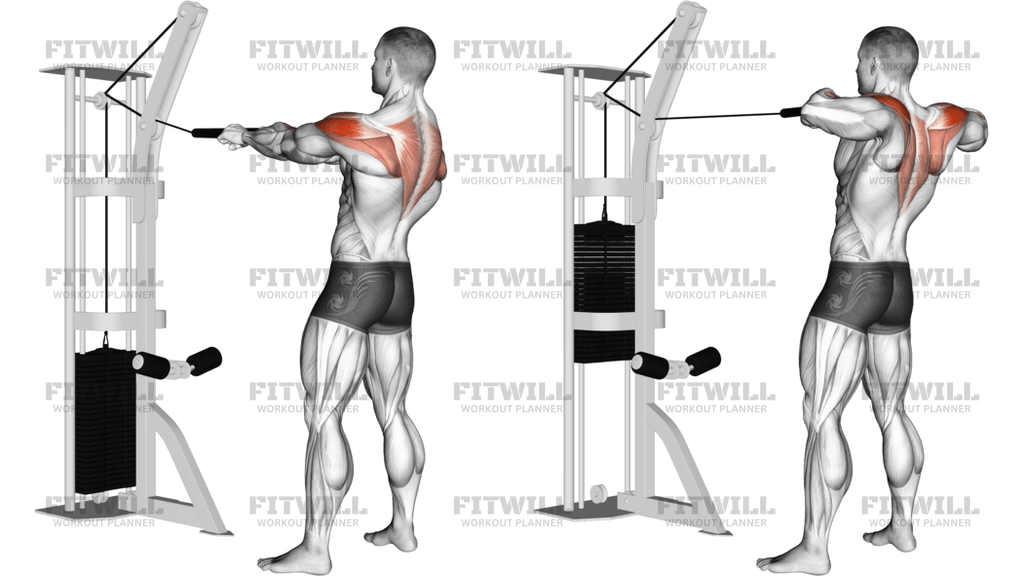
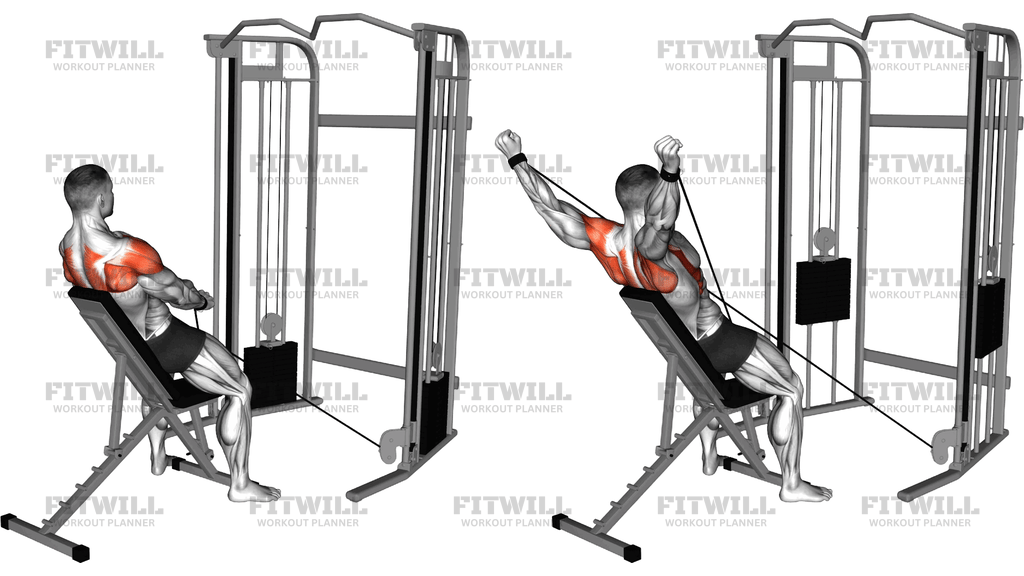
The Cable Incline Y Raise With Back Support is a shoulder and upper-back isolation exercise performed on a dual cable stack while seated on an incline bench. You anchor wrist straps to the low pulleys, sit leaning back against the pad, and raise both arms up and out into a wide Y position overhead. Because the resistance comes from cables running behind you, the tension stays on the rear delts and trapezius through the entire range, including the top of the movement where dumbbells would normally go slack.
This movement is especially useful for lifters whose rear delts and mid-back get outpaced by pressing work. The incline position with back support removes most of the momentum and lower-back compensation you see in standing cable raises, so the target muscles have to do the work. It also trains the scapular upward rotation pattern, which matters for healthy overhead mobility and balanced shoulder development.
The primary muscles worked are the posterior deltoids, with strong contribution from the lower and middle trapezius and the rhomboids as the shoulder blades rotate and retract. The side delts assist as the arms travel through the mid-range, and the rotator cuff works to control the shoulder position throughout.
Setup matters more here than in most raises. The bench angle, the distance you sit from the pulleys, and the strap position on your wrists all determine whether the cables pull in a clean line behind you or grind against your forearms. Sit far enough back that the straps clear your body at the bottom, and keep your back flush against the pad so your torso stays locked in place.
To execute well, start with your arms down and slightly in front of your hips, then lead with the elbows and spread your arms into a wide Y, finishing with hands just above shoulder height to overhead. Keep the wrists neutral and the thumbs up. Pause briefly at the top, then lower under control until the straps return toward your hips without letting the weight stack slam down.
Use this exercise as an accessory on shoulder or upper-back days, typically for moderate weight and controlled reps in the 10 to 15 range. It pairs well with rows and face pulls, and because the back is supported, it is a solid choice when you want rear delt volume without fatiguing your lower back or needing to stabilize a standing position.
[ Workout Log & Planner ]
Put your next workout in Fitwill
Keep your plan and training log ready when you are.


Instructions
- Set an incline bench to roughly 30 to 45 degrees and position it facing away from a dual cable machine, with one low pulley on each side.
- Attach a wrist strap to each low pulley and secure one strap around each wrist, with the cable running from the pulley behind your arm.
- Sit on the bench and lean your back firmly against the pad, then walk your hips forward or back until the straps hang just behind your hips with light tension at arm's length.
- Plant your feet flat on the floor about hip width apart, brace your core, and let your arms hang down and slightly forward with a neutral grip, thumbs pointing up.
- Exhale and raise both arms up and out to the sides, leading with your elbows, so your arms form a wide Y above shoulder level.
- At the top, your arms should be nearly straight and in line with the cables, with your shoulder blades rotating upward and squeezing together.
- Hold the top position for a beat without shrugging your shoulders toward your ears.
- Inhale and lower your arms back down along the same wide arc until the straps return near your hips, keeping steady tension on the cables.
- Complete your reps, then release one strap at a time and let the weight stack settle gently before standing up.
Tips & Tricks
- If the straps drag against your forearms or the bench at the bottom, slide the bench slightly further from the pulleys until the cables clear your body through the full arc.
- A common mistake is shrugging at the top and turning this into an upper-trap raise. Keep space between your ears and shoulders and let the lower traps finish the movement.
- Do not bend the elbows excessively to lift heavier. A soft elbow is fine, but bending the arms turns the Y raise into a rear-delt row and shortens the range.
- Keep your lower back and shoulders in contact with the pad. If your chest lifts off the bench as you raise, the weight is too heavy or you are arching to generate momentum.
- The cables should pull from behind and slightly below your shoulders at the start. If they pull from directly in front, reposition the bench on the other side of the machine.
- Use a lighter weight than you would for lateral raises. The rear delts and lower traps are smaller muscles and the back-supported setup gives you no way to cheat.
- Aim for a wide arc rather than height. Hands drifting forward over your head means the arms are internally rotating and the rear delts are losing tension.
- Control the lowering phase for two to three seconds. The eccentric is where the cable setup really differs from dumbbell Y raises, so rushing it wastes the advantage.
- If your wrists ache, check that the straps sit on the forearm side of the wrist joint and that you are not cocking the hands backward at the top.
Frequently Asked Questions
What muscles does the Cable Incline Y Raise Wrist Straps With Back Support work?
The posterior deltoids are the primary movers, with the lower and middle trapezius and rhomboids working hard as the shoulder blades rotate upward. The side delts and rotator cuff assist throughout the range.
Why use wrist straps instead of handles for this exercise?
Wrist straps let the cable pull from behind your forearm without forcing your grip or wrist angle to change. This keeps the shoulder in a neutral, thumbs-up position, which is more comfortable for the rear delts and rotator cuff.
What bench angle should I use for the Cable Incline Y Raise?
Somewhere between 30 and 45 degrees works for most people. A steeper angle shifts your torso more upright, while a shallower angle lengthens the cables slightly, so adjust bench position rather than angle if tension feels off.
Is this exercise suitable for beginners?
Yes, provided you start with a light weight and focus on the wide Y arc. The back support actually makes it beginner-friendly because it removes balance and momentum demands, leaving only the raise to learn.
How is this different from a dumbbell Y raise on an incline bench?
Cables keep constant tension at the top of the movement, where dumbbells lose resistance because gravity pulls straight down. The cables also pull from behind you, which biases the rear delts and lower traps more directly.
How heavy should I go on the Cable Incline Y Raise?
Stay lighter than you think and work in the 10 to 15 rep range with strict form. If your torso peels off the pad or your shoulders shrug to your ears, reduce the weight.
Can I do this exercise if I only have one adjustable pulley?
You can, by training one arm at a time with the bench angled so the cable pulls from behind your working side. Expect the set to take twice as long and switch arms without long rests to keep the effort even.
Where should I feel the Cable Incline Y Raise With Back Support?
You should feel a broad pull across the back of your shoulders and between your shoulder blades. If you only feel it in the top of your traps or your neck, you are shrugging and need lighter weight with a wider arc.
Is it safe for my shoulders if I have a history of impingement?
The thumbs-up, wide-arc position is generally shoulder-friendly, but any history of shoulder pain deserves caution. Start with a very light weight, keep the range pain-free, and check with a qualified professional if symptoms persist.