Lyine Prone Shoulder Extension
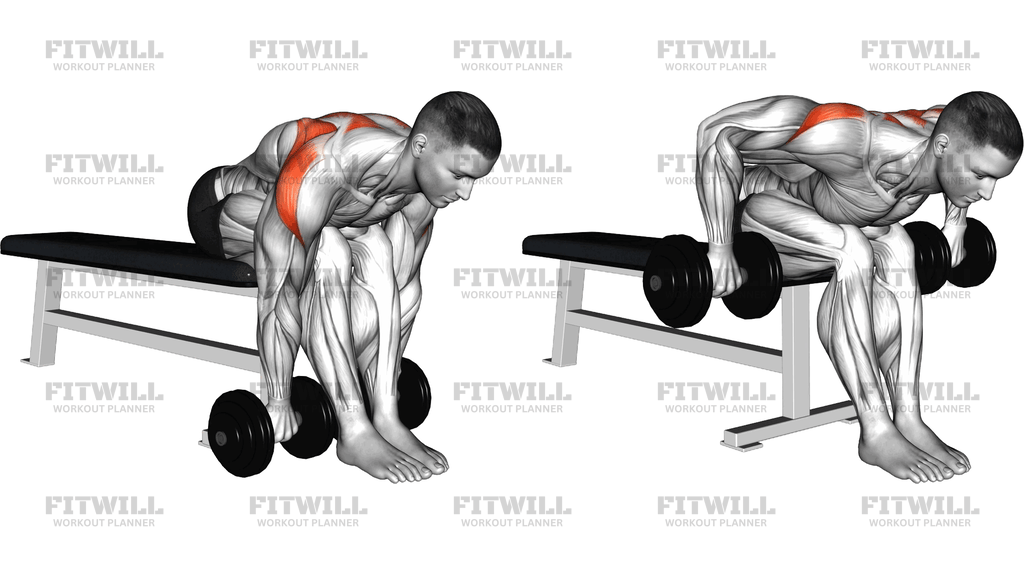
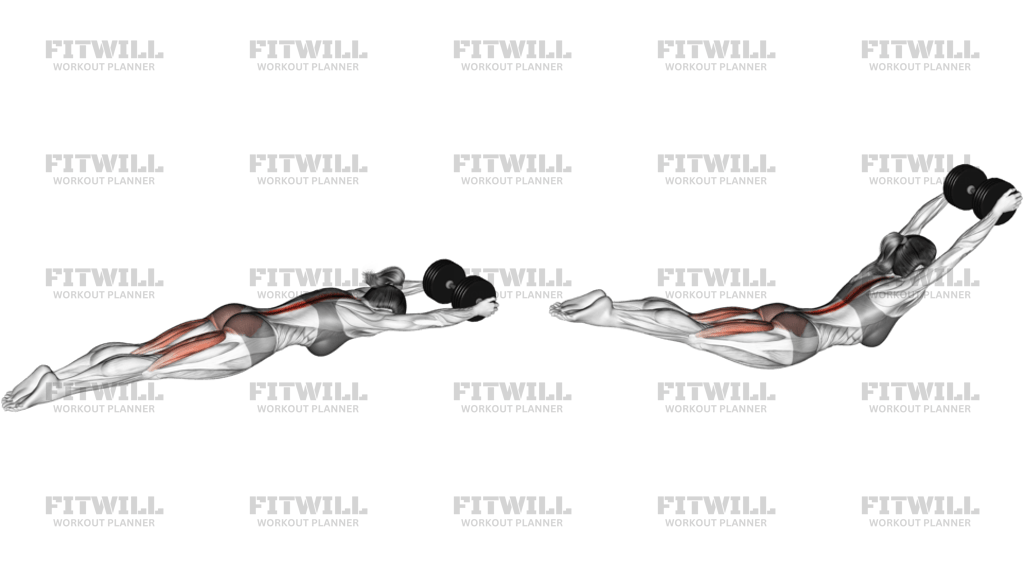
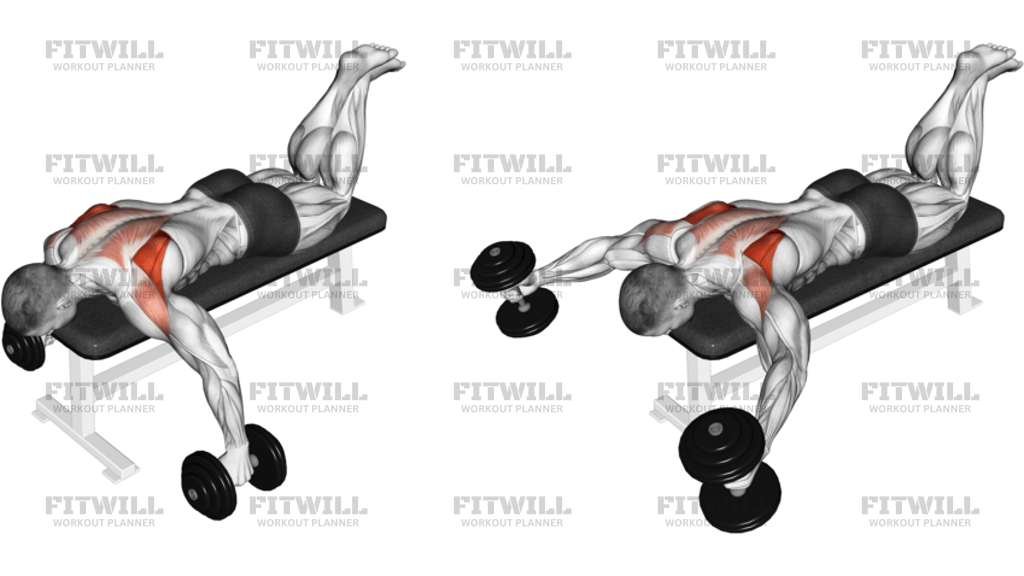
The Lying Prone Shoulder Extension is a dumbbell isolation exercise performed face down on a flat bench. You hold a dumbbell in each hand with your arms hanging straight toward the floor, then raise both weights behind you by extending at the shoulder joints until your hands travel back toward your hips. Because your chest is supported and your arms stay nearly straight, the movement isolates the shoulder extension pattern that is hard to load cleanly in most standing positions.
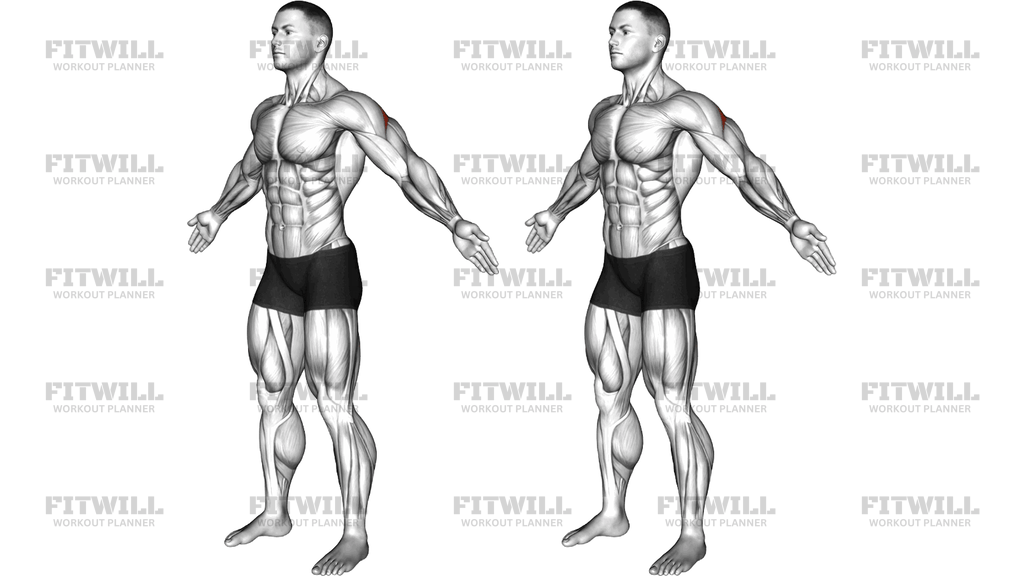
The main muscle at work is the posterior deltoid, the rear portion of the shoulder that extends the upper arm behind the body. As the arms travel back past your sides, the lats and the muscles of the upper back, including the rhomboids and teres major, assist and stabilize. The grip and forearms work isometrically simply to hold the dumbbells, but they should not drive the movement.
This exercise suits lifters whose rear shoulders get neglected relative to pressing and pulling volume, people working on balanced shoulder development, and anyone who wants a strict, low-momentum way to train shoulder extension. Because the bench blocks body English, it is also a good teaching tool for learning what true rear-shoulder contraction feels like before moving to harder variations.
Setup matters more here than in most dumbbell moves. Lie face down with your chest and upper abdomen supported on the bench, head slightly off the pad so your neck stays neutral, and your feet on the floor for stability. Let the dumbbells hang directly under or slightly behind your shoulders. If the bench is too high or the dumbbells rest on the floor at the start, your range will be cut short, so pick a height that lets your arms hang freely.
To execute it well, keep your elbows soft but essentially straight throughout. Think about driving your upper arms back toward the ceiling behind your hips rather than pulling with your hands or bending at the elbows. Lift only as far as your shoulders allow without your chest peeling off the bench, pause briefly at the top, and lower the dumbbells under control to the hanging start.
Use the Lying Prone Shoulder Extension as an accessory movement, typically for moderate to higher reps with lighter dumbbells. It pairs well with rows and presses, and it fits naturally at the end of an upper body session when the smaller shoulder musculature can be isolated without heavy load. Keep the tempo smooth and stop any set where the shoulder feels pinched rather than worked.
[ Workout Log & Planner ]
Put your next workout in Fitwill
Keep your plan and training log ready when you are.


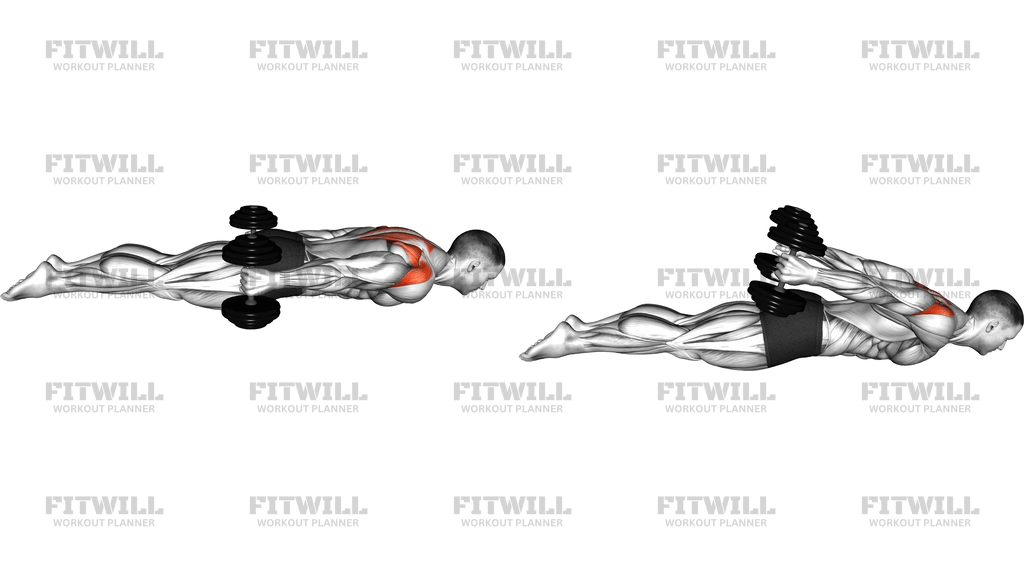
Instructions
- Place a pair of light dumbbells beside a flat bench, then lie face down with your chest and upper abdomen supported on the pad and your feet flat on the floor for balance.
- Grip a dumbbell in each hand with a neutral grip, palms facing your body, and let both arms hang straight down toward the floor in line with or slightly behind your shoulders.
- Keep your chin just off the bench so your neck stays long and neutral, and lightly brace your abdominal muscles to keep your ribs and pelvis quiet.
- Keeping your elbows nearly locked and your wrists straight, exhale and raise both dumbbells behind you by moving your upper arms back toward your hips.
- Continue until your hands are roughly level with your hips or just above them, feeling the work in the back of your shoulders rather than in your arms.
- Pause for a short beat at the top without shrugging your shoulders toward your ears or arching your chest off the bench.
- Inhale and lower the dumbbells slowly back to the fully hanging start position, letting your shoulders settle briefly before the next rep.
- Complete your target reps, then set the dumbbells on the floor before sitting up, and recheck your position on the bench between sets.
Tips & Tricks
- If you feel the exercise in your triceps, your elbows are bending and you are drifting into a kickback — keep the arms long and think of the dumbbells as an extension of a straight arm.
- Do not let your chest lift off the bench as the weight travels back; that means the load is too heavy or the range is too long, so reduce the weight and stay supported.
- Watch for shrugging at the top of each rep. If your shoulders creep toward your ears, lighten the load and consciously keep space between your ears and shoulders.
- The dumbbells should travel close to your body toward your hips. Letting them swing out wide turns the movement into a fly pattern and stresses the shoulder differently than intended.
- Try a thumbs-up grip if the neutral grip bothers the front of your shoulder — the slight rotation often makes the top position more comfortable for the joint.
- Keep your wrists straight and stacked over the dumbbell handle. Cocked wrists pull the shoulders out of position and shift tension into the forearms.
- A two-second lowering phase is worth more than extra weight here, since the rear shoulders respond better to controlled tempo than to momentum.
- If your lower back tenses up, make sure your feet stay planted and you are not lifting your legs or ribs to help the dumbbells up.
- Start with a range that stops at hip height. Forcing the hands higher than the shoulder allows usually just arches the spine instead of working the muscle more.
Frequently Asked Questions
Which muscles does the Lying Prone Shoulder Extension work?
The posterior deltoid at the back of the shoulder is the prime mover. The lats and upper back muscles such as the rhomboids assist as the arms travel behind the body.
How is the Lying Prone Shoulder Extension different from a reverse fly?
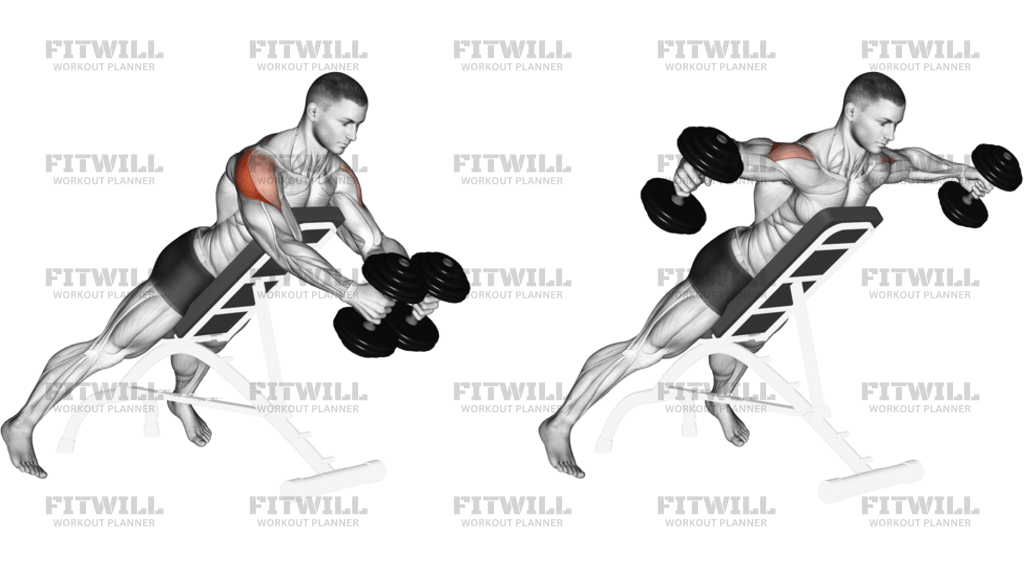
A reverse fly moves the arms out to the sides at shoulder height, while this exercise keeps the arms straight and sends them backward toward the hips. That trains shoulder extension rather than horizontal abduction.
Why lie prone on a bench for this movement?
The bench supports your torso and makes it very hard to swing or use body English, so the rear shoulders have to do the work. It also takes standing load off the lower back.
Should my elbows bend during the Lying Prone Shoulder Extension?
Keep them essentially straight. Once the elbows bend significantly, the movement becomes a triceps kickback and the rear shoulders stop driving the weight.
Can beginners perform the Lying Prone Shoulder Extension?
Yes, it is actually a good beginner exercise because the bench enforces strict form. Start with very light dumbbells for sets of ten to fifteen controlled reps.
My lower back feels tight when I do the Lying Prone Shoulder Extension. What should I change?
You are likely lifting your chest or legs to help the dumbbells up, or the weight is too heavy. Keep your feet planted, reduce the load, and stop the lift at hip height.
What grip should I use on the dumbbells?
A neutral grip with palms facing your body is the standard setup. If the top position pinches the front of the shoulder, rotating to a thumbs-up grip often feels smoother.
What can I use instead of dumbbells for this exercise?
A resistance band anchored in front of you while you lie prone, or a cable with a single handle pulled straight back, mimics the same straight-arm extension path.
How heavy should the dumbbells be?
Lighter than you expect. The rear shoulders are a small muscle and the prone position removes all momentum, so choose a weight you can pause cleanly at the top for ten to fifteen reps.
Is the Lying Prone Shoulder Extension safe if I have a shoulder issue?
The straight-arm path is generally joint-friendly, but any existing shoulder condition deserves professional guidance. Work within a pain-free range and stop if you feel pinching rather than muscular effort.