Chair Sit Alternate Heel Raise Agains Wall
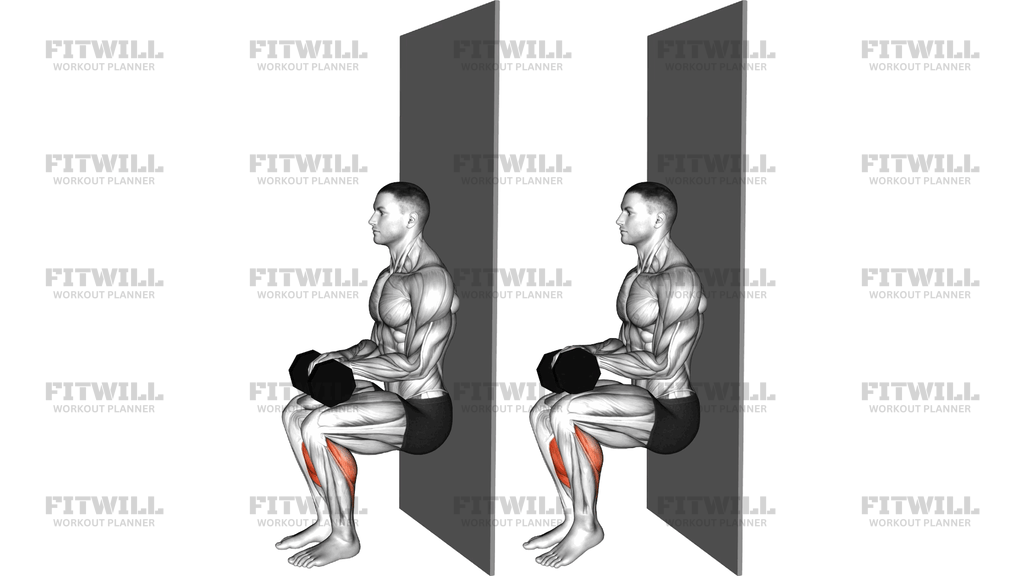
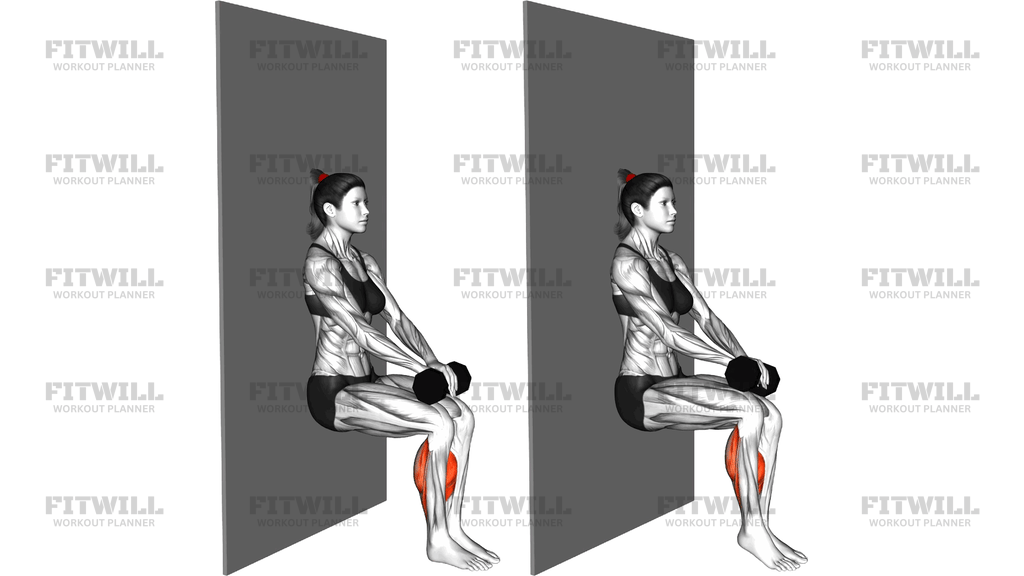
Chair Sit Alternate Heel Raise Against Wall combines an isometric wall sit with alternating calf raises, so you train two things at once: the calves lift the heels one at a time while the thighs and glutes hold the seated position against the wall. A dumbbell rests on the thighs to add load to both the hold and the raises, which is why this movement feels far harder than a simple standing heel raise.
This exercise suits lifters who want more calf work without a calf raise machine, as well as anyone rebuilding lower leg strength after time away from training. Because one foot always stays planted while the other lifts, the working ankle gets a full, unhurried contraction, and the planted side keeps practicing balance and control under load. The wall sit component also builds isometric strength in the quadriceps and glutes, which carries over to squats, hiking, and everyday activities like climbing stairs.
Setup matters more here than in most calf work. Slide your back down the wall until your hips and knees are both bent close to ninety degrees, with the dumbbell placed squarely on the thighs just above the knees. If your stance is too close to the wall your knees will drift forward and shift stress away from the thighs; too far away and your feet will want to slide. Feet stay about hip-width apart and flat on the floor before each rep begins.
To perform the raise, press the ball of one foot into the floor and lift that heel as high as it will go while the other foot stays flat, then lower the heel under control and switch sides. Keep your back, shoulders, and hips in contact with the wall throughout so the torso cannot lean or twist to help. Breathe steadily rather than holding your breath, since the isometric hold already raises blood pressure.
Common use cases include finishing a leg day with calf volume, pairing calf training with quad endurance work in a short home session, and adding controlled ankle strength for running and jumping sports. Start with one light dumbbell or even bodyweight only, and add load only when you can complete all reps without the hips dropping or the heels snapping up and down.
The main safety points are simple: stop if the knees or Achilles feel sharp pain rather than muscle effort, keep the heel lowering slow instead of dropping it, and step away from the wall to rest as soon as your thighs shake to the point where your form changes. Quality reps with a full heel lift beat partial, rushed reps every time.
[ Workout Log & Planner ]
Put your next workout in Fitwill
Keep your plan and training log ready when you are.


Instructions
- Stand with your back flat against a wall, then walk your feet out and slide down until your hips and knees are both bent at roughly ninety degrees, as if sitting on an invisible chair.
- Set the dumbbell across both thighs just above the knees, holding it steady with your hands so it cannot roll toward the hips.
- Position your feet hip-width apart and fully flat on the floor, with your whole back, shoulders, and head staying in contact with the wall.
- Brace your core lightly and keep your weight centered over the middle of each foot before starting the reps.
- Press the ball of your right foot into the floor and raise your right heel as high as possible while your left foot stays completely flat.
- Pause briefly at the top of the lift so the calf squeezes, then lower the right heel back to the floor under control instead of dropping it.
- Repeat the same lift on the left heel, keeping the right foot planted and flat, and continue alternating heel raises for the desired number of reps per side.
- Exhale as you lift each heel and inhale as you lower it, avoiding breath-holding during the wall sit hold.
- Keep your hips at the same height the entire set; if they creep upward or your back peels off the wall, end the set and rest.
- To finish, stay in the hold for the last rep, place the dumbbell on the floor, then stand up by pushing away from the wall with both legs.
Tips & Tricks
- If your feet slide forward during the set, your stance is too far from the wall for the wall sit angle; take a half-step closer and reset before continuing.
- A common mistake is lifting the opposite heel along with the working foot, which turns the exercise into a two-leg raise; keep the non-working foot actively flat by pressing its toes and ball into the floor.
- Do not let the dumbbell roll toward your knees or hips; pin it in place on the thighs with your hands so the load stays over the working calves and thighs.
- If your heels snap up quickly and fall back, the calves are skipping the lowering phase; take two full seconds to lower each heel to keep the soleus and ankle working through the whole range.
- Watch for the hips rising as the set gets hard, which shortens the wall sit and removes the isometric quad work; check your knee angle in a mirror or film a set from the side.
- If the wall sit fails before the calves do, drop to a lighter dumbbell or do the first sets without weight until your thigh endurance catches up.
- Keep the lift going through the big toe and ball of the foot rather than rolling onto the outside edge of the foot, which strains the ankle.
- Place an exercise mat or a towel on the floor under your heels if your gym floor is slippery, since a sliding foot is the main setup risk in this movement.
- If your shoulders or head drift off the wall as you tire, pause the set, reset your back contact, and finish with fewer reps rather than leaning forward to cheat.
Frequently Asked Questions
Which muscles does Chair Sit Alternate Heel Raise Against Wall work?
The primary muscles are the calves, mainly the gastrocnemius and soleus, with the ankle stabilizers helping on each single-leg lift. The isometric wall sit position also keeps the quadriceps and glutes under continuous tension throughout the set.
Why raise one heel at a time instead of both together?
Alternating heels lets each ankle move through a fuller range without the other foot leaving the floor, and it adds a balance and stability demand that a two-leg raise does not have. Each calf also gets a brief rest between lifts, which lets you do more total reps with good form.
Is Chair Sit Alternate Heel Raise Against Wall good for beginners?
Yes, as long as you start without the dumbbell and hold the wall sit at a higher, easier angle. Once you can keep your back flat on the wall and control each heel lift for a full set, add a light dumbbell on the thighs.
What does the dumbbell add if the calves are doing the lifting?
The dumbbell sitting on the thighs loads both the isometric hold and every heel raise, since each calf presses its share of the added weight into the floor. Even a modest dumbbell makes the set noticeably harder than a bodyweight version.
How deep should the wall sit be during this exercise?
Aim for hips and knees both bent at about ninety degrees, so your thighs are close to parallel with the floor. That depth is challenging but keeps the knees and ankles in a stable position for the heel raises.
Why do my thighs burn more than my calves during this movement?
The wall sit keeps your quadriceps under constant tension, so they often fatigue first, especially with a dumbbell on the lap. If the thighs give out before the calves, use a lighter weight or a slightly shallower angle so the calf work gets done properly.
What is the most common mistake in Chair Sit Alternate Heel Raise Against Wall?
The most common errors are dropping the heel instead of lowering it under control and letting the hips rise off the wall sit position as fatigue builds. Both cut the range of motion short and reduce the work the calves and thighs actually do.
Can I substitute this exercise if I have no dumbbell?
Yes, perform the same wall sit with alternating heel raises using bodyweight only, or hold a heavy household object such as a filled bag across the thighs. The movement pattern and setup stay exactly the same.
How many reps and sets should I do?
A practical starting point is 2 to 3 sets of 10 to 16 alternating lifts per side, resting between sets. Increase the dumbbell weight or add a short pause at the top of each lift once all reps feel smooth and controlled.
Is it safe for my knees and Achilles tendons?
For most people the movement is gentle because the angle is fixed and the load is modest, but stop if you feel sharp pain in the knees or at the back of the ankle. Keep the heel lowering slow, and if you have a history of Achilles or knee issues, check with a qualified professional before adding load.