Narrow Lunge With Wall Supported
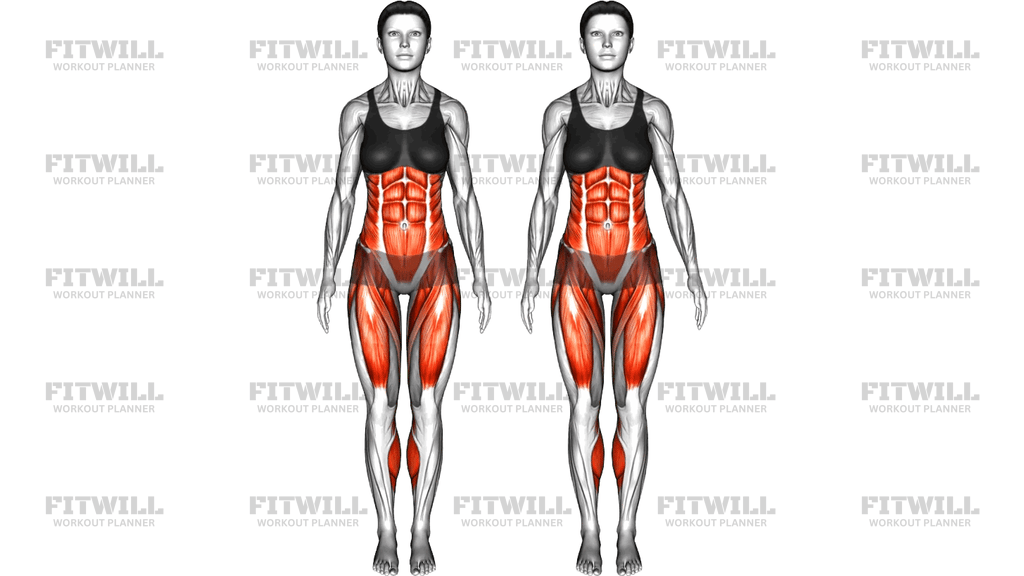
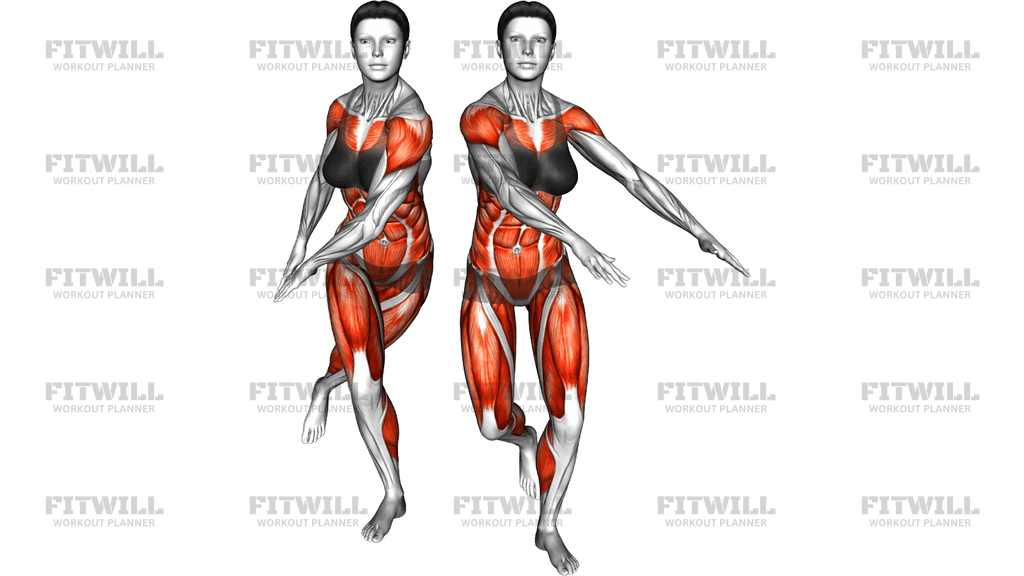
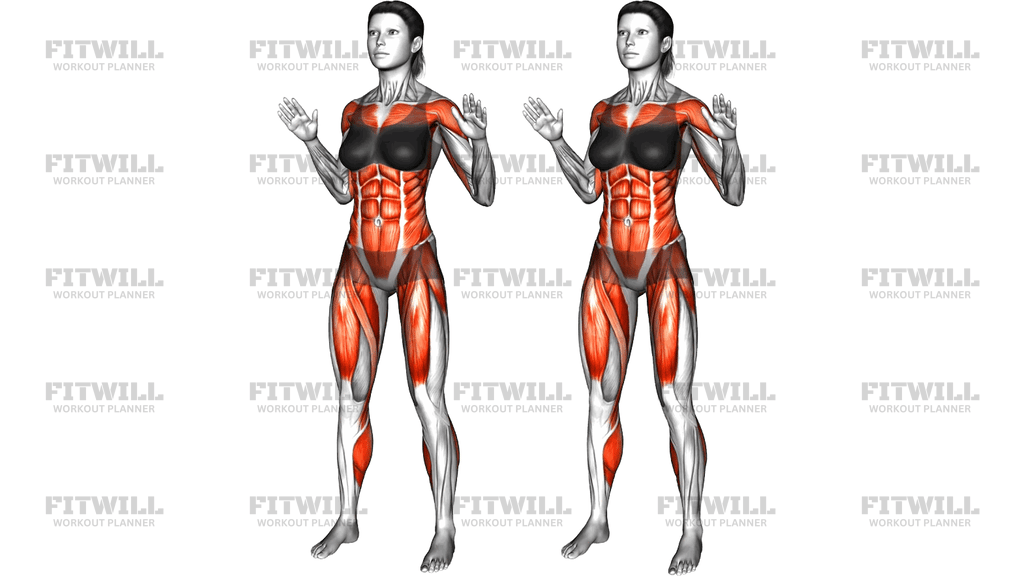
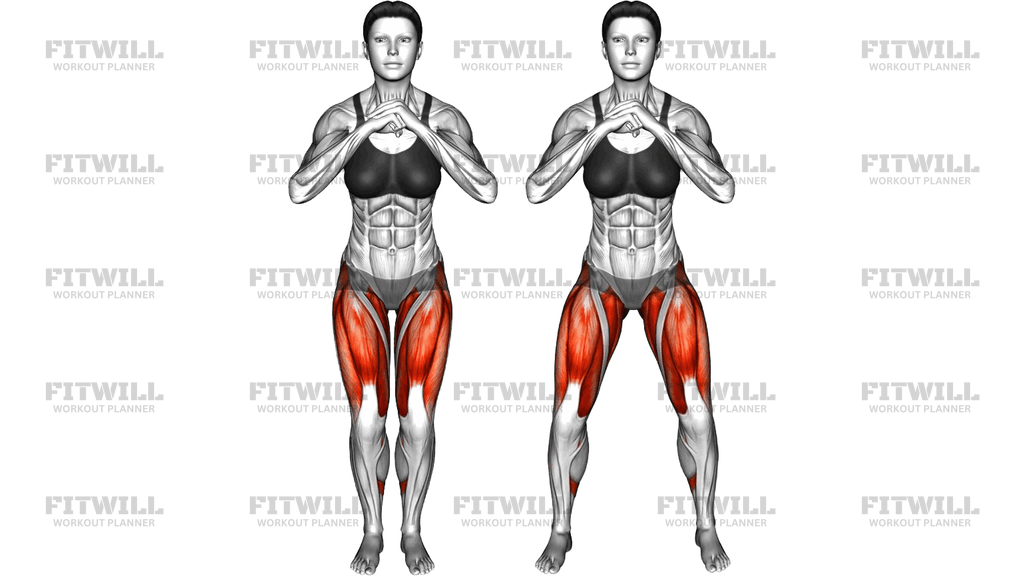
The Narrow Lunge With Wall Supported is a bodyweight lunge variation performed in a tight split stance with your fingertips resting against a wall for balance. Instead of stepping out wide, your feet stay close to a single line front to back, which places a strong emphasis on the quads of the front leg while the rear leg's hip flexors and glutes work to control the descent. The wall contact is there for stability, not for pushing — it lets you focus on a clean vertical drop without wobbling.
This setup makes the movement a good choice for anyone who finds regular lunges awkward or unsteady: beginners learning the lunge pattern, older trainees working on confidence in a split stance, or lifters coming back after time off. Because the wall removes the balance demand, you can put your attention where it matters — keeping your torso tall-ish and angled slightly forward toward the wall, tracking your front knee over your toes, and lowering until your rear knee hovers just above the floor.
The narrow stance is what separates this from a standard lunge. With your feet nearly in line, the front knee travels further over the foot, and the quad does more of the work than the glutes would in a longer stride. The rear leg gets a deep hip extension stretch at the bottom, and your calves and ankles work continuously to keep you from tipping sideways or backward.
In the depicted setup, you stand facing the wall about an arm's length away, place both palms flat on the wall at roughly chest height, then take a narrow split stance with the rear heel lifted. From there you bend both knees and sink straight down between your feet, letting your elbows bend slightly as your body lowers, then drive through the front foot to stand back up. Complete all repetitions on one side before switching legs.
Use this exercise as a warm-up activation for leg day, as a high-rep finisher for the quads, or as a standalone practice drill for lunge mechanics. It requires no equipment beyond a clear stretch of wall, so it works well at home, in a hotel room, or in a crowded gym where you just need a bit of floor space. Keep the load on your front leg, move with control, and stop short of any knee discomfort at the bottom.
[ Workout Log & Planner ]
Put your next workout in Fitwill
Keep your plan and training log ready when you are.


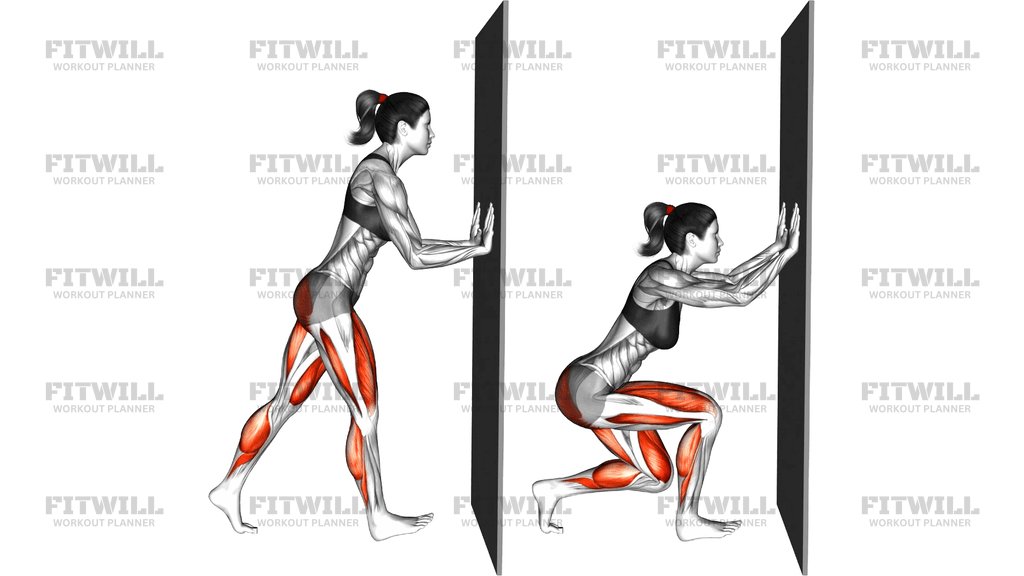
Instructions
- Stand facing a clear wall about an arm's length away, feet hip-width apart.
- Place both palms flat on the wall at chest height with your elbows softly bent.
- Take a narrow split stance: step one foot back so your feet form a tight line, front foot flat, rear heel lifted high.
- Brace your abdominals lightly and let your torso incline slightly toward the wall while keeping your back flat.
- Inhale, then bend both knees at the same time and sink straight down between your feet.
- Lower until your rear knee is just above the floor and your front knee is bent deeply over your foot, letting your hands slide or press as needed.
- Exhale and press through the whole front foot, especially the mid-foot, to drive your body back up the same vertical path.
- Straighten both legs to return to the narrow split stance without locking the front knee hard.
- Finish all reps on the front leg, then step the feet together, reset your hand position, and switch legs.
- Keep your weight resting into the fingertips, not the palms — the wall is for balance only.
Tips & Tricks
- If your hips twist as you descend, narrow your stance even less aggressively — a slight gap between the front and rear foot's line is fine when you're learning.
- The most common fault here is leaning so far into the wall that your chest and arms take over; keep only light fingertip pressure so the front leg still does the lifting.
- If your front knee caves inward at the bottom, think about spreading the floor with your front foot and driving the knee toward the pinky-toe side.
- Avoid slamming the rear knee into the floor; if you can't stop it just above the ground, reduce your depth and rebuild range gradually.
- Keep the rear heel lifted the entire set — dropping it flattens the rear leg's stretch and shifts the work away from the intended split-stance position.
- Your elbows should bend as you lower rather than your shoulders shrugging up; tension in the neck means you're leaning on the wall too heavily.
- Shorten your stride if your front heel lifts off the floor at the bottom — the heel should stay planted through every rep.
- Slow the lowering phase to two or three counts to get more out of the quads without adding load.
- If balance is still tricky, hold the bottom position for one breath each rep to teach the split stance before adding speed.
Frequently Asked Questions
Which muscles does the Narrow Lunge With Wall Supported work the most?
The quads of the front leg do the bulk of the work because the narrow stance keeps the knee traveling well over the foot. The glutes, hamstrings, and calves of both legs assist, and the core stabilizes your torso throughout.
Why does this lunge use a wall for support?
The wall removes most of the balance demand, letting you concentrate on knee tracking, depth, and a straight vertical drop. It's especially helpful for beginners or anyone rebuilding confidence in a split stance.
Should I push hard against the wall during the movement?
No — rest your fingertips or palms lightly against it for balance only. If you're pushing hard enough to bend your elbows significantly, you're offloading work from your legs.
Why is my stance described as narrow instead of a normal lunge stride?
In this variation your feet stay close to a single line front to back, which increases front-knee travel and shifts more emphasis to the quads while giving the rear hip a deeper stretch. A wide stride would turn it into a standard lunge with more glute involvement.
Is it okay if my front knee goes past my toes?
In a narrow lunge this is expected and generally fine as long as the knee tracks in line with the foot, the heel stays down, and there's no pain. Reduce depth if any of those conditions fail.
How deep should I lower in the Narrow Lunge With Wall Supported?
Aim to descend until your rear knee is just above the floor and your front thigh is roughly parallel or lower. Only go as deep as you can while keeping your front heel planted and your knee aligned.
How many reps should I do per side?
Start with 8 to 12 controlled reps per leg for two or three sets. Since it's bodyweight only, higher rep ranges of 15 to 20 per side also work well for endurance or as a finisher.
What can I use instead of a wall if none is available?
A sturdy doorframe, a squat rack upright, or even the back of a heavy chair can serve the same balancing role. Any fixed surface at roughly chest height that won't move when you touch it is suitable.
My hips keep shifting sideways as I lunge — how do I fix that?
Check that both hands are on the wall evenly and that you're sinking straight down rather than drifting forward over the front foot. Slowing the descent and pausing briefly at the bottom usually corrects the drift within a few sessions.
Is this exercise safe for sensitive knees?
The wall support actually makes it gentler than a free-standing lunge because you control balance and depth precisely. Keep the range shallow at first, move slowly, and stay within a comfortable, pain-free arc; stop and consult a professional if knee pain persists.