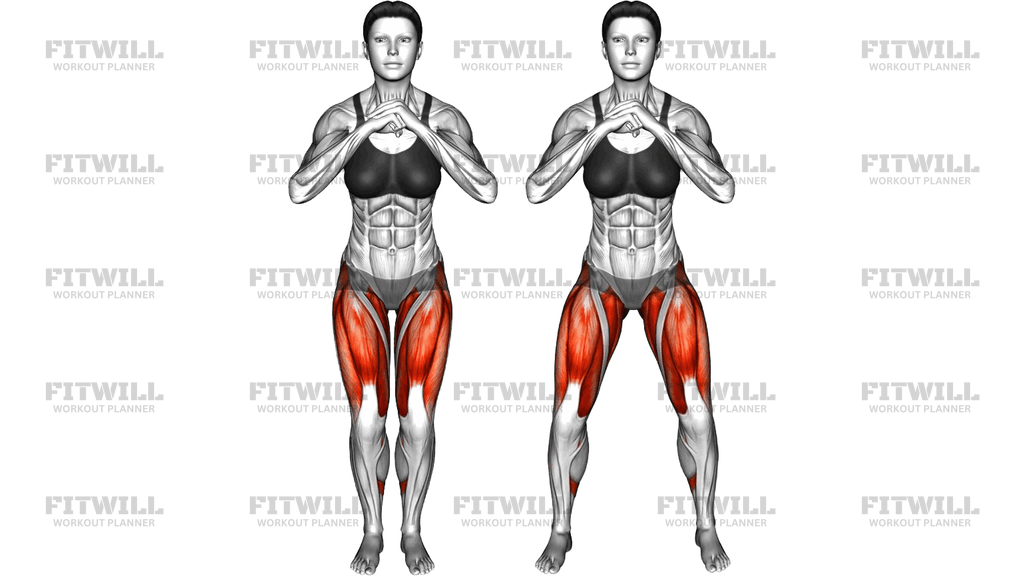
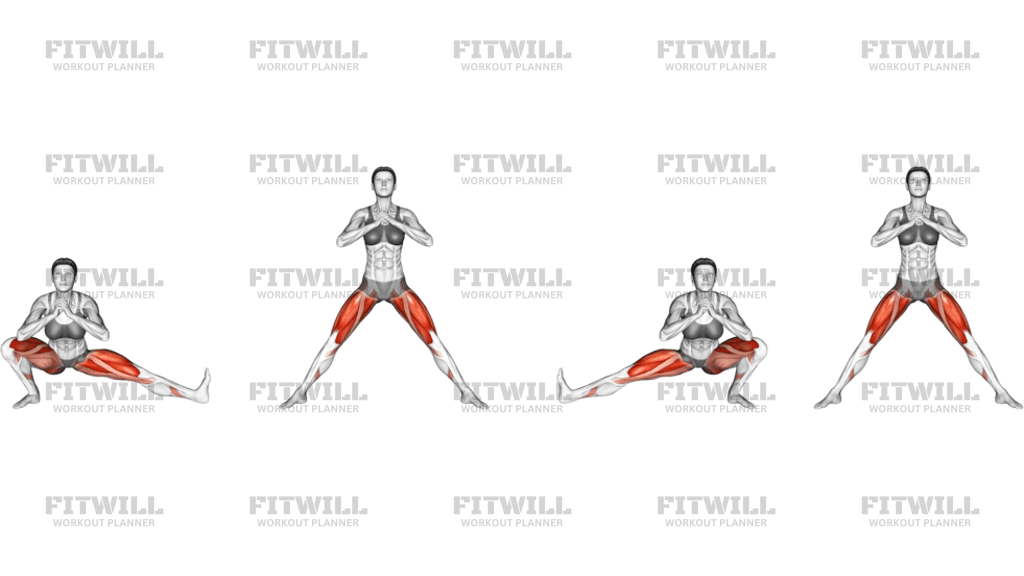
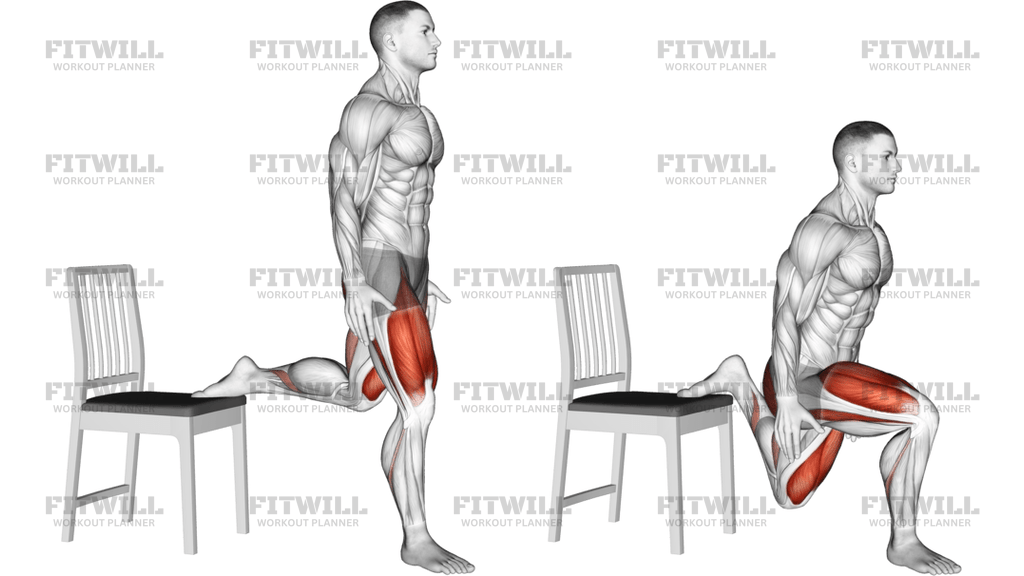
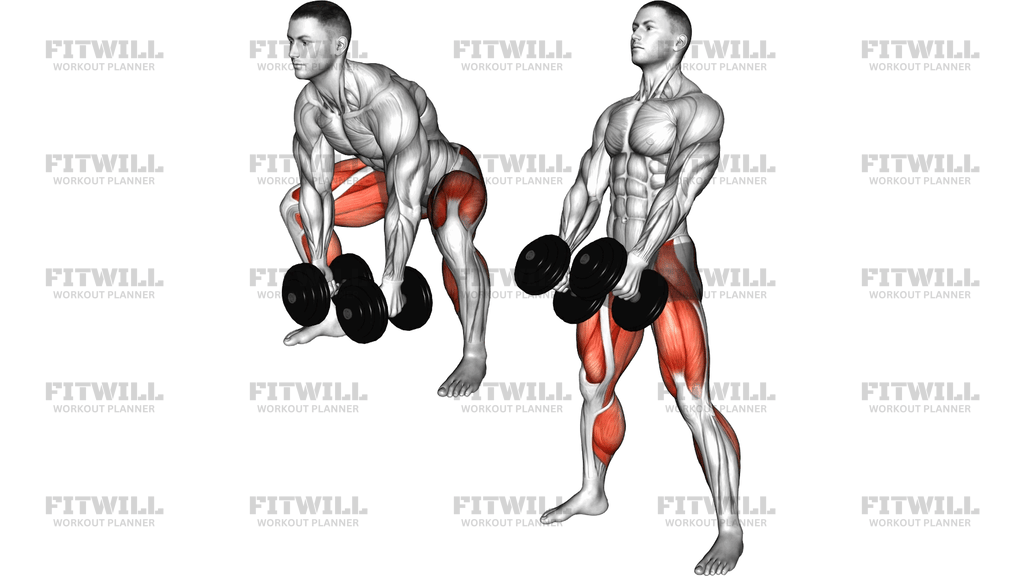
Chair Squat To Toe Stand
Chair Squat To Toe Stand is a bodyweight lower-body exercise that combines two simple but effective actions: lowering yourself back to a chair or bench under control, then driving up to a full stand and finishing onto the balls of your feet. The chair gives you a clear depth target and a built-in safety net, while the toe stand at the top adds a calf and ankle-stability element that a regular sit-to-stand misses. Hands are typically clasped at the chest, which keeps the torso upright and makes it easier to feel whether your weight stays balanced over your mid-foot.
This movement is one of the best entry points into squatting for beginners, older adults, or anyone returning from a layoff. Because the chair sets the depth, you don't have to guess how low to go, and you can't collapse into an uncontrolled bottom position without noticing. At the same time, it's not only a beginner drill — adding a deliberate calf raise at the top turns it into a useful conditioning exercise for the whole lower leg and a balance challenge that carries over to stairs, hiking, and everyday standing.
The main muscles working are the quadriceps, which extend the knees on the way up, and the glutes, which drive the hips forward out of the seated position. The hamstrings assist on the descent, and the calves and ankle stabilizers take over each time you rise onto your toes. Your core works isometrically the entire time to keep your chest tall and stop your torso from dumping forward as you stand.
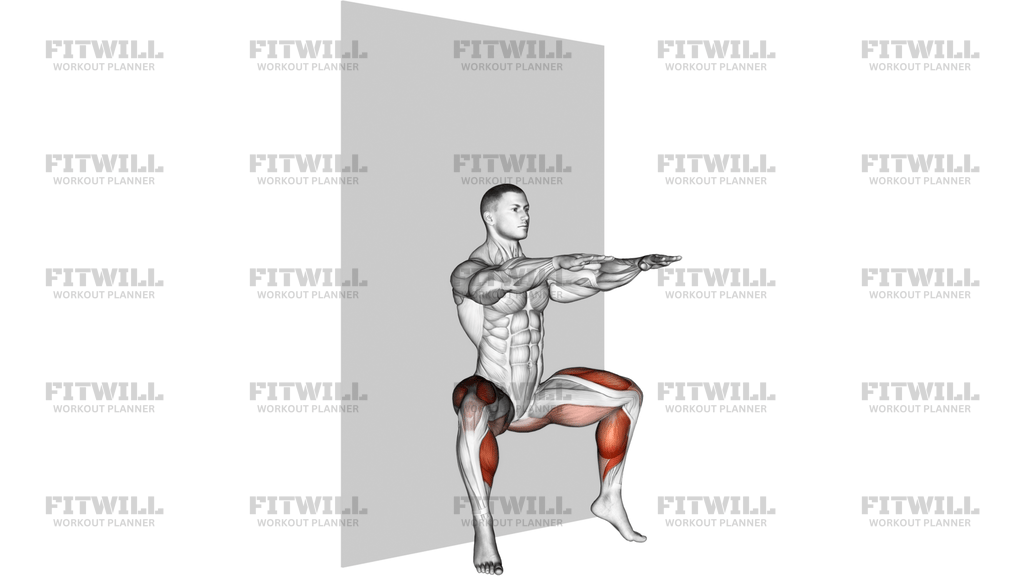
Setup matters more than most people expect. Chair height determines how hard the movement is: a higher seat makes the squat easier, a lower one demands more knee and hip strength. Position the chair behind you with your heels roughly a hand's width away from the front edge, feet about hip-width apart with toes turned slightly out. If your shins bang the chair or you fall onto the seat, your stance is too close or too far back.
To execute it well, hinge at the hips first and reach your hips back until they touch the seat lightly — think of tapping the chair, not plopping into it. Keep your chest lifted and your weight through your whole foot on the way down. From the seat, lean your torso slightly forward, press the floor away through mid-foot, and stand all the way up. Once your knees are straight, roll up onto the balls of your feet with control, hold for a beat at the top of the calf raise, then lower your heels slowly before starting the next rep.
Use this exercise as a warm-up for heavier leg work, as the main strength movement in a beginner program, or as high-rep finisher for quads and calves. It's also a practical bench-mark for daily function: if you can stand from a chair without using your hands repeatedly and smoothly, you've built a level of leg strength that directly supports independent living. Progress by lowering the seat height, slowing the tempo, pausing longer at the top, or eventually removing the chair and performing full bodyweight squats to toe stands.
[ Workout Log & Planner ]
Put your next workout in Fitwill
Keep your plan and training log ready when you are.


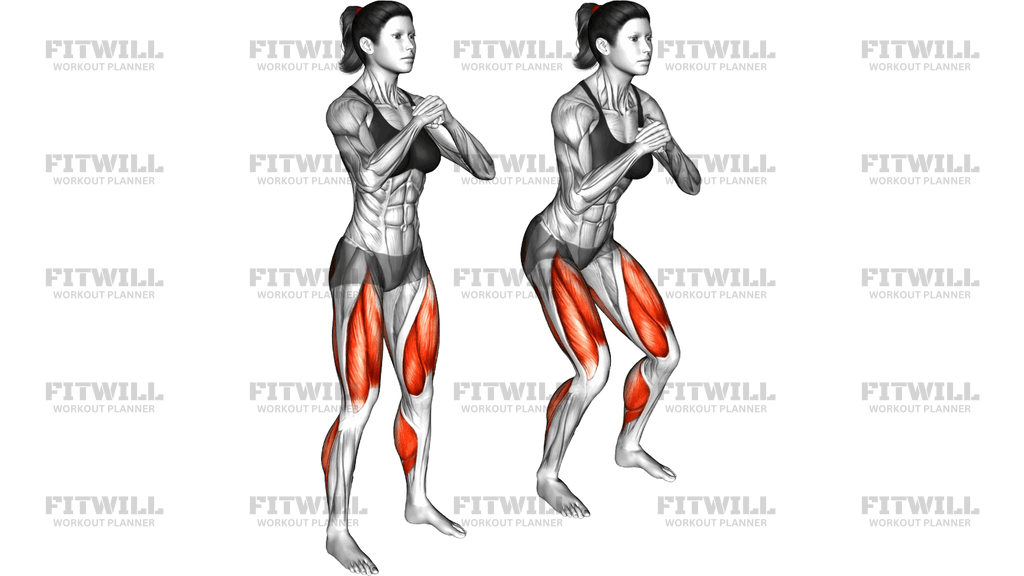
Instructions
- Place a sturdy chair or bench behind you and stand with your back to it, feet hip-width apart with toes angled slightly outward, heels about a hand's width from the front edge of the seat.
- Clasp your hands together in front of your chest and stand tall with your gaze forward.
- Brace your core lightly by drawing your belly button in and keep your chest lifted.
- Push your hips back and bend your knees to lower yourself toward the chair, keeping your weight spread across your whole foot and your knees tracking over your toes.
- Tap the seat lightly with your hips — do not fully rest or slump — then immediately lean your torso slightly forward.
- Drive through your mid-foot and squeeze your glutes to stand all the way up until your knees and hips are straight.
- At the top, press through the balls of your feet and rise onto your toes into a calf raise, holding the peak for one to two seconds.
- Lower your heels back to the floor with control, take a breath in as you begin the next descent, and exhale as you push up to stand.
Tips & Tricks
- If you drop heavily onto the seat, slow the last few inches of the descent — the tap should be gentle enough that a sheet of paper under you would stay in place.
- Don't let your heels lift as you squat down; if they do, widen your stance slightly or turn your toes out a little more.
- If you bounce straight off the chair, pause for a full second at the seat to remove momentum and force your quads and glutes to do the work.
- Keep the toe raise to a height you can lower slowly — shooting up fast and collapsing down means your calf control, not your calf strength, is the weak link.
- Watch that your knees don't cave inward as you stand; think of gently spreading the floor apart with your feet.
- Use a chair without wheels and, if balance is shaky at first, position it against a wall or near a counter you can touch for reassurance.
- As you rise onto your toes, keep your ankles stacked over your big and second toes rather than rolling outward onto the pinky side.
- If the seat is too low and your form breaks down, start with a cushion on the seat and remove it as your strength improves.
Frequently Asked Questions
What muscles does the Chair Squat To Toe Stand work?
The quadriceps and glutes do most of the work during the squat and stand, while the calves take over during the toe raise. The hamstrings and core assist throughout to control the descent and keep your torso upright.
Should I fully sit down on the chair between reps?
No — aim for a light tap of the seat before driving back up. Fully unloading onto the chair each rep turns it into a partial rest and reduces the strength benefit.
How high should the chair be for the Chair Squat To Toe Stand?
Start with a seat around knee height or slightly higher so you can lower with control. As you get stronger, move to a lower seat to increase the demand on your quads and hips.
Why does the exercise include rising onto the toes?
The toe stand adds a calf raise at the top, training the gastrocnemius and soleus plus the ankle stabilizers. It also challenges your balance in a standing position, which transfers well to stairs and walking.
I feel this only in my knees — what am I doing wrong?
This usually means your weight has shifted toward your toes and your torso is leaning too far forward. Sit your hips back further on the descent and keep your heels planted so the glutes and quads share the load.
Is the Chair Squat To Toe Stand good for beginners?
Yes, it's one of the most beginner-friendly squat variations because the chair sets your depth and provides a safety target. Master a controlled tap-and-stand before attempting free-standing squats.
Can I do this exercise without a chair?
Once you can tap the chair smoothly for sets of ten to fifteen reps, you can perform a full bodyweight squat to toe stand without it. Removing the chair increases the depth and demands more control at the bottom.
How many reps and sets should I do?
Start with two to three sets of eight to twelve reps, resting about a minute between sets. For a conditioning focus, build toward higher reps with a slower tempo and a longer hold at the top of the toe raise.
Is it safe to do Chair Squat To Toe Stand every day?
Because it uses only your bodyweight, most people can perform it frequently, but your muscles still need recovery to get stronger. Two to four sessions per week with at least one rest day between harder sessions is a sensible starting point.