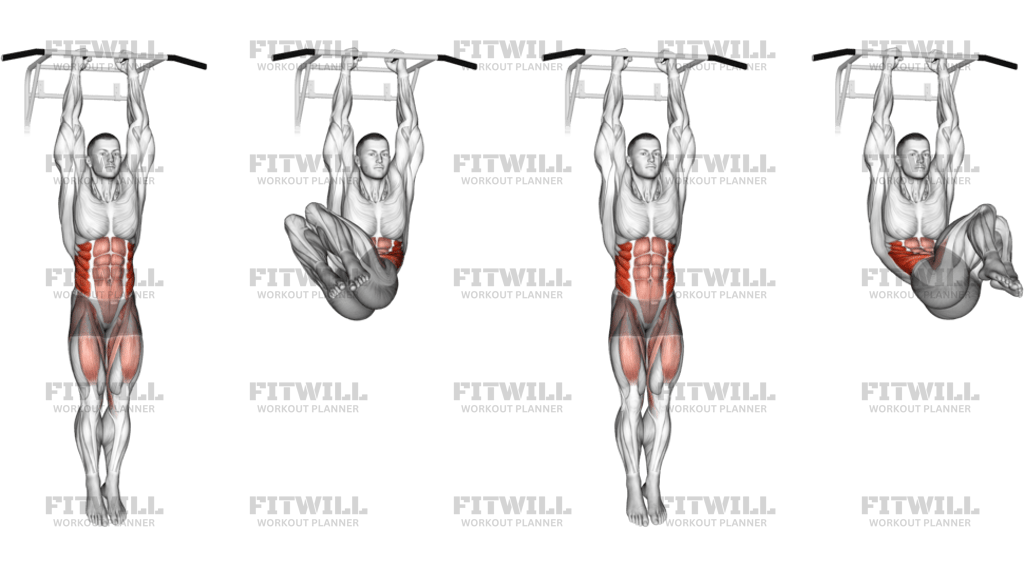
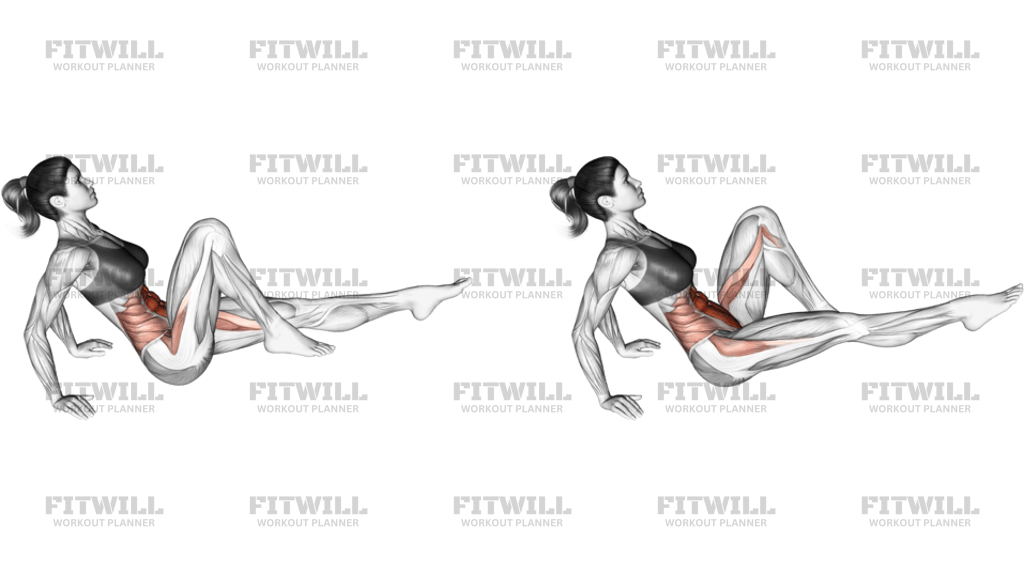
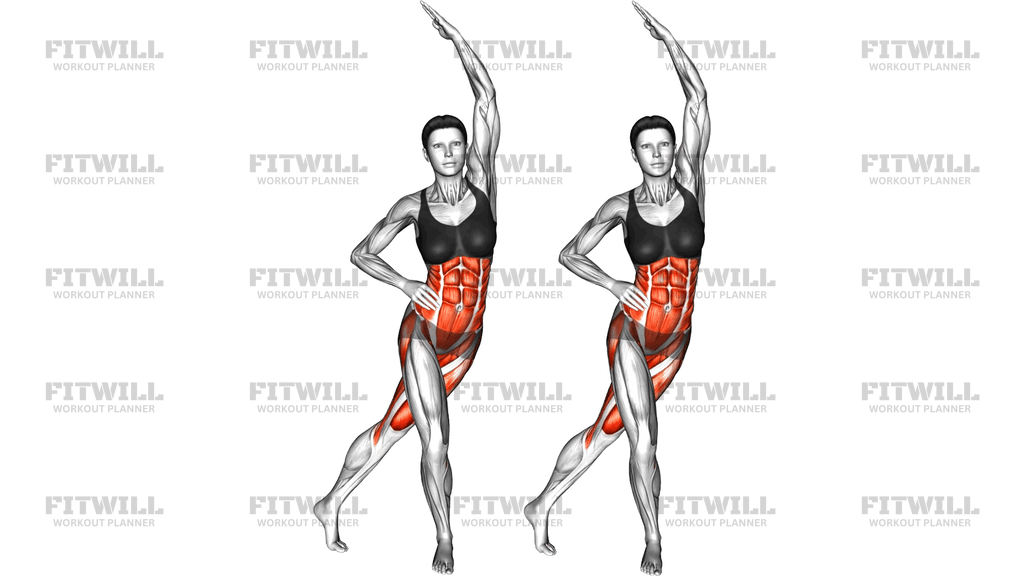
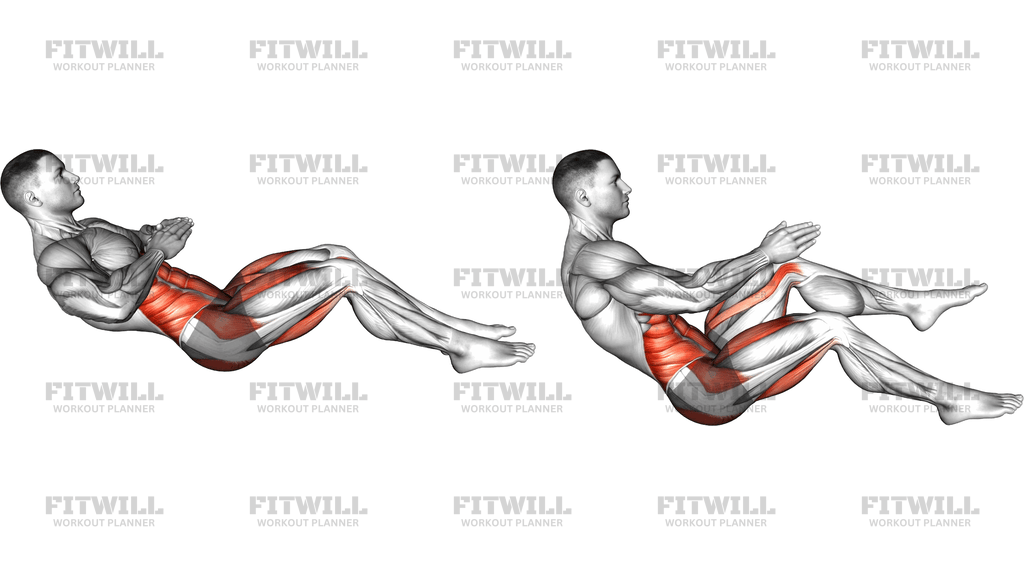
Alternate Ankle Tap Under Sit Agains Wall
The Alternate Ankle Tap Under Sit Against Wall combines two challenges into one exercise: an isometric wall sit for the legs and a controlled alternating reach to tap each ankle with the opposite hand. Your back stays flat against the wall the entire time while you slide down into a seated position, then lift one foot slightly and reach the opposite hand down to tap that ankle before switching sides. The wall removes any temptation to lean back or round forward, which forces your trunk to do the stabilizing work honestly.
This movement is especially useful for people who want core control without loading the spine. Because your back is supported by the wall, you cannot compensate by arching or swinging, so the deep trunk muscles have to brace while the hip flexors lift the leg and the opposite obliques control the reach. At the same time, the standing leg's quads and glutes hold an isometric contraction, which builds the leg endurance that wall sits are known for.
The setup matters more than it looks. Your feet need to be far enough from the wall that your knees stack over your ankles in the sit, and your whole back, from shoulders to pelvis, should stay in contact with the wall. If your feet are too close, your knees drift past your toes and the sit becomes unstable; too far, and your legs burn out before your core gets any meaningful work.
To execute it well, slide down only to a depth you can hold with your back fully on the wall, usually thighs near parallel to the floor. Clasp your hands at your chest, then alternate tapping each ankle with the opposite hand in a slow, deliberate rhythm. The temptation is to curl your torso down toward the leg; instead, think of lengthening your spine along the wall as your hand travels. Each tap should be a smooth reach, not a lunge.
This exercise fits well into warm-ups, core circuits, and rehab-style programming because it trains coordination between the trunk and hips with very little equipment. It is also a practical choice for home training, since all you need is a clear stretch of wall. Start with short sets of eight to twelve taps per side and progress by slowing the tempo or adding a brief pause at each tap rather than increasing speed.
[ Workout Log & Planner ]
Put your next workout in Fitwill
Keep your plan and training log ready when you are.


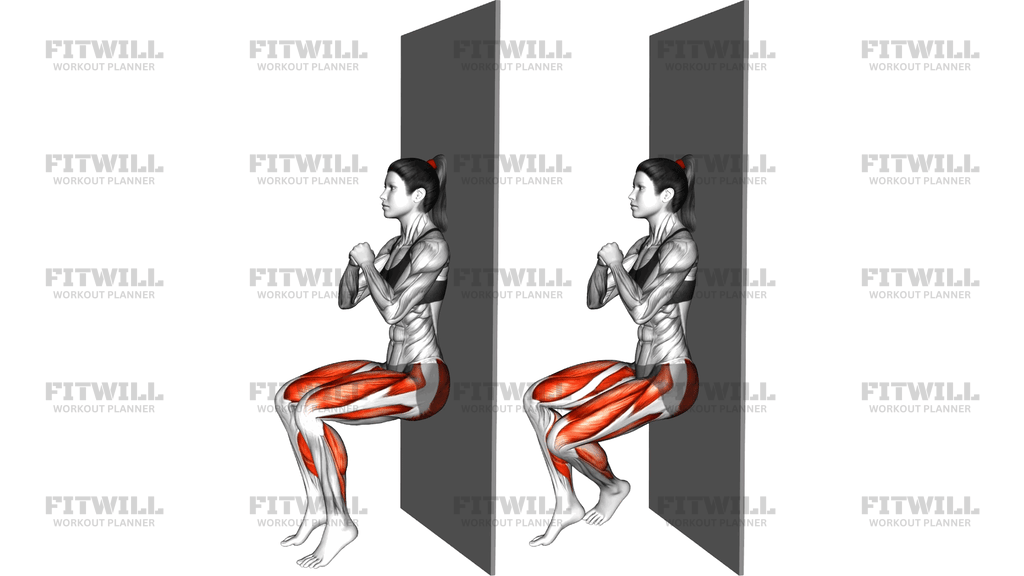
Instructions
- Stand with your back flat against a clear wall and walk your feet forward about one and a half to two foot-lengths from the wall, hip-width apart.
- Slide your hips down the wall until your thighs are roughly parallel to the floor, keeping your knees stacked over your ankles and your entire back in contact with the wall.
- Clasp your hands together at chest height and brace your trunk as if preparing for a light push.
- Shift your weight slightly into one leg and lift the opposite foot two to three inches off the floor.
- Reach the hand on the same side as your lifted foot's opposite side down and tap the top of that ankle, keeping your back and shoulders glued to the wall.
- Return your foot to the floor under control, then immediately switch sides and tap the other ankle with the opposite hand.
- Continue alternating taps at a steady two-second-per-rep pace, exhaling on each reach and inhaling as the foot returns.
- Keep your hips level throughout; do not let the pelvis tilt or rotate as you reach to each side.
- Complete your target number of taps, then press through both heels and slide back up the wall to stand, shaking out your legs before the next set.
Tips & Tricks
- If your shoulders round forward to reach the ankle, shorten the reach: lift the foot slightly higher instead of collapsing your chest toward your knee.
- A common mistake is sliding deeper into the sit as fatigue builds, which rounds the lower back against the wall; when your back starts peeling away, end the set.
- Keep the working knee tracking over the middle of the foot. If it caves inward when you lift the opposite leg, consciously press the standing knee out.
- Tap the ankle with your fingertips rather than grabbing it; grabbing encourages you to pull your torso down and lose wall contact.
- Move your feet closer to the wall if your quads give out before you feel any trunk work, and further away if you feel pressure in your knees.
- Bare feet or flat-soled shoes work best here, since you need to feel the floor to keep the standing foot from rolling outward.
- Breathe continuously rather than holding your breath; the wall contact plus held breath tends to spike tension in the neck and shoulders.
- If one side reaches farther or feels smoother than the other, start each set with the stiffer side and match the reps on both sides.
Frequently Asked Questions
What muscles does the Alternate Ankle Tap Under Sit Against Wall work?
The primary work comes from the trunk muscles that hold you braced against the wall, with the quads and glutes of the standing leg working isometrically. The hip flexors lift the foot and the obliques control the alternating reach.
Is this exercise suitable for beginners?
Yes, as long as the wall sit depth is adjusted. Beginners can slide only partway down and perform slower taps, then progress toward a deeper sit as leg endurance and trunk control improve.
How deep should my wall sit be during the Alternate Ankle Tap Under Sit Against Wall?
Aim for thighs roughly parallel to the floor, but only as deep as you can hold with your entire back staying flat on the wall. Depth is less important than maintaining full wall contact.
Why does my back keep coming off the wall when I reach for my ankle?
This usually means you are curling your torso toward the leg instead of reaching with the arm, or the sit is too deep for your current control. Lift the foot slightly higher and reduce the sit depth until you can keep shoulders and hips on the wall.
My legs burn out before my core feels anything. What should I change?
Bring your feet closer to the wall so the wall sit angle is shallower, or slide down only halfway. This shifts more of the demand to the trunk while your legs adapt.
Can I do the Alternate Ankle Tap Under Sit Against Wall if I have knee discomfort?
Use a shallower sit so the knees stay closer to extended, and stop if discomfort increases. If knee symptoms persist during simple wall sits, it is worth getting the movement checked by a qualified professional.
How many taps per side should I do?
Eight to twelve controlled taps per side is a solid starting point. Progress by slowing the tempo or pausing two seconds at each tap rather than rushing more reps.
What can I substitute if I do not have a clear wall space?
A seated ankle tap on the floor or a bench, reaching the opposite hand to the ankle with a tall chest, trains a similar trunk control pattern. A standard wall sit with alternating foot lifts also works if the reach is too difficult.
Should I hold my breath during the taps?
No. Exhale on each reach and inhale as the foot returns; continuous breathing helps you keep tension in the trunk without straining.