Alternate Leg Kick Sit Agains Wall
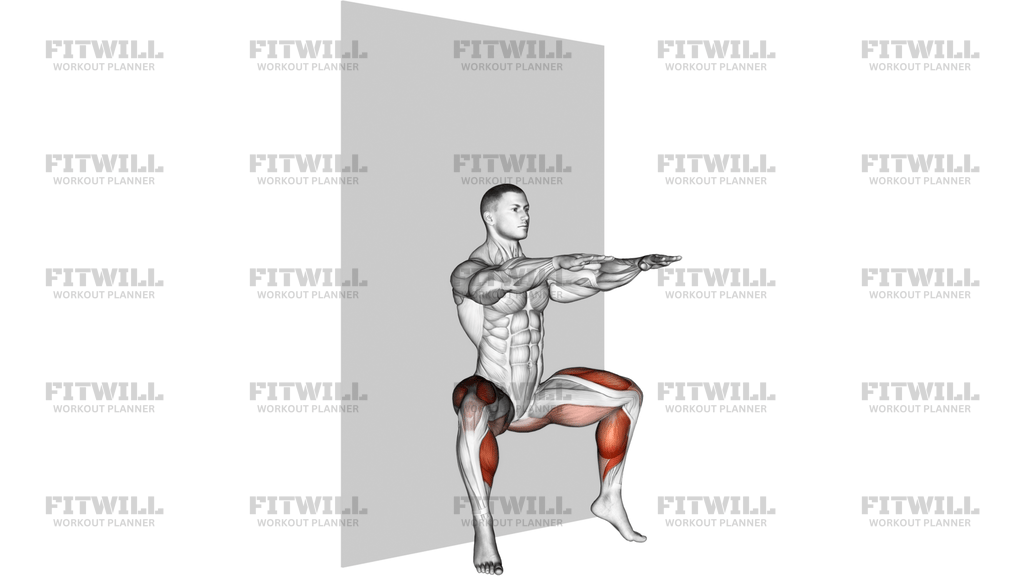
Alternate Leg Kick Sit Against Wall is a static wall sit with a moving twist: you hold an isometric squat position with your back flat against a wall, then extend one leg forward at a time in a slow, controlled kick. The wall does double duty here — it locks your torso into an upright position and removes any chance of leaning or swinging, which means your front thighs have to do the work on both the holding and the kicking side.
This movement trains the quadriceps isometrically while the planted leg supports your bodyweight, and the kicking leg works through hip flexion and knee extension against its own resistance. The calves and feet stay active to keep the planted foot grounded, and your core works quietly the whole time to hold your torso still as your legs move. Because one leg is always under load and the other is extending, you also get a natural balance and coordination challenge that a plain wall sit does not offer.
The setup matters more than it looks. Sliding too high up the wall turns this into an easy partial hold; dropping too low rounds the lower back and shifts stress away from the thighs. Aim for a position where your knees sit roughly above your ankles and your thighs are close to parallel with the floor. Keep your whole back — shoulders, upper back, and lower back — in contact with the wall, and resist the urge to push off your hands on your thighs.
To perform it well, settle into the wall sit first, then lift one foot a few centimeters off the floor and extend that leg straight out in front of you until the knee is nearly locked. Pause briefly, then bend the knee and place the foot back down before switching sides. The kicks should be smooth and unhurried; rushing them turns the drill into a jerky leg swing and lets momentum do the work.
This exercise fits well into home workouts since it needs nothing but a clear stretch of wall, and it is a common choice for leg finishers, warm-up activation, or low-impact quad work for people who want to avoid jumping and heavy loading. It is also popular in rehab-adjacent and general fitness settings because the wall gives constant feedback about torso position, making bad form obvious and easy to correct.
A few practical points will keep it safe and effective. Stop the set when your thighs start shaking so hard that the kicks lose their rhythm — quality reps matter more than time under fatigue. If you feel pinching at the front of the knee, raise your hips slightly up the wall. And keep breathing steadily throughout; holding your breath is one of the most common mistakes in any sustained wall sit variation.
[ Workout Log & Planner ]
Put your next workout in Fitwill
Keep your plan and training log ready when you are.


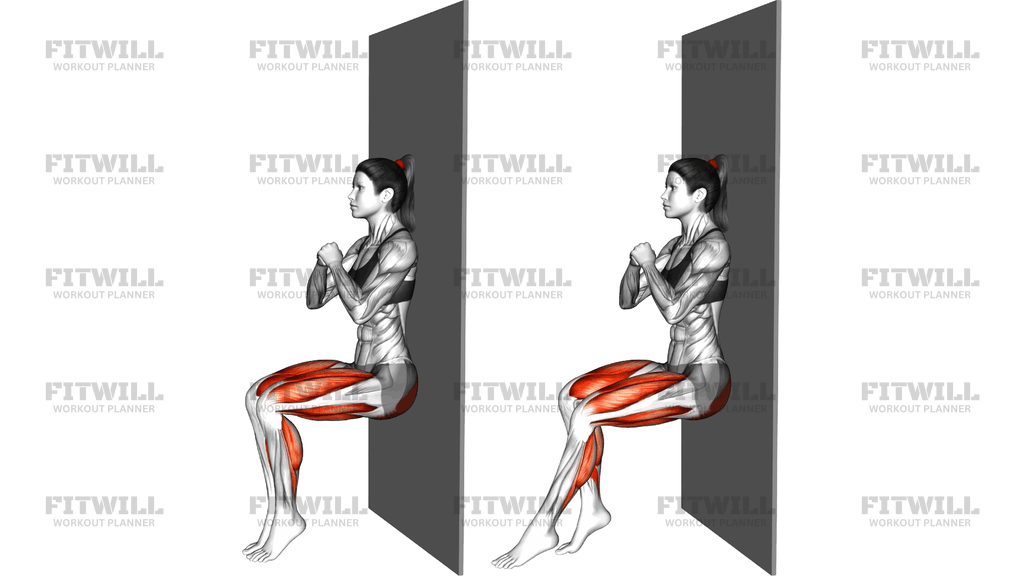
Instructions
- Stand with your back to a clear wall, then walk your feet out about 45 to 60 centimeters and slide your hips down until your knees are bent to roughly 90 degrees, with knees stacked over ankles.
- Press your head, shoulders, upper back, and lower back flat against the wall and clasp your hands together in front of your chest so they stay clear of your thighs.
- Brace your core gently and shift your weight evenly across both feet to set a stable wall sit position.
- Exhale as you lift one foot off the floor and extend that leg straight out in front of you, pointing the knee toward full extension without forcing it.
- Hold the extended position for a brief pause of one to two seconds, keeping your back and hips pressed into the wall.
- Bend the knee slowly and place the foot back on the floor in its original spot, controlling the return rather than dropping it.
- Immediately repeat the kick with the opposite leg, alternating sides for one full repetition each.
- Keep breathing in a steady rhythm throughout — inhale as the leg returns, exhale as it extends — instead of holding your breath.
- Continue alternating until your thighs fatigue and your form starts to slip, then walk your feet up the wall to stand back up.
Tips & Tricks
- If your knees drift past your toes or cave inward, reset your foot position so each knee tracks directly over its ankle before you start kicking.
- A common mistake is leaning forward off the wall to make the kicks easier; if you catch your shoulders peeling away, slide your hips slightly higher up the wall instead of breaking contact.
- Keep the kick low and controlled rather than swinging the leg up high — this is a knee extension drill, not a hip-flexor power move.
- Do not let the working foot slam back down; a soft, deliberate placement keeps tension on the planted leg and protects the knee.
- If your hands are braced on your thighs, you are leaking load away from the quads — keep them clasped at chest height for the whole set.
- Shorten the hold to 30 seconds with slow alternating kicks when starting out, and build toward longer durations as your quads adapt.
- Watch for one leg getting more work than the other; counting kicks per side keeps the effort even.
- If the floor is slippery, do this in shoes or on a mat so the planted foot does not slide forward under load.
- Slight trembling in the thighs near the end of a set is normal, but if your lower back rounds away from the wall, end the set.
Frequently Asked Questions
What muscles does Alternate Leg Kick Sit Against Wall work?
The quadriceps do most of the work, holding the wall sit on the planted leg and extending the kicking knee. The glutes, calves, and core support the position and keep your torso still as the legs move.
Is this exercise suitable for beginners?
Yes, as long as you keep the wall sit shallow at first — hips higher up the wall with a smaller knee bend. Start with short sets of 20 to 30 seconds and extend the duration as your thigh strength improves.
How low should I sit during Alternate Leg Kick Sit Against Wall?
Aim for thighs close to parallel with the floor and knees directly over your ankles. If you feel strain in your knees or your lower back rounds off the wall, slide your hips higher to reduce the angle.
Why does my back keep sliding on the wall during the kicks?
This usually happens when the kicking leg moves too fast, pulling your torso with it. Slow the tempo down, brace your core, and consciously press your upper back into the wall as each leg extends.
Can I do this exercise if plain wall sits feel too easy?
Yes — the alternating kicks add a single-leg balance demand and force each thigh to handle the load while the other leg moves, which makes the hold noticeably harder without adding weight.
What can I use instead of a wall if I do not have one available?
Any sturdy, flat vertical surface works, such as a closed door or a stable pillar. Avoid anything with a slippery surface or anything that could move under your bodyweight.
How many repetitions should I do?
Count one repetition per kick and work in sets of 10 to 20 total kicks, or simply alternate for time, such as 30 to 45 seconds per set. Stop when the kicks lose their smooth rhythm.
Is it normal for my thighs to shake during this exercise?
Yes, light trembling is a normal response to a sustained isometric hold near fatigue. If the shaking comes with a burning that forces sloppy kicks or your back leaving the wall, that is your cue to end the set.
Should my lower back stay flat against the wall the whole time?
Ideally yes — your head, shoulders, and lower back should stay in contact throughout. If maintaining contact forces discomfort, sit slightly higher rather than letting your pelvis tuck and your spine round.