Barbell Lying Seal Row On Rack
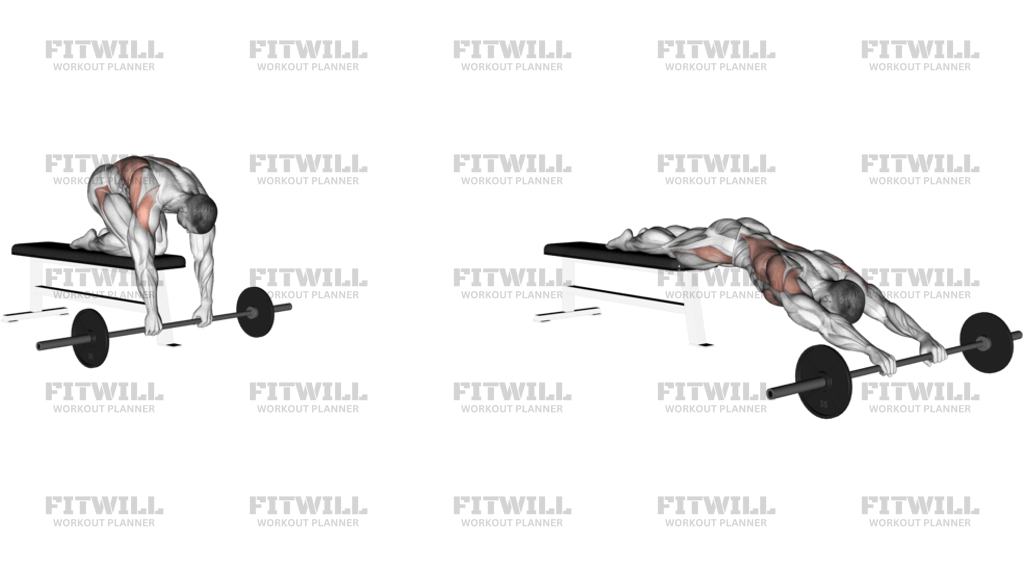
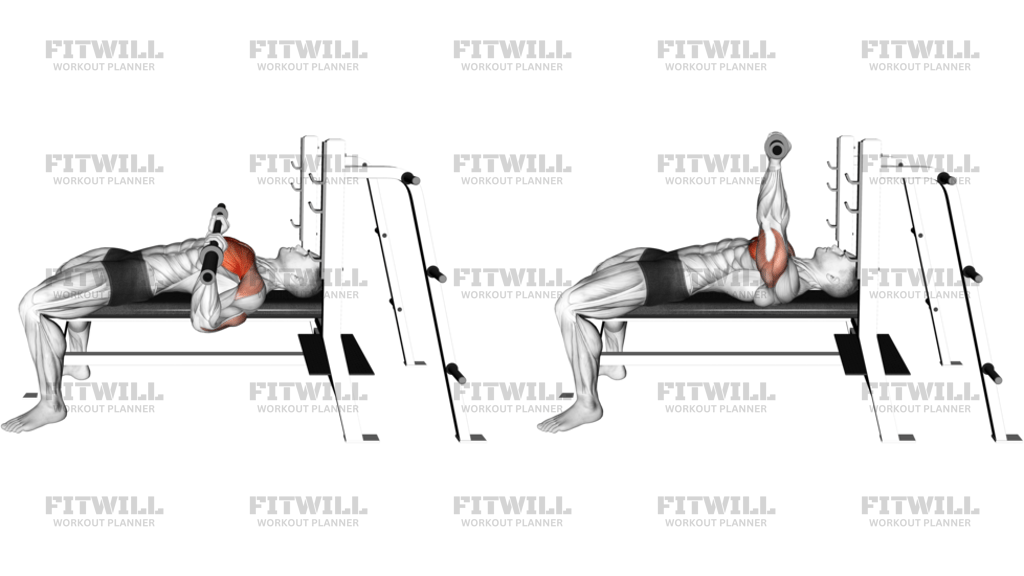
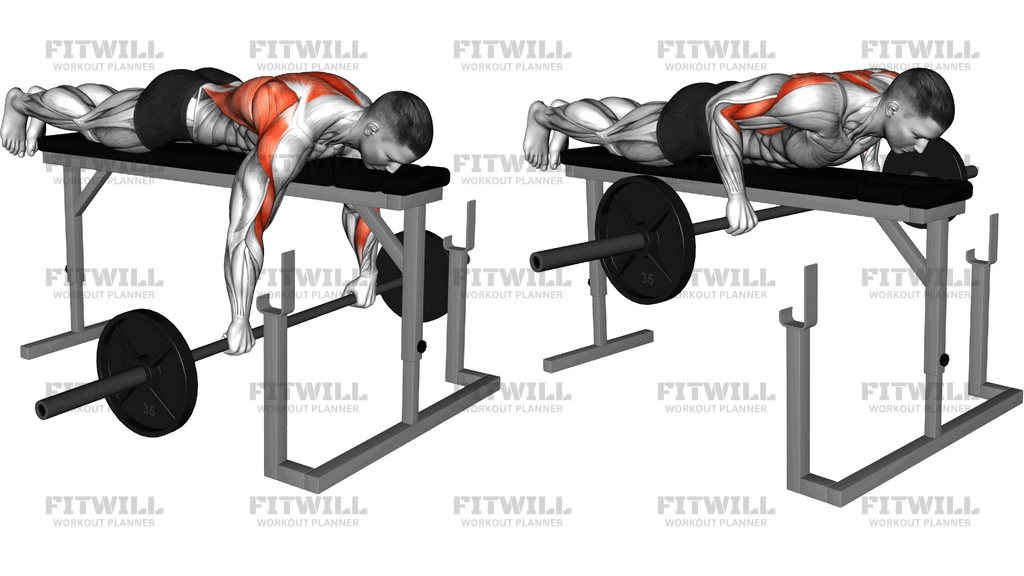
The Barbell Lying Seal Row On Rack is a strict horizontal row performed face-down on a high flat bench, with a barbell resting on rack supports set beneath you. You start each rep from a dead stop with your arms hanging straight down, pull the bar up toward the underside of the bench, and lower it all the way back to the supports before the next rep. Because your torso is fully supported by the bench, there is no way to cheat with hip drive, body English, or momentum — every rep has to come from your upper back, lats, and arms.
This setup is what separates the seal row from almost every other barbell row. With your chest and stomach pinned to the pad, your lower back is taken out of the equation, which makes the movement a great choice for lifters who want heavy rowing volume without fatiguing their spinal erectors. It also removes the standingRows problem of the torso drifting upright as the set gets hard, so the pulling angle stays constant from the first rep to the last.
The main muscles worked are the lats and the mid-back — the rhomboids and mid traps pull the shoulder blades together, while the lats draw the upper arms down and back. The rear shoulders assist the pull, and the biceps and forearms work hard on the grip and the elbow flexion. Because the bench blocks the bar's path at the top, you also get a strong squeeze at the finish of each rep without having to guess when to stop.
The Barbell Lying Seal Row On Rack suits intermediate and advanced lifters looking to build a thicker back, powerlifters who want rowing strength with less lower-back fatigue between deadlift sessions, and anyone whose standing rows turn into sloppy standing good-mornings once the weight gets heavy. Beginners can use it too, since the supported torso makes it easier to learn what a proper scapular retraction feels like.
Execution is simple but demanding. Lie face down with your chest at the top edge of the bench so your arms hang freely, set the bar on rack supports at roughly the height of your hanging hands, and grip it just outside shoulder width. Pull the bar up until it touches or nearly touches the underside of the bench, pause briefly, and lower it under control back to the supports. Keep your neck neutral, your chest in contact with the pad throughout, and let the dead stop between reps keep every rep honest.
A few practical points make a big difference. Position the bench so the bar clears the floor and the rack hooks when your arms are fully extended, and warm up your grip, since holding a barbell in a hanging position is more demanding than most people expect. If your bench is not high enough to allow full arm extension, place it on blocks or use safety pins in a rack to set the correct bar height rather than shortening your range.
[ Workout Log & Planner ]
Put your next workout in Fitwill
Keep your plan and training log ready when you are.


Instructions
- Set a flat bench so the end where your head rests is high enough for your arms to hang fully extended without the barbell touching the floor, or place the bench over rack supports set at that height.
- Position the loaded barbell on the rack supports directly below your shoulders, with the plates clear of the bench legs and the floor.
- Lie face down on the bench with your chest at the top edge, legs extended behind you, and let your arms hang straight down toward the bar.
- Grip the bar slightly wider than shoulder width with an overhand grip and squeeze it hard before initiating any pull.
- Brace your core lightly and keep your chest and stomach in contact with the pad so your torso does not lift as you row.
- Pull the bar straight up toward the underside of the bench by driving your elbows back and pulling your shoulder blades together.
- At the top, the bar should touch or come close to the bottom of the bench — hold that squeezed position for a brief pause.
- Lower the bar under control all the way back to the rack supports and let it come to a complete stop before the next rep.
- Exhale as you pull the bar up and inhale as you lower it back down to the supports.
- After your final rep, set the bar fully on the supports, release your grip, and slide back off the bench carefully.
Tips & Tricks
- If the bar scrapes the floor at full arm extension, raise the bench on blocks or adjust the rack supports — a shortened hang ruins the dead-stop advantage of this exercise.
- The most common mistake is letting the chest peel off the bench as the set gets hard; if your torso lifts, the weight is too heavy or the set is done.
- Do not bounce the bar off the rack supports between reps — the pause is the point, forcing each rep to start from a full stretch with no momentum.
- Keep your neck in line with your spine by looking down at the pad; craning your head up to watch the bar strains the neck and shifts your chest off position.
- If your grip gives out before your back does, use a pair of lifting straps rather than cutting the set short — the row itself should be the limiting factor.
- Aim your elbows at roughly 45 to 60 degrees from your torso; tucking them completely turns it into more of a lat-focused pull, while flaring too wide shortens the range and stresses the shoulders.
- Chalk your hands or use a full grip with the thumb wrapped around the bar — a hanging hold with a loose false grip invites the bar to slip.
- Start lighter than your regular bent-over row; you have no leg drive or body English here, so the honest weight is noticeably lower.
- If the bar path feels awkward, check that the supports are centered under your shoulders — a bar that sits too high or low toward your head or feet pulls you off balance.
Frequently Asked Questions
What muscles does the Barbell Lying Seal Row On Rack work?
It primarily targets the lats and the mid-back muscles — the rhomboids and mid traps — with help from the rear shoulders, biceps, and forearms. Because your torso is supported, the work stays in the upper body instead of spilling into the lower back.
Why is the barbell resting on rack supports instead of the floor?
Setting the bar on supports places it at the exact height of your hanging arms, so you can start every rep from a dead stop with a full stretch without needing an extremely tall bench. It also protects the plates from hitting the floor.
Is the Barbell Lying Seal Row On Rack suitable for beginners?
Yes, as long as the weight is kept modest. The supported torso actually makes it easier to learn good rowing mechanics than a standing row, since you cannot compensate by swinging your hips or leaning back.
Why is the seal row harder than a bent-over barbell row with the same weight?
In a bent-over row you can generate momentum with your hips and legs, but lying face down on the bench removes every form of body English. Every rep must be produced entirely by your back and arms, so the honest load is much lower.
How high should the bench be for the Barbell Lying Seal Row On Rack?
High enough that when you lie face down with your chest at the top edge, your arms hang straight down and fully extended with the bar just clearing the floor and supports. If your bench is too low, put it on sturdy blocks or bump plates.
Should my chest stay on the bench during the whole rep?
Yes. If your chest lifts off the pad as you pull, momentum or excess weight is doing the work. Lighten the load and pull with your elbows and shoulder blades instead.
Can I do the Barbell Lying Seal Row On Rack without a rack?
You can, as long as you have a bench tall enough for full arm extension and a way to hold the bar at hang height, such as two low squat stands or safety pins. Setting the bar on the floor is an option only with a very high bench.
What can I substitute if I have no tall bench or rack supports?
A chest-supported row on an incline bench with dumbbells is the closest alternative, followed by a machine chest-supported row. Both keep your torso supported and eliminate the same cheating patterns.
How do I stop my grip from failing before my back does?
Use chalk, wrap your thumb fully around the bar, and if your grip still limits the set, add lifting straps. Forearm and grip fatigue is common early on because the bar hangs from your hands between every rep.
Is the Barbell Lying Seal Row On Rack safe for the lower back?
It is generally comfortable for the lower back because the bench supports your torso and removes spinal loading from the equation. Still, get on and off the bench with the bar settled on the supports, and avoid twisting your torso while holding the weight.