Lean Back Tap Ankle Tap
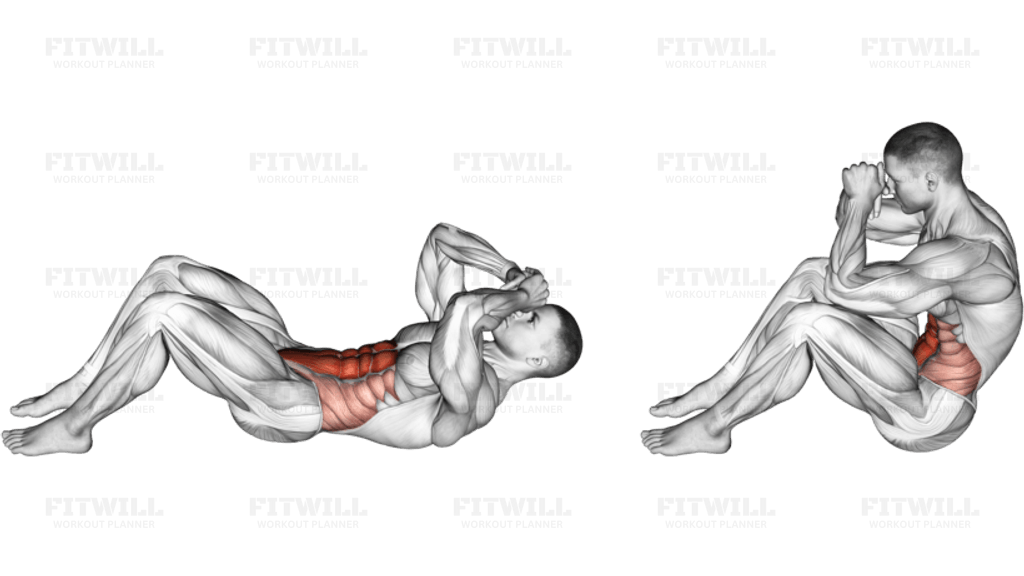
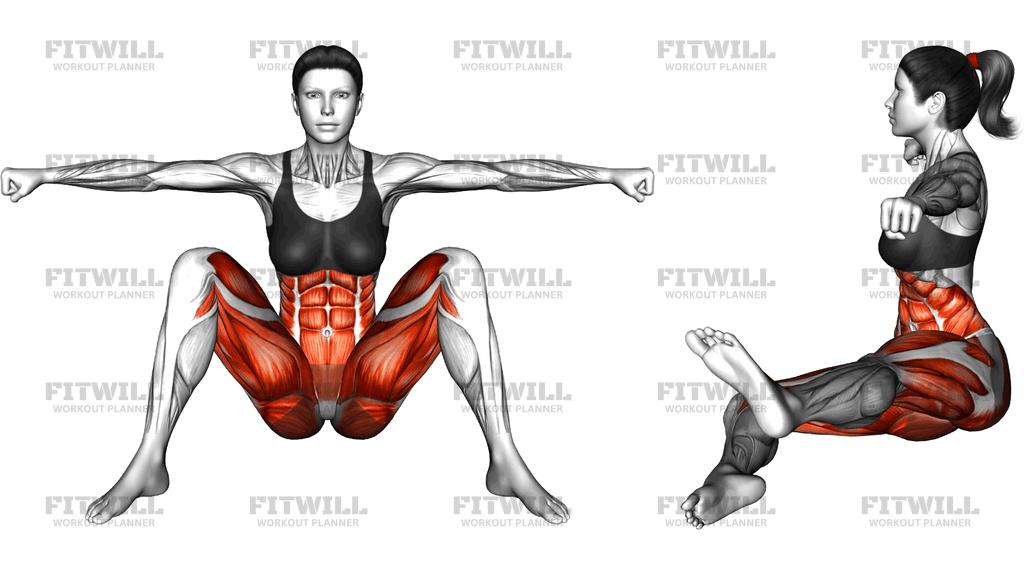
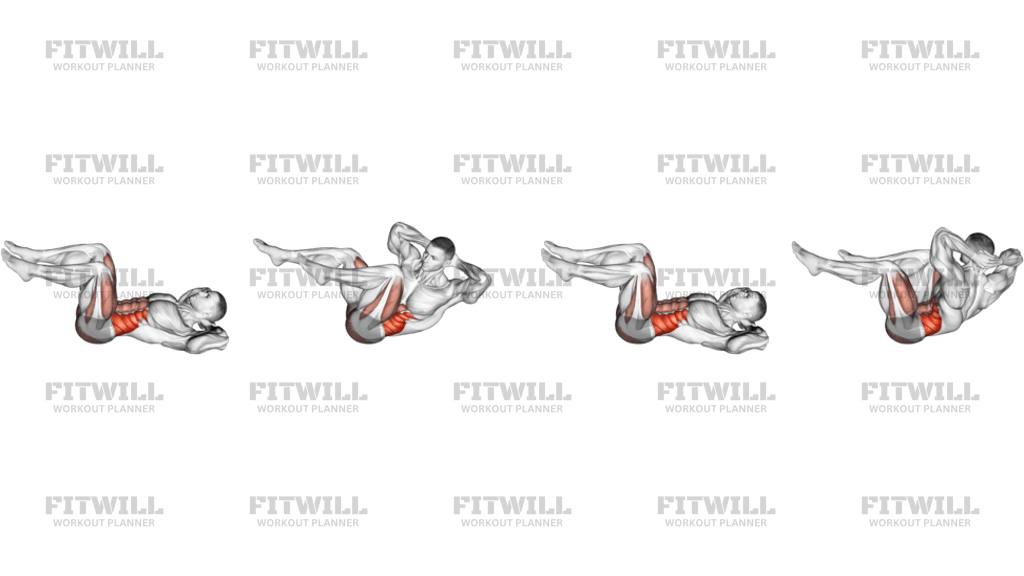
Lean Back Tap Ankle Tap is a body weight core exercise that combines a supported lean-back hold with a strong forward crunch to touch your ankles. You start seated on the floor with your hands planted behind your hips, knees bent, and feet hovering just off the ground. From there you crunch your torso forward and reach both hands to tap your ankles or the tops of your feet, then lower back under control to the leaned-back position without letting your feet touch down. The two positions create a long range of motion for the abdominal wall, with the rectus abdominis doing most of the work as it lengthens and shortens.
This movement is especially useful for people who find floor crunches too easy or too static. Because your feet stay lifted and your upper body travels from a reclined angle all the way to your shins, your abs work through a much larger arc than a standard crunch, and your hip flexors assist strongly as they hold your legs up. The support from your hands behind you also lets you manage how much load your spine handles, which makes the exercise scalable for intermediate trainees who want more abdominal challenge without adding external weight.
Setup matters more than it looks. If your hands are planted too close to your hips, your shoulders and triceps take over and your torso sags; if they are too far behind you, the lean-back position becomes a strain on the shoulders rather than a supported hold. Aim for hands roughly shoulder-width, a short arm's length behind your hips, with your chest tall and your shoulder blades drawn gently back. Your knees should be bent around 90 degrees and your feet held together, hovering a few inches off the floor throughout the set.
To execute it well, think of the forward phase as a curl rather than a reach. Exhale as you pull your ribs toward your pelvis, rounding through the upper back so your hands arrive at your ankles because your trunk flexed, not because you stretched your arms ahead of your body. Pause briefly at the ankle tap, then reverse the same path, unrolling your spine back to the lean-back position while your abs stay braced and your feet never drop. Moving slowly in both directions keeps the tension on your midsection instead of letting momentum do the rep for you.
You will see this exercise in general core training, home workouts, and athletic conditioning blocks where hip flexor endurance and trunk control are trained together. It pairs well with planks, leg raises, or bicycle crunches in a circuit. The main safety points are modest: keep the lean-back angle comfortable for your shoulders and lower back, avoid yanking your neck forward during the crunch, and stop the set when your feet start sagging toward the floor, since that is usually the first sign your abs have handed the work off to your hip flexors.
[ Workout Log & Planner ]
Put your next workout in Fitwill
Keep your plan and training log ready when you are.


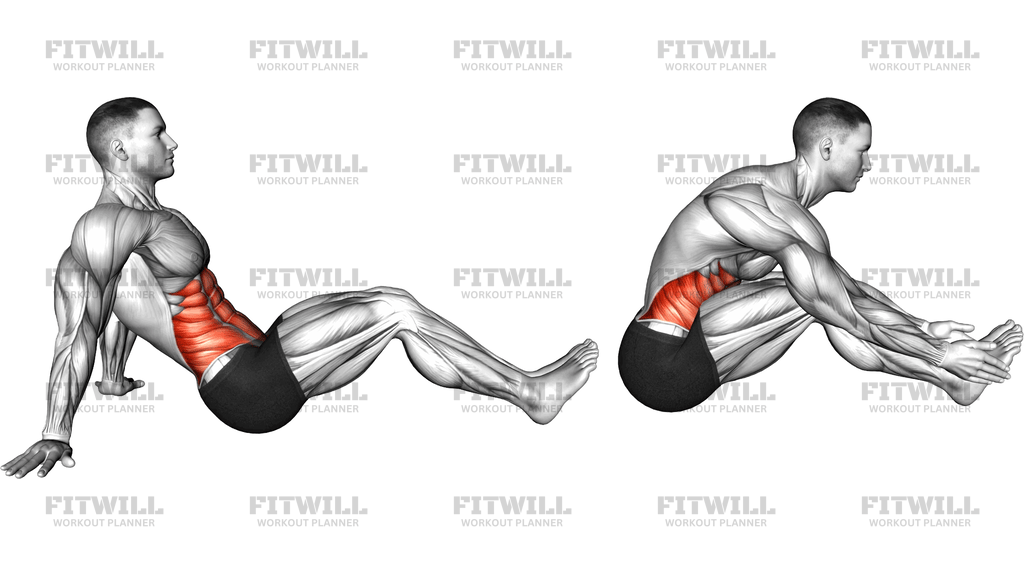
Instructions
- Sit on the floor or an exercise mat with your knees bent about 90 degrees and your feet together in front of you.
- Place your palms flat on the floor behind your hips, roughly shoulder-width apart and about a forearm's length back, with your fingers pointing toward your body.
- Lean your torso back to a comfortable angle, keep your chest lifted and shoulders pulled back, then raise both feet off the floor a few inches so your weight rests on your hands and glutes.
- Brace your core and hold this leaned-back position for a beat, making sure your lower back is long rather than collapsed.
- Exhale and curl your torso forward, rounding your upper back as you reach both hands toward your ankles or the tops of your feet.
- Tap your ankles with both hands at the top, letting your trunk do the flexing rather than just stretching your arms forward.
- Pause for one second at the tap, keeping your feet elevated the entire time.
- Inhale and slowly unroll your spine back to the leaned-back starting position, reversing the exact path you came up through.
- Keep breathing steadily throughout, exhaling on the forward crunch and inhaling on the return.
- Complete your reps, then lower your feet to the floor and shake out your shoulders and wrists before the next set.
Tips & Tricks
- If your shoulders ache in the lean-back position, walk your hands a little closer to your hips or lean back less steeply; the support angle should feel stable, not like a deep shoulder stretch.
- The most common mistake is reaching with straight arms to touch the ankles while the torso stays relatively flat. Fix it by exaggerating the spinal curl and letting your fingertips barely reach the ankles.
- Do not let your feet drift toward the floor as fatigue builds. Once you cannot hold them up through a full rep, end the set rather than turning it into a hip flexor grind.
- Keep your neck neutral during the crunch. Lead with your breastbone curling down toward your pelvis instead of snapping your chin forward.
- Press the floor away slightly with your hands on the return leg so you lower down smoothly instead of dropping back with a thud.
- A slower descent increases the difficulty more than a faster crunch does. Try a two-count down and a one-count up once the basic version feels easy.
- If your lower back rounds and strains during the lean-back hold, bend your knees more, which shortens the leverage your legs create on your trunk.
- Keep your knees together and pointed up. Letting them flop outward usually means your core has disengaged and your hips are compensating.
- Set this up on a mat or smooth surface so your palms do not snag, which can pull your weight forward mid-rep.
Frequently Asked Questions
What muscles does the Lean Back Tap Ankle Tap work?
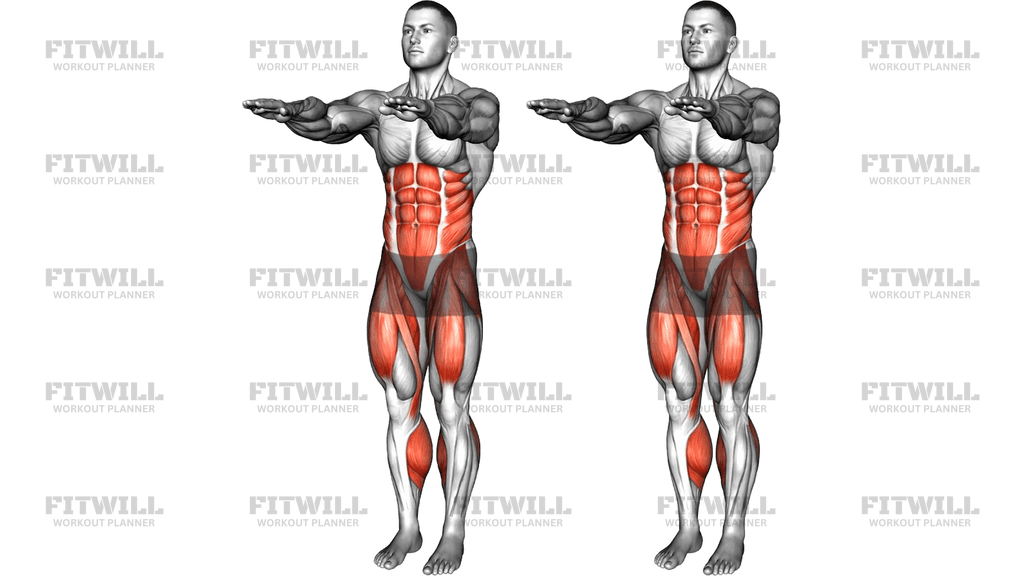
The rectus abdominis is the primary mover, contracting hard through the long crunch range. Your hip flexors hold your legs up and assist the crunch, while your shoulders, triceps, and deeper core muscles stabilize the leaned-back position.
Is the Lean Back Tap Ankle Tap suitable for beginners?
It is best for intermediate trainees because holding the feet off the floor in the lean-back position demands solid core strength. Beginners can regress it by resting one heel lightly on the floor between reps or reducing how far back they lean.
Why do my hip flexors burn more than my abs during the Lean Back Tap Ankle Tap?
That usually means your feet are dropping low or your torso is barely moving, so the hip flexors are doing the holding and lifting. Keep your feet higher, curl your ribs down harder on the way forward, and shorten the set if needed.
Should my hands stay on the floor the whole time?
During the lean-back phase your palms stay planted for support, but they lift off briefly on the forward crunch so both hands can tap your ankles. Press back into the floor as soon as you return to the leaned-back position.
How far back should I lean in the starting position?
Lean only as far as you can hold with a tall chest, braced core, and comfortable shoulders. A moderate recline around 45 degrees works for most people; a steeper lean adds core demand but costs shoulder comfort and control.
How is the Lean Back Tap Ankle Tap different from a regular crunch?
A regular crunch happens lying flat with a short range of motion, while this version starts from a supported lean-back with your feet elevated, so your abs lengthen much further before contracting and your hip flexors work isometrically throughout.
What can I use instead if I do not have a mat or the floor position bothers my wrists?
You can perform the same lean-back and ankle-tap pattern on a bench with your hands gripping the sides for support, or substitute V-ups, which train a comparable long-range crunch without loading the wrists.
How many reps and sets should I do?
Two to four sets of 8 to 15 controlled reps is a reasonable range. Because quality drops quickly once the feet sag, stop each set at the first rep where you cannot keep your feet elevated and curl fully to the ankles.
Is it safe for my lower back?
For most people with a healthy back, yes, as long as you keep the lean-back angle moderate, avoid bouncing at the bottom, and move through a range you can control smoothly. If the reclined position causes discomfort, reduce the lean or choose a regressed crunch variation.