Crossed Body Twist Sit Up
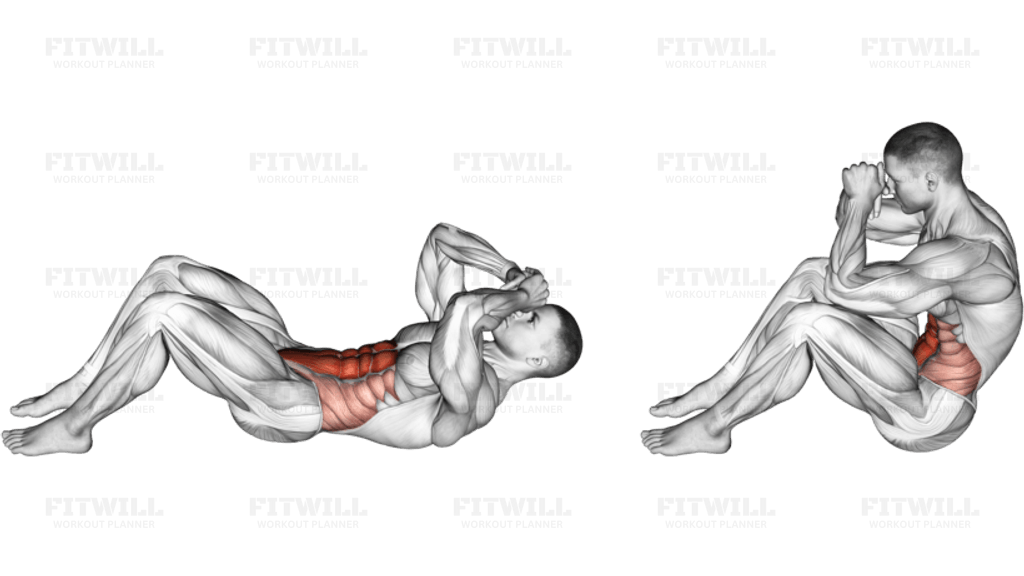
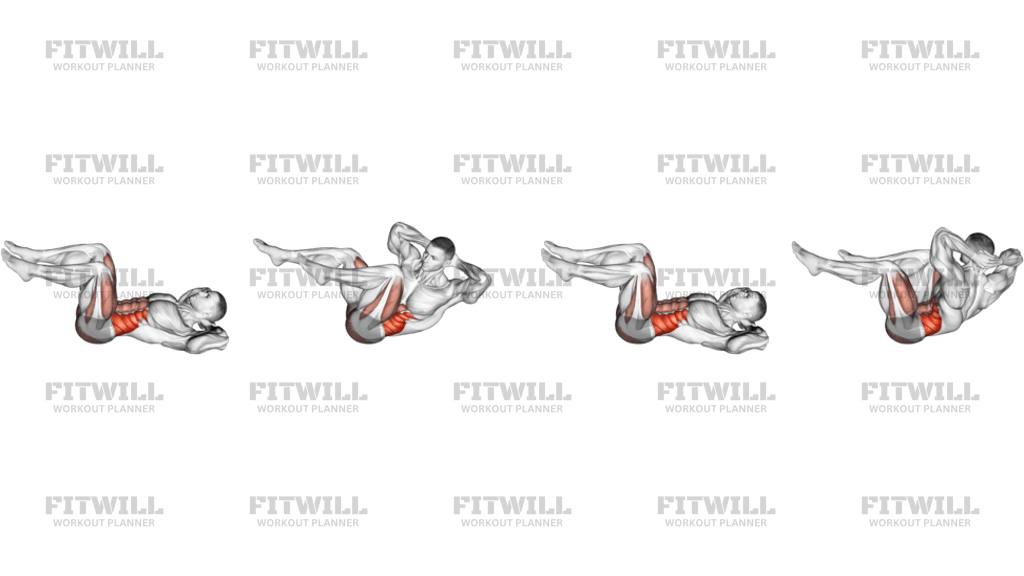
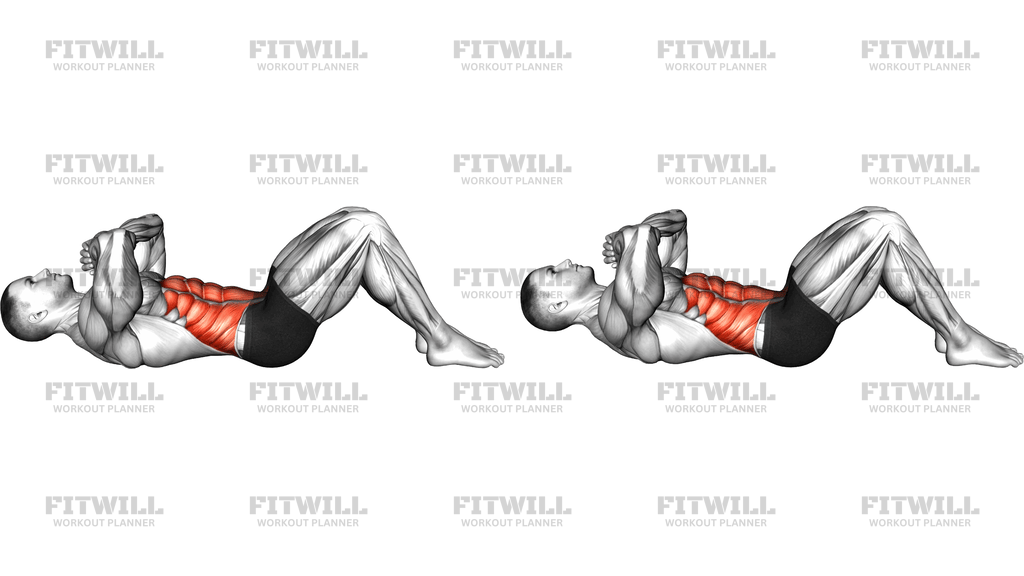
The Crossed Body Twist Sit Up is a floor-based sit-up variation where you keep your arms crossed over your chest and rotate your torso as you rise, driving one elbow toward the opposite knee. Compared with a straight sit-up, the added rotation shifts a large share of the work to the obliques, which have to both flex the spine and control the twist at the same time. The rectus abdominis still does plenty of work pulling your torso off the floor, so you get a combined front-and-side trunk challenge in one repetition.
This movement suits anyone who has already built some comfort with basic crunches or sit-ups and wants to train rotation without equipment. It is a common pick in martial arts and combat sport conditioning, since rotational trunk strength transfers directly to throwing, striking, and changing direction. It also works well as part of a bodyweight core circuit at home, where the only thing you need is a bit of floor space and, ideally, a mat.
The setup matters more than people expect. Lying with knees bent and feet flat gives your hip flexors a manageable angle to work from, and crossing your arms over your chest with each hand on the opposite shoulder keeps your neck out of the movement. Because your hands cannot pull on your head, the crossed-arm position naturally forces your trunk muscles, not your arms, to do the lifting.
To execute it well, curl up first and then rotate, letting your ribs lead the turn rather than swinging your elbow. Think about bringing your shoulder, not just your arm, across toward the opposite knee. Move up with an exhale, pause briefly at the top where the twist is tightest, and lower back down under control, untwisting as your shoulder blades return toward the floor.
A common use case is 8 to 15 controlled reps per side near the end of a workout, when the goal is trunk fatigue rather than maximal strength. Because the descent phase loads the spine with rotation under tension, keep the tempo smooth and avoid collapsing back down. If your lower back or hip flexors take over and your torso arches or jerks, reduce the range or switch to a cross-body crunch until you can own the full sit-up version.
[ Workout Log & Planner ]
Put your next workout in Fitwill
Keep your plan and training log ready when you are.


Instructions
- Lie on your back on the floor or an exercise mat with your knees bent to roughly 90 degrees and your feet flat on the floor about hip-width apart.
- Cross your arms over your chest and place each hand on the opposite shoulder, so your right hand holds your left shoulder and your left hand holds your right shoulder.
- Draw your shoulder blades slightly down and back, brace your trunk as if preparing for a light push, and press your lower back toward the floor.
- Exhale as you curl your head, shoulders, and upper back off the floor, keeping your elbows tucked in toward your chest.
- As you continue rising, rotate your torso so your right elbow travels across your body toward the outside of your left knee.
- Pause for a moment at the top with the twist fully set, feeling the squeeze along the side of your trunk.
- Inhale as you slowly unrotate and lower your torso back down until your shoulder blades touch the floor.
- Repeat on the other side by driving your left elbow toward the right knee, or complete all reps on one side before switching.
- Keep breathing in a steady rhythm throughout — exhale on the way up, inhale on the way down — and reset your brace before each rep.
Tips & Tricks
- The most common fault is swinging the elbow across without actually rotating the ribcage. Focus on turning your shoulder and chest toward the opposite knee so the obliques do the work.
- Do not snap up off the floor with momentum. A sit-up that starts with a jerk usually means the hip flexors are doing the first third of the rep while the abs stay passive.
- Keep your elbows closed toward your chest. Letting them flare wide lengthens the lever arm and makes the twist feel like a shoulder movement instead of a trunk rotation.
- If your feet lift or your hips shift as you twist, your rotation is too aggressive for your current control — reduce the height you rise to and build up gradually.
- A slower lowering phase, around two to three seconds, does more for trunk control than squeezing out extra fast reps.
- Avoid pushing your chin toward your chest as you rise. Keep a fist's worth of space between chin and chest and let the curl start from your ribcage.
- If you feel the front of your hips doing most of the work, try bending your knees more or moving your feet slightly further from your hips.
- Anchor your attention on the lowering half of the rep. Collapsing back down with a rounded, uncontrolled spine is where most strain happens in this movement.
- If the full twist is too difficult, train a cross-body crunch first — same rotation, smaller range — and progress to the full sit-up once you can control it.
Frequently Asked Questions
Which muscles does the Crossed Body Twist Sit Up work?
The rectus abdominis drives the sit-up itself, while the internal and external obliques handle the rotation as your elbow crosses toward the opposite knee. The hip flexors assist in lifting the torso, especially in the second half of the rise.
Should I alternate sides each rep or do all reps on one side?
Alternating sides each rep keeps the workload balanced and keeps you honest about control on both directions. Doing one side at a time is fine too, but always match the rep count on the weaker side.
Does my elbow have to touch the opposite knee?
No. Chasing contact usually causes people to yank with the arm or round the upper back excessively. Rotate until your shoulder crosses toward the knee under control; whether the elbow touches is incidental.
How is the Crossed Body Twist Sit Up different from a regular sit-up?
A regular sit-up flexes the spine straight up, while this version adds rotation, which recruits the obliques far more. The crossed-arm position also removes the option of pulling on your head or neck.
Is this exercise suitable for beginners?
Beginners can do it, but most people should earn it first with crunches and straight sit-ups. If the full range feels shaky, a cross-body crunch gives you the same rotation with less load.
Should I anchor my feet under something?
Keeping your feet free on the floor forces your trunk to do the stabilizing, which is usually the better choice. If your feet lift constantly, that is a sign to slow down and reduce the range rather than hook them under a heavy object.
Why do I feel this more in my hip flexors than my abs?
If the hip flexors dominate, you are likely sitting up from the hips instead of curling from the ribcage first. Start the rep by peeling your head and shoulders off the floor before the rest of the torso follows.
Is the Crossed Body Twist Sit Up safe for my lower back?
Done with a controlled tempo and a range you can manage smoothly, it is a reasonable trunk exercise. If you have a history of back issues, keep the range smaller, avoid jerky twisting, and stop if you feel anything beyond normal muscle effort.
What can I use instead if I cannot do full sit-ups?
Cross-body crunches, standing cable or band rotations, and bicycle crunches all train similar rotational trunk patterns with less hip flexor demand. Pick whichever lets you move slowly and control the twist.
How many reps should I do?
Somewhere around 8 to 15 reps per side works well for most people. If your form breaks down before eight, lower the range or switch to the crunch version rather than muscling through extra reps.