Straight Leg Crossed Arms Sit Up
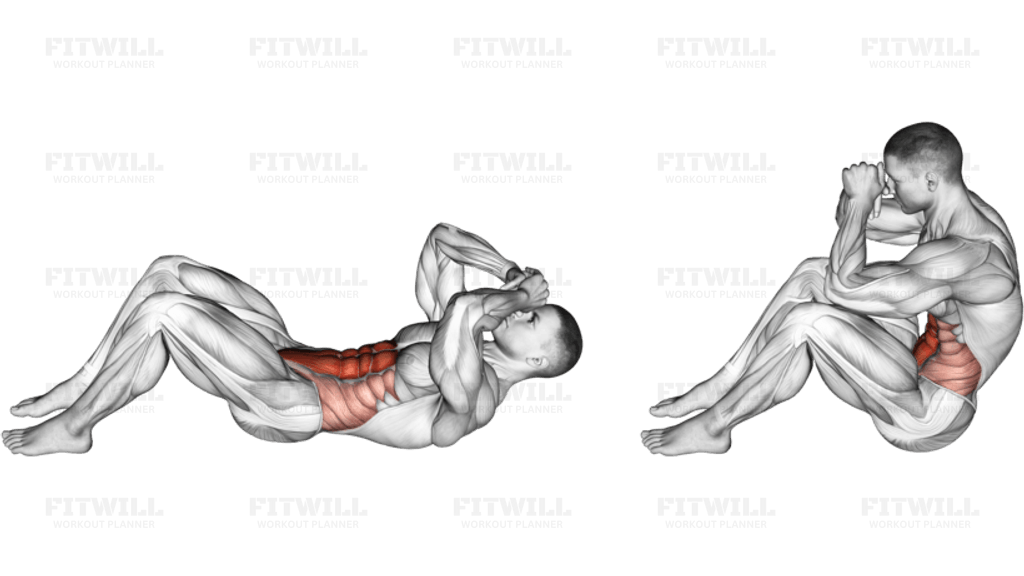
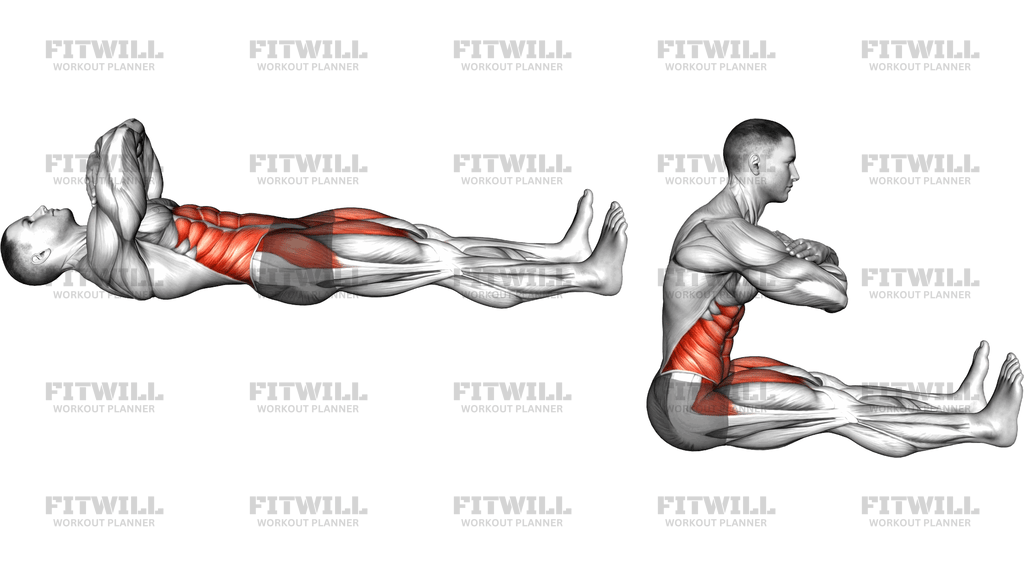
The Straight Leg Crossed Arms Sit Up is a bodyweight abdominal exercise performed flat on the floor with both legs extended straight out in front of you and your arms folded across your chest. Unlike bent-knee sit-ups, the straight-leg position lengthens the hip flexors' leverage and removes the stability that bent knees provide, so your trunk has to do more of the work to lift and lower your torso. The crossed-arm position also takes your hands out of the equation, which prevents the common habit of pulling on the head or neck.
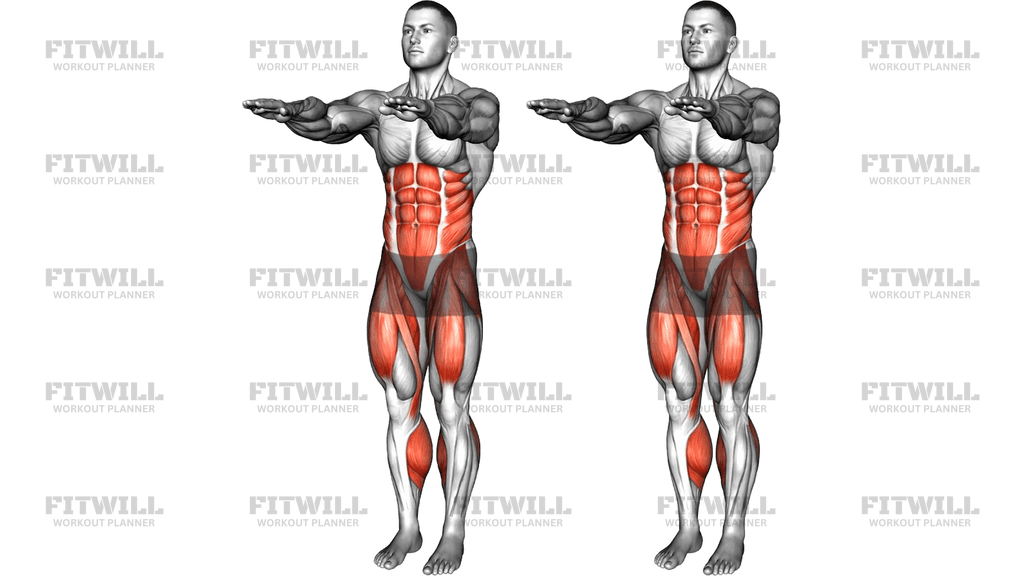
The main muscles worked are the rectus abdominis, the sheet of muscle running down the front of your abdomen, with strong assistance from the hip flexors as they work to hold your pelvis and legs steady while your torso rises. The obliques contribute to keeping your crossed arms level and your torso square as you rotate slightly upward through the spine. The transverse abdominis braces throughout, which is why this variation feels harder than it looks even without added weight.
This setup matters because the straight legs change the challenge considerably. With knees bent, many people can swing or jerk their way up; with legs flat on the floor, momentum is limited and any arching or bouncing shows up immediately as a loss of control. Lying on an exercise mat makes the movement comfortable for the lower back, heels, and shoulders, since the legs stay in contact with the ground for the entire set.
To execute it well, lie back with your legs extended and about hip-width apart, flex your feet upward, and cross your arms over your chest with each hand resting on the opposite shoulder. Brace your abdominal wall, then curl your head and shoulders off the floor first, peeling your spine up one section at a time until your torso is upright and near vertical. Lower back down with the same control, letting your upper back touch down lightly before starting the next rep rather than crashing into the floor.
This exercise suits people who have outgrown basic bent-knee crunches and want a more demanding sit-up without equipment, as well as trainees who tend to pull their neck forward with their hands. It fits well into home core circuits, calisthenics routines, and general abdominal training. If your lower back lifts off the floor or you feel strain rather than abdominal work, shorten the range by not sitting all the way up, or bend your knees slightly until your strength improves.
[ Workout Log & Planner ]
Put your next workout in Fitwill
Keep your plan and training log ready when you are.


Instructions
- Lie flat on your back on an exercise mat with both legs extended straight on the floor and your feet about hip-width apart.
- Flex your feet so your toes point toward the ceiling and keep your heels in contact with the ground.
- Cross your arms over your chest, placing each hand on the opposite shoulder or upper arm, and let your elbows point forward.
- Draw your belly button in slightly and brace your abdominal wall before moving.
- Curl your head, shoulders, and upper back off the floor first, keeping your chin a fist's distance from your chest.
- Continue rolling your spine upward until your torso is upright and your chest is over or near your thighs.
- Pause briefly at the top with your arms still crossed and your torso square, not twisted to one side.
- Lower your torso slowly back to the floor in reverse, one section of the spine at a time, until your shoulders and head touch down lightly.
- Exhale as you rise and inhale as you lower, keeping a steady breathing rhythm.
- Reset your brace at the bottom of each rep and keep your legs flat and still for the entire set.
Tips & Tricks
- If your heels keep popping up as you rise, press them gently into the floor throughout the rep instead of letting your legs float.
- Do not fling your elbows forward to generate momentum; the crossed arms should stay glued to your chest from start to finish.
- A common mistake is leading with the chin and craning the neck. Keep a fist-sized gap between chin and chest and let the ribs do the curling.
- If you rock side to side at the top, your obliques are being loaded unevenly. Slow the tempo down and check that both hands stay anchored on opposite shoulders.
- Lower for a count of two to three seconds rather than dropping; the lowering phase is where a lot of the abdominal work happens.
- If your lower back arches uncomfortably at the start, slide a folded towel or small pad under it, or switch to a slight knee bend for a few weeks.
- Stop the rep once your torso is upright. Leaning far past vertical toward your knees shifts the load to the hip flexors and rounds the lower back.
- For added difficulty once bodyweight reps feel easy, hold a small plate or dumbbell against your chest under your crossed arms.
- Avoid anchoring your feet under a couch or bench at first; the unanchored legs force your abs to do the lifting honestly.
Frequently Asked Questions
Which muscles does the Straight Leg Crossed Arms Sit Up target?
The rectus abdominis across the front of your torso is the primary mover, with the hip flexors assisting strongly and the obliques stabilizing the crossed-arm position. The deep core braces throughout to keep your pelvis and spine controlled.
Why are the arms crossed over the chest in this sit-up?
Crossing the arms removes the option of pulling on the back of your head, which is one of the most common causes of neck strain in sit-ups. It also makes it easy to spot twisting, since the shoulders should stay level as you rise.
How is the Straight Leg Crossed Arms Sit Up different from a bent-knee sit-up?
Straight legs take away the stable base that bent knees provide and limit how much momentum you can generate, so the abdominal muscles must work harder through the same range. Many people find they can do far fewer quality reps in the straight-leg version.
Is this exercise suitable for beginners?
Beginners can do it, but many will progress faster starting with bent-knee sit-ups or partial-range crunches first. If the full sit-up causes your lower back to arch or your feet to lift, shorten the range or bend the knees until your strength builds.
My legs keep lifting off the floor during the rep. What should I change?
Lifting legs usually means the hip flexors are dominating or you are jerking upward. Slow the tempo, initiate the movement by curling the shoulders first, and consciously press your heels into the floor for the entire rep.
Can I anchor my feet under something to make it easier?
Anchoring your feet does make the movement easier, but it shifts more work to the hip flexors and lets you pull with the legs. Keep the feet unanchored to get the intended abdominal emphasis, and reduce the range instead if you need an easier version.
What can I use as a substitute if floor sit-ups bother my back?
Bent-knee sit-ups, crunches on a mat, or Stability Ball crunches all train the abs with less hip flexor demand. A Stability Ball also supports the curve of the lower back through the movement.
How many reps and sets should I do?
Two to four sets of 8 to 15 controlled reps is a solid range for most people. Prioritize smooth, full-range reps over hitting a high number, and stop the set when your form starts to break down.
Do I need any equipment for the Straight Leg Crossed Arms Sit Up?
No equipment is required since it is a pure bodyweight movement. A thin exercise mat or carpeted surface is recommended to cushion your spine, shoulders, and heels during the set.
Should I hold my breath during the sit-up?
No. Exhale as you curl up and inhale as you lower back down. Holding your breath through multiple reps tends to increase tension in the neck and shoulders and makes the set harder to sustain.