Sumo Stance Side Lunges
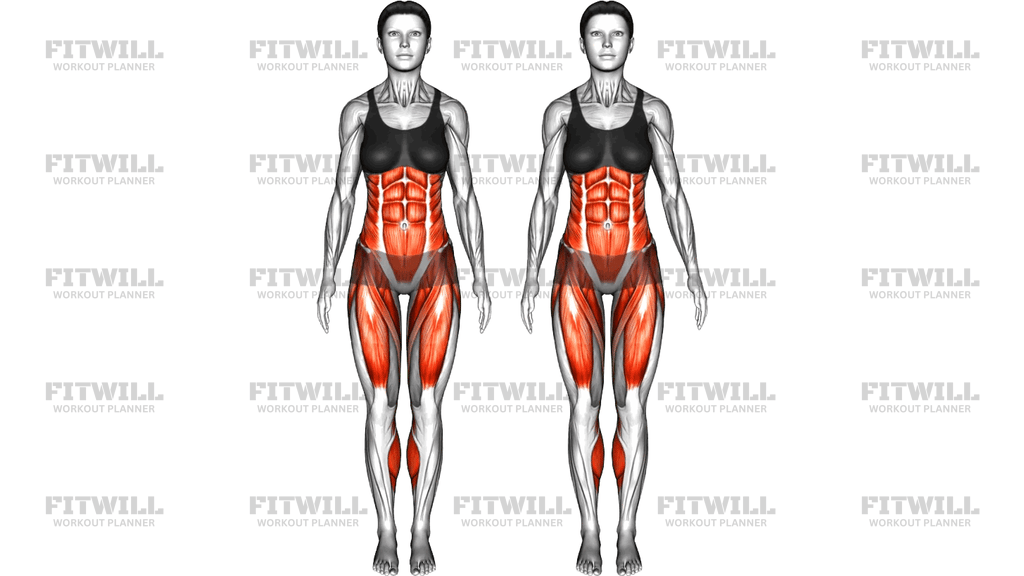
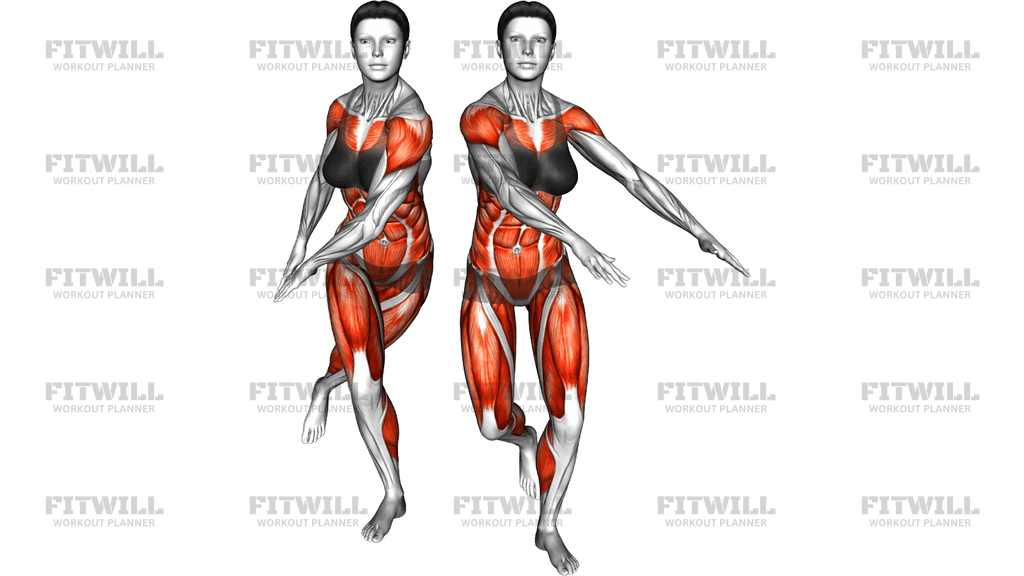
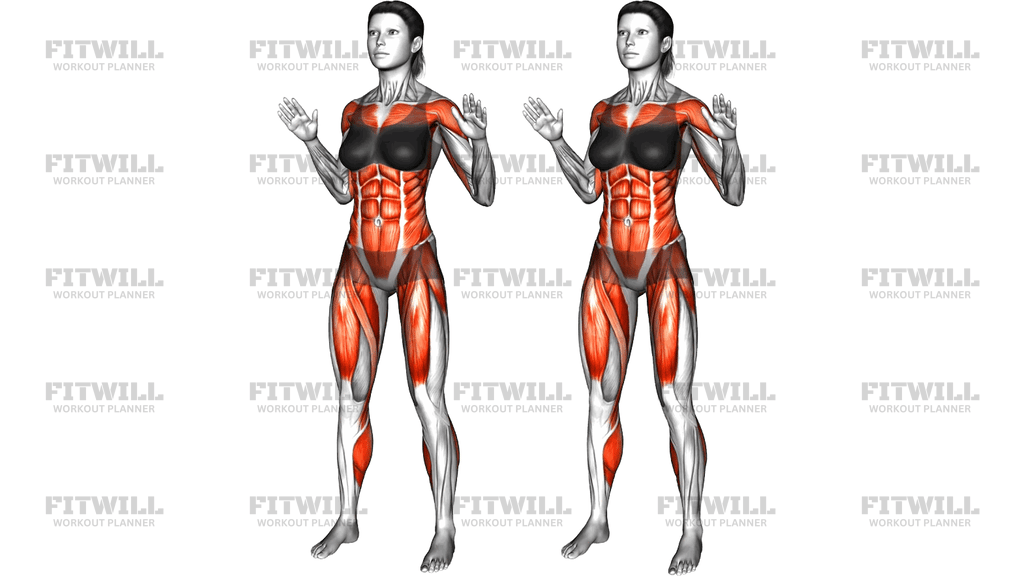
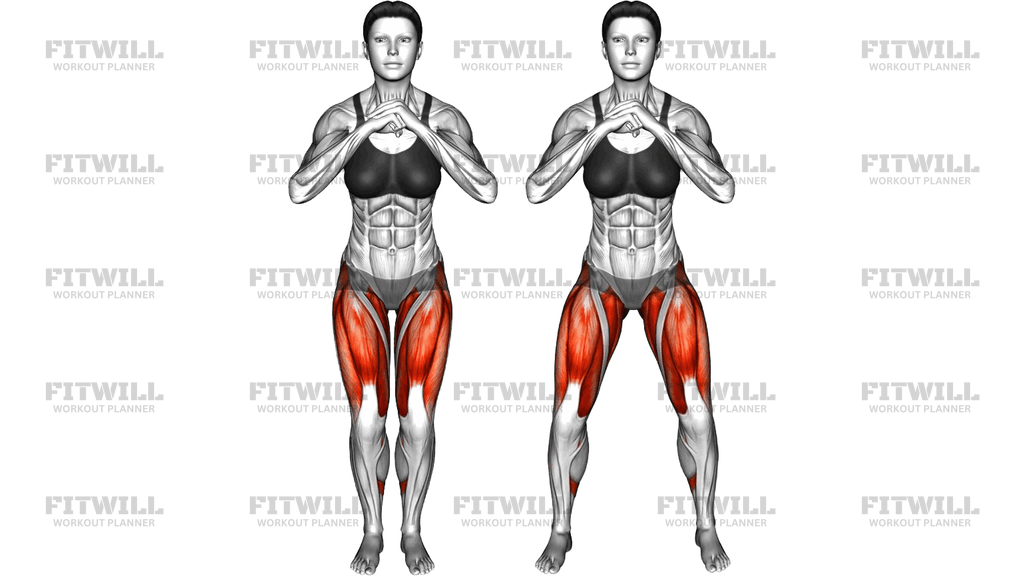
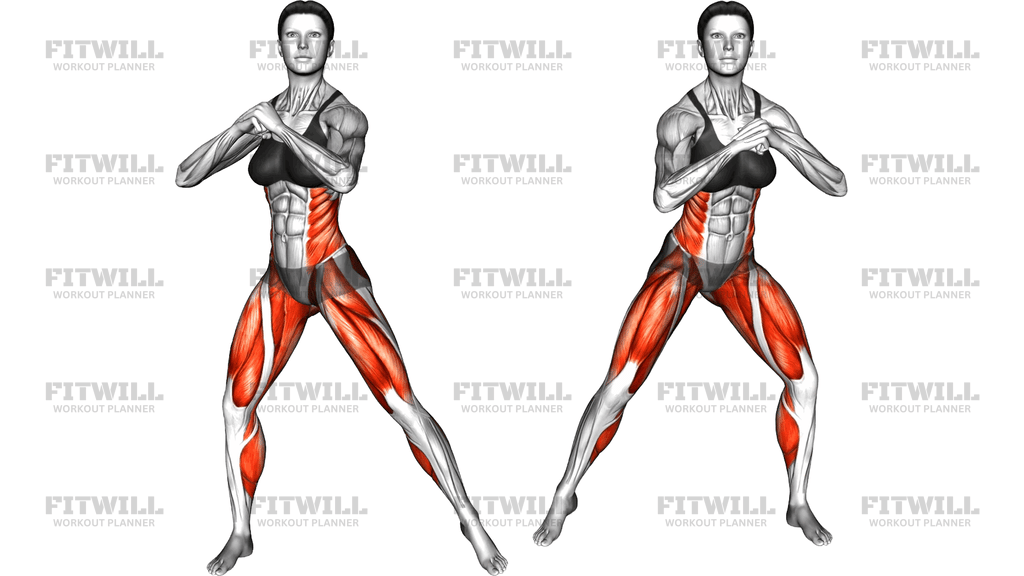
Sumo Stance Side Lunges are a bodyweight lower-body exercise that starts from a very wide sumo stance and shifts your weight laterally from one leg to the other. Instead of stepping out like a traditional side lunge, you stay planted in the wide base and simply lean, sink, and drive back and forth between legs. With your hands clasped in front of your chest for balance, each rep bends one knee deeply while the opposite leg stays long, giving you a loaded stretch through the inner thigh of the straight leg and heavy work through the quad and glute of the bent leg.
This movement is especially useful for anyone who trains squats and lunges in the sagittal plane but rarely challenges side-to-side hip strength. The wide stance puts a strong stretch on the adductors, while the shift loads the quads and glutes of the working side in a way forward-and-back squats do not. Skaters, martial artists, tennis and soccer players, and anyone who wants more stable hips for daily movement will get a lot out of it.
Setup matters more here than in most lunge variations because your feet never move. Take a stance roughly one and a half to two shoulder-widths apart and turn your toes out slightly, about 15 to 30 degrees. If your stance is too narrow, you will not be able to sit into one side without the opposite heel peeling up; too wide, and your hips may not allow the depth. Find the width where both feet stay flat through the whole range.
To execute well, keep your chest tall and hinge slightly forward from the hips as you shift over one leg. Push your hips back and let that knee travel out over your little toe, not caving inward. The opposite leg stays straight with the foot glued to the floor, feeling a pull along the inner thigh and hamstring. Pause briefly at the bottom, then drive through the whole foot of the bent leg to transfer your weight across to the other side in one smooth, controlled path.
Because it requires no equipment and very little space, Sumo Stance Side Lunges work well as a warm-up before squats, as a strength set on their own for higher reps, or as a finisher to fatigue the inner thighs and glutes. Beginners should start with bodyweight only and a shallower range, keeping the shift small and controlled.
The main safety points are protecting the knees and lower back. Never let the bending knee collapse toward the middle of your body, keep both heels down at all times, and only sink as low as you can while maintaining a braced, neutral spine. If the straight leg forces your pelvis to tilt or your back to round, shorten the range until your mobility improves.
[ Workout Log & Planner ]
Put your next workout in Fitwill
Keep your plan and training log ready when you are.


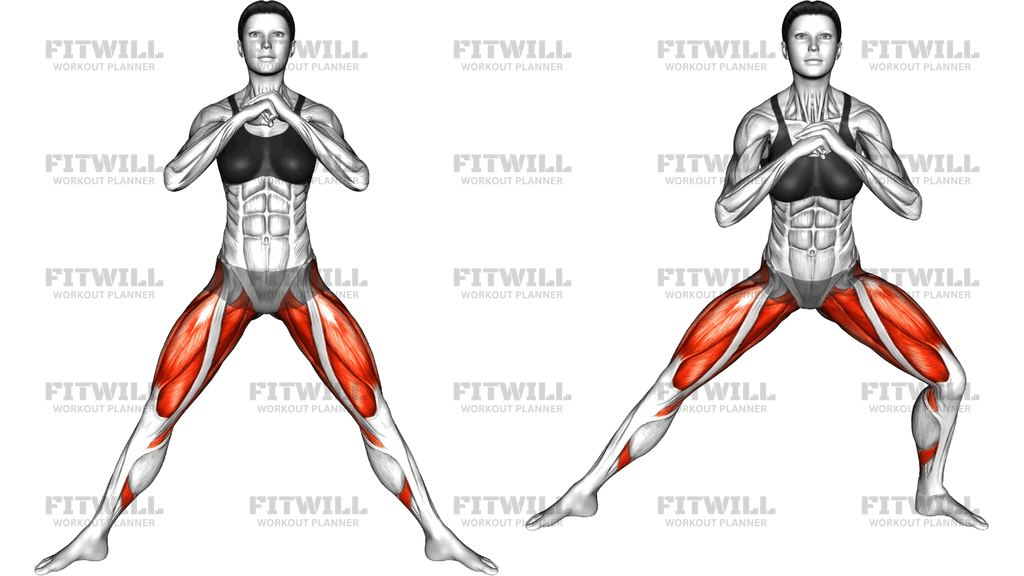
Instructions
- Stand with your feet roughly one and a half to two shoulder-widths apart, toes turned out 15 to 30 degrees, weight spread evenly across both feet.
- Clasp your hands together in front of your chest with elbows pointing down to help counterbalance and keep your chest lifted.
- Brace your core, pull your shoulders back, and soften both knees slightly to set a stable starting position.
- Shift your hips to the right and sit back into a side lunge, bending the right knee so it tracks out over your little toe while the left leg stays straight.
- Lower until your right thigh is near parallel to the floor or as deep as you can go with the left foot flat and your back neutral.
- Pause briefly, feeling the stretch along the straight left inner thigh and the load in the bent right quad and glute.
- Drive through the right heel and mid-foot to push back up and transfer your weight across the middle to the left side.
- Sink into a side lunge on the left leg with the same mechanics, keeping the right leg straight and planted.
- Breathe in as you shift into each side and exhale as you drive out of the lunge, keeping a steady rhythm.
- Continue alternating left and right for the desired number of reps, resetting your stance and posture if your feet drift or your heels lift.
Tips & Tricks
- The most common fault is the knee caving inward on the bending leg. Cue your knee toward your pinky toe as you sink, and if it keeps collapsing, reduce your depth.
- Watch the foot of your straight leg. If it rotates onto its outer edge or the heel lifts, your stance is too wide or you are going too deep for your current hip mobility.
- Do not turn this into a shifting squat by bending both knees equally. The working side bends a lot while the opposite leg stays long and straight, or you lose the adductor stretch entirely.
- Keep the lean coming from your hips, not your lower back. A slight forward hinge is fine; rounding or twisting your spine to get lower is not.
- Move slower than feels necessary at first. Momentum makes the weight transfer sloppy, while a controlled shift keeps tension on the quads and inner thighs.
- If your hands clasped at chest feel unstable, reach both arms straight forward instead. This lengthens the counterweight and makes balancing easier.
- Keep your torso facing forward throughout. Many people rotate their chest toward the bending leg, which twists the hips and reduces the lateral loading.
- Start with a shallow range for the first set and gradually increase depth as your adductors warm up. Cold inner thighs are where most strains in this exercise happen.
- If your heels want to lift at the bottom, slightly narrow your stance rather than forcing depth. Width should match your hips, not a fixed number.
Frequently Asked Questions
What muscles do Sumo Stance Side Lunges work?
The bent-leg side loads the quads and glutes through a deep lunge, while the straight leg holds a long stretch that targets the inner thighs. Your core and hip stabilizers work throughout to control the side-to-side weight transfer.
How is a Sumo Stance Side Lunge different from a regular side lunge?
In a regular side lunge you step out to one side and return to a narrow stance. Here your feet never move; you stay in a wide sumo stance and simply shift your weight laterally from leg to leg, which keeps constant tension and makes the transition between sides smoother.
Is this exercise good for beginners?
Yes, because it is bodyweight only and the range is easy to adjust. Beginners should use a slightly narrower stance, sink only partway down, and hold onto a wall or sturdy object with one hand if balance is difficult at first.
Why do my inner thighs feel more than my quads in Sumo Stance Side Lunges?
The straight leg is under a strong adductor stretch the entire time, so the inner thighs often dominate early on. As you build flexibility and learn to drive forcefully through the bent leg, the quad and glute involvement becomes more noticeable.
How wide should my stance be?
Start around one and a half to two shoulder-widths with toes turned out slightly. The right width lets you sink into one side while both feet stay flat and your straight-leg heel never lifts; adjust in or out based on your hip mobility.
Should my toes point forward or outward?
Turn your toes out about 15 to 30 degrees, matching the sumo-style setup. Pointing them straight ahead forces the bending knee to twist inward and can irritate the knee joint at depth.
Can I add weight to Sumo Stance Side Lunges?
Yes. Once bodyweight reps feel easy, hold a dumbbell or kettlebell with both hands at your chest in a goblet position, which actually improves balance by lowering your center of gravity.
How many reps should I do?
For mobility and warm-up, 8 to 12 controlled shifts per side work well. For strength and muscle endurance, 12 to 20 reps per side with a brief pause at the bottom of each rep is a solid range.
My knees hurt when I shift side to side. What should I change?
Check that the bending knee tracks out over your toes instead of caving inward, that both heels stay down, and that you are not dropping deeper than your hips allow. Reducing depth and slowing the tempo usually resolves the issue.
What can I substitute if my hips are too tight for the wide stance?
Use alternating reverse lunges or narrower side lunges with a shorter range while your adductor mobility improves. Stretching the inner thighs separately will gradually let you widen the stance over time.