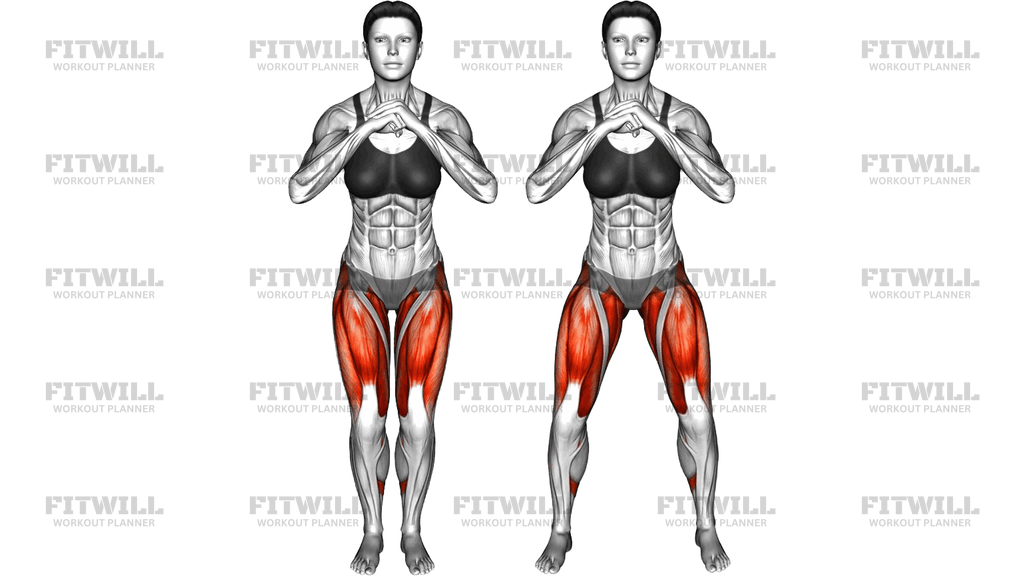
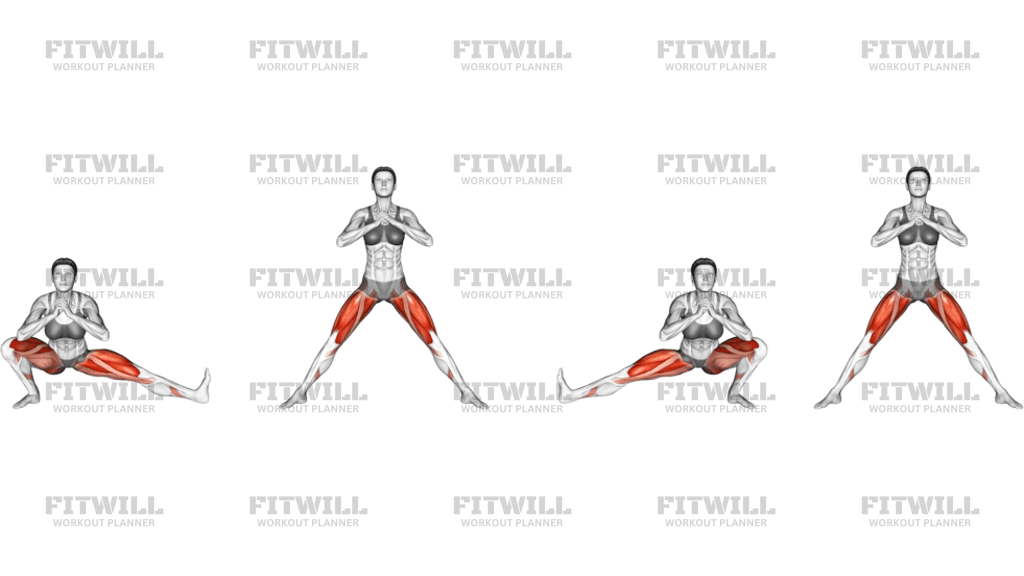
Heel Together Slight Squat
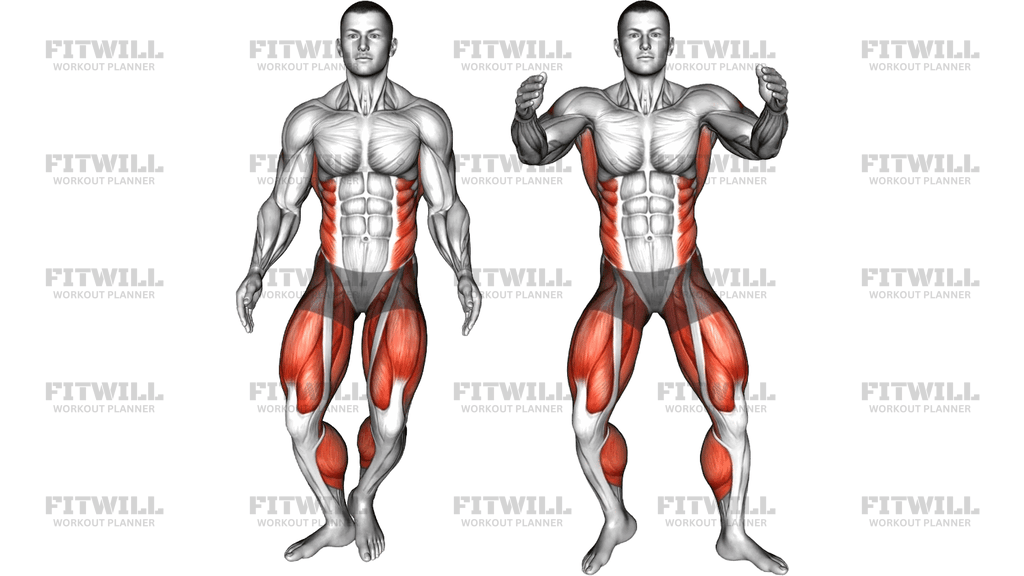
The Heel Together Slight Squat is a body weight squat variation performed with the heels touching and the toes turned outward, similar to a first-position stance in ballet. From that narrow base, you bend the knees and sink into a small, controlled squat while letting the knees travel outward over the toes, then press back up to standing. Because the feet stay close together, the movement demands more balance and hip control than a standard shoulder-width squat.
The stance is what makes this exercise distinct. With the heels together and toes angled out, the thighs rotate externally, which shifts a noticeable share of the work toward the inner thighs and the muscles that control hip rotation, while the quadriceps still drive the bending and straightening of the knees. The calves and the small muscles around the ankles work continuously to keep you steady on a narrow base, which is why this exercise can feel harder than its shallow depth suggests.
This movement suits beginners learning to squat with good knee tracking, dancers and skaters who need strength in a turned-out position, and anyone recovering general leg control after time away from training. It is also a useful warm-up drill before heavier lower body work, because it wakes up the hips, knees, and ankles through a gentle range without loading the spine.
To get the most from it, keep the descent shallow and deliberate. You only need a slight bend at the knees; the goal is not depth but precision. Press the knees outward in line with the toes as you lower, keep the heels glued together and flat on the floor, and hold your torso tall with hands on the hips or at your sides for balance.
Common mistakes include letting the knees collapse inward, rocking up onto the toes, and leaning the torso forward. All three usually come from going too deep too soon. Stay within a small range, move slowly, and let the strength and stability build over repeated sets before you attempt a lower position.
Perform 2 to 3 sets of 10 to 15 controlled repetitions, pausing briefly at the bottom of each rep. Because the exercise is low load, it can be done almost anywhere and pairs well with plie squats, glute bridges, or calf raises in a short home routine.
Fitwill
Log Workouts, Track Progress & Build Strength.
Achieve more with Fitwill: explore over 9600 exercises with images and videos, access built-in and custom workouts, perfect for both gym and home sessions, and see real results.
Start your journey. Download today!




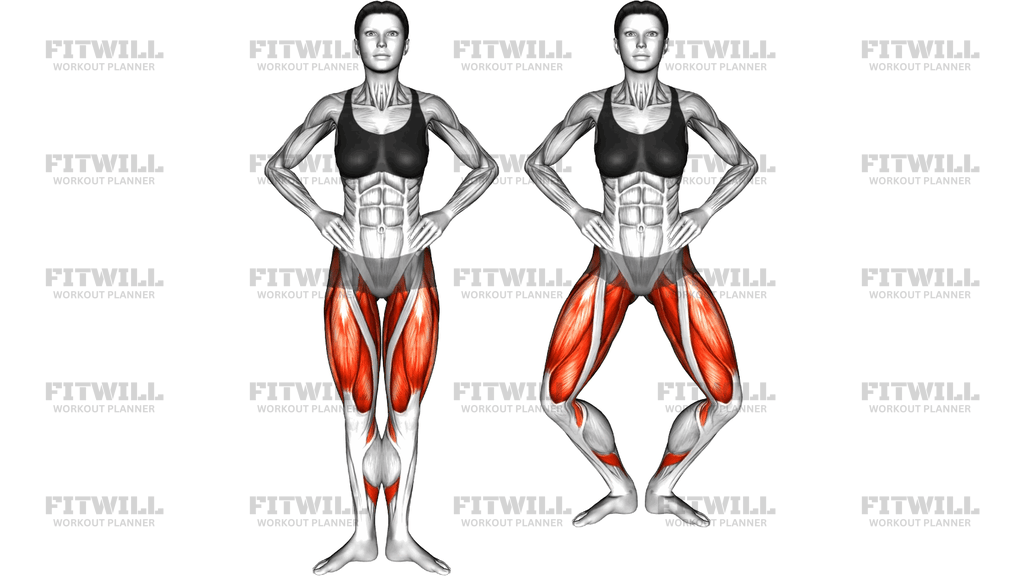
Instructions
- Stand tall with your heels touching, feet forming a narrow V with the toes turned comfortably outward.
- Place your hands on your hips or let them hang lightly at your sides, and set your eyes on a fixed point ahead to help with balance.
- Engage your core softly and keep your chest lifted and shoulders relaxed down away from your ears.
- Inhale, then slowly bend both knees outward over the direction of your toes, sinking into a slight squat while your heels stay pressed together and flat on the floor.
- Stop the descent at a small knee bend, or slightly deeper only if you can keep your heels down, torso upright, and knees tracking outward.
- Hold the bottom position for a brief moment and feel the thighs and inner thighs working to hold the narrow stance.
- Exhale and press through the floor to straighten your legs, drawing the knees back until you are standing tall again.
- Fully straighten the hips and knees at the top without locking the knees hard, and re-set your balance before the next repetition.
- Keep the movement slow and even throughout, and stop the set if your heels lift or your balance breaks down.
Tips & Tricks
- If your knees drift toward each other as you lower, reduce the depth and consciously drive them out over your little toes; narrow-stance squats expose weak hip control quickly.
- Weight should stay over the whole foot, especially the heels; if you find yourself up on the balls of the feet, you are descending too far for your current ankle and calf mobility.
- Do not force an extreme turnout of the feet. Angle the toes only as far as feels natural, because excessive turnout with the heels together can strain the knees.
- Keep the pelvis neutral rather than tucking it under at the bottom; tucking is common in very deep plie positions but is unnecessary for this slight squat.
- Use a wall, chair back, or doorway for fingertip support on your first few sessions if the narrow base makes you wobble, then progress to hands on hips.
- Move at a tempo of about two seconds down and two seconds up; rushing the reps turns this into a bouncing movement and blunts the thigh and inner thigh work.
- If your calves cramp or shake, that is the ankle stabilizing work showing up; shorten the set, and stretch the calves afterward.
- Warm up the hips with a few standing leg swings or gentle bodyweight squats first, since a cold turned-out stance feels stiffer than a normal squat stance.
- Stop and widen your stance if you feel pinching at the front of the knee; this exercise is meant to be knee-friendly when kept shallow and controlled.
Frequently Asked Questions
What muscles does the Heel Together Slight Squat work?
The quadriceps on the front of the thighs do most of the bending and straightening, while the inner thighs and hip muscles control the turned-out, heels-together position. The calves and ankle stabilizers work throughout to keep you balanced on the narrow base.
Why are the heels together instead of hip-width apart in this squat?
The heels-together, toes-out stance rotates the thighs outward and narrows your base of support, which challenges hip control and balance in a way a normal squat does not. It also strengthens the legs in the turned-out positions used in dance, skating, and martial arts.
How deep should I go in the Heel Together Slight Squat?
Only a slight knee bend is needed, especially when starting. Go a little deeper only if you can keep your heels flat, knees tracking over the toes, and torso upright; depth is less important than clean knee tracking here.
Is this exercise suitable for complete beginners?
Yes, it is a gentle, low-load way to learn squat mechanics and knee control. Beginners should keep the range shallow and may hold a wall or chair for balance until the narrow stance feels steady.
My knees cave inward when I lower, what should I do?
This is the most common fault in this exercise because the stance is so narrow. Shrink the range of motion, deliberately press the knees outward over the toes, and strengthen your hips with glute work before trying a deeper position.
Can I use the Heel Together Slight Squat as a warm-up?
Yes, it works well as a warm-up before squats, lunges, or running because it takes the hips, knees, and ankles through a controlled range without heavy load. Use one or two easy sets of 10 to 12 reps.
What can I substitute if the heels-together position hurts my knees?
Try a plie squat with the feet a comfortable width apart and toes turned out, which trains similar muscles with less stress on the narrow stance. A standard body weight squat with feet hip-width apart is another option.
Do I need any equipment for this movement?
No, it is entirely body weight, so you only need a small clear space and preferably a smooth floor. A mirror can help you check that your knees are tracking outward over your toes.
How many reps and sets should I do?
Two to three sets of 10 to 15 slow repetitions is a good starting point. Focus on a brief pause at the bottom of each rep rather than adding speed or depth.
Is it normal for my calves to shake during this exercise?
Yes, some trembling is common because the calves and ankle stabilizers work hard to keep you balanced on a narrow base. If it becomes excessive or you feel cramping, rest briefly and shorten your next set.