Alternate Butt Kick To Knee Thrust
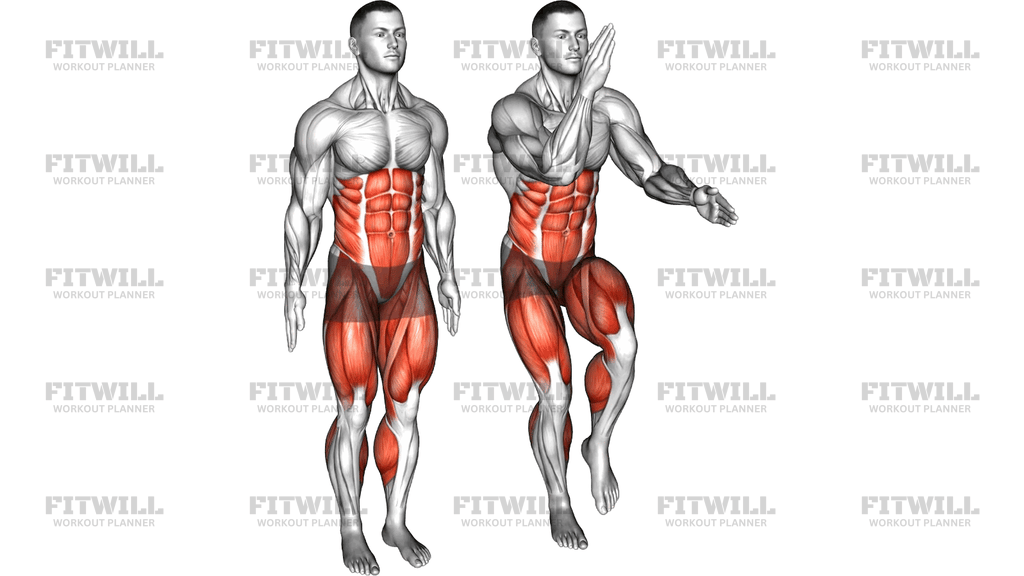
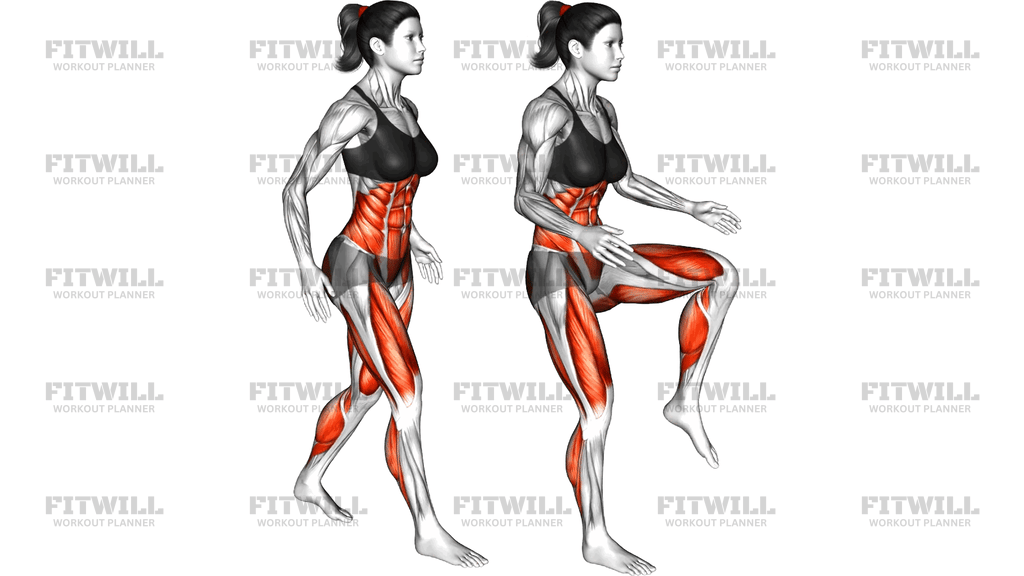
The Alternate Butt Kick To Knee Thrust is a standing, body-weight movement that combines two familiar leg actions into one continuous rhythm. From a tall stance with your hands resting lightly on your hips, you kick one heel up toward your glutes, then immediately swing that same knee forward and up to hip height before switching sides. The result is a flowing, alternating pattern that raises your heart rate while challenging coordination and single-leg balance.
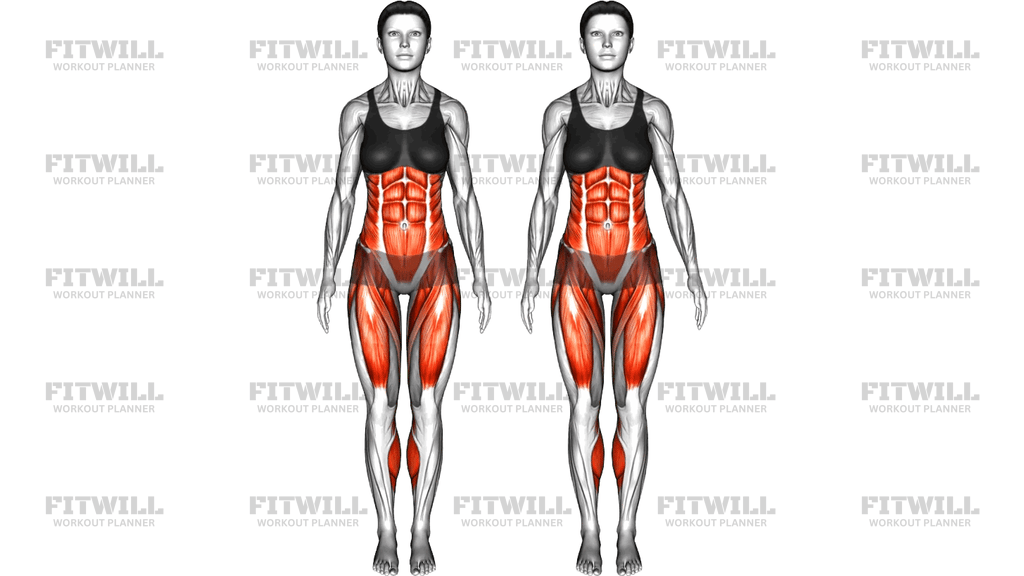
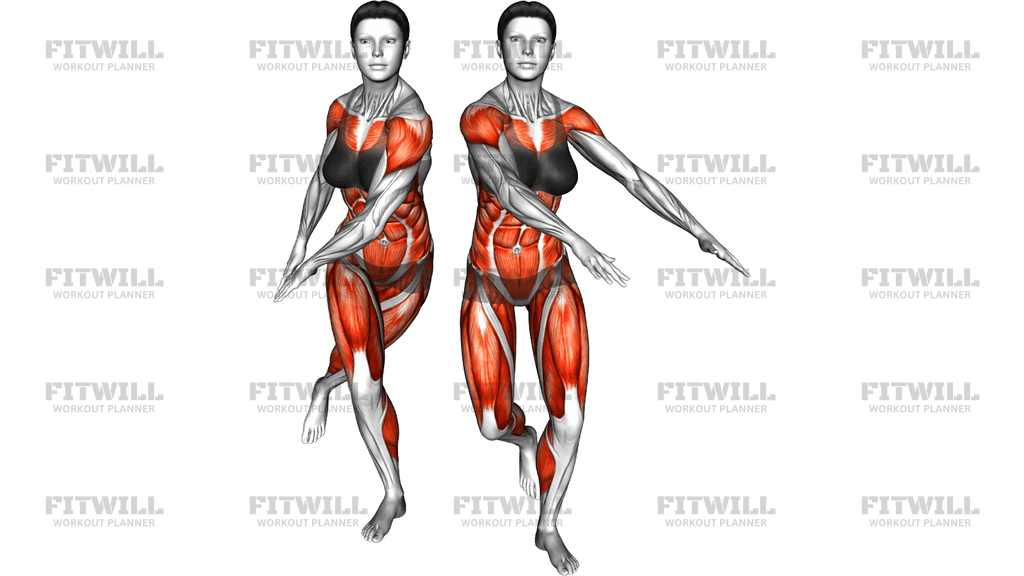
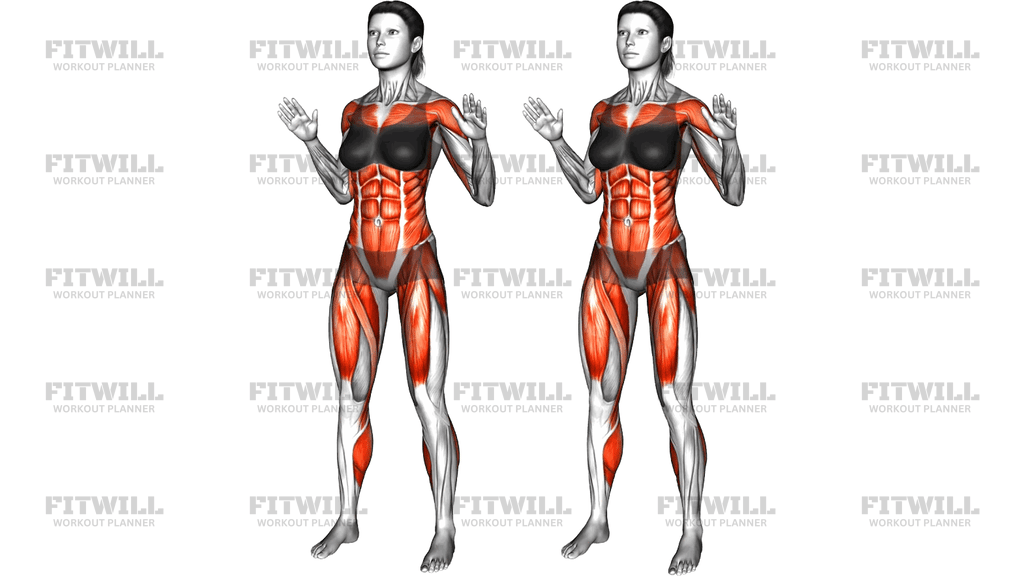
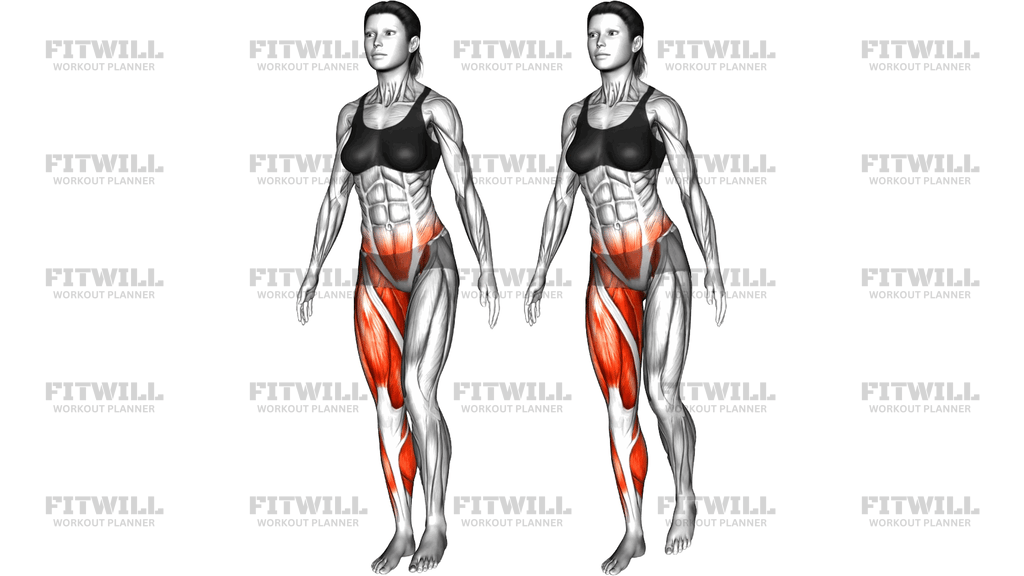
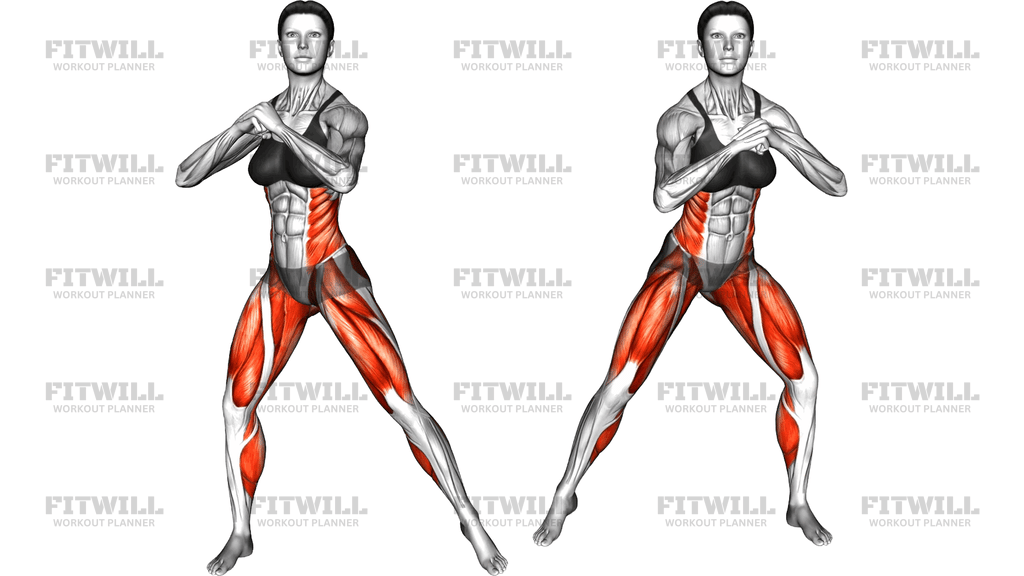
This exercise earns its place in warm-ups, cardio circuits, and active recovery days because it covers a lot of ground in a small space. The butt-kick phase stretches the quadriceps and recruits the hamstrings as they curl the heel up, while the knee thrust phase drives the hip flexors and front of the thigh to lift the leg. Because you alternate legs continuously, your calves, glutes, and core stabilizers work overtime to keep you upright and controlled on each transition.
The hands-on-hips setup is not just cosmetic. Placing your hands on your hips gives you a reference point for keeping your torso tall and prevents the arm swinging that can mask a lazy knee drive. It also makes it easier to notice if you start leaning back as you thrust the knee up, which is one of the most common form breakdowns in this movement.
To execute it well, think of the floor contact as quick and light. Your working foot should kiss the ground between the kick and the knee lift rather than planting heavily. Stay on the balls of your feet, keep your ribs stacked over your pelvis, and drive each knee to a consistent height so the rhythm stays even from left to right. If your knee height starts dropping or your torso starts swaying, that is your cue to slow down rather than push through fatigue.
You can use the Alternate Butt Kick To Knee Thrust as a dynamic warm-up before lower-body strength work, as a cardio station in a circuit, or as a low-skill conditioning drill when you want to elevate your heart rate without equipment. Because it requires no gear and minimal space, it also works well for home training and travel workouts.
[ Workout Log & Planner ]
Put your next workout in Fitwill
Keep your plan and training log ready when you are.


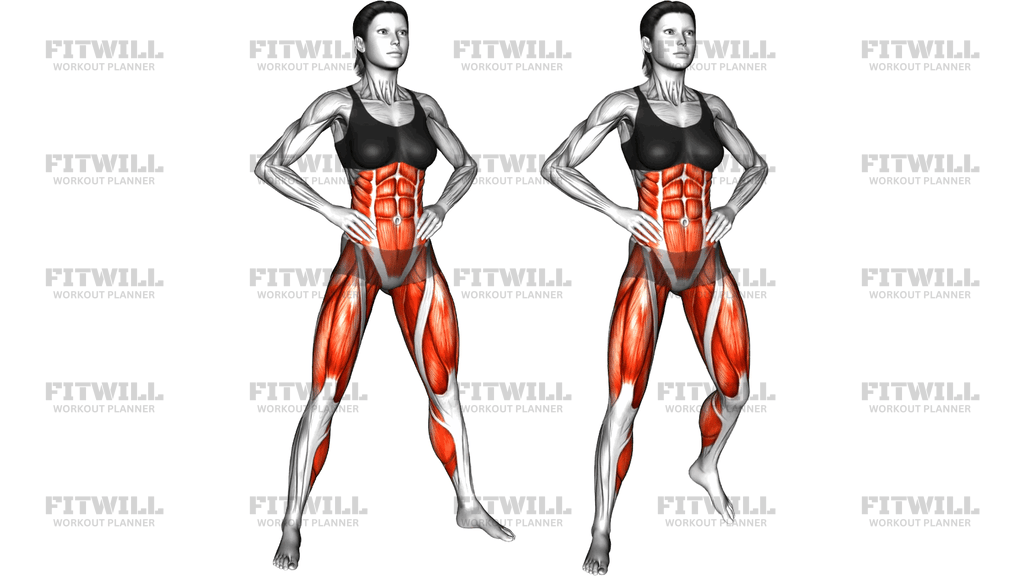
Instructions
- Stand tall with your feet about hip-width apart and place your hands lightly on your hips, elbows out to the sides.
- Engage your core, lift your chest, and shift your weight onto the balls of both feet so you are ready to move quickly.
- Kick your right heel back and up toward your right glute, bending the knee so the foot travels close to your body.
- Without letting the foot fully plant, immediately swing the same knee forward and thrust it up to roughly hip height.
- Lower the right foot to the floor under control and repeat the kick-and-thrust sequence with the left leg.
- Keep alternating legs in a steady rhythm, staying light on the balls of your feet with each contact.
- Exhale as you drive each knee up and inhale as the foot returns down, keeping the breath even throughout.
- Maintain a tall torso the entire time; avoid leaning back or rounding forward as the knees come up.
- Continue for your desired time or repetitions, then stop with both feet flat and reset your posture before the next set.
Tips & Tricks
- If you lean your torso backward during the knee thrust, your hip flexors are being bypassed by momentum — cue your ribs down and imagine pulling your belly button toward your spine as the knee rises.
- A heavy heel strike between reps usually means you are rushing; aim for soft, quick contacts on the balls of your feet instead.
- Keep the heel path tight on the butt kick — if your foot swings out behind you, the hamstring curl becomes sloppy and your balance suffers.
- Match knee height on both sides; a lower drive on one leg often points to tight hip flexors or simply a side you haven't practiced as much.
- Your hands should rest on your hips, not press into them — pushing down on your thighs or hips to help lift the knee cheats the movement.
- If balance is shaky, widen your base slightly and slow the tempo before adding speed; steadiness first, then rhythm.
- Warm up your ankles with a few slow heel raises first, since repeated ball-of-foot contacts demand decent calf and ankle tolerance.
- For a harder conditioning effect, increase knee height and pace rather than extending the set to the point where your form degrades.
Frequently Asked Questions
What muscles does the Alternate Butt Kick To Knee Thrust work?
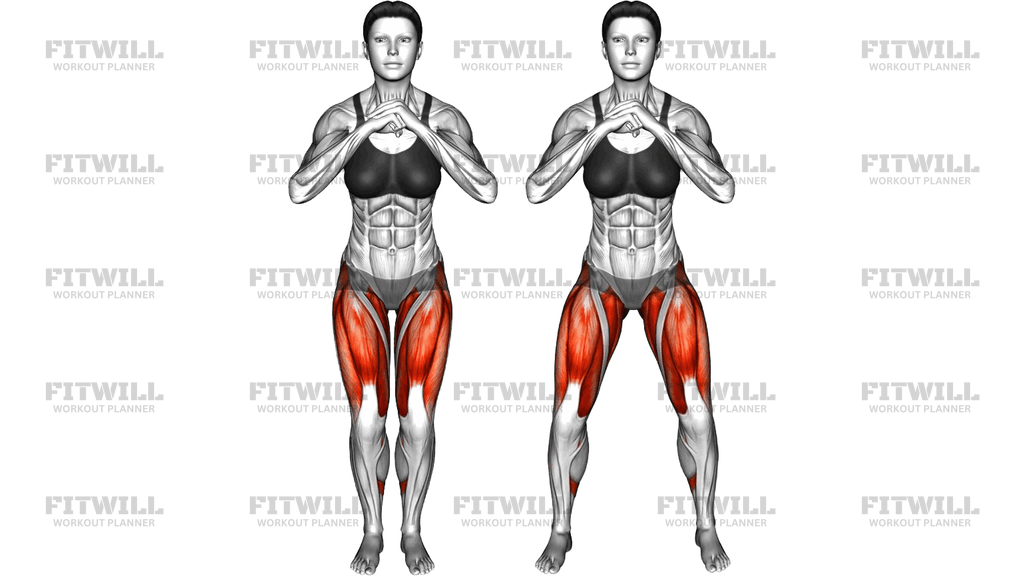
The primary work comes from the quads and hamstrings — the hamstrings pull the heel up in the butt kick, and the quads and hip flexors drive the knee thrust. Your calves, glutes, and abs stabilize and keep you balanced as you alternate.
Is the Alternate Butt Kick To Knee Thrust good for beginners?
Yes. It is a low-skill, equipment-free movement, so beginners can start with a slow tempo and modest knee height, then build speed and range as balance and coordination improve.
Why do my hands stay on my hips during this exercise?
Hands on the hips keep your torso tall, stop you from swinging your arms for momentum, and give you immediate feedback if you start leaning back during the knee thrust.
How high should I drive my knee in the knee thrust phase?
Aim for roughly hip height, or whatever point lets you keep your torso upright and your rhythm even. Height should never come at the cost of leaning back or planting heavily between reps.
Can I use the Alternate Butt Kick To Knee Thrust as a warm-up?
Absolutely. It raises your heart rate, takes your hips and knees through a dynamic range, and primes your hamstrings, quads, and hip flexors before lower-body strength work or running.
What is the most common mistake in this movement?
Leaning the torso backward as the knee comes up, which turns the hip drive into a momentum swing. Keep your ribs stacked over your pelvis and let the hip flexors and abs do the lifting.
My lower back feels strained during the knee thrust — what should I change?
Reduce the knee height slightly, tighten your core before each drive, and make sure you are not arching your back as the leg lifts. If discomfort persists, switch to a slower tempo or a gentler substitute.
What can I substitute if balance is an issue?
Stand next to a wall or sturdy chair with one hand lightly touching for support, or perform the movement more slowly with a brief pause between the kick and the knee thrust until your stability improves.
How long should I perform the Alternate Butt Kick To Knee Thrust?
For warm-ups, 20 to 40 seconds at a controlled rhythm is usually enough. In a cardio circuit, 30 to 60 seconds works well, as long as your knee height and posture stay consistent to the end.
Does the Alternate Butt Kick To Knee Thrust help with running?
It can, as a warm-up drill. The butt kick reinforces heel recovery and hamstring action, while the knee thrust emphasizes hip flexor drive — both patterns show up in the running gait.