Gate Rock (Advanced)
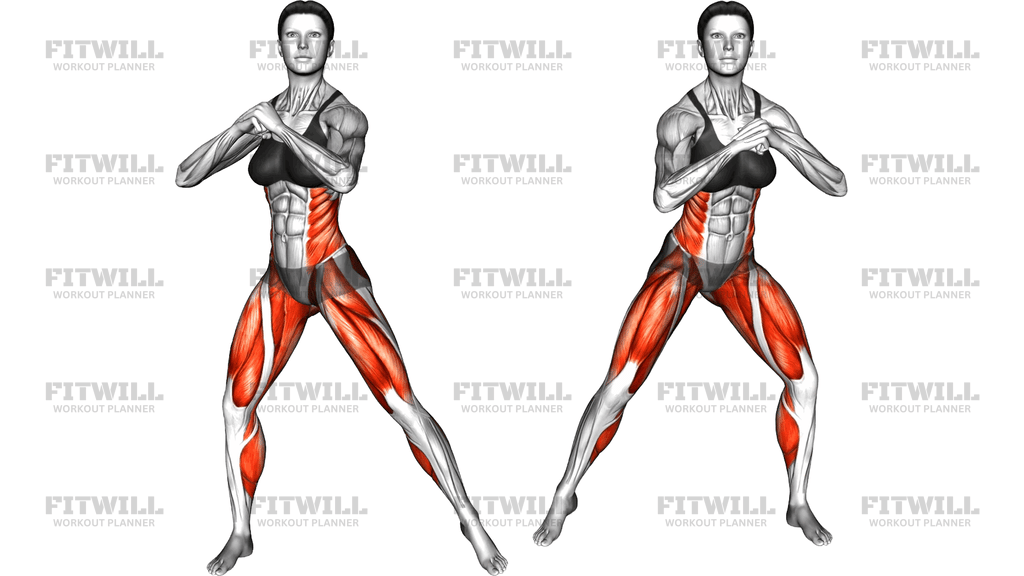
Gate Rock (Advanced) is a demanding bodyweight lateral movement that combines a deep side lunge with a controlled weight shift from one leg to the other. You start in a wide stance, fold fully into one hip so the bent knee carries your weight while the opposite leg stretches out straight to the side with the foot flexed, then rock across to the other side without standing up in between. Because the transition happens low to the ground, the legs never get a chance to unload, which is exactly what makes this an advanced variation rather than a simple side lunge.
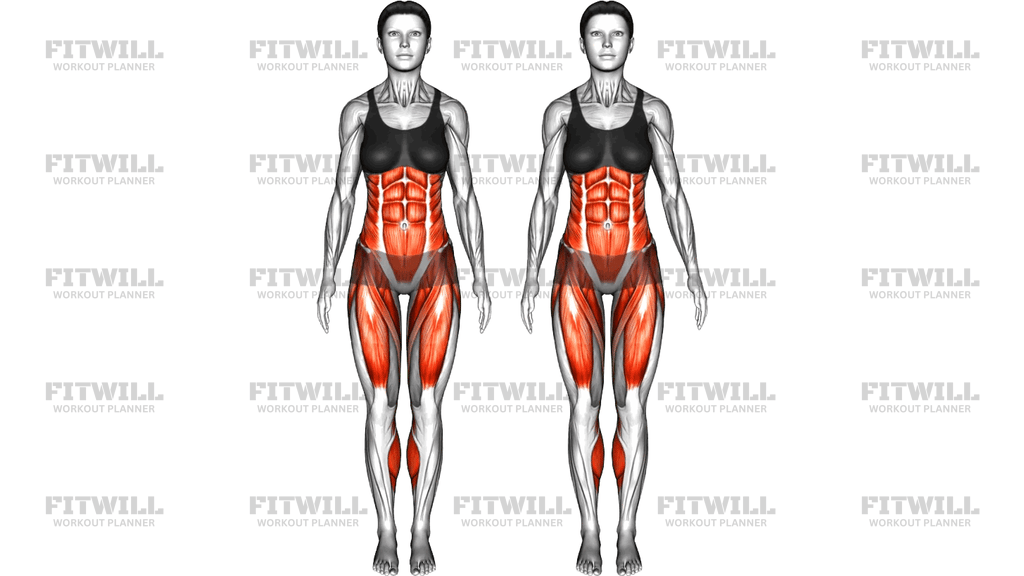
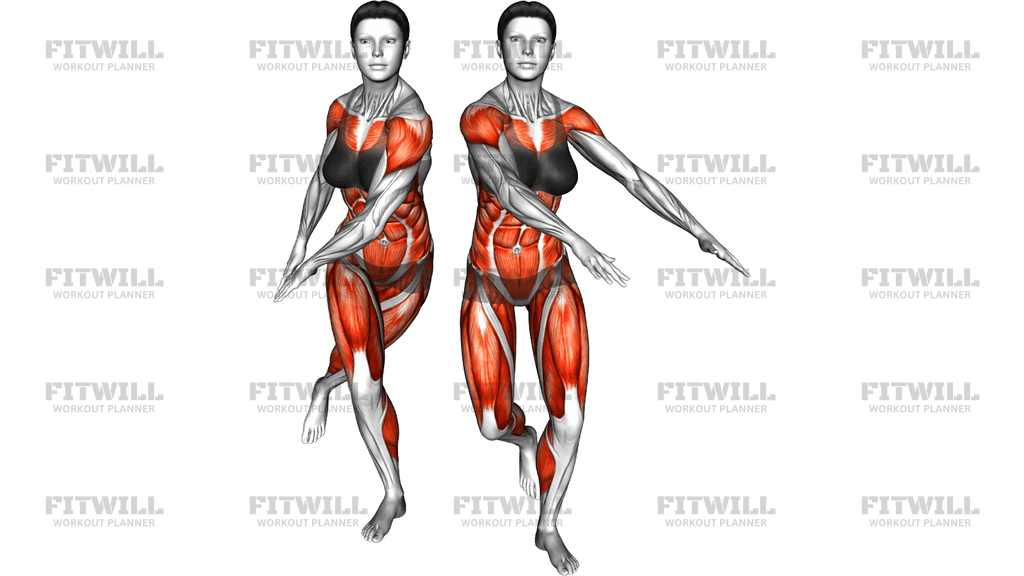
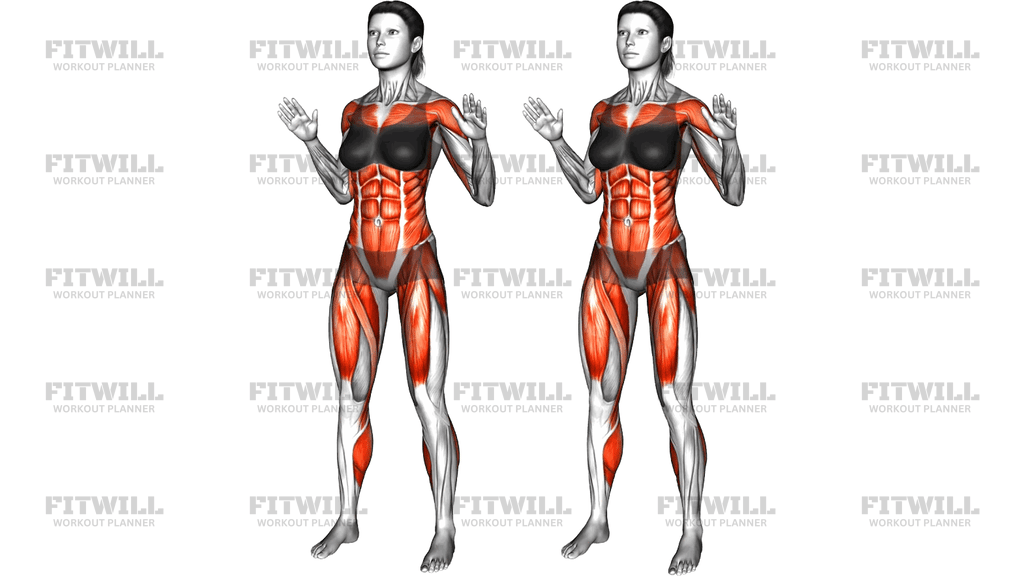
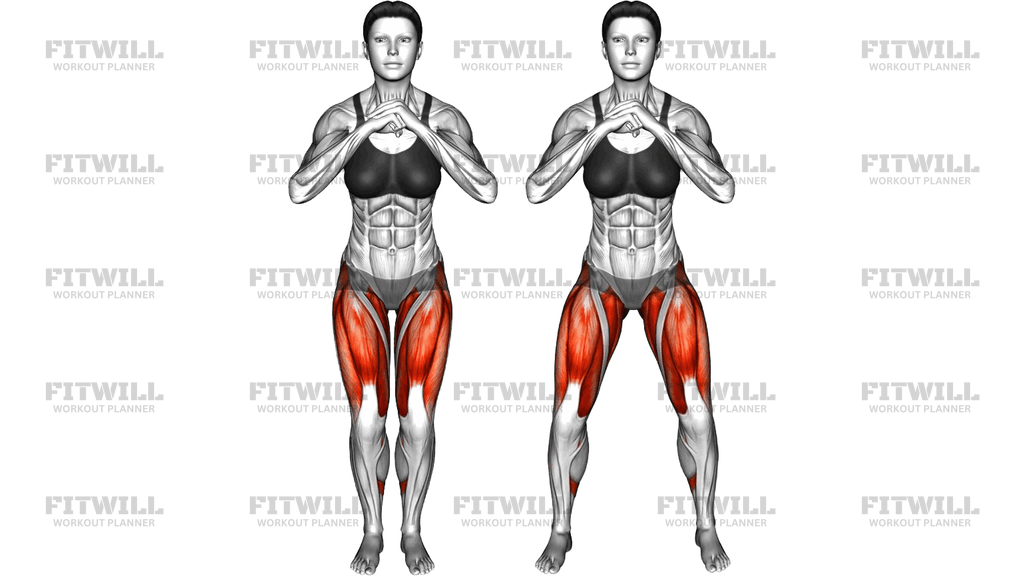
The primary work comes from the quads of the bent leg, which lower and lift your entire bodyweight in a deep single-leg squat pattern. At the same time, the inner thigh muscles of the straightened leg work eccentrically to control the stretch as you sink in, and the glutes of the working side drive you back out of the bottom. Holding the torso tall and the hands clasped at the chest keeps the core and obliques engaged to prevent the trunk from collapsing over the bent knee.
This movement is especially useful for athletes who change direction, such as tennis, soccer, basketball, and martial arts practitioners, because it trains strength in the exact frontal-plane position where cuts and lateral pushes happen. It also serves as a strong mobility-strength hybrid for anyone whose side lunges have plateaued at a shallow depth. Lifters recovering balance between sides, or those who favor one leg, will notice the asymmetry immediately.
The setup matters more than most people expect. Your stance needs to be genuinely wide, and your weight must sit back into the heel and hip of the bending leg rather than dumping onto the kneecap. The straight leg should stay long with the toes pulled up toward the shin, foot flat on the floor from heel to ball. If the stance is too narrow or the trailing heel lifts, the stretch at the inner thigh disappears and the knee of the working leg takes the stress instead.
To execute well, keep your chest lifted and shoulders stacked over the hips as you sink, rather than rounding forward. Shift laterally, not down; think of sliding across a low doorway rather than dropping straight between your feet. Pause for a beat at full depth, feel the straight leg's inner thigh under tension, then push the floor away with the bent leg to rock the weight across. Move slowly enough that you could stop the shift at any point — if momentum is doing the work, the legs are not.
Common use cases include dynamic warm-ups for lower-body strength days, unilateral leg work in minimal-equipment home sessions, and accessory training for squat and deadlift depth. Practical safety points: keep the bent knee tracking over or slightly inside the toes, never let it dive inward, and stay within a depth where you can still reverse the shift under control. If you cannot hold the bottom position momentarily, build depth gradually with standard side lunges first.
Fitwill
Log Workouts, Track Progress & Build Strength.
Achieve more with Fitwill: explore over 9600 exercises with images and videos, access built-in and custom workouts, perfect for both gym and home sessions, and see real results.
Start your journey. Download today!




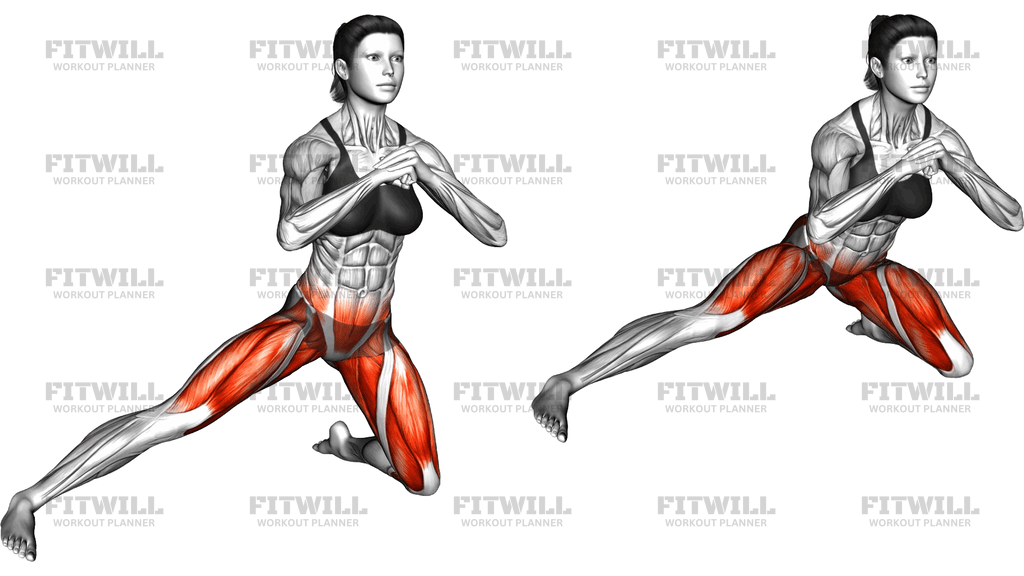
Instructions
- Stand with your feet roughly one and a half shoulder-widths apart, toes pointing forward, and clasp your hands together in front of your chest with elbows tucked in.
- Brace your abdominal wall, lift your chest, and shift your weight onto one foot so the other leg begins to lengthen out to the side.
- Bend the loaded knee and sit your hip back and down into it, letting the opposite leg extend fully straight with the foot flexed and the whole sole in contact with the floor.
- Lower until the bent thigh is at or near parallel to the floor and you feel a firm stretch along the inner thigh of the straight leg, keeping the heel of the working foot flat.
- Pause briefly at the bottom with your torso upright and shoulders stacked over the hips; do not let your chest fall over the bent knee.
- Push the floor away through the heel and mid-foot of the bent leg to rock your weight horizontally across to the other side, keeping your hips low the entire time.
- Receive the shift by bending the newly loaded knee and letting the opposite leg straighten out, mirroring the position you just came from.
- Exhale as you drive out of each bottom position, and inhale as you sink into the next one, keeping the breath steady through the whole sequence.
- Continue rocking side to side for the desired number of repetitions, then stand up fully through the center of your stance to finish the set.
- Reset your stance and brace again between sets if your feet have crept inward or your posture has drifted.
Tips & Tricks
- If your knees drift toward each other at the bottom, widen your stance — most people set up too narrow for this movement and lose the inner-thigh stretch entirely.
- Keep the foot of the straight leg fully planted with toes pulled back; a lifted heel or floppy toe means the adductors are not lengthening under load and the knee of the working leg compensates.
- The most common failure is standing up between reps. If you pop up to reset each side, you turn Gate Rock into two separate lunges — fight to keep your hips at the same low height as you shift.
- Do not let the bent knee travel forward past your toes; sit back into the hip instead, as if sliding sideways onto a low stool.
- If you keep falling forward, press your clasped hands firmly together at your chest. That small tension stabilizes the upper back and makes it much easier to stay tall.
- Slow the transition down before adding reps. A two-second shift across the bottom builds more usable lateral strength than a fast swing that momentum controls.
- Warm up the hips with shallow side lunges or leg swings first; going straight into the full-depth rock on cold inner thighs is where most strains happen.
- If one side is notably weaker, lead with that side on every set and match the repetitions on the stronger side rather than doing extra.
- On a slippery floor, work barefoot or in flat-soled shoes; the straight leg needs to grip so it can act as an anchor during the shift.
Frequently Asked Questions
What muscles does Gate Rock (Advanced) work the most?
The quads of the bent leg do the bulk of the work as they lower and lift your bodyweight in a deep single-leg position. The inner thighs of the straightened leg work hard eccentrically under the stretch, with the glutes driving you out of the bottom and the core stabilizing your upright torso.
Why is Gate Rock considered advanced compared to a regular side lunge?
In a side lunge you stand up between repetitions, which gives the legs a brief rest. Gate Rock keeps you low the entire time, so the working leg never unloads and you must generate force from a deep position just to move across to the other side.
How wide should my stance be for Gate Rock (Advanced)?
Wide enough that when you sink fully to one side, the opposite leg extends almost straight with its whole foot flat on the floor. For most people that means roughly one and a half shoulder-widths or more — if the straight leg has to bend, widen up.
My inner thighs feel a strong pull at the bottom. Is that normal?
A firm stretching sensation along the inner thigh of the straight leg is expected and is part of the training effect. Sharp pain, or a pulling sensation at the groin insertion rather than the muscle belly, means you have gone beyond your current range and should reduce the depth.
Can beginners do Gate Rock (Advanced)?
Beginners should start with standard side lunges and partial-depth versions where they stand up between sides. Once you can perform a controlled deep side lunge on both legs, you can attempt the rock with a reduced range and build up gradually.
Should my torso lean toward the bent knee during the movement?
A slight forward lean is fine, but your chest should stay lifted and your shoulders stacked over your hips. Collapsing over the bent knee removes tension from the legs and shifts stress onto the knee joint.
What can I use as a substitution if the full movement is too hard?
Alternating side lunges where you stand tall between each rep train the same lateral pattern with less demand. You can also perform the rock at partial depth, or hold onto a door frame or rack for light assistance while you build strength through the transition.
How many repetitions should I do per set?
Because the legs stay loaded continuously, quality drops quickly. Two to four sets of six to ten controlled shifts per side is plenty; when you cannot pause briefly at the bottom of each rep, end the set.
Is it a problem if one side feels much weaker or tighter?
Some side-to-side difference is normal, but a large gap is worth addressing. Lead each set with the weaker side and match the repetitions and depth on the stronger side rather than adding extra work to it.
Do I need any equipment or floor surface considerations for Gate Rock (Advanced)?
No equipment is needed, but you need enough lateral space for a wide stance and a surface with enough grip that the straight foot does not slide. Practice on a non-slip floor, in flat shoes or barefoot, and avoid slick surfaces where the extended leg could slip out.