Resistance Band Speed Step
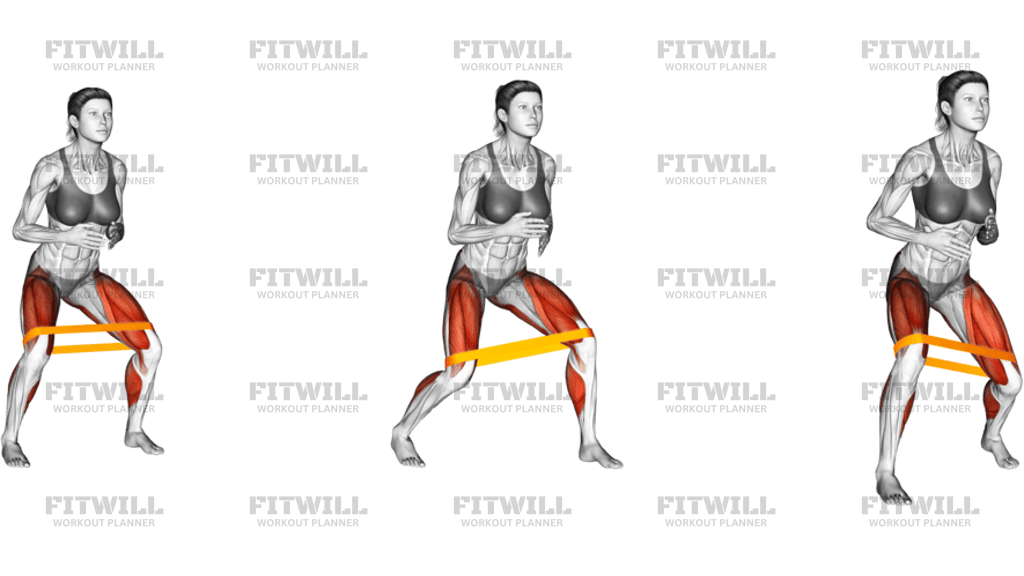
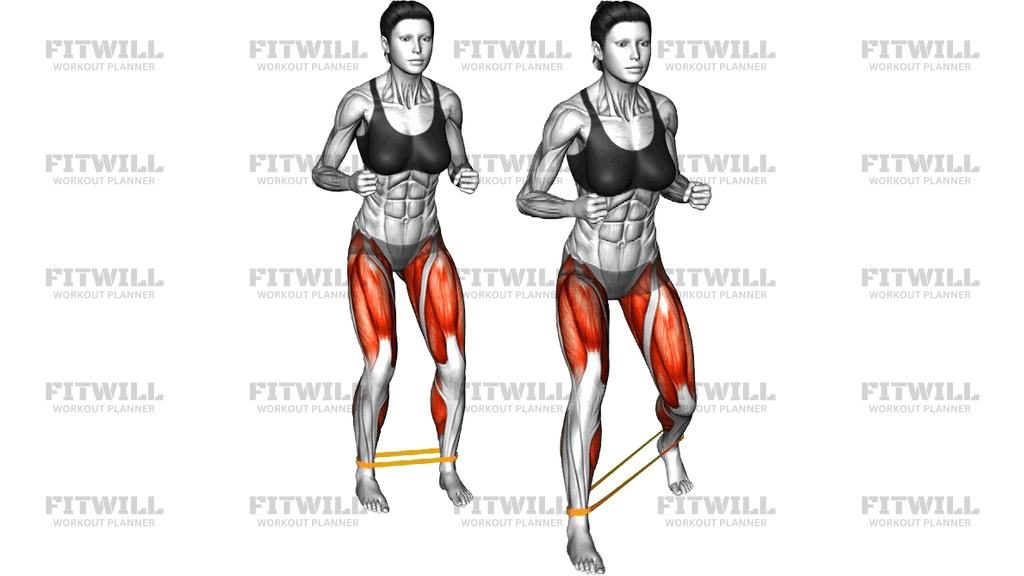
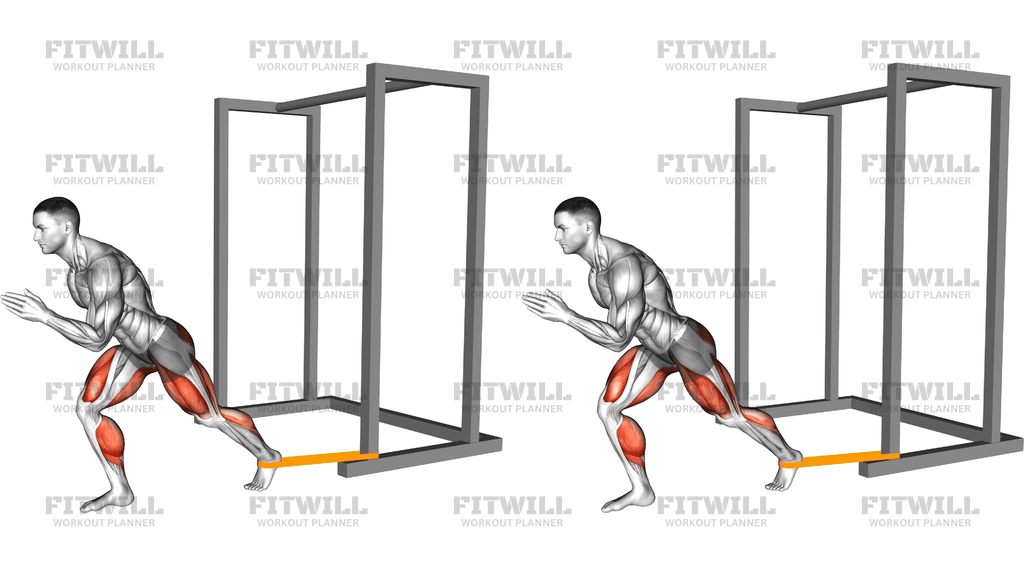
The Resistance Band Speed Step is an explosive lower-body drill that replicates the first step of a sprint start, with an elastic band anchored behind you and looped around your rear ankle. You set up in a staggered, forward-leaning stance like an athlete coming out of the blocks, then drive the rear knee forward fast while the band pulls the trailing foot back. The result is a knee-drive and step pattern loaded in exactly the direction that makes it hard: backward.
This movement is especially useful for sprinters, field and court sport athletes, and anyone who wants to sharpen acceleration mechanics without heavy weights. Because the band's resistance increases as the rear foot travels forward, the drill forces an aggressive hip flexor and glute drive through the end range of the step, which is where many athletes get lazy. The standing leg works overtime as well, stabilizing the ankle, knee, and hip against the constant rearward pull.
Setup matters more here than in most band drills. The anchor point should be low and directly behind you, the band should sit snugly around the ankle rather than the mid-foot, and your torso needs a genuine forward lean with weight over the front leg. If you stand too upright or drift too far from the anchor, the band either slackens or drags you backward, and the drill turns into a balance exercise instead of a speed drill.
To execute well, think about stepping, not pulling. Snap the rear knee up and through, let the band whip the foot back down to the start position, and keep your torso angle and arm carriage consistent with an acceleration sprint position. The front leg stays loaded and bent; you are not standing up into a full lunge each rep.
Common use cases include warm-up speed work, contrast training before heavy squats, and low-volume power blocks during off-season or pre-season preparation. Because the band provides smooth deceleration on the return, the drill is generally easier on the knees than jumping variations, though it still demands good ankle and hip control.
Keep the volume modest and the intent high. This is a speed exercise, so every rep should be fast and crisp. If your step slows to half speed because the band is too heavy, drop to a lighter band. Stop the set as soon as your step rhythm or torso angle breaks down, since sloppy fast reps teach the exact pattern you are trying to avoid.
[ Workout Log & Planner ]
Put your next workout in Fitwill
Keep your plan and training log ready when you are.


Instructions
- Anchor a resistance band low on a power rack or sturdy upright behind you, and loop the free end securely around your rear ankle with the band running taut at the start position.
- Take a staggered stance with your left foot forward and right foot back (or the opposite if you prefer), knees bent, torso leaning forward at roughly 45 degrees, and your hands held in front of your chest as if sprinting.
- Shift your weight onto the front leg so the rear foot is light, and brace your core to hold the forward lean without rounding your lower back.
- Drive the banded rear knee up and forward in one fast, punchy step, letting the band stretch as the knee travels toward your chest.
- At the top of the step, the knee should be lifted high in front of the hip with the torso still leaned forward, not standing upright.
- Let the band pull the foot back down to the starting position under control, landing softly on the ball of the foot rather than slapping down.
- Exhale sharply as you drive the knee up, and inhale as the foot returns.
- Complete all repetitions on one side, then switch stance so the opposite leg works against the band.
- Reset your lean and stance between sets, and check that the band has not slipped down from the ankle before continuing.
Tips & Tricks
- If the band is slack at the start of the step, you are standing too close to the anchor; back up until you feel light tension before the knee even moves.
- A common mistake is standing tall as the knee drives up, which turns the drill into a slow march. Hold a slight shin angle over the front foot the whole time.
- Loop the band around the ankle bone, not the arch of the foot. A mid-foot loop drags your heel and changes the step pattern.
- If your front leg locks out between reps, you are resting instead of staying loaded; keep the front knee softly bent from start to finish.
- Speed drops fast with fatigue. Cut the set short rather than grinding slow reps, since the training effect comes from rate of movement, not time under tension.
- Keep your arms moving in opposition to the legs, as if sprinting. Stiff, hanging arms usually mean the core has disengaged and the lean is collapsing.
- Do not let the band snap the foot back into a hard heel strike. Actively lower the foot to the ball of the foot so each rep stays quiet and controlled on the landing.
- Start with a light band and master the rhythm first; a heavy band pulls you off balance and teaches you to reach with the foot instead of driving with the hip.
Frequently Asked Questions
What muscles does the Resistance Band Speed Step work?
The primary drivers are the glutes and quads, with strong contributions from the hip flexors as the rear knee punches up and the calves as the front foot stabilizes. The core also works to hold the forward lean against the band's pull.
How is the Resistance Band Speed Step different from a normal band lunge?
It is a speed and power drill, not a strength lunge. You stay in a loaded sprint stance and snap the rear knee up and down rapidly, rather than stepping into a deep, slow lunge with the band around the thigh.
Is the Resistance Band Speed Step suitable for beginners?
Yes, with a light band and slower, deliberate reps at first. A beginner should practice the staggered stance and knee drive without tension before adding the band, since the rearward pull can be destabilizing at speed.
How many reps should I do per set?
Keep sets short and explosive, typically 6 to 10 fast steps per side. Because the goal is speed, stop the set when your step rate or torso lean starts to deteriorate.
Where should the band be anchored for the Resistance Band Speed Step?
Anchor it low on a rack or fixed upright directly behind you, and loop the free end around your rear ankle. The band should already be taut when you set your stance, so tension exists from the very first step.
Why does the band need to be on the ankle instead of the foot?
An ankle placement lets the foot flex and step freely, while a mid-foot loop restricts ankle movement and can catch on the floor. The ankle loop also keeps the resistance pulling along the line the leg actually travels.
Can I use the Resistance Band Speed Step as a warm-up?
Yes, one or two light, crisp sets make an excellent sprint or lower-body warm-up because they groove acceleration mechanics and raise hip and ankle readiness without fatiguing the legs.
What should I do if I keep losing my balance during the Resistance Band Speed Step?
Widen your stance slightly, keep more weight over the front leg, and use a lighter band. Most balance issues come from standing too upright or from a band that is heavy enough to yank the rear foot backward mid-step.
Is it safe for my knees?
For most people with healthy knees, yes, since the band smooths both the lift and the return. Land softly on the ball of the foot, keep the front knee tracking over the foot, and skip the drill if you have an active knee or ankle injury.
What can I substitute if I do not have a rack to anchor the band?
Any low, sturdy anchor behind you works, such as a heavy kettlebell, a bench leg, or a partner holding the band. Unanchored band-resisted knee drives or simple sprint drills from a forward lean are reasonable alternatives.