Quick Sumo Squat
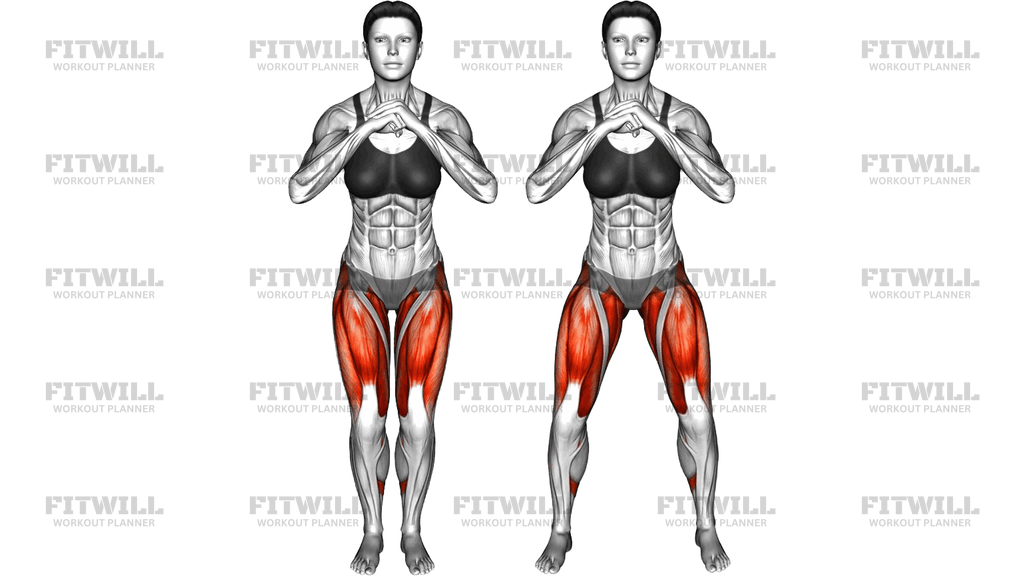
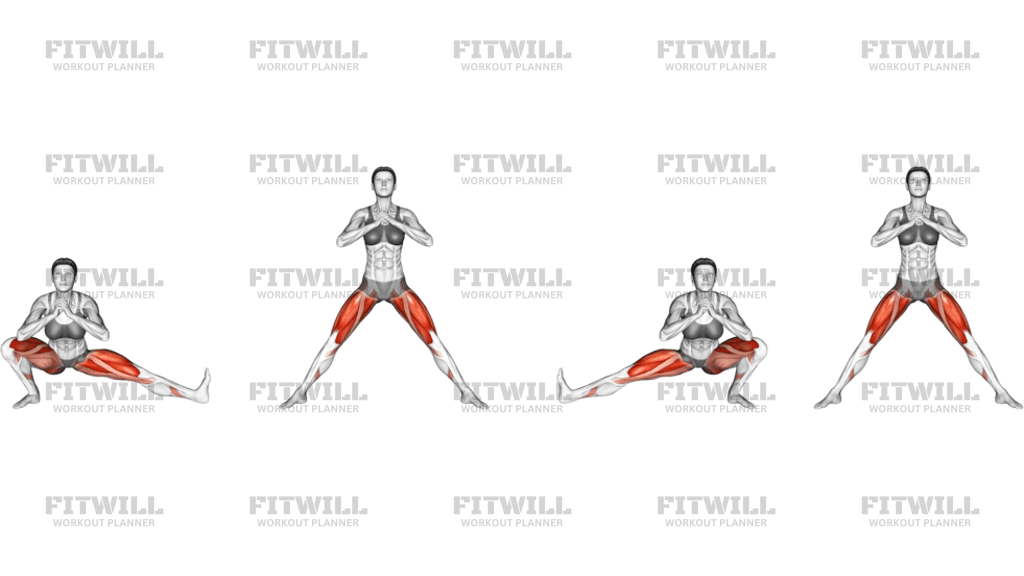
The Quick Sumo Squat is a fast-paced, bodyweight variation of the classic sumo squat, performed with a wide stance and toes turned out. Unlike a slow, loaded sumo squat, the emphasis here is on crisp, rhythmic reps that move through a comfortable range at a quicker tempo, making it a useful warm-up drill, a conditioning move, or a filler exercise between heavier lifts. Because it needs no equipment and very little space, you can do it at home, in a hotel room, or as part of a circuit.
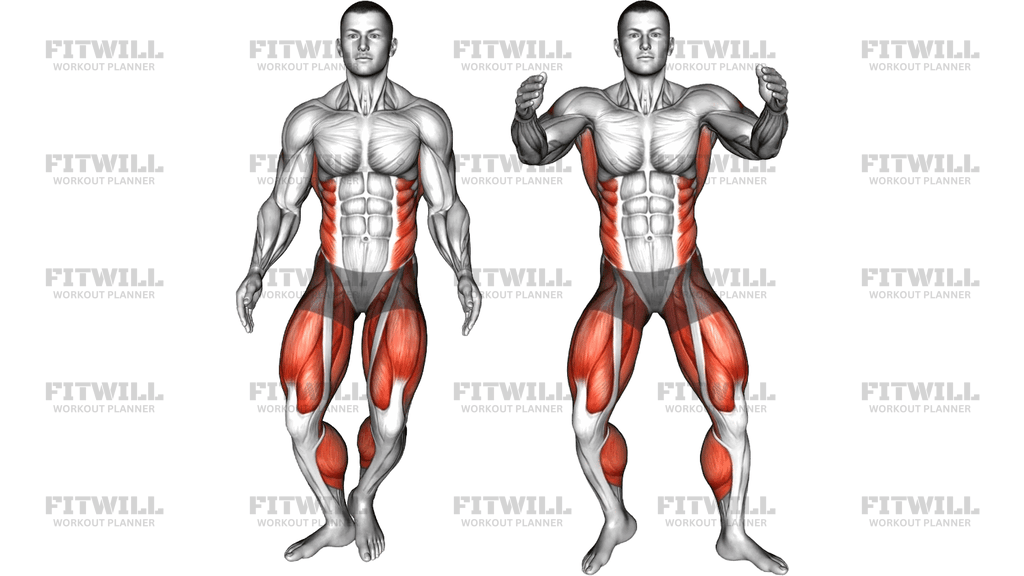
The wide, externally rotated stance shifts a large share of the work toward the inner thighs and the outer sweep of the quadriceps, while the glutes handle most of the hip extension as you stand back up. The turned-out feet also encourage the hips to open, which is why this movement is popular as an activation drill before squats, deadlifts, or any leg session. The calves and ankles work to keep you balanced as your knees track over your toes.
Setup matters more than people expect with a bodyweight squat. The wide stance only works if your knees travel in the same direction as your toes; if your feet point out but your knees collapse inward, you lose the inner-thigh emphasis and load the knee joint awkwardly. An upright torso with a light brace through the core keeps the movement in the hips and legs rather than dumping stress into the lower back.
To execute it well, drop down by pushing your hips back and knees out at the same time, sink only as deep as you can keep your heels down and chest tall, then drive back up through the floor without letting your knees cave on the way. The "quick" element refers to a brisk but controlled tempo, not a bounce at the bottom or a slam into lockout. Each rep should end standing tall, then flow straight into the next rep.
This exercise suits beginners learning the wide-stance squat pattern, intermediate lifters looking for a warm-up that wakes up the adductors and glutes, and anyone building a no-equipment circuit where higher reps and a steady rhythm add a conditioning element. If you want more challenge later, hold a dumbbell or kettlebell at your chest, but master the bodyweight tempo first.
Fitwill
Log Workouts, Track Progress & Build Strength.
Achieve more with Fitwill: explore over 9600 exercises with images and videos, access built-in and custom workouts, perfect for both gym and home sessions, and see real results.
Start your journey. Download today!




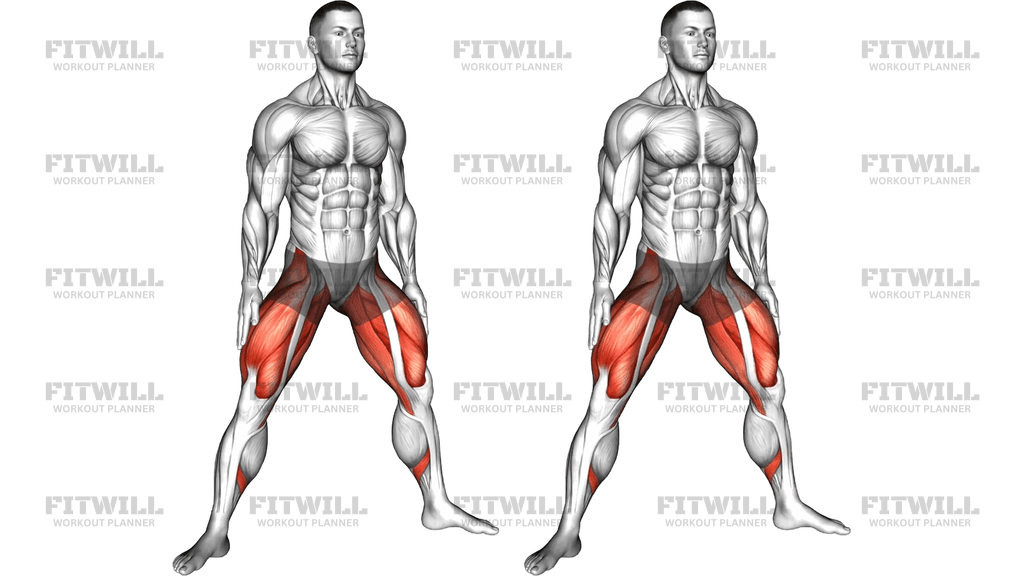
Instructions
- Stand with your feet roughly one and a half shoulder-widths apart, toes turned out about 30 to 45 degrees, arms hanging relaxed at your sides.
- Shift your weight evenly across both feet and press gently into the floor with the big toes so your arches stay active and your heels stay grounded.
- Take a breath into your belly, brace your core lightly, and lift your chest so your back is tall before you start moving.
- Push your hips back and let your knees travel outward over your toes as you descend, keeping your torso upright and your hands drifting slightly forward for balance.
- Lower until your thighs are near parallel to the floor, or as deep as you can go while keeping your heels down and knees tracking over your toes.
- Drive the floor away through your mid-foot and heels to stand back up, keeping the knees pushed out so they do not cave inward on the ascent.
- Exhale as you rise, finishing each rep fully standing with hips and knees extended but not hyperextended.
- Move into the next rep promptly at a brisk but controlled pace, keeping the tempo consistent instead of bouncing at the bottom.
- After your final rep, stand tall, shake out your legs, and reset your stance before starting the next set.
Tips & Tricks
- If your knees drift inward as you descend, imagine pushing the floor apart with your feet; that cue keeps the adductors loaded and the knees safe.
- Heels lifting off the floor usually means the stance is wider or deeper than your hips and ankles currently allow—narrow your stance slightly or reduce depth rather than rising onto your toes.
- Do not let the quick tempo turn into a bounce at the bottom; pause tension in the hips for a split second keeps the quads and inner thighs working instead of using momentum.
- Keep your chest up by leading with the hips on the way down—if your torso tips far forward, you have turned it into a good-morning, which steals work from the legs.
- Your toes should point out but your weight should stay centered over the whole foot, not rolled onto the outer edges, which is a common fault in wide-stance squats.
- Let your arms swing slightly forward as you drop and back as you rise; holding them rigid at your sides makes balancing the fast reps harder than it needs to be.
- If your inner thighs cramp at depth, which is common in this stance, work in a smaller range for the first few sessions and add depth gradually.
- Breathe in a steady rhythm—one inhale on the way down, one exhale on the way up—rather than holding your breath across several fast reps.
- Use this as a warm-up before barbell squats for two or three sets of 10 to 15 reps; it grooves the wide-stance pattern without fatiguing the legs.
Frequently Asked Questions
What muscles does the Quick Sumo Squat work?
The quads and inner thighs do most of the work, with the glutes driving you back up and the calves and ankles stabilizing each rep. The turned-out, wide stance is what shifts emphasis toward the adductors compared with a normal squat.
How is the Quick Sumo Squat different from a regular bodyweight squat?
The stance is much wider and the toes turn out, which changes the knee path and pulls the inner thighs and outer quads into the movement. The tempo is also quicker, so it doubles as a light conditioning drill.
Is the Quick Sumo Squat good for beginners?
Yes, it is one of the easiest squat variations to learn because there is no load and the wide stance gives you a stable base. Start with a partial range and only sink lower once your heels stay down and your knees track over your toes.
Why do my knees cave inward when I do the Quick Sumo Squat?
Inward knee drift is the most common fault in a wide, turned-out stance and usually means the hips are not controlling the movement. Slow the tempo down, cue yourself to push your knees toward your pinky toes, and rebuild the pattern before speeding back up.
How deep should I go on each rep?
Aim for thighs roughly parallel to the floor, but only as deep as you can keep your heels flat and your chest upright. Depth you cannot control at speed is not depth worth getting.
How fast should the "quick" tempo actually be?
Brisk but controlled—about one second down and one second up with no pause at the bottom. If you are bouncing out of the hole or losing your knee position, you are going too fast.
Can I add weight to the Quick Sumo Squat?
Yes, holding a dumbbell or kettlebell at your chest works well once the bodyweight version feels easy and your form holds up at speed. Add load gradually because the quick tempo amplifies any form breakdown.
What can I use instead if wide-stance squats bother my hips?
Try a narrower stance with toes pointing forward, or slow tempo bodyweight squats with the same controlled rhythm. Some hips simply do not tolerate deep external rotation, and there is no benefit to forcing the wide position.
Should I feel this in my inner thighs?
Yes, a working sensation along the inner thighs is normal and expected because the wide stance loads the adductors significantly. Mild soreness there after higher-rep sets is typical; sharp pain is a sign to stop and adjust your stance or depth.
How many reps and sets should I do?
For a warm-up, two or three sets of 10 to 15 reps works well. For conditioning, try 20 or more reps per set or run it in a circuit, as long as your knee position stays clean throughout.