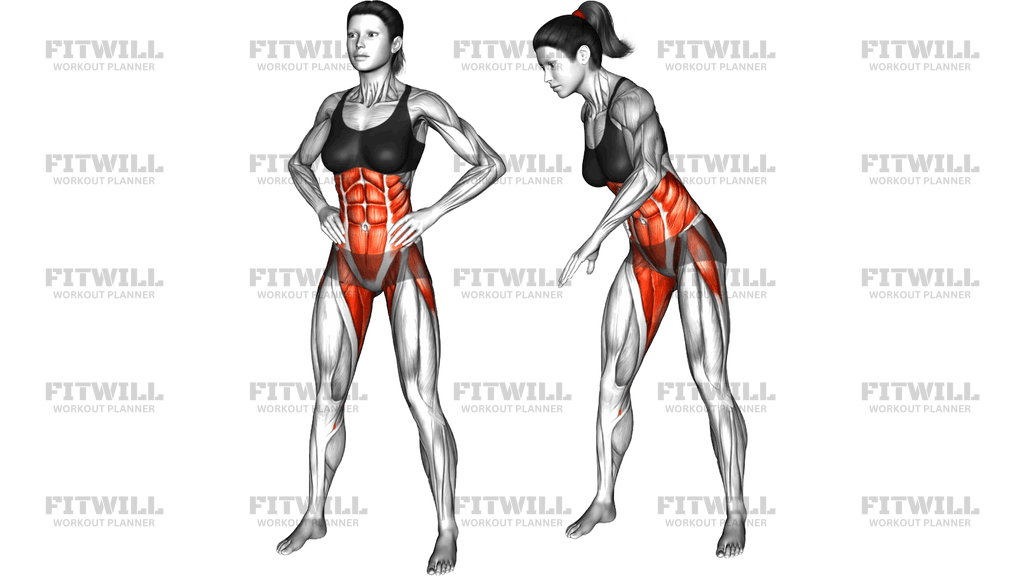
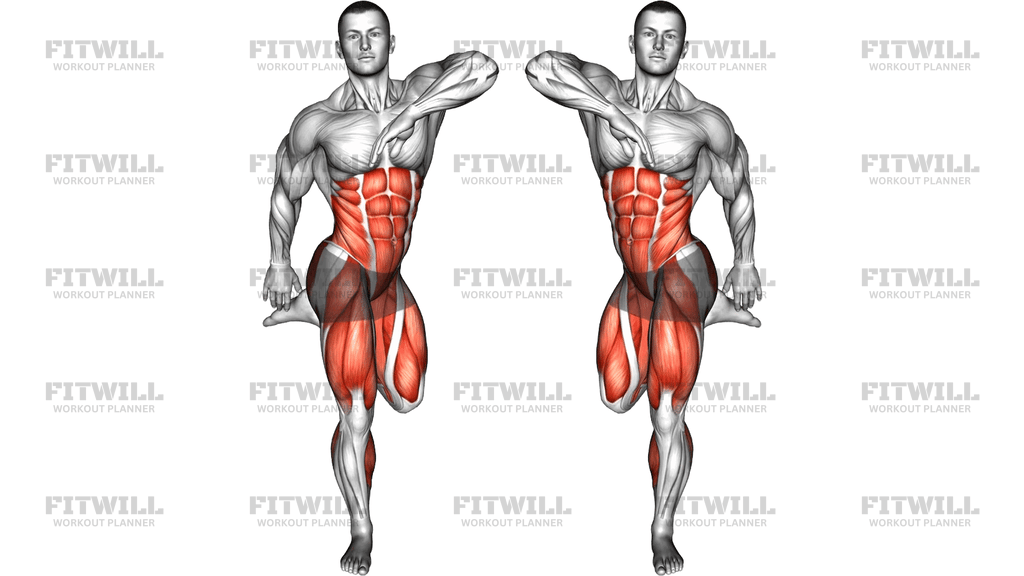
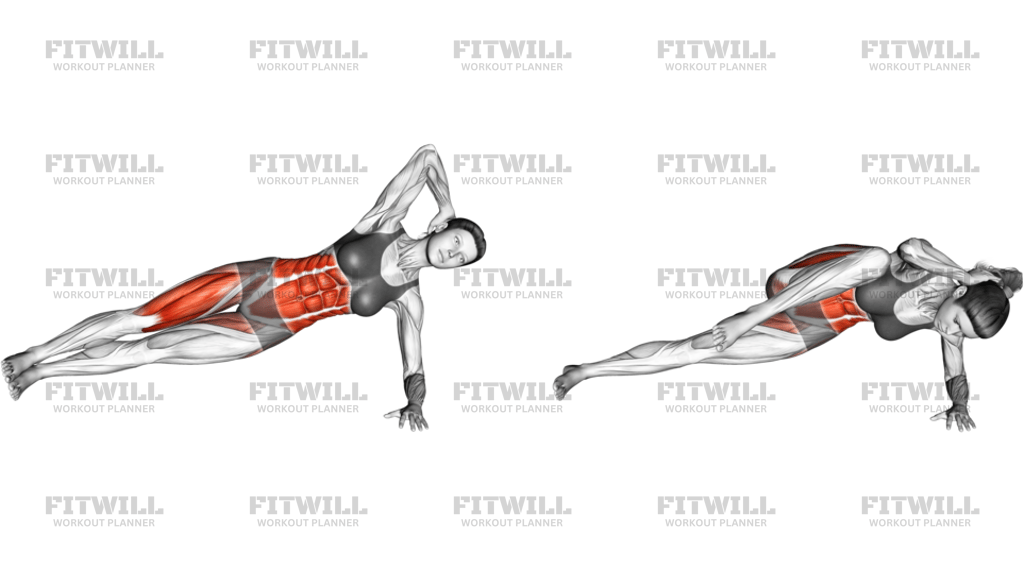
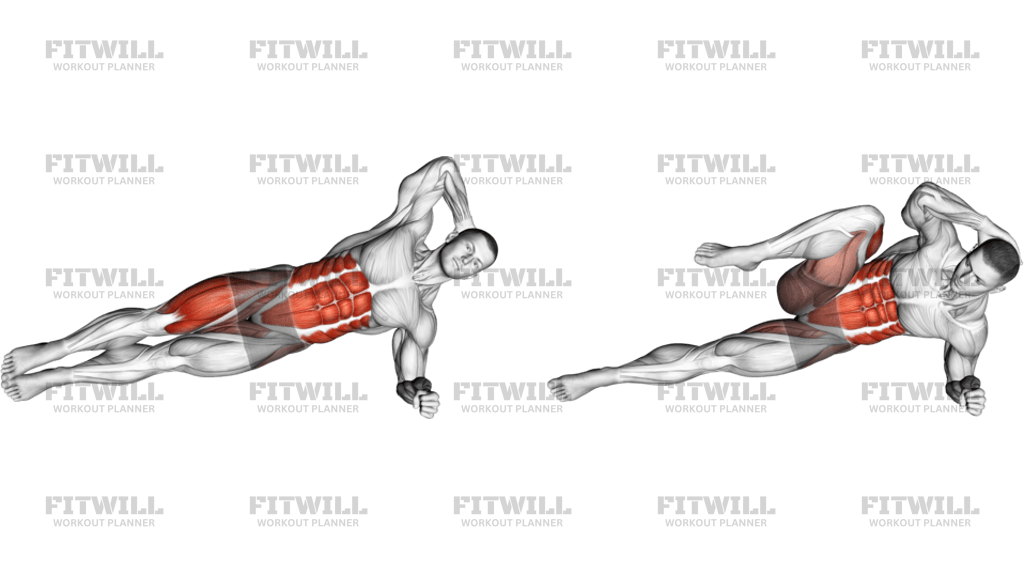
Alternate Leg Lift Double Hands Crunch
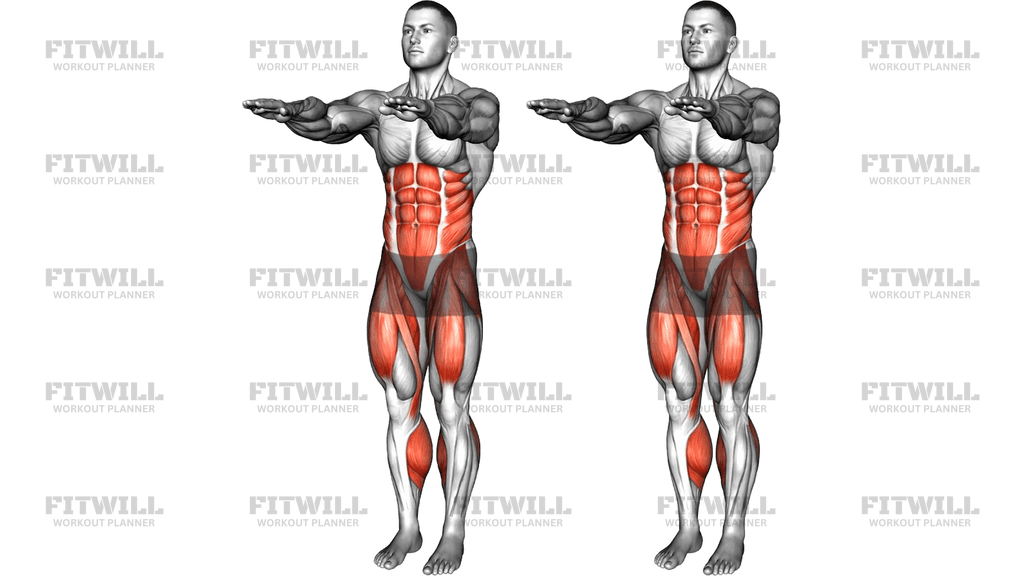
The Alternate Leg Lift Double Hands Crunch is a standing bodyweight core exercise that combines a knee lift with an overhead-reaching crunch. You stand tall with both arms extended straight above your head, then drive one knee upward while curling your ribs toward your pelvis, keeping both hands working together through the entire rep. Because you alternate legs from rep to rep, each side of your trunk gets loaded evenly without you needing to reset between repetitions.
This movement is a good fit for people who want to train their abs without getting down on the floor, or for anyone who finds traditional floor crunches uncomfortable on the neck or lower back. It also works well as part of a warm-up circuit, a standing core block, or a finisher at the end of a session, since it requires no equipment and very little space. The raised arms add a lengthened lever, which forces the abdominal wall to work harder to flex the spine than it would with hands simply held at the chest.
The main muscles at work are the rectus abdominis, which curls the trunk downward, and the hip flexors, which lift the knee toward the torso. The obliques contribute by stabilizing the ribcage and keeping the trunk from twisting as one knee rises, while the deep core muscles brace to hold you balanced on the standing leg. Your shoulders and upper back also stay active isometrically to keep the arms extended overhead throughout the set.
Setup matters more than it might seem. A tall, narrow stance with soft knees gives you a stable base, and reaching the arms fully overhead before the first rep establishes the lever length you will maintain for every crunch. If the arms drop, drift forward, or bend as fatigue sets in, the abdominal challenge fades and the shoulders start doing work the core should be handling.
To execute it well, think of the crunch as a rib-to-pelvis pull rather than a simple knee raise. The knee comes up, but the chest dips slightly toward it and the upper body curls forward a few degrees so the abs shorten under tension. Exhale forcefully at the top of each rep, squeeze the abdominal wall, then lower the leg under control so your torso returns to tall before the other knee lifts.
Keep the tempo deliberate and the range honest. A common error is turning the movement into a fast standing leg march, where momentum from the thigh drive replaces actual spinal flexion. If you cannot feel your abs working by the end of a set, slow down, shorten the knee height, and focus on the curl of the trunk instead of the lift of the leg.
[ Workout Log & Planner ]
Put your next workout in Fitwill
Keep your plan and training log ready when you are.


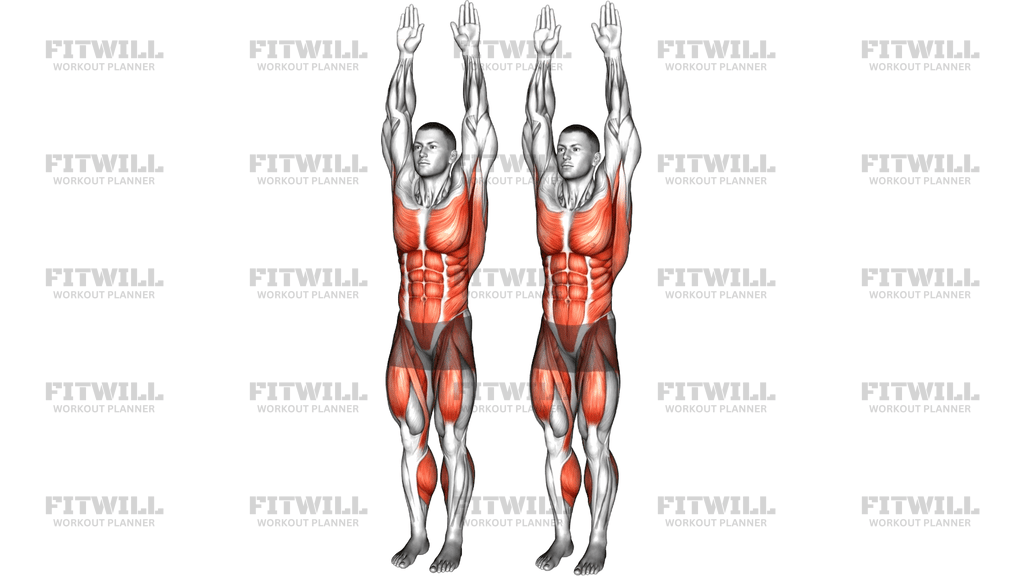
Instructions
- Stand upright with your feet hip-width apart or slightly closer, knees soft, and weight spread evenly across both feet.
- Extend both arms straight overhead with palms facing each other and elbows locked out, forming one long line from feet through fingertips.
- Brace your abdominal wall lightly and pull your ribs down so your lower back is not already arched before you begin.
- Shift your weight onto your left leg and keep your gaze forward to steady your balance.
- Lift your right knee toward your chest while simultaneously curling your ribcage down toward your pelvis, letting your torso flex a few degrees forward with both arms still reaching up.
- Squeeze your abs hard at the top, where the knee is highest and the trunk is most curled, and exhale through the crunch.
- Lower the right leg slowly to the floor and let your torso rise back to the tall starting position with arms overhead.
- Repeat the same crunch and knee lift on the left leg, keeping both hands working together and the movement symmetrical.
- Breathe in as you lower and reset between legs, and exhale as each knee drives up.
- Continue alternating legs for your target reps, stopping when you can no longer curl the trunk and must rely on swinging the leg.
Tips & Tricks
- If your arms bend or drop toward your head as the set progresses, the abdominal challenge is slipping away; pause, reset the arms fully overhead, and resume with fewer, cleaner reps.
- A frequent mistake is lifting the knee without moving the trunk at all, which turns the exercise into a hip flexor raise. Cue yourself to dip the chest and pull the ribs toward the pelvis on every rep.
- Avoid arching your lower back and leaning the whole torso backward as the knee rises. Keep the ribs stacked over the hips so the crunch comes from spinal flexion, not a body sway.
- Keep the working foot dorsiflexed slightly and drive the knee straight up in front of you. Letting the knee drift outward or across the body changes the muscle emphasis and can strain the standing hip.
- Do not rush the return. The lowering phase is where balance is easiest to lose, so place the foot down fully before starting the opposite side.
- If balance is shaky, stand next to a wall and let one fingertip rest lightly against it for support rather than gripping, which would reduce core demand.
- Exhaling sharply as the knee comes up is not just breathing etiquette here. It helps the abdominal wall contract fully and makes the crunch noticeably stronger.
- Progress by slowing the tempo, pausing for a full second at the top of each crunch, or adding a light medicine ball held in both hands overhead once bodyweight reps feel easy.
- Stop the set when your shoulders fatigue before your abs. Overhead arm position is part of the exercise, but if the shoulders give out first, finish with a shorter range rather than dropping the arms.
Frequently Asked Questions
Which muscles does the Alternate Leg Lift Double Hands Crunch target?
The rectus abdominis does most of the work as you curl the trunk, while the hip flexors lift the knee. The obliques stabilize the ribcage so the trunk does not twist as you alternate sides.
Why are the arms held overhead during the Alternate Leg Lift Double Hands Crunch?
Raising both arms lengthens the lever your abs must control, making the crunch harder than it would be with hands at the chest. It also keeps the shoulders and upper back engaged isometrically throughout the set.
Is the Alternate Leg Lift Double Hands Crunch suitable for beginners?
Yes, it is beginner friendly because it uses no equipment and the range can be scaled by lifting the knee lower. New lifters should focus on feeling the trunk curl rather than achieving a high knee.
Why do I feel the Alternate Leg Lift Double Hands Crunch mostly in my thighs instead of my abs?
That usually means the knee is being driven up with momentum while the trunk stays still. Slow down and make the chest curl toward the pelvis the main action, letting the knee lift follow it.
How does the Alternate Leg Lift Double Hands Crunch differ from a regular floor crunch?
It is performed standing, so it adds a balance demand and trains the hip flexors through a fuller range as the knee lifts. It also removes the neck strain that many people experience when pulling the head up off the floor.
Can I do the Alternate Leg Lift Double Hands Crunch every day?
Because it is a low-load bodyweight movement, most people can perform it frequently without issue. Still, treat it like any strength work and allow normal recovery if your abs are noticeably sore.
What can I use as a substitute for the Alternate Leg Lift Double Hands Crunch?
A standing knee raise with hands at the temples is the closest swap, or a lying reverse crunch with alternating leg lowering if you prefer floor work. Both train the same trunk flexion with hip flexor assistance.
Should my standing leg stay straight during the Alternate Leg Lift Double Hands Crunch?
Keep a soft bend in the standing knee rather than locking it. A slightly bent knee absorbs small balance corrections and keeps the lower back from compensating as the trunk curls.
How many reps of the Alternate Leg Lift Double Hands Crunch should I do?
Start with 10 to 15 total alternating reps, counting each knee lift as one rep, for two or three sets. Add reps or slow the tempo once you can complete every rep with a genuine trunk curl and no balance wobble.
Is it safe for my lower back to crunch while lifting a knee?
When done with a braced trunk and controlled tempo, the movement is a normal flexion pattern, not a risky one. Avoid swinging the leg, jerking the torso, or letting the lower back arch sharply at the bottom, and stop if you feel any pinching.