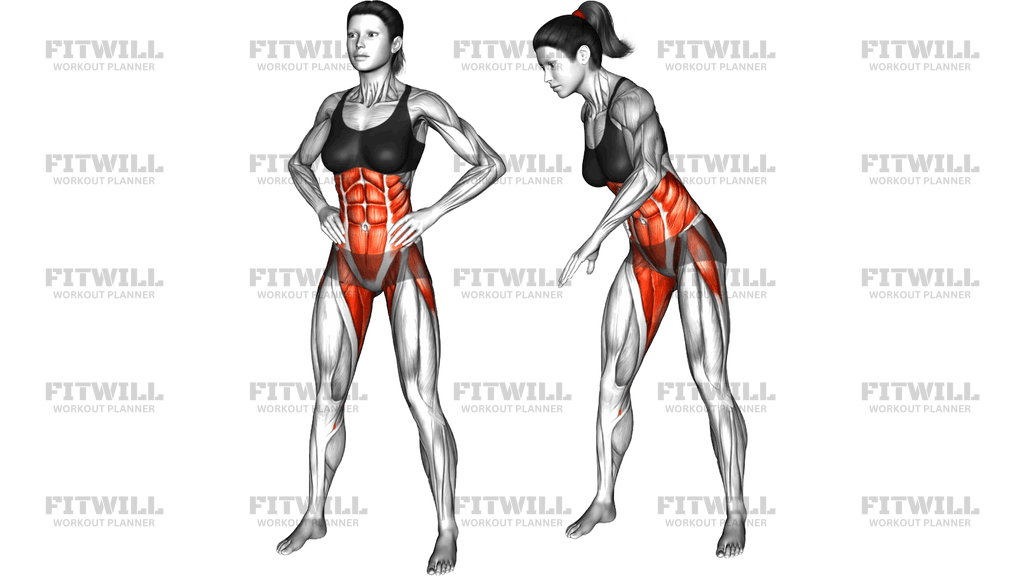
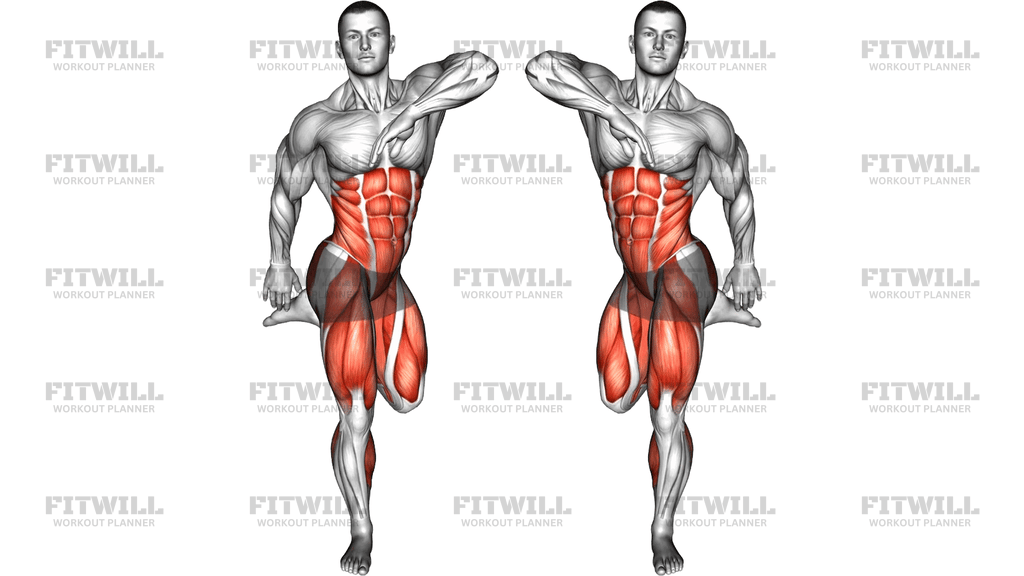
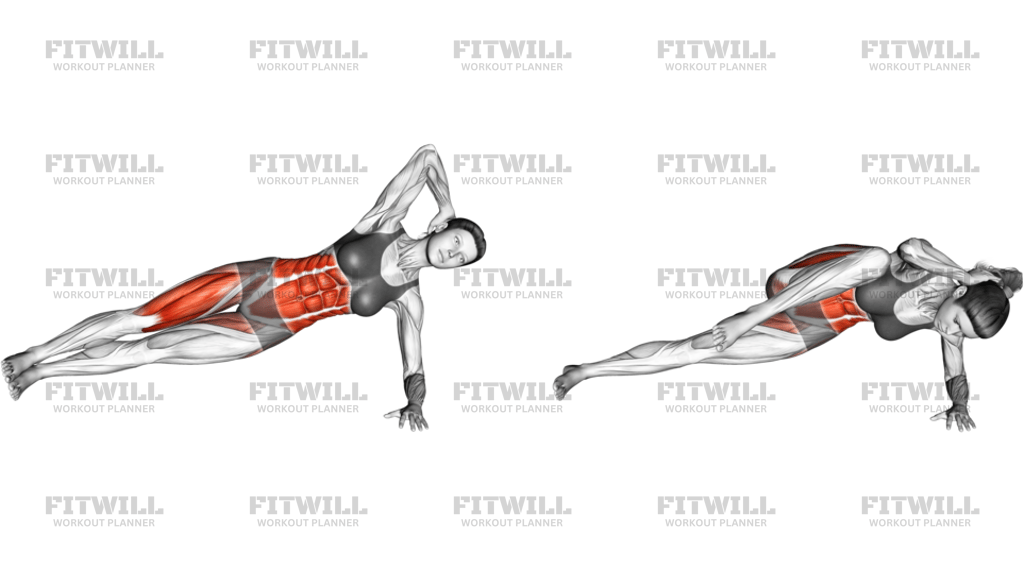
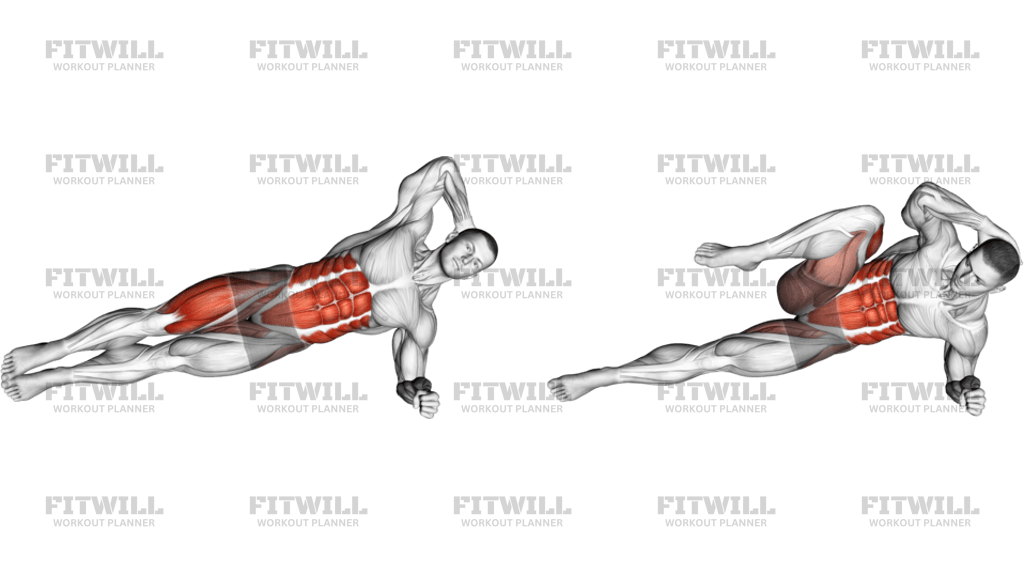
Standing Hand Out Cross Kick
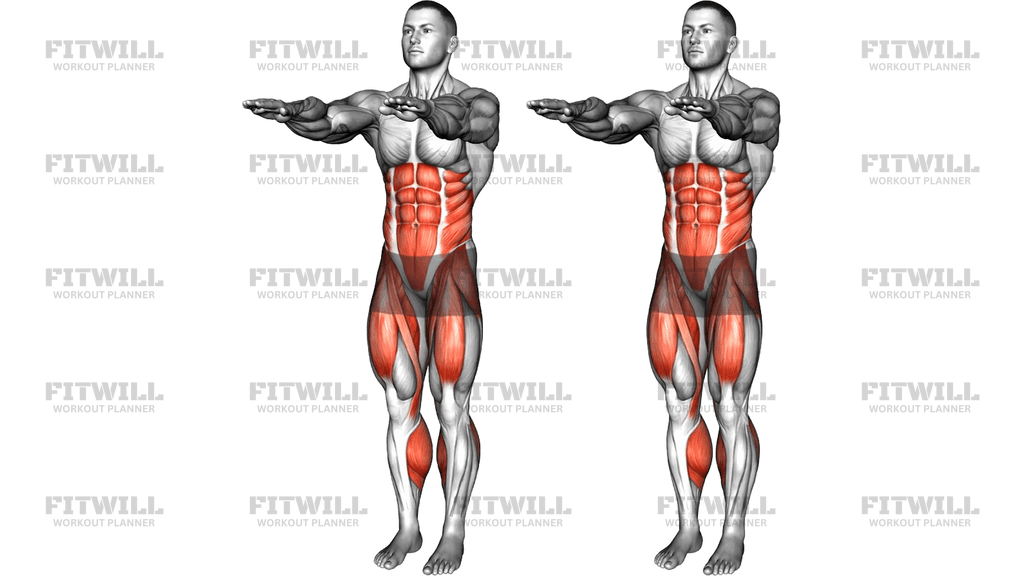
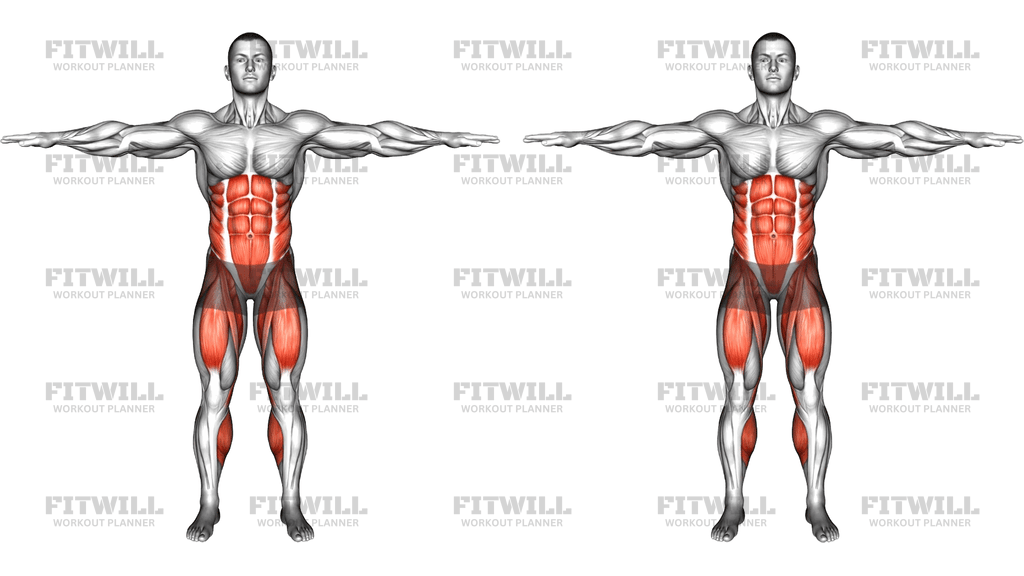
Standing Hand Out Cross Kick is a body weight standing core drill where you hold both arms straight out to your sides in a T shape while sweeping one leg across the front of your body in a controlled kicking arc. The arms-out position acts as a built-in balance challenge: with no hands to grab or reach for, your trunk has to stabilize every degree of the leg swing, which is exactly why the abdominal wall and hip region do so much work here.
The movement primarily trains the abs and obliques as they resist rotation while the leg crosses your midline. The hip flexors and inner thighs drive and guide the kick, the quads extend the knee, and the standing leg's calf and ankle stabilizers quietly manage your balance the entire time. Because it is performed upright rather than lying on the floor, it also carries over well to real-world coordination, where your core has to control your limbs while your feet are under you.
This exercise suits beginners building standing core control, people warming up for kickboxing or martial arts practice, and anyone who wants core work without getting down on a mat. It fits neatly into circuit training, dynamic warm-ups, or active recovery days since it requires no equipment and only a small training space.
Setup matters more than speed. Stand tall with feet about hip-width apart, arms lifted to shoulder height with palms facing forward or down, and your gaze fixed on a point ahead of you. That fixed gaze and level arm line give your nervous system a reference; if your arms drift or your eyes wander, your balance gets noticeably worse and the core stops doing its job.
To execute the kick, shift your weight onto one leg, brace your abs, and sweep the other leg up and across the front of your body toward the opposite side, keeping the knee mostly straight or softly bent. Lift only as high as you can without your torso leaning or your arms dipping. Lower the leg back to the floor under control, reset your stance, and alternate sides.
The most common error is treating this as a ballistic kick and whipping the leg up with momentum, which rounds the lower back and turns the drill into an uncontrolled swing. Keep the tempo smooth, the torso upright, and let the range grow naturally as your balance and hip mobility improve. If you wobble, slow down rather than narrowing your stance or locking your knees.
[ Workout Log & Planner ]
Put your next workout in Fitwill
Keep your plan and training log ready when you are.


Instructions
- Stand tall with your feet about hip-width apart and your weight spread evenly across both feet.
- Raise both arms straight out to your sides until they reach shoulder height, palms facing down or forward, and keep them there for the whole set.
- Pick a fixed point on the wall ahead of you at eye level and brace your abdominal wall as if preparing for a light nudge to the torso.
- Shift your weight onto your left leg with a soft knee, keeping your torso upright and shoulders level.
- Sweep your right leg up and across the front of your body toward your left side in a smooth arc, letting the toes lead and the knee stay nearly straight.
- Stop the kick at the highest point you can reach without leaning your torso sideways or dropping your arms, and pause there for a beat.
- Lower the right leg back to the floor under control, returning to your hip-width stance.
- Exhale as the leg swings across and inhale as it lowers back to the starting stance.
- Repeat with the left leg crossing toward the right side, and continue alternating legs for your target number of reps per side.
- Between reps, recheck your arm line and stance height before starting the next kick.
Tips & Tricks
- If you keep losing balance, slow the kick down rather than widening your feet; a wider stance shortens the arc and hides the weak point.
- Watch your arms throughout the set. Dipping one arm usually means your torso is starting to lean away from the kick, so reset the arm line before continuing.
- Point your toes slightly on the kicking leg to help the leg travel smoothly across the midline without catching the floor.
- Keep the standing knee soft instead of locked; a locked knee makes wobbles harder to absorb through the ankle and hip.
- The kick should travel across the front of your body, not out to the side. If the leg swings sideways, you are drifting into a side leg raise.
- Do not force height early on. A kick that reaches hip height with a level torso trains the core better than a high kick that tilts your pelvis.
- Keep your chin level and your gaze fixed; looking down at your foot is one of the fastest ways to lose the balance reference.
- Warm up the hips with a few leg swings beforehand if you feel tightness in the inner thighs at the top of the arc.
- Place yourself near a wall the first few sessions so you can lightly touch it if you stumble, but avoid leaning on it during the reps.
Frequently Asked Questions
What muscles does Standing Hand Out Cross Kick work?
The abs and obliques work hardest to keep your trunk stable while the leg crosses your midline. The hip flexors and inner thighs move the leg, the quads extend the knee, and the calf and ankle stabilizers of the standing leg handle balance.
Why are the arms held straight out to the sides during Standing Hand Out Cross Kick?
The arms-out T position removes any hand support and raises the balance demand, forcing your core to stabilize the torso without assistance. It also gives you an immediate visual cue: if your arms tilt, your torso is leaning too.
Is Standing Hand Out Cross Kick suitable for beginners?
Yes. Start with a low kick that travels only a short distance across the front of your body and prioritize a level torso over height. Balance improves quickly with consistent practice.
How high should I kick in the Standing Hand Out Cross Kick?
Kick only as high as you can while keeping your torso upright and both arms at shoulder height. For most people that starts around knee to hip height and rises gradually as hip mobility and control improve.
What is the most common mistake in Standing Hand Out Cross Kick?
Whipping the leg up with momentum so the lower back rounds and the torso tips sideways. If your upper body leans or your arms drop, shorten the arc and slow the tempo.
Can I substitute Standing Hand Out Cross Kick if balance is an issue?
You can perform the same cross-body kick next to a wall with one fingertip for light support, or do standing cross-body knee raises with a shorter arc until your control improves.
Should I do Standing Hand Out Cross Kick as a warm-up or as a main exercise?
It works well as both. Low, controlled reps make an excellent dynamic warm-up for the hips and core, while higher-volume sets with pauses at the top of each kick stand on their own as a core and balance circuit.
How many reps should I perform per side?
Start with 8 to 12 controlled kicks per leg, alternating sides. Stop the set as soon as your balance breaks down repeatedly or your arm line starts to sag.
Is it safe for my knees and lower back?
Done with a soft standing knee, an upright torso, and a controlled arc, the movement places low stress on both areas. Avoid snapping the leg up forcefully and stop if you feel any pinching in the hip or lower back discomfort.