Alternate Hamstring Curl Sky Punch
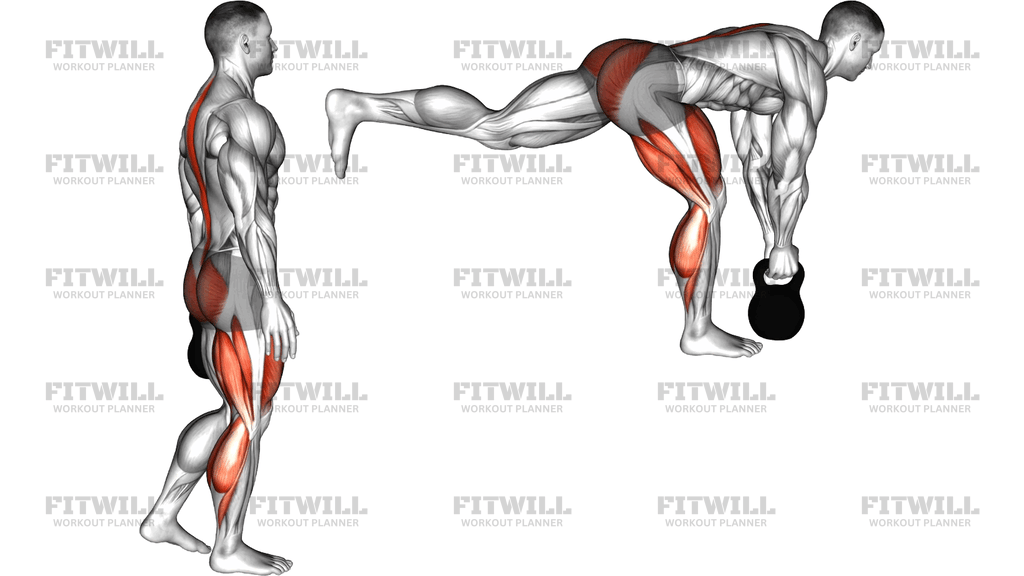
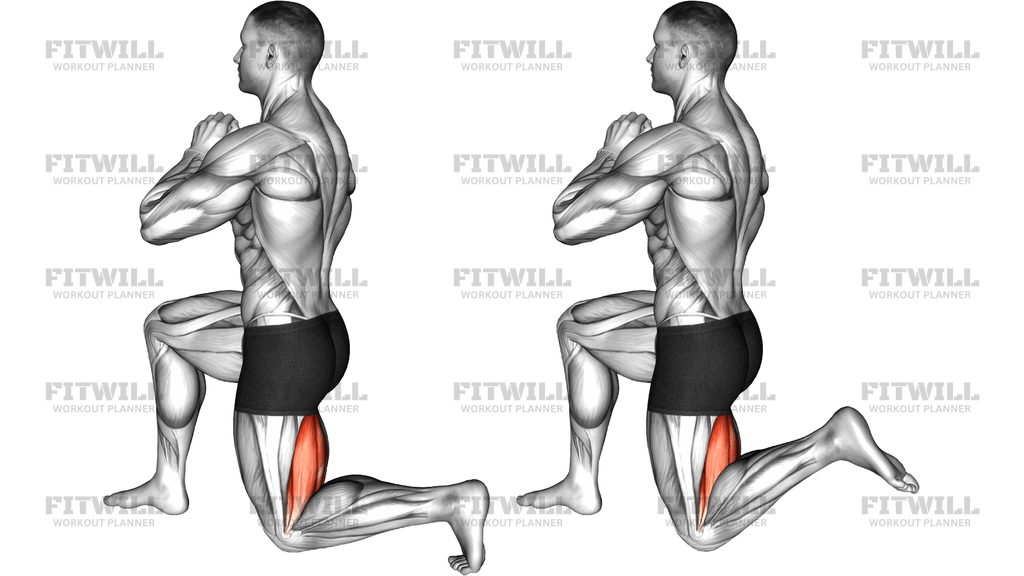
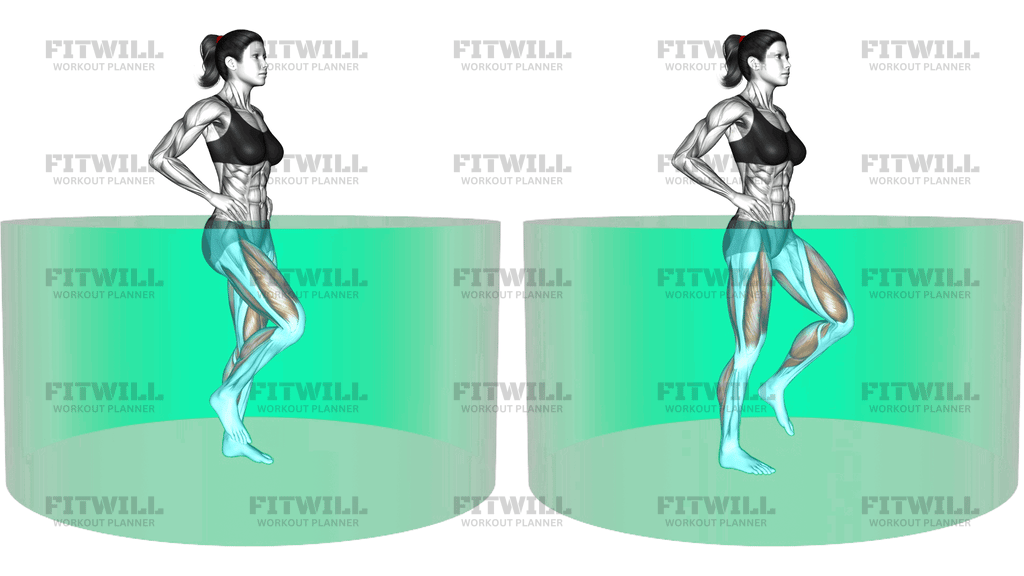
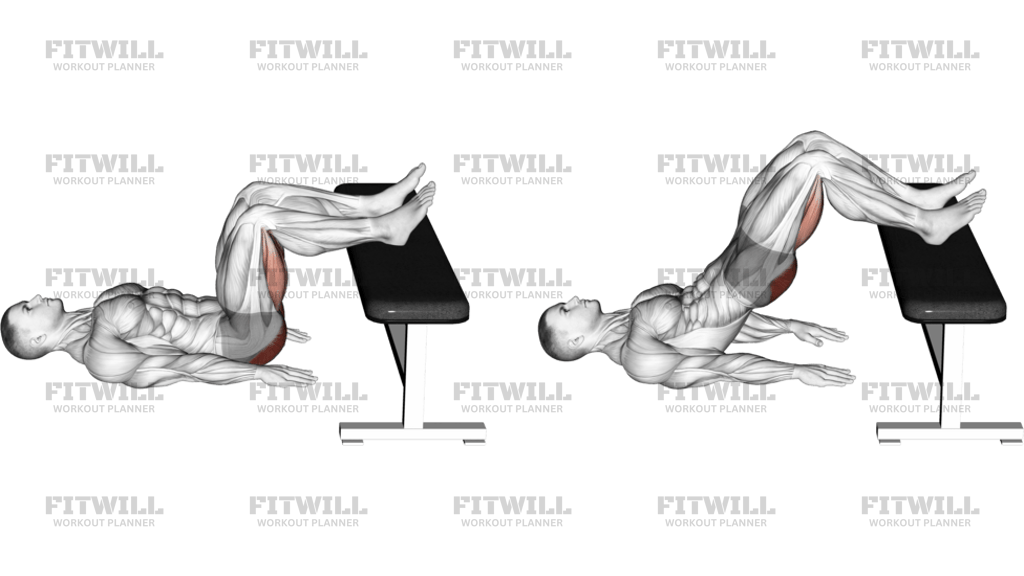
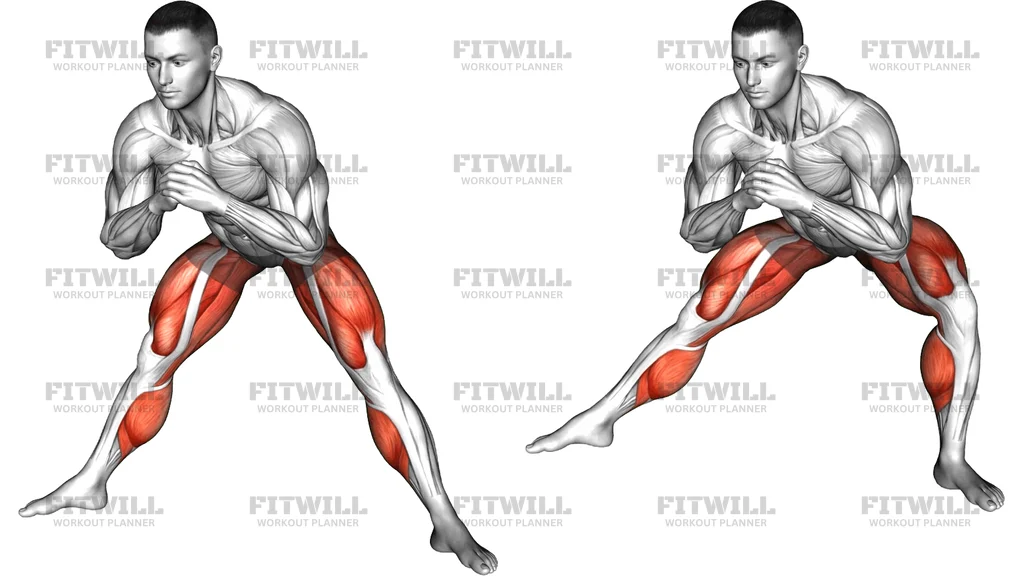
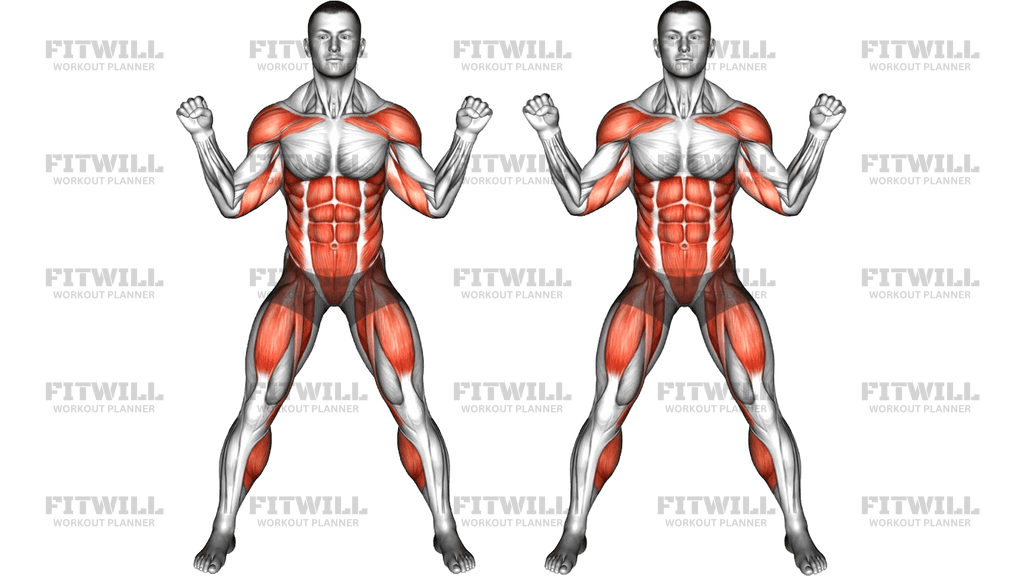
The Alternate Hamstring Curl Sky Punch is a standing bodyweight drill that combines an alternating standing hamstring curl with an upward punch toward the ceiling. From a wide, stable stance, you pull one heel up toward your glute while the opposite arm drives straight up in a punching motion, then switch sides in a steady rhythm. Because the arms and legs work in opposition, the move demands coordination as well as strength, and the highlighted musculature shows exactly why: the hamstrings do the curling, the shoulders and upper back drive the punch, and the core keeps your trunk from swaying between reps.
This movement fits well into warm-ups, general conditioning circuits, and lower-body sessions where you want to pre-activate the hamstrings before heavier work like deadlifts or leg curls on a machine. It is also a practical option for home training, since no equipment is required and the tempo can be adjusted to suit the goal. Slower reps with a deliberate squeeze at the top emphasize the hamstring contraction, while a faster cadence turns the drill into a light cardio and coordination challenge.
The setup matters more than it might seem. A stance slightly wider than shoulder width gives you a solid base so the curling leg does not pull your hips off line. Your fists start near shoulder height with elbows bent, which keeps the arm path short and controlled when you punch up. If your base is too narrow, you will rock side to side with each rep and lose the clean hamstring contraction you are chasing.
Execution is straightforward but easy to rush. Curl one heel up toward the same-side glute with control, feeling the hamstring shorten rather than just flicking the foot back. At the same time, punch the opposite fist toward the sky, extending the arm fully without shrugging or leaning. Lower the heel under control and switch sides immediately or after a brief pause, depending on your training goal.
The most common faults are leaning the torso back as the heel comes up, punching with a slouched shoulder, and bouncing the foot off the ground instead of controlling the descent. Keep your ribs stacked over your hips, your gaze forward, and your weight evenly distributed across both feet. If balance is a challenge at first, widen your stance slightly or slow the tempo until each rep feels deliberate rather than rushed.
[ Workout Log & Planner ]
Put your next workout in Fitwill
Keep your plan and training log ready when you are.


Instructions
- Stand with your feet slightly wider than shoulder width, toes pointing forward or turned out a few degrees, and your weight spread evenly across both feet.
- Raise both fists to shoulder height with elbows bent about 90 degrees, shoulders relaxed and pulled gently down away from your ears.
- Brace your core, keep your ribs stacked over your hips, and set your gaze on a fixed point forward to help with balance.
- Curl your right heel up toward your right glute by bending the knee, actively squeezing the hamstring at the top instead of just flicking the foot back.
- As the right heel rises, punch your left fist straight up toward the sky, extending the arm fully without shrugging or arching your lower back.
- Lower the right heel to the floor under control, resisting gravity rather than dropping the foot.
- Switch sides immediately: curl the left heel toward the glute while the right fist punches upward.
- Continue alternating legs and arms in a steady rhythm, exhaling on each curl-and-punch and inhaling as the foot returns to the floor.
- Keep your torso upright throughout; if you sway, pause, reset your stance, and resume with a slower tempo.
- Finish the set standing tall with both feet flat, then shake out the arms and legs before the next set.
Tips & Tricks
- If your torso rocks side to side, your stance is too narrow or your tempo too fast; widen the feet a few inches and think about keeping both hips facing forward.
- Do not let the heel just flick toward the glute. Pause for a beat at the top of each curl and feel the hamstring squeeze, or the move turns into a knee bounce.
- Avoid punching with a lifted shoulder. Keep the shoulder blade pinned down as the arm extends, or you will build tension in the neck instead of the shoulder.
- Watch for lower back arching as the arm punches up. Brace the abs lightly before the set starts and keep the ribs down to protect the spine.
- Land the heel softly each rep. Slapping the foot down means you are dropping it instead of controlling the hamstring through the lowering phase.
- For more hamstring emphasis, slow the lowering phase to a two-count and keep the punch arm where it is until the foot lands.
- For a conditioning effect, pick up the cadence and breathe rhythmically, but only after you can keep the trunk steady at a slow tempo.
- If balance is shaky, rest your fingertips lightly against a wall or chair until you build confidence, then progress to free-standing reps.
- Alternate which leg starts each set. Starting on the same side every time tends to widen any left-right coordination gap.
Frequently Asked Questions
What muscles does the Alternate Hamstring Curl Sky Punch work?
The hamstrings are the primary movers during the curl, while the shoulders and upper back drive each upward punch. The glutes, calves, and core work continuously to keep you balanced and upright.
Why does the Alternate Hamstring Curl Sky Punch use a wide stance?
The wider base keeps your hips square and stops your torso from rocking each time a heel lifts. A narrow stance makes balance harder without adding any benefit to the hamstring contraction.
Is the Alternate Hamstring Curl Sky Punch good for beginners?
Yes, it is a low-load movement that beginners can use to learn hamstring control and cross-body coordination. Start with slow reps and a slightly wider stance, and hold a light support if balance is difficult.
Should the punch go straight up or at an angle in the Alternate Hamstring Curl Sky Punch?
Punch straight up toward the ceiling with the palm facing forward or inward. Angling the arm across the body changes the shoulder path and usually pulls your torso out of position.
How fast should I alternate in the Alternate Hamstring Curl Sky Punch?
Prioritize control first. A slow, deliberate tempo with a squeeze at the top builds hamstring strength, and you can gradually increase cadence for conditioning once your trunk stays steady.
Can I use the Alternate Hamstring Curl Sky Punch as a warm-up?
It works well as a warm-up before deadlifts, Romanian deadlifts, or machine leg curls because it raises the heart rate and activates the hamstrings without fatiguing them.
What is the most common mistake in the Alternate Hamstring Curl Sky Punch?
Leaning the torso back as the heel curls up. This usually means the rep is too rushed or the core is not braced; slow down and keep your ribs stacked over your hips.
What can I substitute for the Alternate Hamstring Curl Sky Punch?
A simple standing hamstring curl without the punch covers the leg action, while adding a controlled arm raise keeps some of the coordination demand. Seated or lying leg curls are alternatives if you need a supported version.
Do I need any equipment for the Alternate Hamstring Curl Sky Punch?
No, it uses only your body weight. A mat can be useful if you are training on a hard floor, but it is optional.
Is the Alternate Hamstring Curl Sky Punch safe for the knees?
For most people it is a gentle, joint-friendly movement because the knee bends without external load. If you have a current knee issue, keep the range pain-free and control the lowering phase rather than snapping the foot down.