Seated Overhead Reach Press
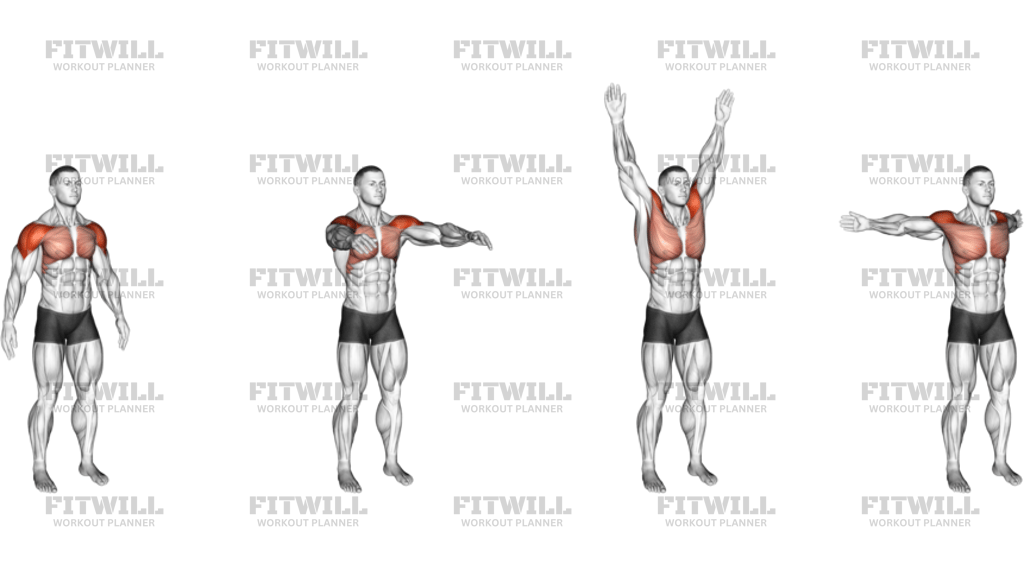
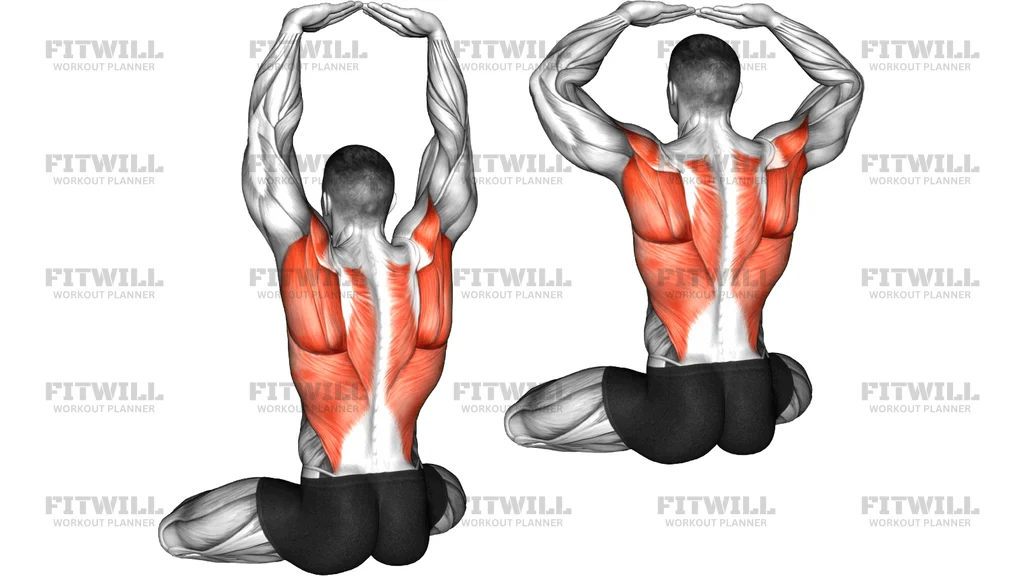
The Seated Overhead Reach Press is a bodyweight movement performed from a seated position on the floor, usually sitting back onto your heels, with both arms reaching straight overhead so the hands meet above the head. From there, the elbows bend and travel down and out to the sides until they drop to roughly shoulder height, then press back up to the full overhead reach. Because there is no external load, the exercise works as a controlled scapular and shoulder movement that teaches you to move the shoulder blades through their full upward and downward rotation cycle.
The muscle work centers on the upper and middle traps and the rhomboids, which control the shoulder blades as the arms rise and lower. The rear shoulders and rotator cuff stabilize the upper arm at the end ranges, while the triceps finish the overhead reach. The seated position removes help from the legs and hips, forcing the upper back and shoulders to do the work on their own and making it easy to feel when you start substituting with lumbar arching or shrugging through the neck.
This movement is useful for people who spend long hours sitting at a desk, lifters who want a warm-up before pressing or pulling work, and anyone rebuilding overhead comfort after long periods without reaching overhead. It is also a common choice in posture-focused routines because the repeated overhead reach trains the muscles that hold the shoulder blades up and back in daily sitting and standing.
To get the most from it, keep the torso tall and the ribs stacked over the pelvis throughout. The hands should stay in contact or very close as they rise, and the elbows should lead downward on the way out rather than letting the hands drift wide of the head. Move slowly enough that you can feel the shoulder blades glide, and keep the neck relaxed so the traps work without the shoulders creeping up toward the ears. If sitting on your heels is uncomfortable, sit on a low block or the edge of a bench with the feet flat instead.
Fitwill
Log Workouts, Track Progress & Build Strength.
Achieve more with Fitwill: explore over 9600 exercises with images and videos, access built-in and custom workouts, perfect for both gym and home sessions, and see real results.
Start your journey. Download today!




Instructions
- Sit on the floor with your legs folded underneath you, sitting back onto your heels, and rest your hands on your thighs to settle into an upright torso.
- Lengthen your spine by imagining the crown of your head lifting toward the ceiling, then let your shoulders relax down away from your ears before starting.
- Raise both arms straight overhead so the hands meet or nearly touch above your head, palms facing each other or turned slightly inward.
- Brace your core lightly and keep your ribs stacked over your pelvis so your lower back does not arch to gain extra height.
- From the overhead position, bend your elbows and lower them down and out to the sides until they sit at about shoulder height, feeling your shoulder blades draw down and together.
- Pause briefly at the bottom with the elbows wide, then press your hands back up along the same path until the arms are straight overhead again.
- Keep the movement smooth and continuous, letting the shoulder blades rotate upward as you reach and downward as the elbows lower.
- Exhale as you press the hands up, inhale as the elbows lower back down.
- Complete your repetitions, then lower your arms and gently roll your shoulders to reset before the next set.
Tips & Tricks
- If your lower back arches as the hands go up, think about gently tucking the back ribs down and tightening the abs before each rep.
- Do not force the hands to touch if your shoulders cannot get there comfortably; press to a comfortable height and improve the range gradually.
- Keep the neck long and relaxed. If your shoulders climb toward your ears at the top, lower the hands slightly and reset the shoulder blades.
- Move at a pace of roughly two to three seconds per direction. Rushing the press turns it into a momentum-driven arm swing that does little for the upper back.
- If sitting on your heels strains your knees or ankles, place a cushion between your calves and thighs or perform the same arm motion seated upright on a bench.
- The elbows should track down and slightly out, not straight back behind the head. Letting them flare too far back shifts work away from the shoulder blades and can pinch at the front of the shoulder.
- Use this as a warm-up before overhead pressing, pull-ups, or lat pulldowns; a set of ten to fifteen slow reps primes the traps and rotator cuff well.
- If one side feels tighter, pause for an extra second at the bottom of the rep on that side rather than adding more total repetitions.
- Keep the hands in a loose, soft position rather than rigidly locked; tension in the hands tends to travel up into the neck.
Frequently Asked Questions
What muscles does the Seated Overhead Reach Press work?
The primary muscles are the upper and middle traps, with strong help from the rhomboids that move the shoulder blades. The rear shoulders and rotator cuff stabilize the arms, and the triceps extend the elbows at the top of the reach.
Why is the Seated Overhead Reach Press done seated instead of standing?
Sitting removes the legs and hips from the movement, so the upper back and shoulders have to control everything. It also makes it easier to notice and avoid arching the lower back to fake extra overhead range.
Is the Seated Overhead Reach Press good for beginners?
Yes. With no load and a short, familiar range, it is one of the safest ways to learn how the shoulder blades move overhead. Beginners should focus on slow tempo and upright posture rather than forcing maximum height.
My hands cannot touch overhead. Is that a problem?
Not necessarily. Limited overhead range is common, especially in the lats or chest. Press only as high as you can with a straight torso, and the range usually improves with consistent practice.
Can I do the Seated Overhead Reach Press with weights or a band?
The bodyweight version is intended to be done unloaded, but you can hold a very light object or a band once the movement feels easy. Start with nothing, because adding load too soon tends to cause lower back arching and shoulder shrugging.
How does the Seated Overhead Reach Press differ from a shoulder press?
A shoulder press moves an external weight and focuses on the deltoids, while this movement is unloaded and emphasizes the shoulder blades gliding and rotating through their full range. They complement each other, and this one works well as a warm-up before pressing.
How many repetitions should I do?
Eight to fifteen slow, controlled repetitions per set works well, usually one to three sets. Since the goal is control and range rather than fatigue, stop when the movement quality drops.
Is it safe if I have shoulder discomfort?
Mild, muscle-level effort is normal, but sharp pain or pinching at the front of the shoulder is a signal to reduce the range or stop. Reduce the height of the reach first, and if discomfort persists, have a professional assess the shoulder before continuing.
Can I substitute the seated position if sitting on my heels is uncomfortable?
Yes. Sit upright on a firm chair, bench, or cushion with the feet flat on the floor and perform the identical overhead reach and elbow lowering. The arm path and muscle work stay the same.
When is the best time to use the Seated Overhead Reach Press in a workout?
It fits best as an early warm-up before any overhead pressing, pulling, or lat pulldown work. It can also be used on its own during desk-break routines to counter long periods of sitting.