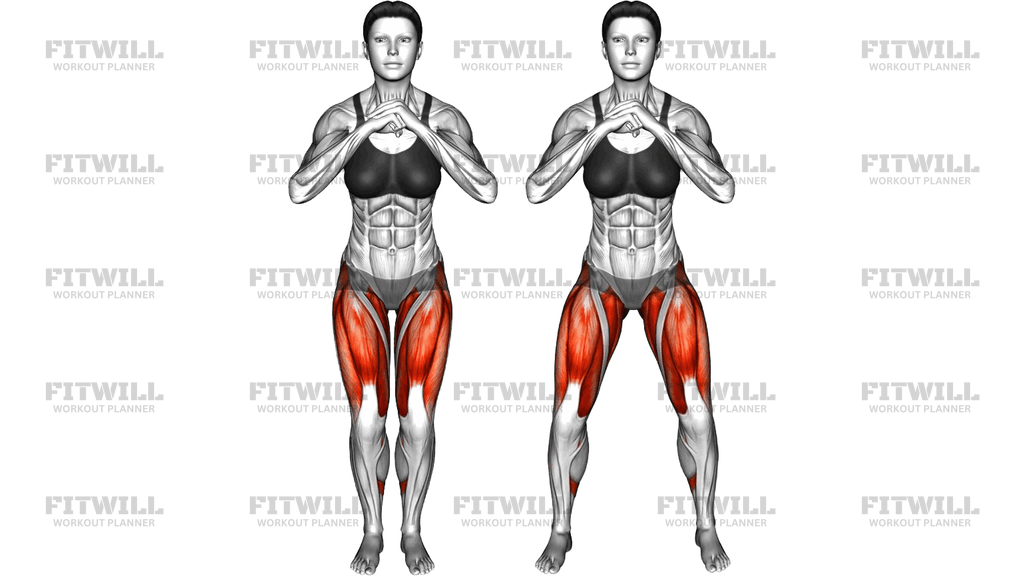
Heels Squat Slide Wall
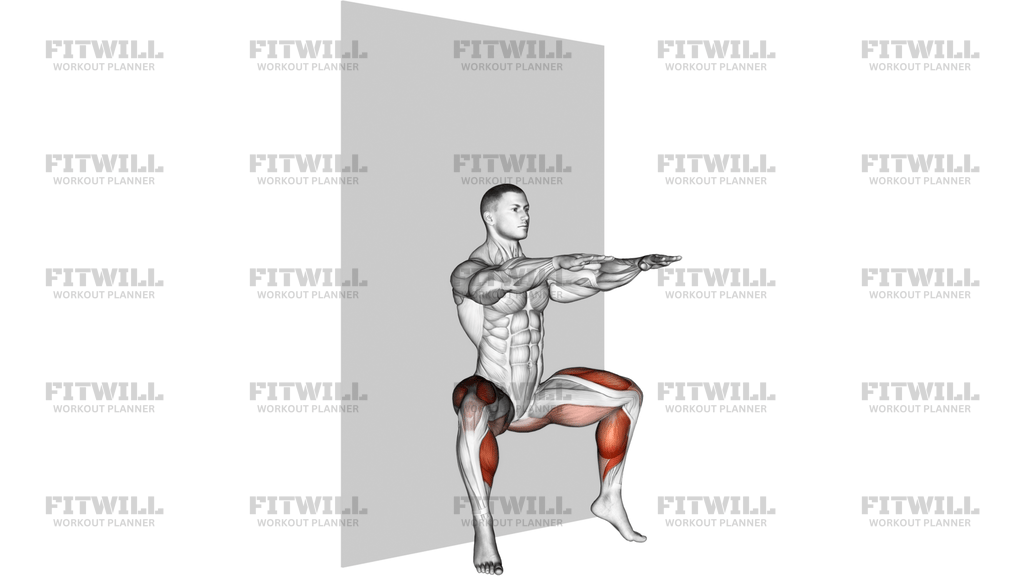
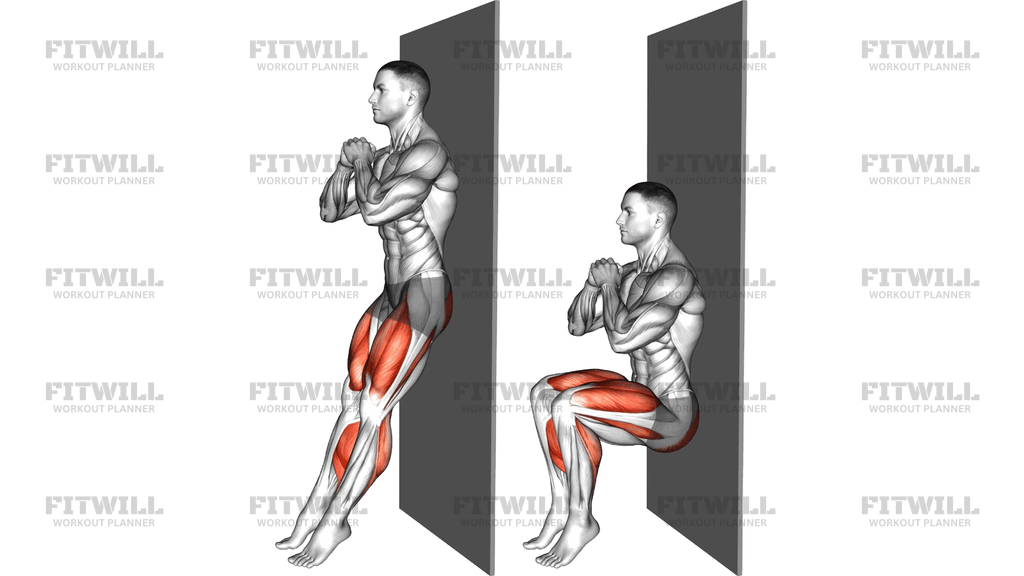
The Heels Squat Slide Wall is a bodyweight squat variation performed with your back flat against a wall and your heels placed close together. Instead of free squatting, you slide your back down the wall in a straight vertical path, which removes nearly all room for cheating. Your spine, hips, and knees are forced to move together as one unit, making this one of the cleanest ways to teach a beginner what a squat actually feels like through the legs.
The close heel position is what separates this from a standard wall sit or wall squat. With your heels nearly touching and toes turned slightly outward, your knees travel forward over the toes and the quadriceps, especially the vastus muscles around the knee, do most of the work. The glutes assist as you approach the bottom, and the calves and foot stabilizers work constantly to keep you balanced on a narrow base.
This movement is especially useful for people learning to squat, for rehabbing or pre-habbing the knees under light load, and for anyone who struggles to keep their chest up or their weight on their heels in a regular squat. Because the wall supports your torso, you can focus entirely on how your knees track, how deep you can go with control, and whether your breathing stays steady under tension.
The setup matters more than it looks. Your back, shoulders, and head should stay in contact with the wall from start to finish, and your feet need to be far enough forward that your knees can bend past your toes without your heels lifting. If your feet are too close to the wall, you will feel pressure jamming into the knees; too far away, and you will slide forward or peel your back off the wall.
Execution is deliberately slow. Lower yourself by bending the knees and letting your back glide down the wall until your thighs are as close to parallel as your mobility allows, pause briefly, then press through your whole foot to slide back up. The wall gives you instant feedback: any wobble, collapse, or uneven weighting shows up immediately as your back loses contact or your heels rise.
Use this exercise as a warm-up primer before leg training, as a teaching drill for squat mechanics, or as a higher-rep finisher that burns out the quads without any equipment beyond a clear patch of wall. Keep the range within what your knees tolerate comfortably, and progress by pausing longer at the bottom rather than chasing depth too early.
Fitwill
Log Workouts, Track Progress & Build Strength.
Achieve more with Fitwill: explore over 9600 exercises with images and videos, access built-in and custom workouts, perfect for both gym and home sessions, and see real results.
Start your journey. Download today!




Instructions
- Stand with your back to a clear, flat wall, then walk your feet forward about 30-45 cm and place your heels close together with your toes turned slightly outward.
- Press the back of your head, your shoulder blades, and your lower back flat against the wall, and clasp your hands together in front of your chest for balance.
- Brace your abdominal muscles as if bracing for a light push, and keep your whole foot in contact with the floor.
- Inhale, then bend your knees and let your back slide straight down the wall, allowing your knees to travel forward over your toes while your heels stay down.
- Continue sliding until your thighs are roughly parallel to the floor or as deep as you can control without your back or heels leaving position.
- Pause for one to two seconds at the bottom, keeping tension in your thighs rather than resting your weight into the wall.
- Exhale and press evenly through your feet, driving your body back up the wall until your legs are nearly straight but not locked.
- Reset your back contact and brace at the top, then repeat for the desired number of repetitions before stepping your feet back toward the wall to finish.
Tips & Tricks
- If your knees feel pinched at the bottom, your feet are probably too close to the wall; shift them a few centimeters farther out so the knees can travel forward without compressing.
- Watch for one heel lifting, a sign the close heel stance is too narrow for your ankle mobility; widen the toe angle slightly before widening the stance.
- A common mistake is sliding down too fast and bouncing off the bottom; the wall makes this tempting, so count a full second on the way down.
- Do not let your lower back arch and pop off the wall as you rise; if it does, you are pushing your hips forward too early with the lower back instead of driving with the legs.
- Keep your head in contact with the wall without craning your chin up; looking slightly down the wall helps your neck stay neutral.
- If your thighs shake before you reach parallel, shorten the range slightly rather than stopping mid-descent each rep, and build depth gradually over sessions.
- Squeeze the glutes on the way up to keep the hips from drifting side to side on the narrow heel base.
- Place a small ball or your hand behind your lower back early on to check that your back contact stays consistent through the whole slide.
Frequently Asked Questions
What muscles does the Heels Squat Slide Wall work?
The quadriceps on the front of the thigh are the main movers, with the glutes contributing near the bottom. The calves and small foot muscles work hard to keep you balanced on the narrow heel stance.
Why are the heels placed close together in this exercise?
The close heel position shifts the emphasis toward the quadriceps and forces the knees to travel forward over the toes. It also makes balance harder, so the stabilizers around the ankles and feet stay active the entire time.
Is the Heels Squat Slide Wall good for beginners?
Yes, it is one of the best beginner squat drills because the wall controls the torso path and makes faulty mechanics obvious immediately. Start with a shallow range and build depth as your control improves.
How deep should I slide down the wall?
Slide until your thighs are about parallel to the floor, or to the point just before your knees or back contact changes. Controlled depth at 45-60 degrees is better than forcing deep reps with poor tracking.
My knees hurt during the Heels Squat Slide Wall. What should I change?
Move your feet a few centimeters farther from the wall and slightly turn the toes out more, which reduces forward knee travel. Shrink the range of motion as well, and stop if sharp pain persists.
Can I use this instead of a regular squat?
It can replace squats temporarily for knee-friendly or technique-focused training, but it loads the muscles less than a weighted squat. Treat it as a teaching tool, warm-up, or finisher rather than a permanent substitute for heavier leg work.
How should I breathe during the wall slide squat?
Inhale as you slide down and exhale as you press back up, keeping your abdominal brace steady throughout. Avoid holding your breath, especially on the way up.
How many reps and sets should I do?
Two to three sets of 10-15 controlled reps works well for learning the pattern or as a warm-up. For a muscular finisher, slow the tempo and add a bottom pause instead of adding load.
Is leaning against the wall cheating?
No, the wall contact is the entire point of the exercise; it guides the torso and exposes weaknesses rather than hiding them. Just make sure your back is gliding along the wall, not resting or sliding unevenly to one side.