Alternate Heel Tap Sit Agains Wall
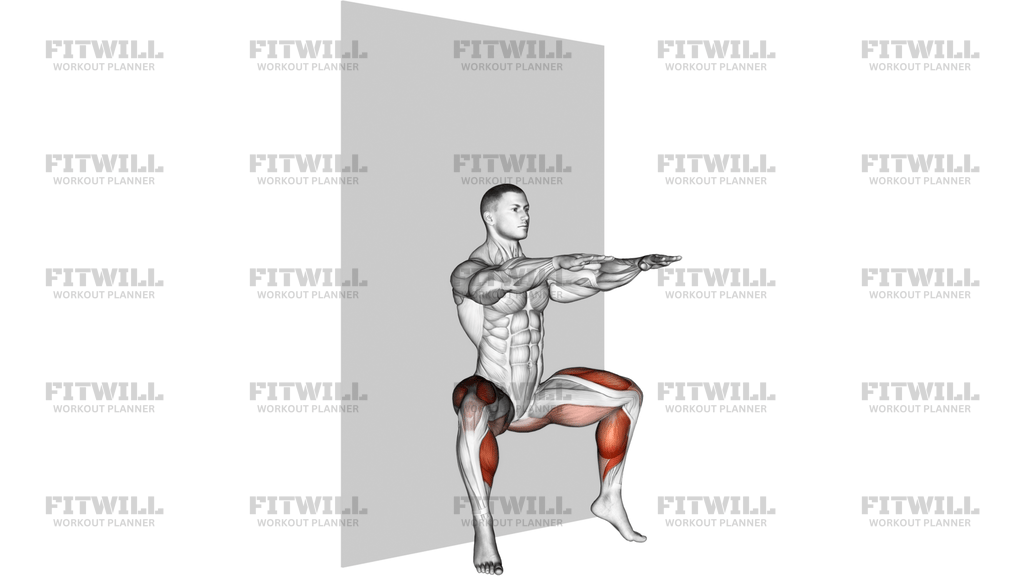
The Alternate Heel Tap Sit Against Wall is an isometric hold with a twist: you settle into a wall sit, then lift one heel off the floor at a time while your thighs keep burning. Your back stays flat against the wall, your hands stay off your legs, and the only thing moving is your ankles. It looks simple, but the moment one heel rises, the working leg has to carry your full weight on its own, which turns a static hold into an active stability drill.
This movement is a great fit for people who want stronger legs without loading a barbell. It works well as a finisher after squats or leg presses, as a low-impact option for anyone managing cranky knees, or as a home workout staple when you have nothing but a clear patch of wall. Because the torso is supported the entire time, you can focus entirely on what your legs and ankles are doing instead of fighting to stay balanced in space.
The main workload sits in the quadriceps, which hold your hips and knees at a fixed angle the whole set. Lifting each heel shifts your weight over the planted foot and forces the calf complex of the support leg to control the balance, while the hip and trunk muscles work quietly to keep your pelvis and spine from drifting off the wall. The alternating rhythm also exposes side-to-side differences, since each leg briefly takes the job alone.
Setup matters more than most people expect. Your feet need to be far enough from the wall that your knees bend to roughly a right angle, and they should stay hip-width apart with your weight spread across the whole foot. If you sit too high, the heel taps feel trivial; if you sink too low too early, your form breaks before the tap pattern does. Find a depth where you could hold the position for 30 to 60 seconds if you did nothing but sit.
To execute it well, slide down the wall until your thighs are near parallel to the floor, press your head, shoulders, and lower back into the wall, and brace your midsection. Then lift one heel smoothly, keep the ball of that foot in contact with the floor, lower it under control, and switch sides. The most common faults are bouncing the heels quickly, letting the hips rock toward the working side, and pushing the knees inward as fatigue builds. Slow, deliberate taps with a stable pelvis beat fast sloppy reps every time.
Use this exercise as a finisher for 20 to 45 seconds per round, or as a standalone leg-endurance drill in minimal-space workouts. If your knees complain during the hold, reduce the depth rather than skipping the movement entirely, and stop any set where your positioning deteriorates noticeably.
[ Workout Log & Planner ]
Put your next workout in Fitwill
Keep your plan and training log ready when you are.


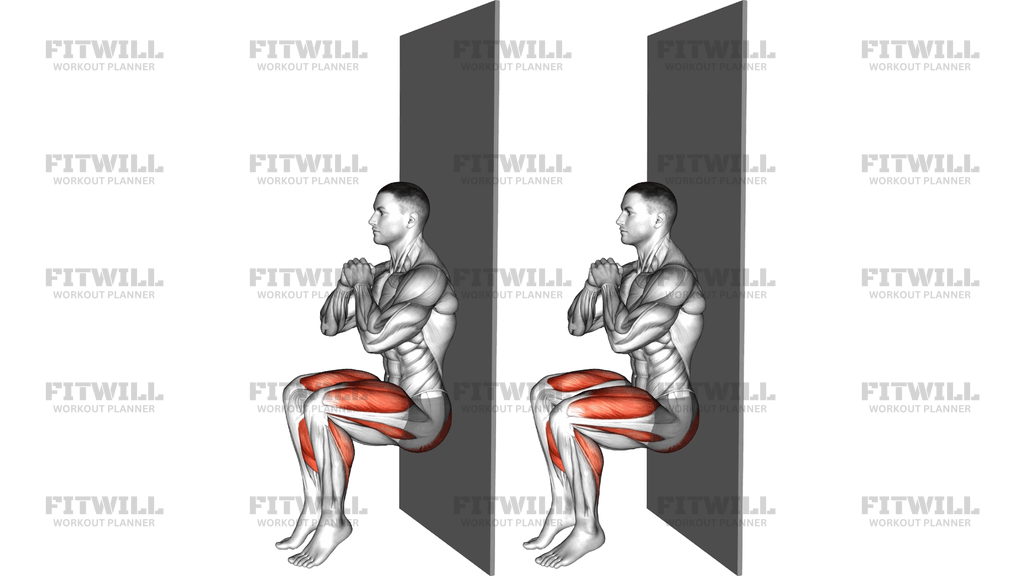
Instructions
- Stand with your back to a clear, flat wall and walk your feet out about two feet in front of you, hip-width apart.
- Slide your back down the wall until your hips and knees are bent close to 90 degrees, with knees stacked over your ankles.
- Press your head, upper back, and lower back flat against the wall, and cross your arms in front of your chest or hold them at your sides so they cannot push on your thighs.
- Distribute your weight across both full feet and brace your abdominal muscles to keep your pelvis still.
- Exhale steadily as you lift your right heel off the floor, keeping the ball of the right foot down and your left foot fully planted.
- Hold the heel lift for one to two seconds, then lower the heel back down with control instead of dropping it.
- Repeat the tap on the left heel and continue alternating sides for the target time or rep count.
- Keep breathing in a steady rhythm throughout the hold; avoid holding your breath as the legs fatigue.
- When finished, push through both feet and slide up the wall to standing, then shake out the legs before the next set.
Tips & Tricks
- If your heels shoot up too fast, the drill becomes a calf bounce instead of a leg-stability hold; pause with each heel in the air for a full second.
- Watch for your hips drifting sideways toward the tapping leg. Keep both hips level and equally weighted against the wall.
- If your knees cave inward as you tire, think about spreading the floor gently with your feet so the knees track over the middle of each foot.
- Sitting too low on the wall shortens the set quickly. Start at a depth you can hold for 40 seconds and only deepen it once that feels easy.
- Keep the ball of the lifting foot in light contact with the floor. Raising the whole foot turns it into a single-leg wall sit, which is a harder progression.
- If your lower back peels off the wall late in the set, that is a signal the hold is ending. Reset your posture or finish the round rather than compensating.
- Wear shoes with a firm, flat sole, or go barefoot on a non-slip surface, so the ball of the foot can stay grounded during each tap.
- Count taps rather than time if you want consistency between sessions, for example 20 total taps per set.
- To make it harder without going deeper, slow the tempo to a three-second lift and a three-second lower on every rep.
Frequently Asked Questions
Which muscles does the Alternate Heel Tap Sit Against Wall work?
The quadriceps do most of the work holding the wall-sit position, while the calves of the planted foot control balance during each heel lift. The glutes and core muscles contribute to keeping the hips and trunk steady against the wall.
Is the Alternate Heel Tap Sit Against Wall suitable for beginners?
Yes. Beginners can start with a shallower wall sit, around a 120-degree knee bend, and tap heels slowly for 15 to 20 seconds per set. Depth and duration can increase as the hold becomes comfortable.
How far should my feet be from the wall in the Alternate Heel Tap Sit Against Wall?
Set your feet so that when you slide down, your knees bend to roughly 90 degrees and sit directly above your ankles. If your knees push well past your toes or your heels want to lift on their own, adjust your foot position before starting.
Should the whole foot leave the floor during the heel tap?
No. Only the heel rises while the ball of the foot keeps light contact with the floor. Lifting the entire foot is a separate, harder variation that shifts the work toward single-leg strength.
Why do my hips rock side to side when I tap my heels?
Your weight is shifting onto the planted leg and your hips are chasing it. Widen your stance slightly, brace your core, and imagine both hips staying glued to the wall at equal pressure throughout the set.
Can I use the Alternate Heel Tap Sit Against Wall if I have knee discomfort?
Many people tolerate it better than loaded knee exercises because the torso is supported and no external weight is involved. Reduce the depth of the sit and keep the range pain-free, and check with a qualified professional if discomfort persists.
What can I substitute if I have no clear wall space?
A sturdy door, a stable pillar, or a fitball placed between your back and the wall can serve the same purpose. The key is a firm surface that lets you hold a supported squat position while tapping your heels.
How long should I hold the Alternate Heel Tap Sit Against Wall?
Aim for 20 to 45 seconds per set, or a set number of taps such as 16 to 24 total. Stop the set when your heels start moving quickly or your back loses contact with the wall.
How does this exercise differ from a regular wall sit?
A regular wall sit holds both legs equally the entire time, while the alternating heel tap briefly loads one leg at a time. That shift adds a balance and single-leg control element and makes the same hold noticeably more demanding.