Alternate Ankle Tap Under Sit Agains Wall
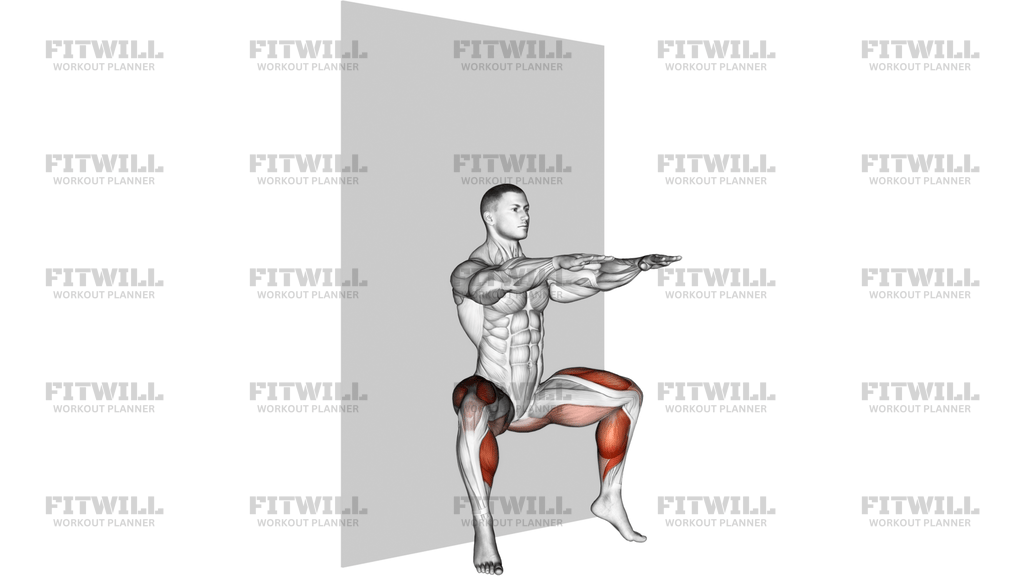
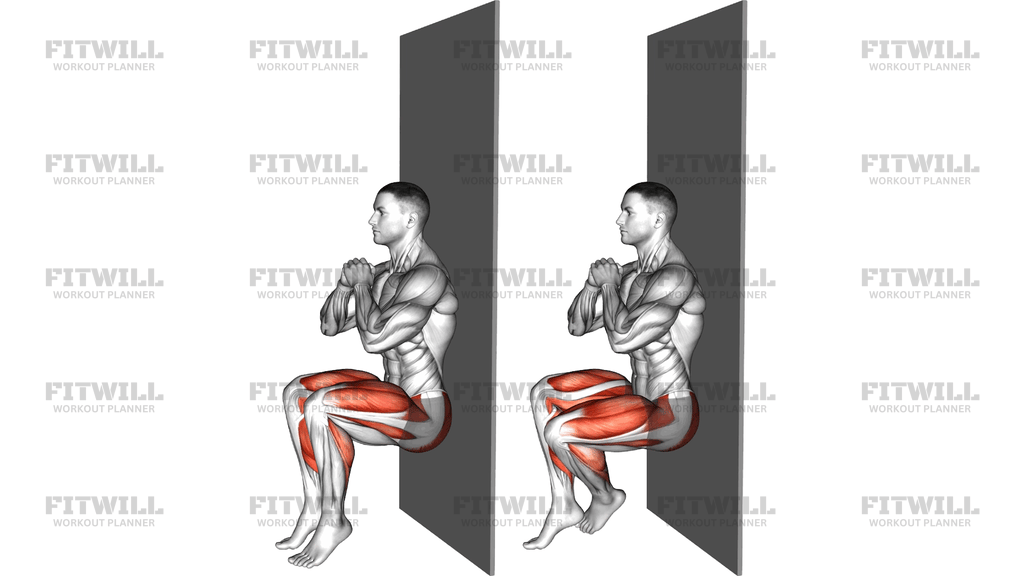
The Alternate Ankle Tap Under Sit Against Wall is an isometric lower-body hold with a twist: you settle into a wall sit, then lift one foot at a time to tap the ankle of the opposite leg, all while keeping your hips pressed to the wall and your thighs parallel to the floor. It turns a static wall sit into a coordination and stability challenge, because every time one foot leaves the ground the working leg has to support your full weight on its own.
This exercise is useful for almost anyone who performs squats, lunges, or running. It builds quad and glute endurance in a knee-friendly position, and the alternating foot taps add a balance demand that exposes left-to-right strength differences quickly. If one side is weaker, you will feel it immediately when that leg takes over solo.
The setup matters more than it looks. Your back, shoulders, and hips need to stay flat against the wall for the entire set, with your feet far enough forward that your knees stack roughly over your ankles at the bottom. If your feet sit too close to the wall, your knees drift forward and the hold becomes much harsher on the knee joints; too far back, and you lose the parallel-thigh position that makes the drill effective.
To execute it well, slide down the wall until your knees reach about ninety degrees, clasp your hands at your chest for balance, and brace your midsection like you are about to take a light push. From there, lift one foot, reach it across to tap the standing ankle, place the foot back in its original spot, and repeat on the other side. Keep the movement slow and deliberate rather than snappy, because speed lets you cheat the balance component.
You will see this drill in warm-ups, knee prehab routines, rehab-style conditioning circuits, and as a finisher on leg days. It requires nothing but a clear stretch of wall and enough floor space to plant your feet, which makes it a go-to option for home training or travel.
A few practical points keep it safe. Stop the set the moment your lower back peels off the wall or your hips start to creep upward, since those are signs your legs have given you everything they have. Keep the tap light, keep your weight centered over the whole foot of the standing leg, and breathe steadily instead of holding your breath through the taps.
[ Workout Log & Planner ]
Put your next workout in Fitwill
Keep your plan and training log ready when you are.


Instructions
- Stand with your back flat against a smooth wall, then walk your feet out about 18 to 24 inches and set them hip-width apart.
- Slide your hips down the wall until your knees are bent roughly ninety degrees and your thighs are parallel to the floor; adjust your foot position so your knees stack over your ankles.
- Clasp your hands together at chest height and press your shoulders, upper back, and hips fully against the wall.
- Brace your core and keep your weight spread evenly across both feet before starting the taps.
- Shift your weight slightly onto one leg, lift the opposite foot off the floor, and reach it down to tap the ankle of the standing leg.
- Return the tapping foot to its exact starting position on the floor, then repeat the tap on the other side.
- Alternate sides for your target number of taps while keeping your hips and back glued to the wall.
- Exhale as you lift and tap, inhale as you place the foot back down, and avoid holding your breath.
- When finished, walk your feet in toward the wall and slide your back up to stand, then reset your stance for the next set.
Tips & Tricks
- If your knees ache at the bottom, walk your feet a couple of inches farther from the wall so the knees travel less far past the ankles.
- A common mistake is letting the hips ride up the wall every time a foot lifts; watch that your seated height stays constant across all reps.
- Keep the tapping foot light and controlled. Slamming it down toward the ankle usually means you are rushing and losing balance.
- If your lower back arches away from the wall, brace harder or slide up slightly to a less aggressive knee angle rather than losing contact.
- Press through the whole foot of the standing leg, not just the toes, or your calf will fatigue before your quads do.
- Keep your hands clasped at your chest instead of reaching them out for balance; reaching hides the stability work this drill is meant to train.
- Start with short holds of 15 to 20 seconds and build up, since the single-leg support phase makes this much harder than a plain wall sit.
- If one side feels noticeably harder, that is useful information; do an extra set or a few extra taps on the weaker side to even things out.
- Do this drill in socks or flat-soled shoes on a non-slip floor so the standing foot does not slide during the taps.
Frequently Asked Questions
What muscles does the Alternate Ankle Tap Under Sit Against Wall work?
The quadriceps and glutes do most of the work holding the seated position, especially in the leg supporting your weight during each tap. The calves and ankle stabilizers assist, and your core works to keep your torso flat against the wall.
How is this different from a regular wall sit?
In a regular wall sit both legs share the load the whole time. Lifting each foot to tap the opposite ankle forces one leg to carry you alone for a moment, adding balance and single-leg strength demands on top of the isometric hold.
Is the Alternate Ankle Tap Under Sit Against Wall suitable for beginners?
Yes, provided you adjust the depth. Beginners can slide down to a shallower angle, around a forty-five degree knee bend, and start with short sets before progressing to a full parallel-thigh position.
How deep should my wall sit be during the ankle taps?
Aim for thighs roughly parallel to the floor with knees over ankles. If you cannot keep your back and hips on the wall while tapping, slide up a few inches until you can hold the position cleanly.
Why do my knees drift forward when I set up?
That usually means your feet are too close to the wall. Walk them out until your shins are close to vertical at the bottom so the load sits in your thighs rather than compressing the knee joint.
What is the most common mistake in this exercise?
The most common mistake is letting the hips rise or the lower back peel off the wall as fatigue builds, followed by rushing the taps so the standing foot loses stability. Slow the pace down and end the set when your position breaks.
What can I substitute if I have no clear wall space?
You can hold an unsupported high squat against no wall, but expect it to be much harder on the quads and lower back. A sturdy door frame or the side of a heavy cabinet can also work as the back support.
How long should I hold the Alternate Ankle Tap Under Sit Against Wall?
Start with 15 to 30 seconds or about 10 to 16 taps per side, and build toward 45 to 60 seconds over a few weeks. Stop when your back or hips lose contact with the wall rather than pushing through sloppy reps.
Is it safe for my knees?
With the feet far enough forward that the knees stay near the ankles, the position is well tolerated by most people. If you have a current knee issue or recent injury, check with a qualified professional before adding loaded or single-leg variations to your routine.
Should I breathe during the taps or hold my breath?
Breathe steadily throughout, exhaling as you lift and tap and inhaling as the foot returns. Holding your breath raises tension in the neck and shoulders and makes long sets unnecessarily hard.