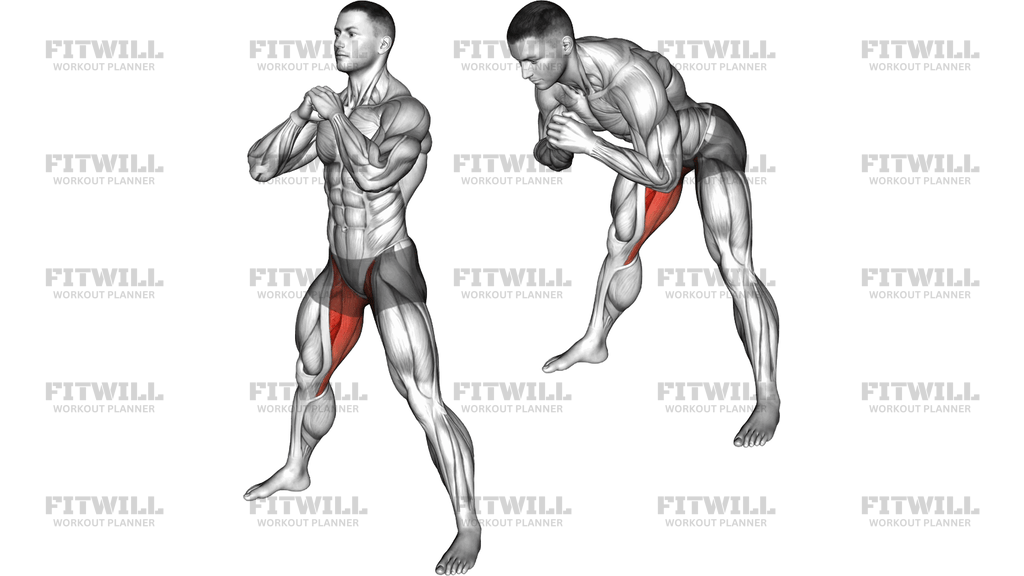
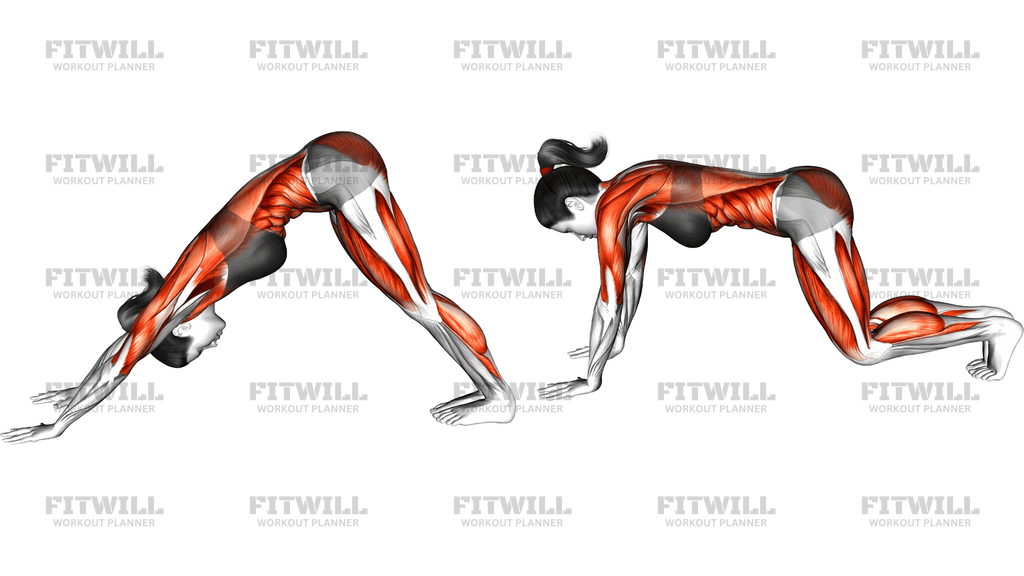
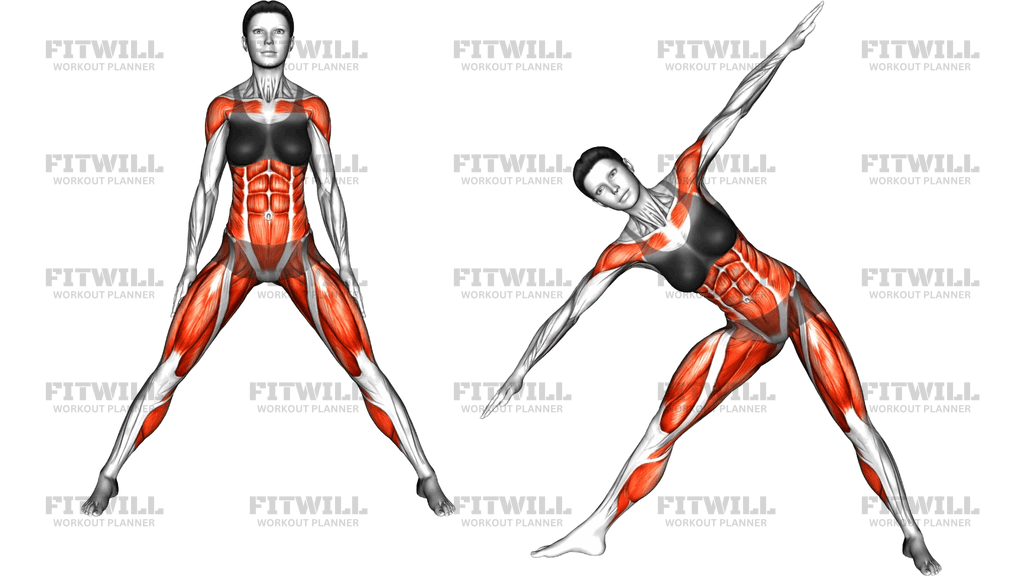
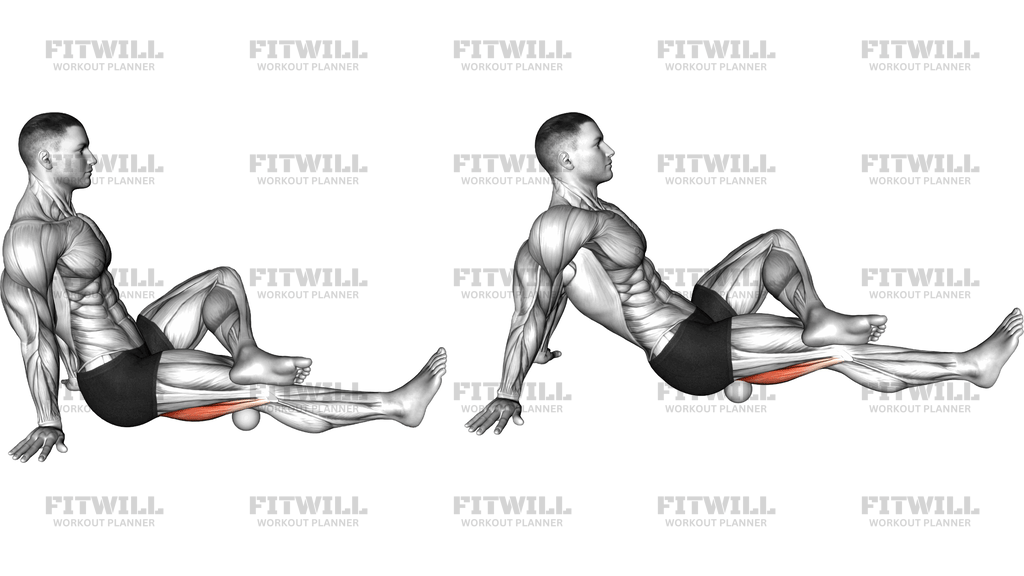
Wide Forward Fold Twist
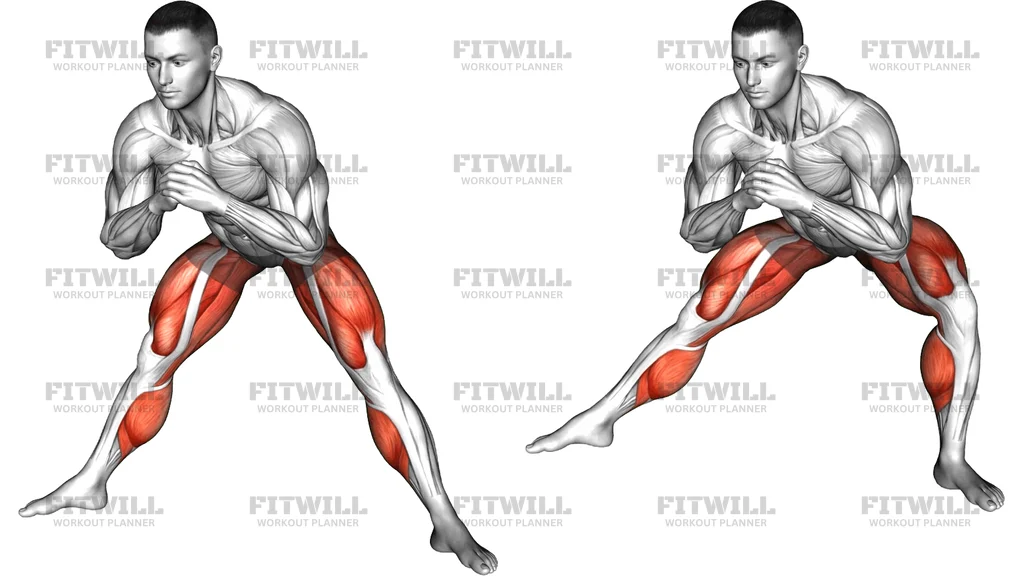
The Wide Forward Fold Twist is a bodyweight stretch that combines a wide-stance forward fold with spinal rotation. From a standing position with your feet set much wider than your shoulders, you hinge forward at the hips, then reach one hand down toward the opposite foot while your other arm rotates up and open toward the ceiling. This turns a simple posterior-chain stretch into a movement that also targets the obliques, the muscles along the spine, and the upper back.
The primary stretch lands on the hamstrings and adductors, since the wide stance lengthens the inner thighs along with the backs of the legs. As you rotate, the twist shifts work into the external and internal obliques and the deep muscles that run alongside the spine, while the reaching arm opens up the chest, shoulders, and the area between the shoulder blades. It is one of the few standing stretches that hits the back of the legs and rotational trunk mobility in a single hold.
Setup matters more than depth here. Because you are folding and twisting at the same time, a stance that is too narrow limits your reach, and a stance that is too wide puts strain on the groin and makes balancing awkward. Aim for roughly three to four feet between your heels, adjust from there, and keep a soft bend in the knees if your hamstrings are tight. Your hips stay as level as you can manage while the upper body does the rotating.
To perform it well, hinge from the hips rather than rounding aggressively through the lower back, let gravity take your torso down, and only then add the rotation. The reaching hand travels across the body toward the opposite foot or shin, and the top arm follows so your chest turns toward one side. Move slowly into the twist, breathe steadily, and hold the end position before returning to center and switching sides.
This stretch fits well into cooldowns after leg day, warm-ups for sports that involve rotation like tennis, golf, or throwing, and general mobility routines for people who sit a lot and feel stiff through the hips and mid-back. The main safety point is to keep the twist coming from the upper body rather than forcing rotation through the lower back, and to come out of the fold slowly, since standing up quickly from a deep fold with a rotated spine can leave you lightheaded.
[ Workout Log & Planner ]
Put your next workout in Fitwill
Keep your plan and training log ready when you are.


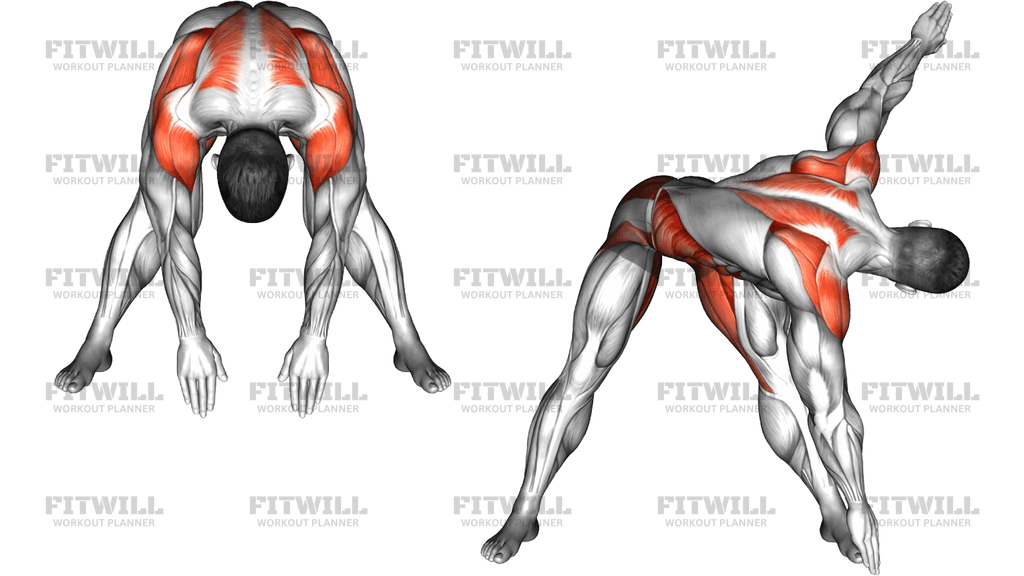
Instructions
- Stand with your feet roughly three to four feet apart, toes pointing forward or turned out very slightly, weight spread evenly across both feet.
- Hinge forward at the hips with a long spine, letting your torso lower toward the floor and allowing a slight bend in the knees if your hamstrings feel tight.
- Let your arms hang toward the floor at first, then bring your right hand across your body toward your left foot or shin.
- Rotate your chest to the left as you sweep your left arm up and back toward the ceiling, so both arms form a rough vertical line.
- Hold the twisted position for 20 to 45 seconds, keeping your hips as level as possible and your neck relaxed rather than craned upward.
- Exhale as you settle deeper into the twist, and inhale slowly and steadily through the hold instead of holding your breath.
- Slowly lower your top arm and untwist, bringing both hands back toward the floor under your shoulders.
- Roll or press yourself back up to standing with a flat back, pausing briefly to let your circulation settle before moving to the other side.
- Repeat the same sequence reaching the left hand toward the right foot, matching the hold time on each side.
Tips & Tricks
- If your fingertips cannot reach your foot, hold your shin or ankle instead. The stretch comes from the rotation and fold, not from touching a specific point.
- Do not force the twist from your lower back. Turn from the ribs and shoulders and let the lumbar spine follow only as far as it comfortably goes.
- Bend your knees more if your hamstrings pull so hard that your back rounds into a heavy curve. A soft knee keeps the fold sustainable and protects the lower back.
- Keep weight in the balls of your feet and toes. Many people drift their weight to their heels in the fold, which makes balancing during the twist shaky.
- Avoid twisting with a locked, hyperextended knee on the leg you reach toward. A micro-bend protects the joint while the hamstring still lengthens.
- If you feel a straining pull in the inner thighs, narrow your stance an inch or two. The groin tolerates the twist poorly when the feet are set too wide.
- Let your head hang heavy and follow the rotation naturally rather than snapping your neck around to look at your top hand.
- Come out of the stretch in two stages: untwist first, then stand up. Rising straight from the twisted fold is where most lightheadedness happens.
- Doing this stretch after training, when the muscles are warm, lets you rotate noticeably further than when you attempt it cold.
Frequently Asked Questions
Which muscles does the Wide Forward Fold Twist stretch?
It primarily lengthens the hamstrings and inner thighs from the wide stance, and the rotation adds a stretch for the obliques, the muscles along the lower back, and the upper back between the shoulder blades. The opening arm also stretches the chest and front of the shoulder.
Is the Wide Forward Fold Twist suitable for beginners?
Yes, as long as beginners shorten the range. Bend the knees generously, reach for the shin instead of the foot, and keep the twist modest. Depth can increase gradually over weeks of practice.
How wide should my stance be for the Wide Forward Fold Twist?
Start with your feet about three to four feet apart, roughly the width you would use for a wide-stance forward fold. If you feel strain in the inner thighs or cannot balance, bring the feet slightly closer; if you cannot reach anywhere near your foot, you can widen a little.
Should my knees be straight or bent during the Wide Forward Fold Twist?
A soft bend in the knees is the safer default, especially if your hamstrings are tight. Straightening the legs deepens the hamstring stretch, but locking the knees while twisting loads the joint and lower back unnecessarily.
Why do I feel the Wide Forward Fold Twist mostly in my lower back instead of my legs?
That usually means you are rounding and twisting through the lumbar spine rather than hinging at the hips. Try folding deeper at the hips first, keep the knees slightly bent, and start the rotation from your ribs and shoulders instead of forcing the twist low in the back.
Can I do the Wide Forward Fold Twist before a workout?
It works as a dynamic prep if you move in and out of the rotation slowly with short holds, which suits warm-ups for rotational sports. For long static holds, it is better placed after training or in a separate flexibility session.
How long should I hold each side of the Wide Forward Fold Twist?
Aim for 20 to 45 seconds per side, breathing steadily through the hold. Match the time on both sides so you do not build a side-to-side difference in your rotation.
What can I use if I cannot reach my foot in the Wide Forward Fold Twist?
Hold your shin, ankle, or calf, or place a yoga block under the reaching hand if you have one nearby. Reducing the distance to the target keeps the twist honest without straining to close the gap.
Is it safe to twist while folded forward like this?
For most healthy people it is safe when the rotation is driven by the upper back and kept within a comfortable range. If you have a history of back problems, disc issues, or dizziness when folding, keep the twist very gentle or choose a separate hamstring stretch and a separate seated rotation instead.