Low Lunge To Hamstring Stretch
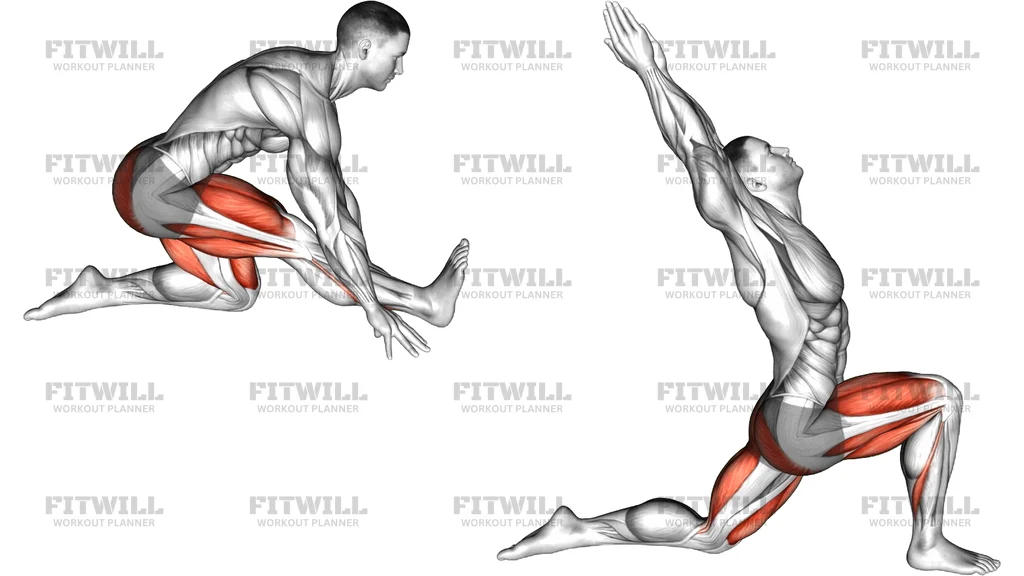
Low Lunge To Hamstring Stretch is a two-phase mobility flow that moves you from a kneeling lunge with the arms reaching overhead into a folded hamstring stretch over the straightened front leg. The first position targets the hip flexors of the back leg and the front hip in a lengthened stance, while the second position shifts the emphasis to the hamstrings and calf of the front leg as you press the hips back and hinge forward. Moving between the two lets you address both sides of the same hip in one smooth sequence without standing up or resetting.
This flow is especially useful for anyone who spends long hours sitting, since seated postures shorten the hip flexors and leave the hamstrings stiff at the same time. Runners, cyclists, and lifters who squat or hinge heavily also benefit, because tight hips and hamstrings tend to pull on each other during training. It works well as a warm-up before lower body sessions, a cool-down after running or leg days, or a standalone stretch on recovery days.
The setup matters more than most people expect. Placing the front foot far enough forward that the shin stays vertical protects the front knee, and keeping the hips squared forward determines whether you actually lengthen the target tissues or just twist around them. When you shift back into the hamstring stretch, the transition should come from the hips, not from rounding the spine, so the low back stays long while the hamstrings do the yielding.
To execute it well, lower the back knee comfortably to the floor, rise tall, and let the arms reach up as the hips press gently forward. Then walk the hands down, shift the weight back, and straighten the front leg enough to feel a clear pull along the back of the thigh. Hinge from the hips with a flat chest, hold where the stretch feels strong but tolerable, then bend the knee and return to the lunge before switching sides.
Because it requires no equipment beyond a soft surface, this sequence travels well and fits into almost any routine. Move slowly, breathe steadily, and let the range improve over weeks rather than forcing depth in a single session. If a knee or the low back complains, shorten the stance or reduce the fold until the position feels clean.
Fitwill
Log Workouts, Track Progress & Build Strength.
Achieve more with Fitwill: explore over 9600 exercises with images and videos, access built-in and custom workouts, perfect for both gym and home sessions, and see real results.
Start your journey. Download today!




Instructions
- Kneel on a mat or soft surface and step your right foot forward into a lunge, placing the foot flat with the shin roughly vertical and the knee stacked over the ankle.
- Lower your left knee to the floor behind you so the back leg rests with the top of the foot down, and check that both hips point straight ahead.
- Rise tall through the torso, reach both arms straight overhead, and gently press the hips forward to open the front of the back hip while keeping the ribs down.
- Exhale and hold this low lunge position for several steady breaths, feeling the stretch across the hip flexor of the back leg.
- Place both hands on the floor on either side of the front foot, then shift your weight back and begin straightening the front leg, drawing the toes up toward the shin.
- Hinge forward from the hips with a long, flat back and reach your hands toward the front foot or ankle until you feel a firm stretch along the back of the thigh.
- Hold the hamstring stretch for 15 to 30 seconds, breathing slowly and letting the chest lengthen toward the leg on each exhale rather than bouncing.
- Bend the front knee, shift your weight forward, and slide back into the low lunge, bringing the arms overhead again if you want a second hold on the hip flexor.
- Lower the hands to the floor, step the front foot back, and repeat the full sequence on the other side.
Tips & Tricks
- If the top of the back kneecap presses uncomfortably into the floor, fold the mat double or tuck a towel under that knee before starting the flow.
- A common mistake is rounding the spine to reach the front foot during the hamstring phase; keep the chest long and hinge from the hips, even if your hands only reach your shin.
- During the stretch phase, keep the front heel planted and the toes pulled back, because lifting the heel quietly removes tension from the hamstring you are trying to lengthen.
- Do not lock the front knee hard when you straighten the leg; a soft, nearly straight knee protects the joint while still loading the hamstring.
- Watch that the front knee tracks over the middle of the foot; if it drifts inward as you shift back, widen your stance slightly and re-stack the knee.
- When the arms reach overhead in the lunge, avoid flaring the ribs and arching the low back; brace the abs lightly so the hip flexor stretch comes from the hip, not the spine.
- Move between the two positions on the breath: exhale as you fold into the hamstring stretch, inhale as you return to the lunge, which keeps the pace slow and controlled.
- If the hamstrings feel tight but painless, a slight bend in the knee with the chest tall often produces a better stretch than forcing a deep fold with a locked knee.
- Expect one side to feel tighter than the other; spend an extra hold on the stiffer side rather than rushing both legs through identical counts.
Frequently Asked Questions
Which muscles does Low Lunge To Hamstring Stretch target?
The low lunge phase primarily lengthens the hip flexors of the back leg, while the folded phase targets the hamstrings and calf of the front leg. The glutes and quads assist and get a secondary stretch throughout.
Is Low Lunge To Hamstring Stretch suitable for beginners?
Yes. Beginners can shorten the stance, keep the hands on a yoga block or the shin instead of the floor, and limit the fold to wherever the hamstring stretch feels moderate rather than intense.
How long should I hold each phase of the flow?
Hold the low lunge for about 15 to 30 seconds, then the hamstring stretch for another 15 to 30 seconds per side. For flexibility gains, one to two rounds per leg is a practical dose.
Should I do this flow before or after a workout?
It works either way. Use shorter, more dynamic passes before running or leg training to open the hips, and hold each position longer after training when the tissues are warm.
Why does my front knee hurt during the hamstring stretch phase?
The knee is usually either locked hard or drifting out of line as you straighten the leg. Keep a small bend, stack the knee over the middle of the front foot, and shift the hips back more gradually.
Can I keep my hands on the floor the whole time instead of raising my arms?
You can, but reaching the arms overhead in the low lunge helps set the torso upright and deepens the hip flexor stretch of the back leg before you fold forward.
What is the difference between this flow and a plain low lunge hold?
A plain low lunge only trains the hip flexor side. Shifting back to straighten the front leg adds the hamstring and calf component, so one sequence covers both the front and back lines of the same hip.
How far forward should I fold during the hamstring stretch?
Fold only until you feel a strong but tolerable pull along the back of the thigh. Reaching the foot is not the goal; a flat back at shin height stretches the hamstring better than a rounded spine gripping the toes.
What can I use if my back knee is sensitive on a hard floor?
Place a folded mat, towel, or cushion under the kneeling knee, or perform the hamstring phase from a seated forward fold and the hip flexor phase from a standing lunge with a hand on a wall.
How often should I include Low Lunge To Hamstring Stretch in my week?
Most people do well with three to five sessions per week, especially after runs, cycling, or leg days. Consistency over weeks drives the range improvement, not one long session.