Lying Front Raise
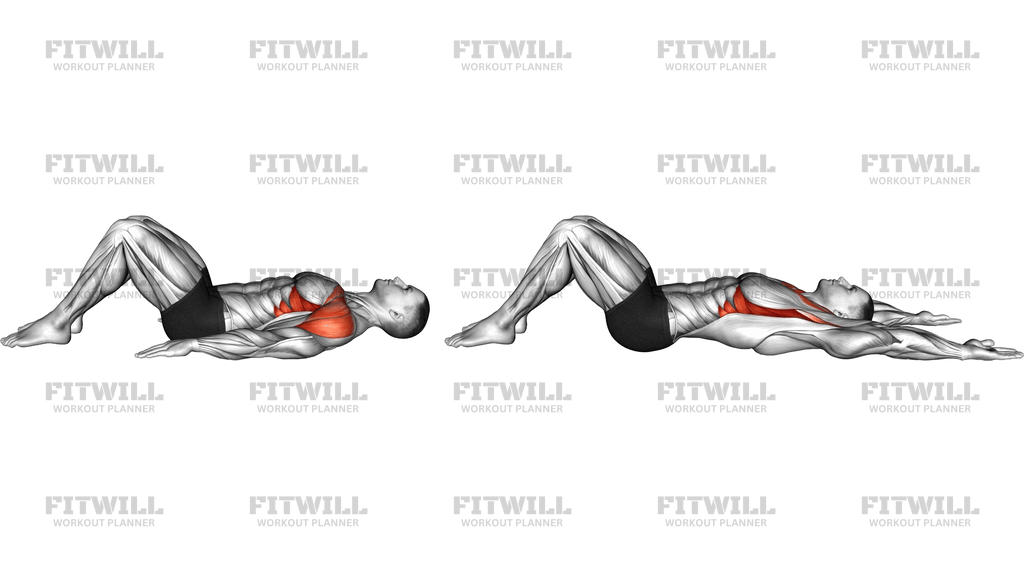
The Lying Front Raise is a bodyweight shoulder exercise performed while lying flat on your back on the floor with your knees bent and feet planted. From this supine position, you extend your arms straight up toward the ceiling, then slowly lower them back and overhead toward the floor before raising them forward again until they sit above your chest. Because you are working against gravity with no external load, the resistance comes entirely from the weight of your own arms, which makes this one of the most joint-friendly ways to train the front of the shoulders.
The main muscles at work are the anterior deltoids, the front portion of the shoulder muscles responsible for lifting the arm forward. As the arms travel from the overhead position back up toward vertical, the upper chest fibers assist, and the traps help control the shoulder blades. Holding your ribs down while the arms sweep overhead also engages the core, which is why many lifters feel gentle abdominal work even though the target is the shoulders.
The supine setup is what makes this movement distinct from a standing front raise. Lying on the floor gives you constant feedback: if your lower back arches or your ribs flare as the arms move overhead, you feel it immediately against the ground. That built-in feedback teaches honest shoulder flexion and overhead mobility without the compensation patterns that often creep in while standing, where the lower back can quietly take over the range.
This exercise suits beginners learning to control their arms overhead, lifters warming up before pressing sessions, and anyone recovering from heavy pressing work who wants blood flow to the shoulders without loading the joint. It is also a practical option for home training, since it requires nothing more than floor space. People with limited overhead mobility can start with a shortened range, lowering the arms only as far back as they can control while keeping the lower back in contact with the floor.
To execute it well, move slowly and treat the lowering phase as the working portion of the rep. The arms should sweep back in a smooth arc until the hands approach the floor above your head, pause briefly, then return to vertical above the chest. Keep the elbows straight but not locked, the palms facing each other or up, and the neck relaxed. If you find yourself shrugging or bouncing, the range has outpaced your control, so shorten it. Consistent, deliberate tempo matters far more here than reps or speed.
Fitwill
Log Workouts, Track Progress & Build Strength.
Achieve more with Fitwill: explore over 9600 exercises with images and videos, access built-in and custom workouts, perfect for both gym and home sessions, and see real results.
Start your journey. Download today!




Instructions
- Lie flat on your back on the floor with your knees bent and feet flat, hip-width apart, so your lower back rests comfortably against the ground.
- Extend both arms straight up toward the ceiling so they sit directly above your chest, palms facing each other, with the elbows fully straight but not locked.
- Gently brace your abdominal muscles and press your lower back into the floor to set a stable, neutral position before moving.
- Inhale, then slowly sweep both straight arms back and overhead in a smooth arc, as if tracing a wide path toward the floor behind your head.
- Lower the arms only as far as you can keep your lower back and ribcage pressed against the floor; pause for a beat when the hands are near the ground above your head.
- Exhale as you raise your arms back along the same arc until they are vertical above your chest, leading with the front of the shoulders rather than shrugging upward.
- Keep your head resting on the floor and your neck relaxed throughout; avoid lifting the chin or straining forward as the arms travel overhead.
- Complete the rep with a brief hold at the top, then begin the next lowering phase under control rather than letting gravity drop the arms.
- After your final rep, lower the arms to your sides, let the shoulders settle, and sit up slowly before standing.
Tips & Tricks
- The most common mistake is letting the lower back arch off the floor as the arms sweep overhead. This shifts work away from the shoulders and strains the lumbar area, so stop the descent at the point where the back starts to lift.
- Keep the elbows straight but soft. Bent elbows shorten the lever and quietly turn the movement into a partial raise, while hard-locked elbows irritate the joint at the end of the arc.
- Avoid shrugging toward your ears as the arms reach overhead. Your traps will try to take over near the top of the range; consciously keep space between your shoulders and ears.
- Slow the lowering phase to a two- or three-second count. With no external weight, the eccentric portion is where the front shoulders actually get meaningful stimulus.
- If your shoulders feel pinched at the end of the overhead reach, do not force the hands to the floor. Reduce the range a few inches and rebuild it gradually over weeks.
- Keep the ribs from flaring upward as the arms extend back. Thinking about drawing the bottom ribs toward your hips keeps the core braced and the movement honest.
- Palms facing each other tends to be the most comfortable hand position for most people; if turning palms upward causes any pinching, rotate them back inward.
- This works best as a warm-up or high-rep finisher. Aim for slow sets of 10 to 15 reps rather than rushing through fast, momentum-driven repetitions.
Frequently Asked Questions
Which muscles does the Lying Front Raise target?
The front shoulders, specifically the anterior deltoids, are the primary movers. The upper chest assists as the arms travel from overhead back to vertical, and the traps and core work to stabilize the position.
Why do the Lying Front Raise lying down instead of standing?
Lying on your back gives constant feedback: if your lower back arches or ribs flare as the arms go overhead, you feel it right away. It also removes momentum, forcing the shoulders to control the arms through the entire arc.
Is the Lying Front Raise good for beginners?
Yes, it is one of the safest ways to learn overhead arm control because the arms are unloaded and the floor guides your torso position. Beginners should start with a shorter overhead range and extend it as mobility improves.
How far back should my arms go during the Lying Front Raise?
Lower them only until your hands approach the floor overhead while your lower back stays pressed to the ground. If your back lifts or ribs flare before the hands reach the floor, that is your current range limit.
Can I add weight to the Lying Front Raise?
Light dumbbells or a small plate can be used once strict bodyweight reps feel easy, but start with nothing. The overhead position makes even light loads challenging, and the floor limits how far the weight can travel.
What is the most common mistake with the Lying Front Raise?
Arching the lower back to reach the hands closer to the floor overhead. This bypasses the shoulders and stresses the lumbar spine, so shorten the range until the back stays flat throughout.
Can the Lying Front Raise replace a standing front raise?
It can serve a similar purpose for the front shoulders, but it is lighter and more of a control and mobility drill. Use it for warm-ups, recovery, or home training, and use a loaded standing or cable raise when you want heavier overload.
Should I feel this in my abs?
Some core engagement is normal because holding the ribs down while the arms sweep overhead requires abdominal bracing. Sharp or localized discomfort in the lower back, however, means the range is too long or the brace has slipped.
Is the Lying Front Raise safe if my shoulders are sore after pressing?
It is often a good gentle option because there is no external load and the range is self-limited. Keep the reps slow, stay within a pain-free range, and skip the exercise if any movement produces sharp or pinching sensations.