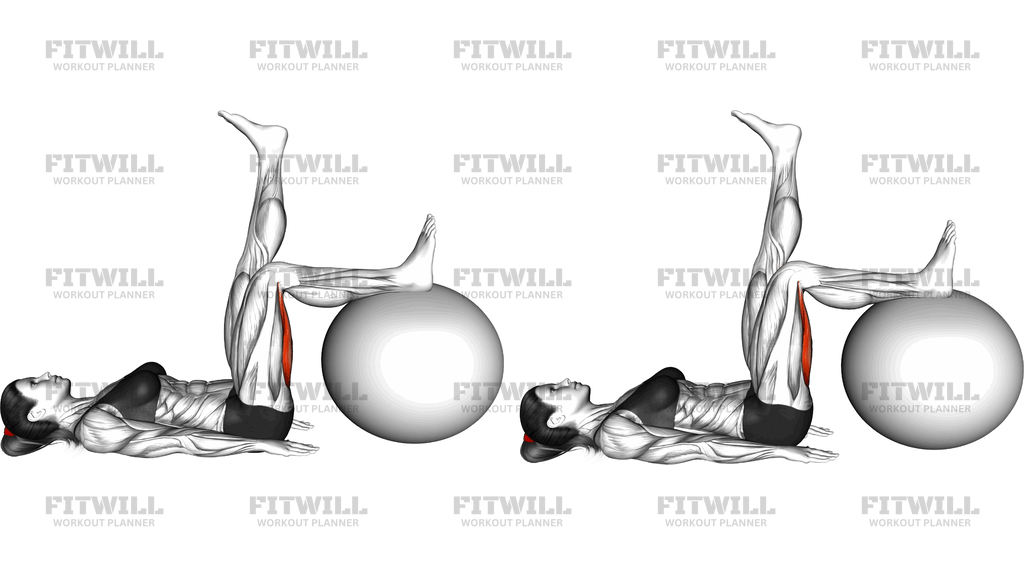
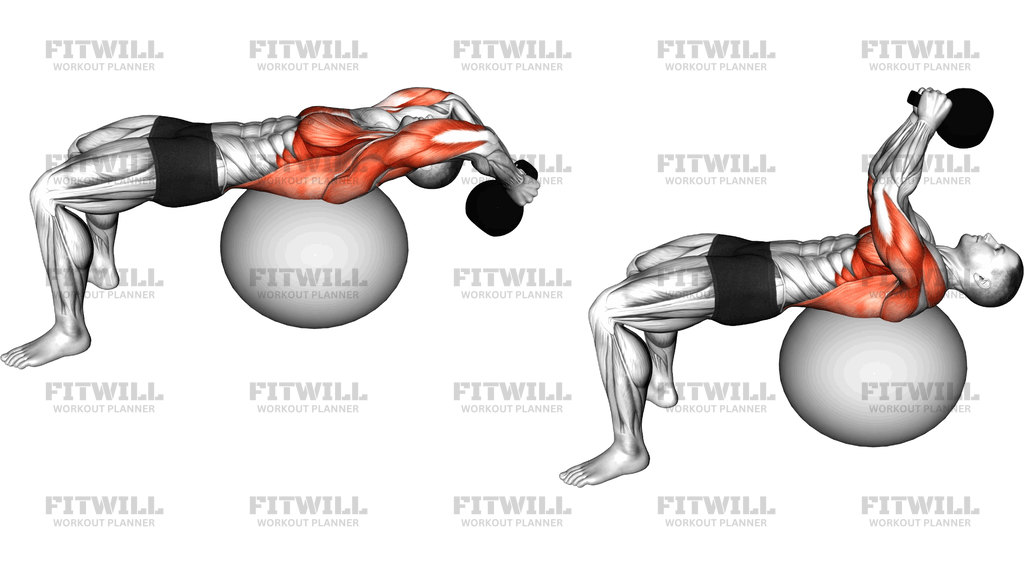
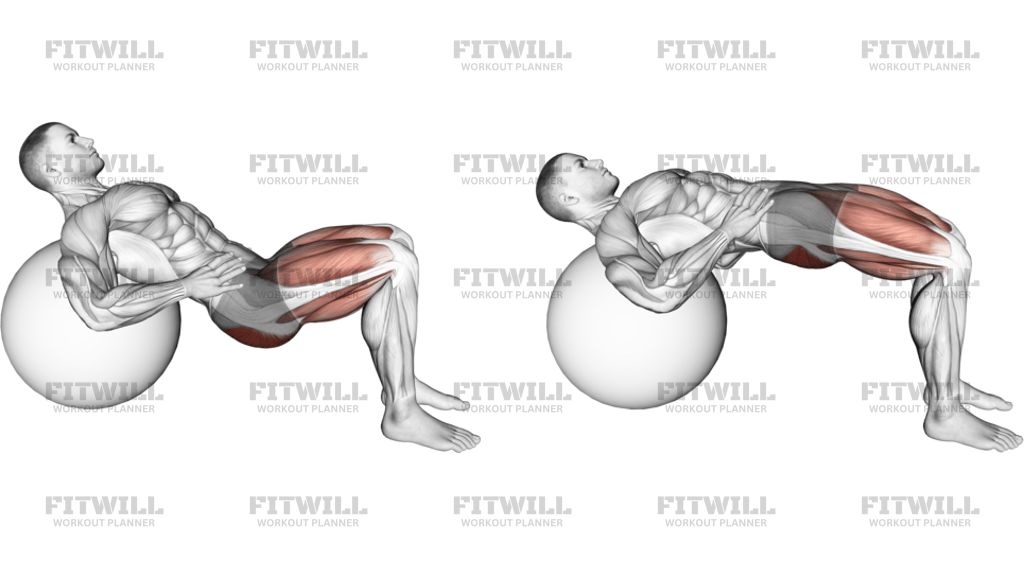
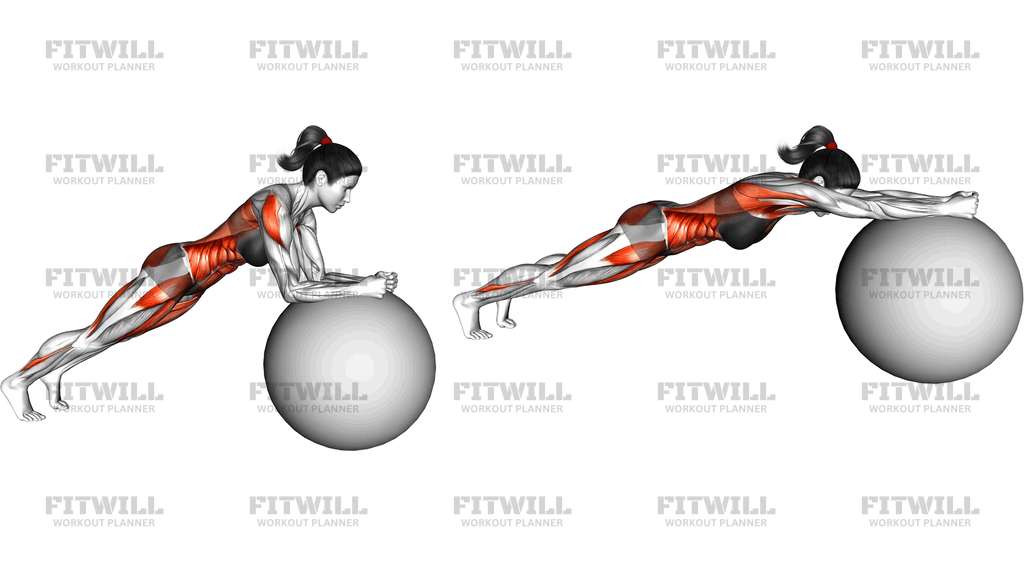
Reverse Hyperextension On Stability Ball
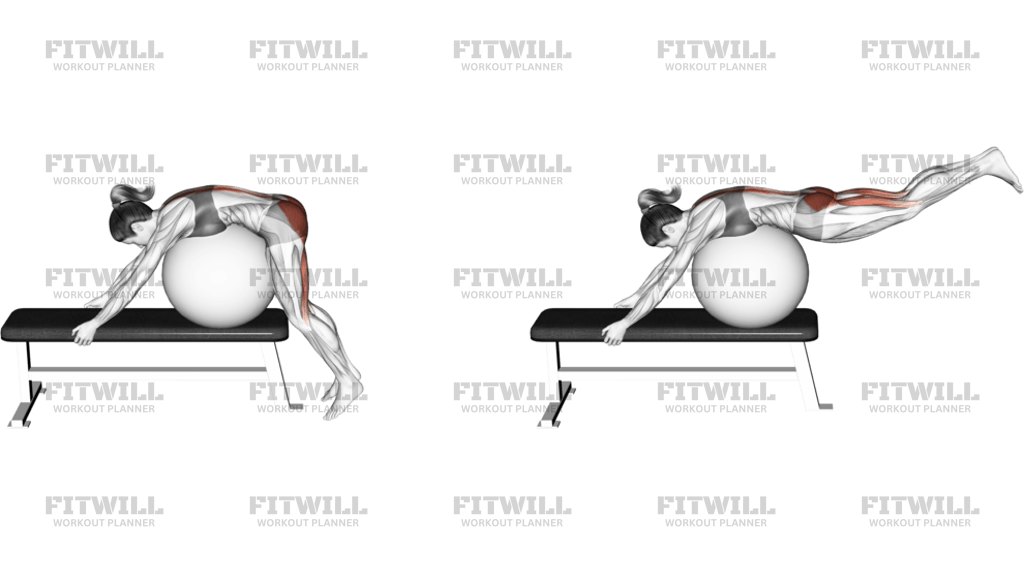
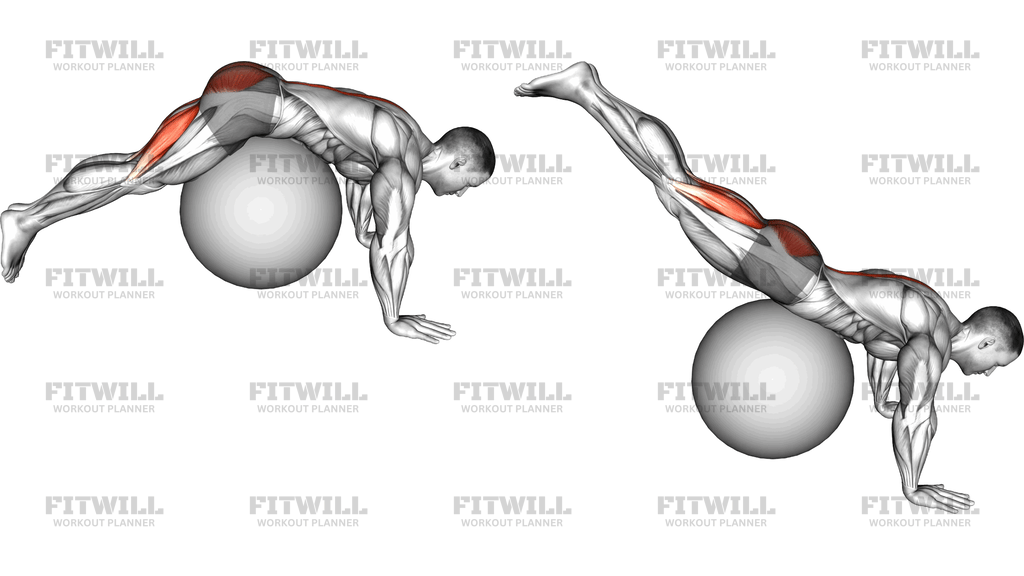
The Reverse Hyperextension On Stability Ball is a body-weight posterior chain exercise performed with your torso draped over a stability ball and your hands planted on the floor. From that supported, face-down position, you lift your legs toward the ceiling by extending at the hips, then lower them back down under control. It is essentially a floor-based version of the reverse hyperextension, with the ball replacing the bench or dedicated machine as the point of support under your hips and abdomen.
This movement primarily trains the glutes and hamstrings, with the erector spinae of the lower back working hard to control and stabilize the lumbar spine as the legs rise. Because your hands are on the floor and the ball is unstable, your core, shoulders, and even the small stabilizers around the shoulder blades are constantly engaged just to keep you from rolling sideways. That combination makes it more demanding on balance than a machine reverse hyper, but also more rewarding for overall trunk control.
The setup matters more here than in most hip extension exercises. The ball should sit under your hips or lower abdomen, not your chest, so your torso slopes slightly downward toward your hands and your legs hang free behind you. If the ball is too far forward under your chest, you end up doing a back extension with a poor angle; too far back and you lose the leverage needed to lift the legs. Hands should be set slightly wider than shoulder width, directly under or just ahead of your shoulders, with a soft elbow to protect the joints.
Execution is about hip extension, not lumbar swinging. Squeeze the glutes to raise the legs until your body forms a straight or slightly arched line from head to feet, then pause briefly at the top before lowering with control. The lift should feel like it comes from the back of the hip, not from yanking the lower back into a deep arch. Keeping the range honest, stopping when your spine stops extending and your glutes finish the job, is what separates a productive rep from a momentum-driven one.
This exercise suits lifters who want to train hip extension without loading the spine with a barbell, people rehabilitating or prehabilitating the posterior chain with a light load, and anyone who wants to add an anti-rotation and balance challenge to their glute work. It is also a useful auxiliary movement for squat and deadlift training days, since it hits the glutes and hamstrings through a shortened position without heavy axial loading. Start with body weight only and modest volume; the unstable setup makes even unweighted reps surprisingly fatiguing.
[ Workout Log & Planner ]
Put your next workout in Fitwill
Keep your plan and training log ready when you are.


Instructions
- Place a stability ball on an exercise mat and kneel in front of it, then roll forward until the ball rests under your hips and lower abdomen with your torso facing the floor.
- Walk your hands out until they are on the floor slightly wider than shoulder width, directly under or just in front of your shoulders, with your arms nearly straight and elbows soft.
- Adjust your position so your legs hang off the back of the ball with your feet close together and your body angled slightly downward from hips to hands.
- Brace your abdominals and lightly squeeze your shoulder blades to create a stable shelf; your head stays in line with your spine, eyes on the floor.
- Exhale and squeeze your glutes to raise both legs toward the ceiling, extending at the hips until your body forms a straight line from head to feet.
- Pause for a beat at the top with the glutes fully contracted, avoiding any extra arch in the lower back or kick from the knees.
- Inhale and lower your legs back to the hanging start position slowly, keeping tension in the glutes and hamstrings rather than dropping the legs.
- Complete your repetitions, then walk your hands back toward the ball, roll your body forward, and step off safely one leg at a time.
Tips & Tricks
- If the ball keeps rolling forward as you lift, walk your hands slightly further out and shift the ball contact point back toward your upper thighs until the setup feels anchored.
- A common mistake is letting the lower back do all the work by over-arching; think about driving the tops of your thighs toward the ceiling and let the glutes finish the lift.
- Keep your feet together or nearly together. Letting the legs drift apart turns the rep into an abduction movement and makes the unstable ball much harder to control.
- Do not bend the knees to kick the legs up. Straight legs keep the tension on the glutes and hamstrings instead of turning it into a hamstring curl.
- Control the descent for two to three seconds. Dropping the legs fast on an unstable ball rocks your torso sideways and robs the glutes of the eccentric work.
- If your shoulders fatigue before your hips, shorten your sets or rest your forearms on a low bench for support while keeping the same hip position over the ball.
- Avoid lifting beyond the point where your back naturally stops extending. A slightly higher leg position on the last rep is not worth arching into your lumbar spine.
- On a soft or cold ball the surface shifts under your hips; make sure the ball is properly inflated and set on a non-slip mat before your first rep.
- Warm up with a few sets of glute bridges or standing hip extensions first so you can feel the glutes contract from the very first rep on the ball.
Frequently Asked Questions
Which muscles does the Reverse Hyperextension On Stability Ball work?
The glutes are the prime movers, supported by the hamstrings during hip extension. The erector spinae of the lower back stabilize the spine, and your core, shoulders, and trunk stabilizers work continuously to keep you balanced on the ball.
Where exactly should the stability ball sit under my body?
The ball should rest under your hips or lower abdomen so your torso angles slightly downward toward your hands and your legs hang free behind you. Placing it under your chest changes the exercise into a poor-angle back extension and reduces hip extension range.
Is the Reverse Hyperextension On Stability Ball suitable for beginners?
Beginners can do it, but the unstable setup makes it harder than a bench or machine version. If you struggle to balance, start with a smaller ball or a ball braced against a wall, and master floor glute bridges and bird dogs before progressing here.
How high should I lift my legs at the top?
Lift until your body forms a straight or slightly extended line from head to feet, which is usually where your glutes reach full contraction. Chasing extra height by arching the lower back shifts work away from the glutes and loads the lumbar spine.
Why do I keep rolling sideways off the ball during reps?
This usually comes from an uneven hand position, a too-soft ball, or lowering the legs too fast. Set your hands evenly, keep the ball firmly inflated, and slow the descent so your torso stays square to the floor throughout each rep.
Can I use this exercise instead of a reverse hyper machine?
It trains the same hip extension pattern with just body weight, so it works well as a substitute when no machine is available. The machine version allows added load and a more stable platform, so treat the ball version as a lighter, balance-demanding alternative rather than a total replacement.
How many reps and sets should I do?
Because the load is limited to your body weight, higher volumes work well: two to four sets of 10 to 15 controlled reps is a practical range. Stop the set when your balance breaks down or your lower back starts doing the lifting instead of your glutes.
Is it safe for my lower back?
When performed with a controlled range and the lift driven by the glutes, it is generally a lower-load way to train hip extension. If you feel sharp or radiating discomfort rather than muscular effort, reduce the range, slow down, or consult a qualified professional before continuing.
What can I use if I do not have a stability ball?
A flat bench or roman chair supports a similar reverse hyperextension, and floor glutes raises or lying hip extensions hit the same muscles. The stability ball simply adds the balance and core stability challenge that the other options do not.