Bodyweight Squat Side Shuffle
The Bodyweight Squat Side Shuffle is a lateral conditioning drill where you drop into an athletic quarter-squat and travel sideways using small, controlled shuffle steps, keeping your hips low the entire time. It combines the isometric hold of a squat with continuous lateral footwork, so your legs work both to hold position and to move you across the floor. No equipment is needed beyond a clear strip of floor, which makes it easy to slot into warm-ups, circuit training, or home workouts.
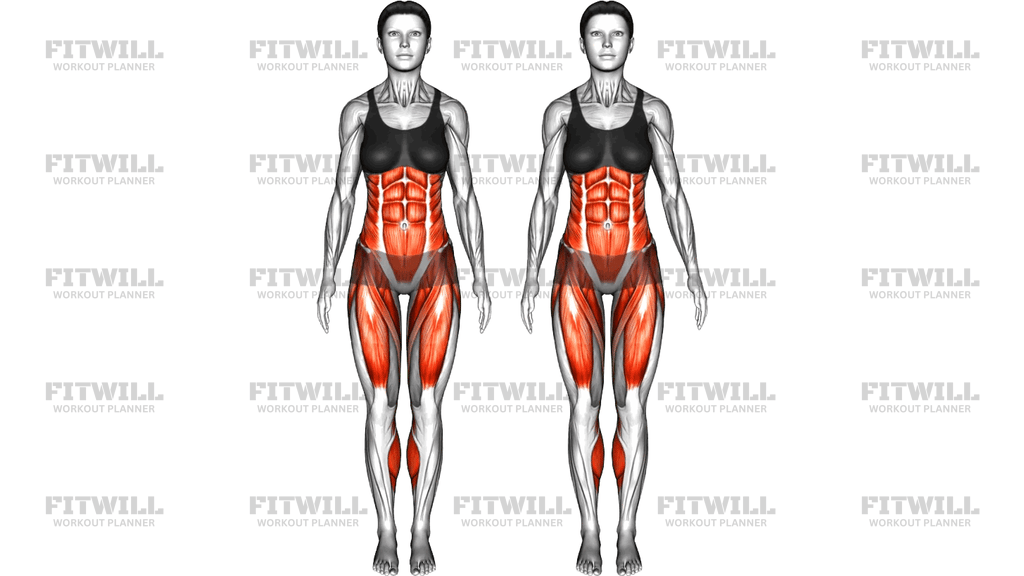
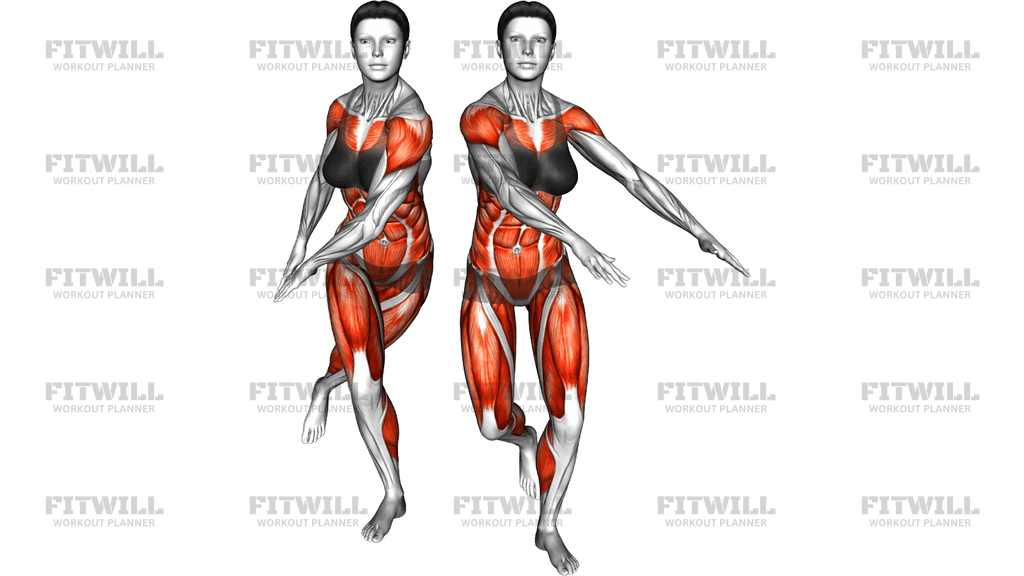
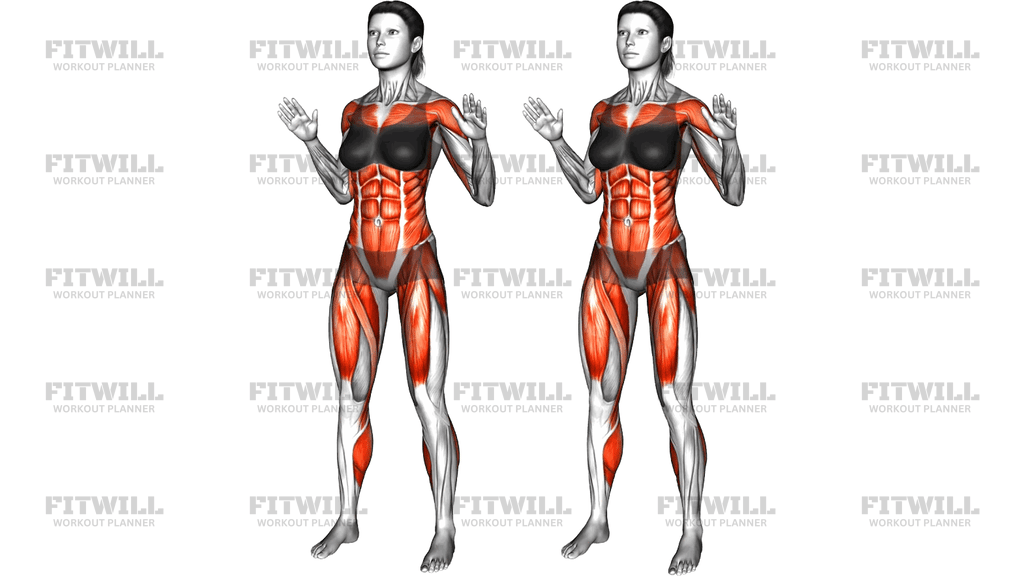
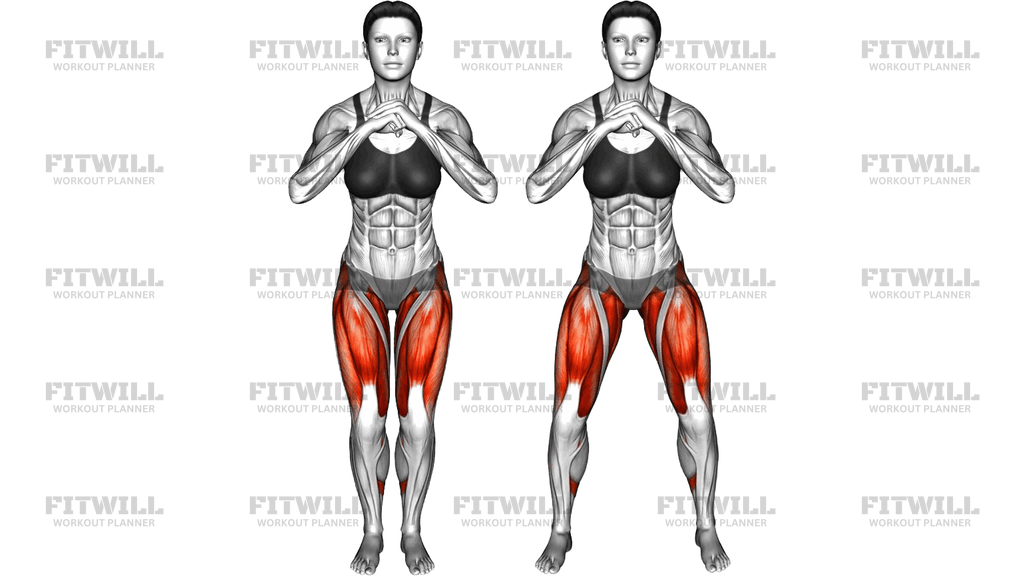
The main load falls on the quadriceps, which stay under constant tension in the squat position, while the glutes and inner thighs drive each sideways step. Because you are moving laterally, the glute medius and muscles around the outer hip do far more work than they would in a straight-line walk, and the calves handle repeated small pushes off the ball of the foot. Holding the squat also asks your core to keep your torso upright and stable as your feet trade positions underneath you.
Shuffling in a low stance is one of the simplest ways to train side-to-side movement, which most daily activity and straight-ahead cardio never touches. Athletes use it to build the footwork and hip strength behind cutting and change of direction, but it is just as useful for general lifters who want sturdier knees and hips. If you sit a lot during the day, the sustained squat hold also works your legs through a range that standing and walking ignore.
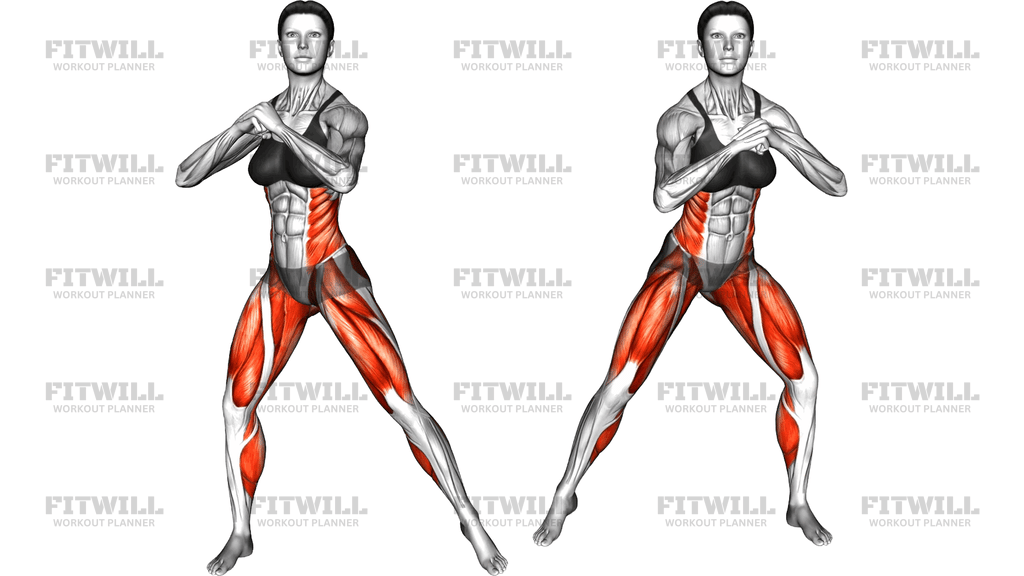
Setup matters because a poor stance turns the shuffle into a stiff, upright slide. Your feet should stay roughly shoulder-width or a touch wider, your weight centered over the middle of each foot, and your hips pushed back so your shins stay nearly vertical. Hands clasped in front of the chest, as shown in the standard position, helps you balance and discourages rounding forward.
To execute well, drop into a quarter- to half-squat you can genuinely hold, then take short, quick steps to the side, leading with the outside foot and following with the trailing foot without letting your feet click together or your hips rise. Keep your chest up and your knees tracking over your toes the whole way. Travel a set distance in one direction, then shuffle back the other way, or alternate directions each rep.
The most common errors are bobbing up out of the squat as fatigue sets in, crossing the feet, and letting the knees cave inward on each step. Start with short ten to twenty second bouts and prioritize staying low with clean foot placement over covering ground quickly. If your knees complain about the depth, work at a shallower angle and gradually sit lower over time.
[ Workout Log & Planner ]
Put your next workout in Fitwill
Keep your plan and training log ready when you are.


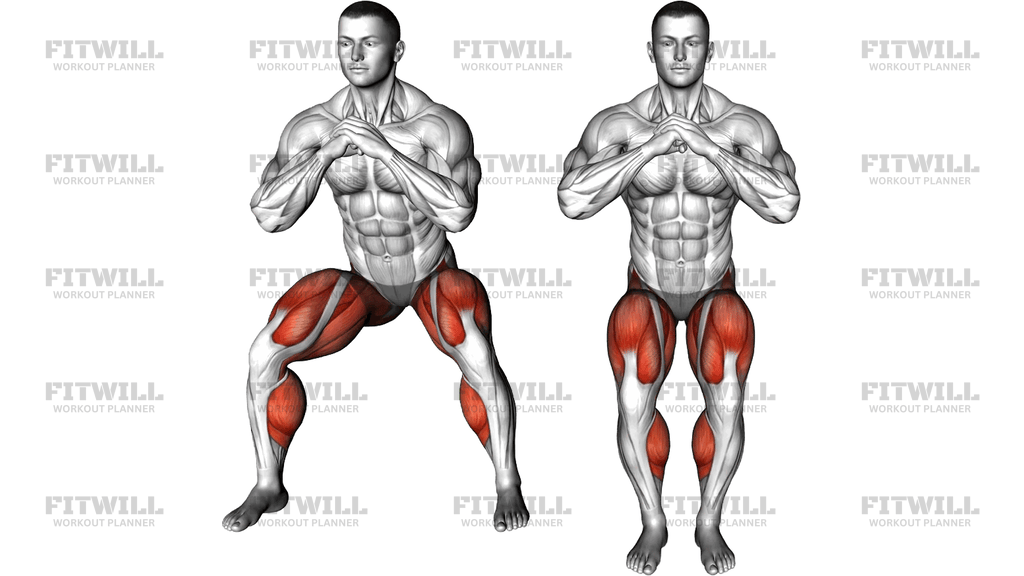
Instructions
- Stand with your feet about shoulder-width apart and clasp your hands together in front of your chest for balance.
- Push your hips back and bend your knees to lower into a quarter- to half-squat, keeping your chest tall and your weight over the middle of both feet.
- Brace your core and hold this squat height as your working position; do not stand taller as you move.
- Take a short lateral step to the right with your right foot, then follow with your left foot, keeping your hips at the same low level.
- Keep your feet from touching or crossing as they trade positions; each step should land under your hips with the knee bent and tracking over the toes.
- Continue shuffling sideways for a set number of steps or a set distance, maintaining the same squat depth throughout.
- Reverse direction and shuffle back to your starting point, or reset to a standing position if you are resting between bouts.
- Breathe steadily throughout, inhaling through the nose and exhaling in a controlled rhythm rather than holding your breath.
- When you finish the set, stand up slowly from the squat position and shake out your legs before the next round.
Tips & Tricks
- The most common breakdown is rising out of the squat as your legs fatigue. Pick a depth you can genuinely hold for the full distance rather than one you can only manage for the first few steps.
- Do not let the trailing foot snap against the leading foot. Landing each step with a slight gap keeps you balanced and prevents the stumbly, hopping rhythm that ruins the drill.
- Watch for your knees drifting inward on each step, especially the knee of the leg you are pushing off. Actively press the knee out over the little toe as you plant.
- Keep your shins close to vertical by sitting into your hips instead of leaning your torso forward. If your chest is angled toward the floor, your squat is too deep or your weight has shifted to your toes.
- Stay on the balls of your feet only lightly; your heels should not lift completely. Rolling onto the toes makes you bounce and shifts stress away from the thighs.
- Shorten your steps if your hips rise between strides. Quick, compact steps keep tension on the quads better than long, reaching lunges that turn it into a different exercise.
- Use a marked distance, such as five to eight shuffles each way, so you can compare rounds and hold depth honestly instead of creeping upward as you tire.
- If your lower back starts rounding or aching, that is usually a sign your torso is folding forward. Reset your chest position and shallow out the squat slightly before continuing.
- Warm up your hips with a few bodyweight squats and leg swings first, since going straight into a held squat with cold adductors often feels stiff and restricted.
Frequently Asked Questions
What muscles does the Bodyweight Squat Side Shuffle work?
The quadriceps take the main load from the sustained squat hold, while the glutes and adductors power each sideways step. The calves and core work continuously to support the low stance and upright torso.
How deep should my squat be during the Bodyweight Squat Side Shuffle?
A quarter- to half-squat is the standard working depth, meaning your hips are clearly back and your thighs are engaged but you are not sitting as low as a full squat. Choose the deepest position you can hold with your chest up and knees tracking over your toes for the entire distance.
Is the Bodyweight Squat Side Shuffle good for beginners?
Yes, provided you keep the depth modest and the distance short. Beginners should start with ten to fifteen seconds of shuffling per bout and focus on staying low with clean footwork before adding speed or duration.
Why do my legs burn so quickly in the Bodyweight Squat Side Shuffle compared to regular squats?
In a regular squat you get brief relief between reps, but during the shuffle your thighs never leave the loaded position, so the muscles work isometrically the whole time. This continuous tension is what makes short bouts feel so demanding.
Should my feet touch together between shuffle steps?
No, letting the feet click together is a common mistake that breaks your rhythm and balance. Keep a small gap between the feet as they trade positions so you are always ready to plant the next step.
Can I use the Bodyweight Squat Side Shuffle as a warm-up?
It works well as a warm-up because it raises your heart rate while lubricating the hips, knees, and ankles through a lateral range you rarely use otherwise. Keep the intensity easy and the bouts brief when using it before lifting.
What can I substitute if I do not have space to shuffle sideways?
You can perform stationary side steps in the same low squat, moving just a foot or two in each direction, or alternate the leading foot in place. The key element to preserve is holding the squat depth while moving your feet laterally.
How do I stop my knees from caving inward during the shuffle?
Consciously press each knee out over the toes as your foot plants, and keep your weight spread across the whole foot rather than dumping it onto the inner edge. If the problem persists, shallow out the squat slightly, since deeper holds tend to expose hip weakness.
Is the Bodyweight Squat Side Shuffle safe for people with knee discomfort?
A shallower version with slow, small steps is often tolerable because the knees stay bent at a moderate angle, but you should stop if you feel sharp pain or instability. When in doubt, get clearance from a qualified professional before loading the knees with sustained holds.
How long should each Bodyweight Squat Side Shuffle bout last?
Fifteen to thirty seconds per direction is a practical range for conditioning, and you can repeat it for several rounds. Once your hips start rising or your steps get sloppy, end the bout rather than grinding through with poor form.