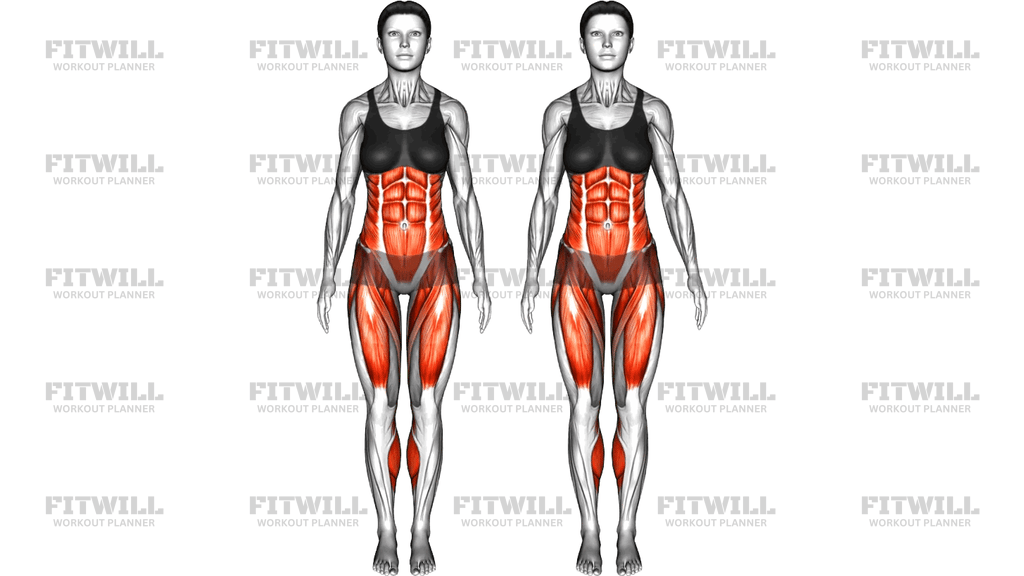
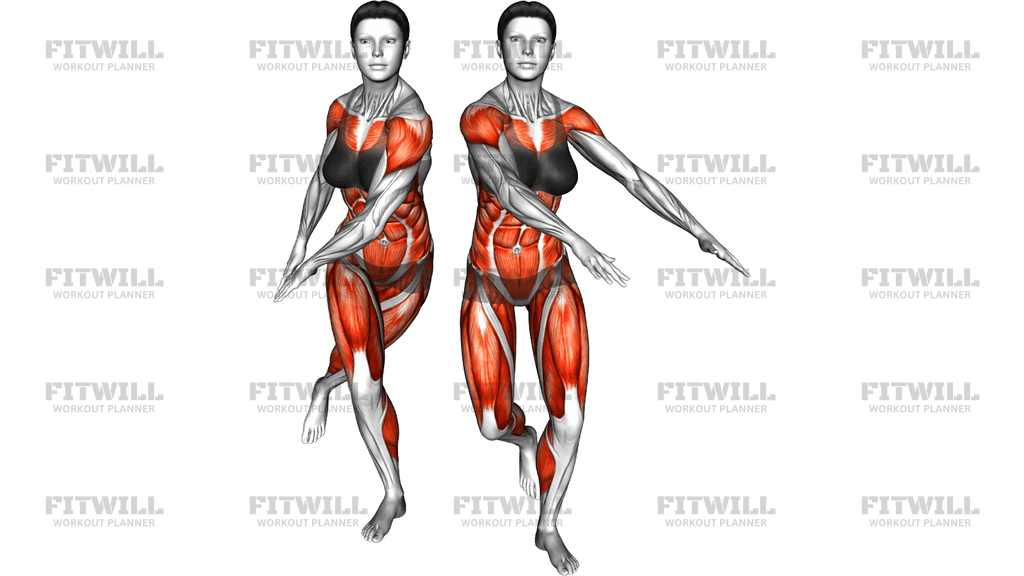
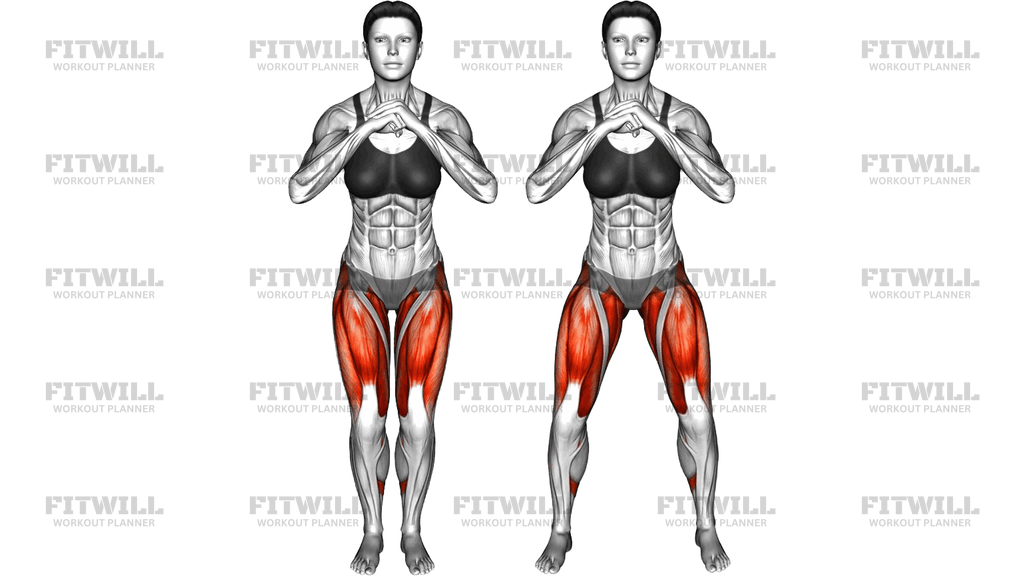
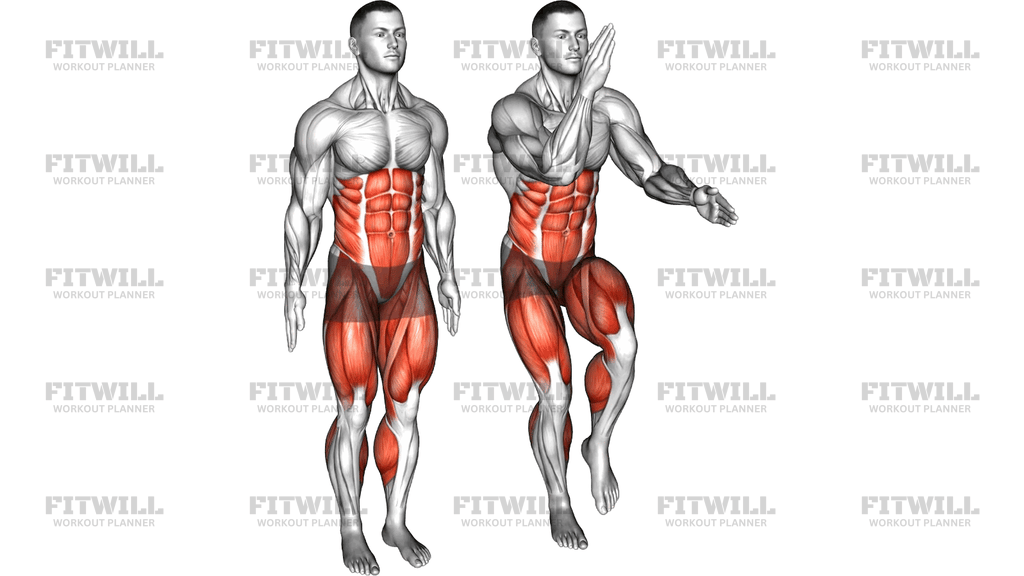
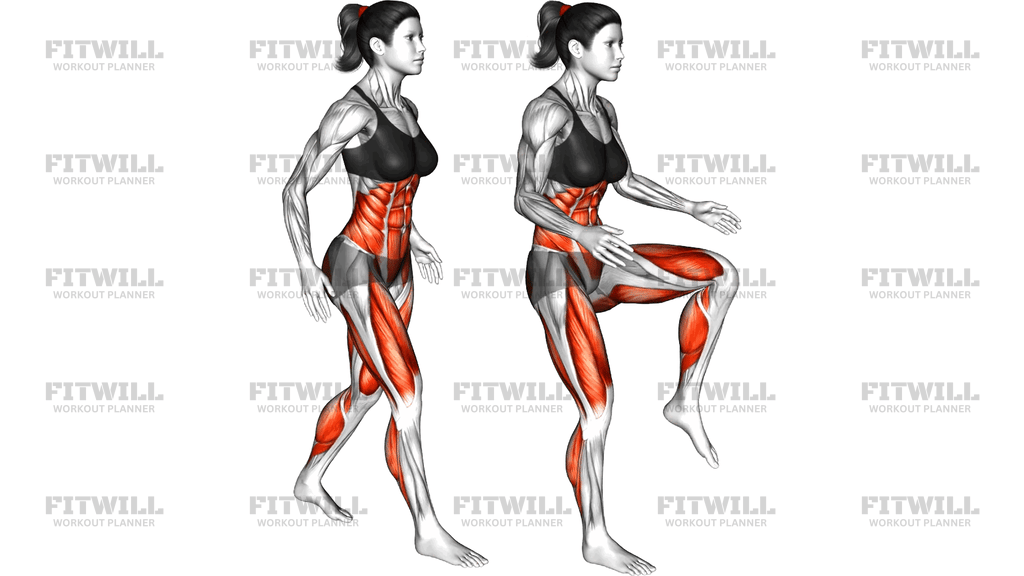
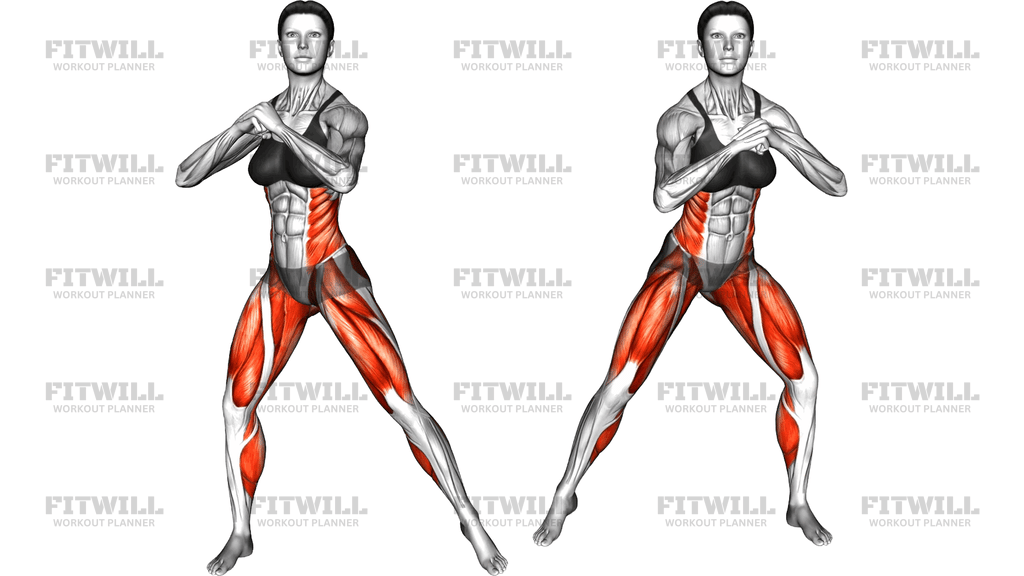
Swinging Arms Jump Split Lunge
The Swinging Arms Jump Split Lunge is a bodyweight plyometric lunge in which you jump explosively out of a split stance, switch your legs in mid-air, and land back into a lunge on the opposite side. The arms swing rhythmically with each jump — driving forward and up as you explode, then sweeping down and back as you descend — which adds momentum, helps coordinate the whole body, and makes the landing feel more natural. It is essentially a jumping lunge performed with a deliberate arm action, so every repetition is a full leg switch rather than a static hold.
This movement is one of the most demanding bodyweight lower-body exercises you can do. Each jump loads the quadriceps of the front leg and the glutes and hamstrings of the rear leg, then immediately repeats the demand on the opposite side when you land. The calves and ankle stabilizers absorb and redirect the landing force, and the core works continuously to keep your torso upright while your legs move beneath you. Because the action is cyclical and continuous, it also raises your heart rate quickly, which is why it shows up in conditioning circuits and sport training as often as in strength work.
The setup matters more than most people expect. Your split stance should be long enough that both knees can bend to roughly right angles without the front knee collapsing forward past the toes or the back knee slamming into the floor. A stance that is too short turns the exercise into an awkward hop and strains the front knee; a stance that is too long makes the switch in mid-air slow and sloppy. Take a moment to set the correct distance before you start jumping, and keep your torso tall with a slight forward lean from the hips rather than a rounded back.
To execute it well, drop into a lunge, then push the floor away hard through both legs — especially the front foot — while swinging your arms up and forward. Switch legs in the air, land softly in the opposite split stance, and let your arms swing down and behind you as your hips lower back toward the floor. Move straight into the next jump once you can land quietly and under control. The quality of the landing is the real test: heels and mid-foot should receive the weight, knees should track over the toes, and the impact should sound quiet rather than heavy.
This exercise suits intermediate to advanced trainees who already own a solid static lunge and a basic split-squat pattern, as well as athletes in running, sprinting, basketball, soccer, or martial arts who need leg power in a split stance. It fits well as a finisher in a leg session, a power block in a circuit, or a short conditioning burst when time is limited. Beginners should build a base with reverse lunges and stationary split squats first.
From a safety standpoint, control your volume. Jumping lunges place significant stress on the knees, ankles, and calves, and fatigue makes form deteriorate fast. Perform them on a firm, non-slip surface, keep the rep count to what you can land cleanly, and stop the set as soon as your landings get loud, shallow, or off-balance.
[ Workout Log & Planner ]
Put your next workout in Fitwill
Keep your plan and training log ready when you are.


Instructions
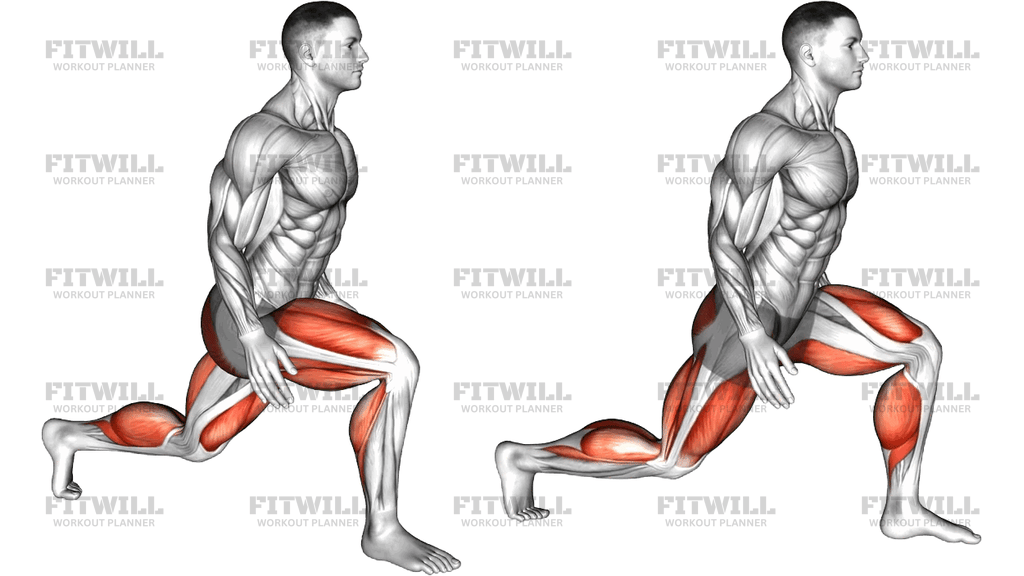
- Stand tall, then step one foot forward and one foot back into a long split stance, roughly two to three feet apart, with your weight balanced between both legs.
- Lower into a lunge so the front knee bends to about 90 degrees over the ankle and the back knee hovers just above the floor, torso upright with a slight hip hinge.
- Brace your abdominal muscles and pull your shoulder blades back so your spine stays neutral before any jump begins.
- Swing your arms down and behind your hips as you sink slightly deeper, loading the front leg like a spring.
- Explosively press through the heel of the front foot and the ball of the back foot, jumping straight up while swinging your arms forward and upward for momentum.
- Switch your legs in mid-air, bringing the back leg forward and the front leg back, keeping your torso facing the same direction the whole time.
- Land softly in the opposite split stance, absorbing the impact by bending both knees immediately and letting your arms swing down and back.
- Continue lowering into the next lunge and repeat the jump and switch for the desired number of reps, alternating legs on every jump.
- Breathe in as you lower into the lunge and exhale sharply as you jump; never hold your breath during the switch.
- When you finish the set, step your feet together to a normal standing position and shake out your legs before the next round.
Tips & Tricks
- If your front knee shoots past your toes on landing, your stance is too short — step the feet farther apart before you start jumping again.
- Aim to land in the same depth of lunge you jumped from; landing with almost no knee bend means you are stiff-legged and dumping force into the joints.
- Quiet feet are the best feedback: if your landings are loud, slow down, jump a little lower, and focus on sinking into the landing instead of collapsing onto it.
- Let the arm swing do real work — driving the arms up hard adds lift, and letting them swing back helps your hips drop into the lunge; stiff arms at your sides usually accompany a stiff, weak jump.
- Keep your gaze on a fixed point ahead of you rather than down at your feet; looking down tends to round the upper back and throw off your balance during the switch.
- If you notice the back knee smashing toward the floor on every landing, soften the descent by controlling the last few inches instead of falling into the lunge.
- On a soft or uneven surface the switch becomes risky; use a flat, firm floor and supportive shoes so the ankle is stable on each landing.
- Stop the set when your switching speed drops or your landings get off-line — a slow, heavy jump lunge trains nothing useful and invites a knee or ankle tweak.
- Master a normal alternating jump lunge with hands free first, then add the deliberate arm swing once the leg pattern feels automatic.
Frequently Asked Questions
Which muscles does the Swinging Arms Jump Split Lunge work the most?
The quadriceps of the front leg do most of the pushing work, with the glutes and hamstrings of the rear leg contributing on every jump. The calves and ankle stabilizers handle the landings, and the core stays active to hold your torso upright.
What is the purpose of swinging the arms in this exercise?
The arm swing adds upward momentum to the jump and helps coordinate the whole body through the switch. Swinging the arms down and back on the descent also helps your hips sink smoothly into the lunge.
Can beginners do the Swinging Arms Jump Split Lunge?
It is best treated as an intermediate progression. Beginners should first be comfortable with static lunges and reverse lunges, and can then try small, low jumps or slow step-through switches before adding full explosive jumps.
How far apart should my feet be during the jump split lunge?
Far enough that both knees can bend to roughly 90 degrees in the bottom lunge — typically two to three feet. A short stance jams the front knee forward, while a stance that is too long makes the mid-air switch slow and awkward.
Why do my landings feel heavy and uncontrolled?
This usually means you are jumping higher than your landing skill allows or letting your knees stay stiff on contact. Reduce the jump height, absorb the landing by bending both knees immediately, and focus on landing mid-foot rather than on the toes.
How many reps should I do per set?
Do as many alternating jumps as you can perform with quiet, aligned landings — commonly 10 to 20 total reps. Once your form breaks down or the landings get loud, end the set rather than pushing through fatigue.
What can I substitute if jumping is hard on my knees?
Alternating reverse lunges or a slow step-back split lunge train the same leg pattern without impact. A stationary split squat with a controlled tempo is another good option while you build tolerance.
Should my torso stay upright during the jump?
Yes, keep the torso tall with only a slight forward lean from the hips. A large forward collapse of the chest usually signals a weak brace and shifts stress away from the legs and onto the lower back.
Is it okay if my back knee touches the floor?
A light brush at the bottom of a deep lunge is fine, but it should not slam into the ground. If it does, control the descent more and land slightly higher, relying on leg strength rather than falling into the bottom position.
How does the Swinging Arms Jump Split Lunge differ from a regular jumping lunge?
The leg action is the same, but the deliberate arm swing adds coordination and a bit of extra drive to each jump. It makes the movement feel more fluid and is especially useful for athletes who need full-body timing in a split stance.