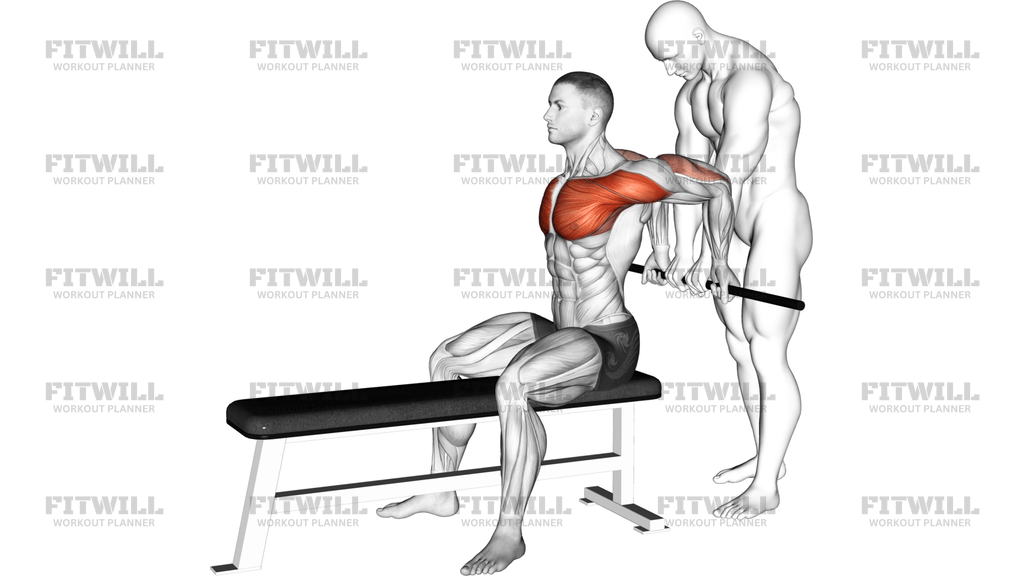
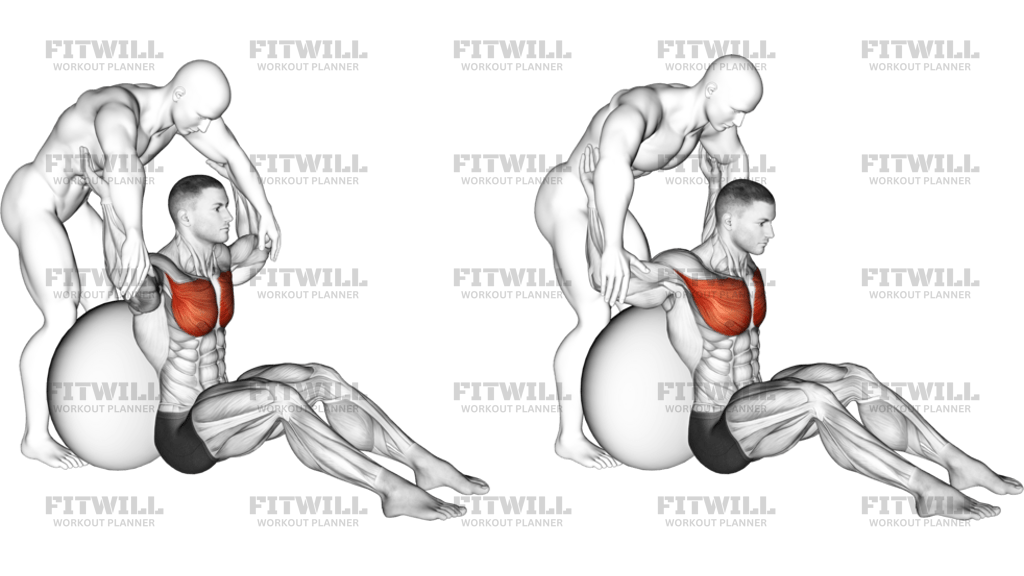
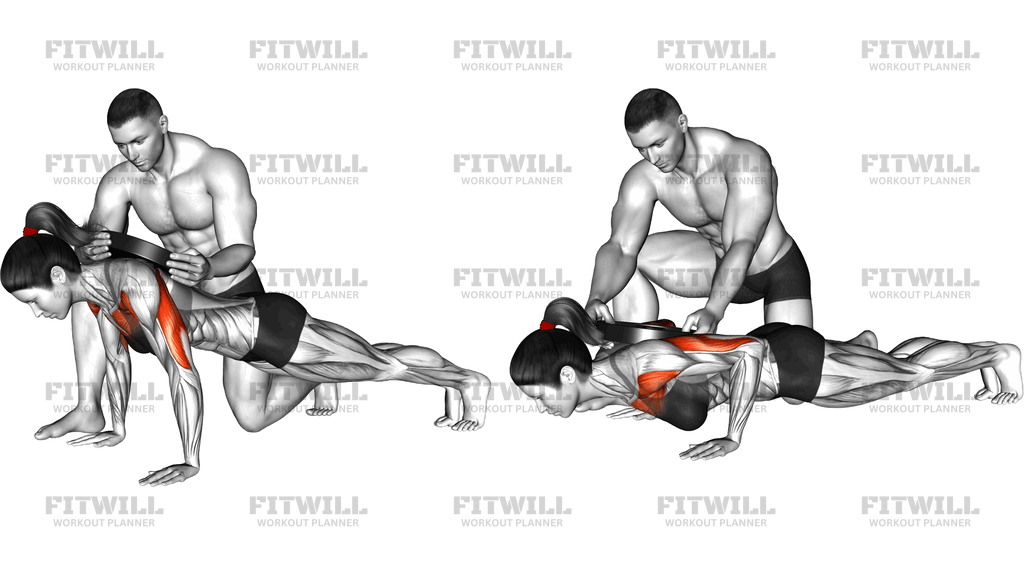
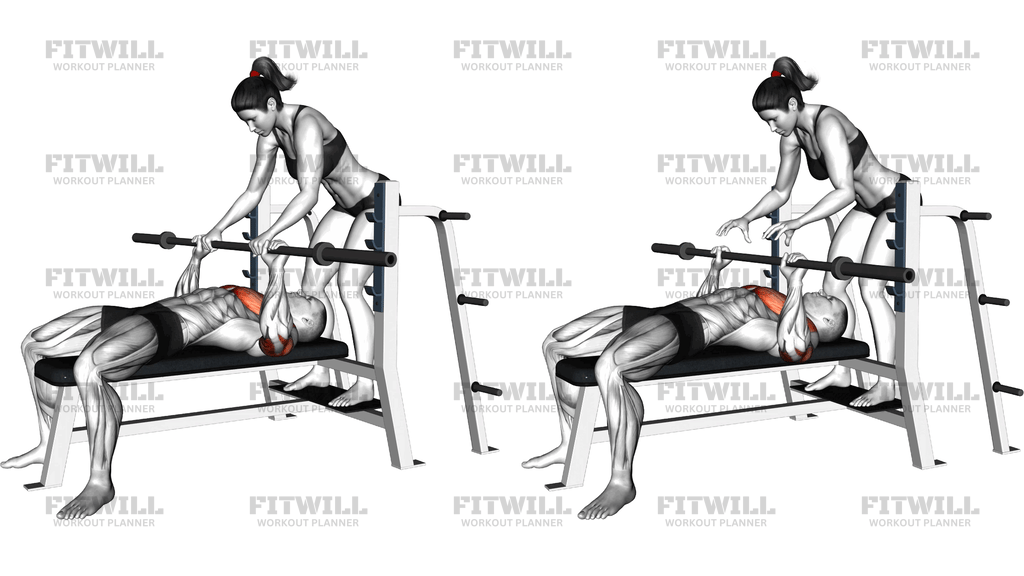
Lying Top Grab Front Grab
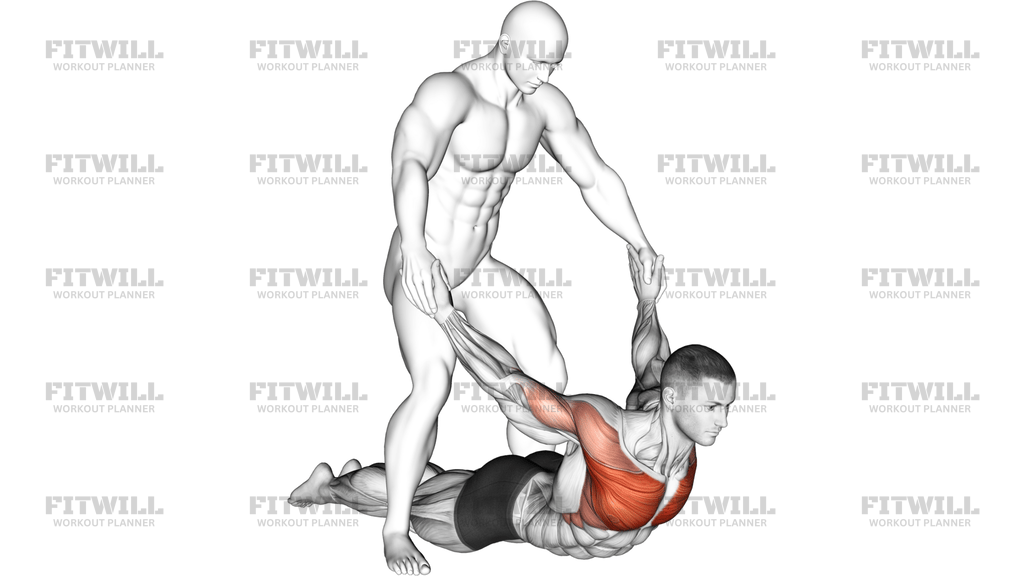
The Lying Top Grab Front Grab is a partner-resisted chest exercise performed flat on your back. You lie with your elbows bent and upper arms out to the sides, fists raised toward the ceiling, while a partner positions at the top near your head and takes a firm grab on each wrist. From there you sweep your elbows forward and inward in a wide hugging arc against your partner's resistance, squeeze the chest at the front, then fight the return. It is essentially a floor fly powered by a human instead of a dumbbell or cable.
The main work falls on the pectorals, with the front delts assisting on every press and the triceps helping hold the bent-elbow position. Because you are lying down, your shoulder blades stay pinned to the floor and your core works quietly to keep your ribs down and lower back settled. That makes the drill feel very different from a standing press: the chest does the moving, and everything else braces.
The setup is what makes or breaks this movement. Your upper arms should sit roughly in line with your shoulders, elbows at about ninety degrees, before the first rep starts. If your partner grabs too low on the forearms or stands off to the side, the resistance pulls at an awkward angle and the shoulders take over. A centered partner grip just above the wrists keeps the force traveling through the elbows and into the chest where you want it.
To execute well, build tension against your partner's hands before you actually move, then press forward smoothly, exhaling as the elbows come together in front of the chest. Stop with your fists a few inches apart rather than clanging them together, pause briefly to feel the pecs shorten, and then let your partner pull your arms back out over two to three seconds while you resist the whole way. The eccentric fight on the way back is where a surprising amount of the training effect lives, so don't give it away.
This drill suits home trainees with no equipment, partners warming up before benching, and anyone who wants a chest pump without loading the elbows or wrists with external weight. Because the partner can dial resistance up or down instantly, it also scales well from easy rehab-style work to a genuinely hard set. Keep the effort controlled, speak up if the grip or angle feels off, and stop any set that produces pinching at the front of the shoulder rather than muscular effort in the chest.
[ Workout Log & Planner ]
Put your next workout in Fitwill
Keep your plan and training log ready when you are.


Instructions
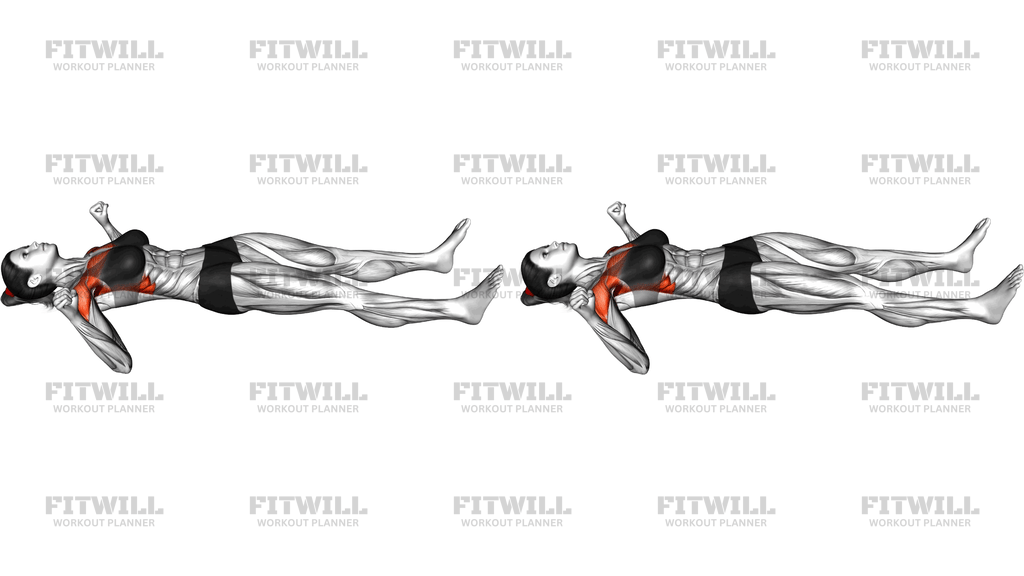
- Lie flat on your back on an exercise mat with your legs extended and relaxed, head resting heavy on the floor.
- Bend both elbows to roughly ninety degrees and set your upper arms out to the sides, about level with your shoulders, fists clenched and facing the ceiling.
- Have your partner kneel or stand at the top, just past your head, and take a firm front grab on each wrist slightly above the fists.
- Brace your core, draw the ribs down, and press the back of your shoulders into the floor so the shoulder blades stay settled.
- Build light tension against your partner's grip first, then exhale and drive your elbows forward and inward in a wide hugging arc against steady resistance.
- Finish with your fists a few inches apart in front of your chest, elbows still bent, and hold the squeeze for a beat.
- Resist as your partner slowly guides your arms back out to the starting width over two to three seconds.
- Exhale on the press forward and inhale on the controlled return, keeping the effort smooth rather than jerky.
- Complete your reps, then have your partner release the grip carefully and shake out your shoulders and chest before the next set.
Tips & Tricks
- If you feel yourself shrugging toward your ears as you press, actively pull the shoulder blades down and back before the rep starts and reset them between reps.
- A common mistake is letting the elbows drift behind the shoulder line, which turns the drill into a shoulder stretch instead of a chest press; check your starting width every set.
- Coach your partner on resistance, too stiff and you will jerk through the start, too loose and the pecs never get challenged; steady hand pressure that lets you move slowly is the target.
- Watch for the lower back arching off the mat as you push hard; that means the load has exceeded what your core can brace, so ease the partner's resistance down slightly.
- Do not bang your fists or wrists together at the top; stopping a few inches short keeps tension on the chest instead of dumping it into the elbow joints.
- Avoid holding your breath through the whole arc; the exhale on the press naturally helps you brace and keeps blood pressure spikes down.
- If the front of the shoulder pinches near the floor, raise your upper arms slightly off the ground an inch or two and shorten the range rather than pushing through it.
- Vary the resistance across the arc; most partners are strongest at the start, so have them ease off as your elbows come forward so the hardest point lands mid-rep where the chest is strongest.
Frequently Asked Questions
Which muscles does the Lying Top Grab Front Grab work?
The pectorals are the primary movers, with the front delts assisting on the press and the triceps holding the bent-elbow position. The core braces isometrically to keep your ribs and lower back on the floor.
Can I do the Lying Top Grab Front Grab without a partner?
Yes. Loop a light resistance band behind your upper back and hold an end in each hand to mimic the partner's pull, or lie on the floor and perform slow bodyweight flyes with self-generated tension.
Why is this chest exercise done lying down instead of standing?
Lying down pins the shoulder blades to the floor and removes momentum, so the chest has to do the work through the whole arc. It also spares the lower back compared with standing partner-resisted variations.
What elbow angle should I keep during the Lying Top Grab Front Grab?
About ninety degrees is the standard, and it should stay constant from start to finish. Straightening the arms as you press shifts work to the triceps, while tucking the elbows in strips tension off the pecs.
Is the Lying Top Grab Front Grab suitable for beginners?
It can be, because a partner controls the resistance moment to moment. Beginners should start with light pressure, fewer reps, and a focus on keeping the shoulders settled before pushing intensity.
How many reps and sets should I do of the Lying Top Grab Front Grab?
Two to four sets of eight to fifteen controlled reps works well, or you can use a five to ten second isometric hold at the mid-arc point. Since intensity depends entirely on your partner, let effort and clean form set the numbers.
What is the most common mistake with this movement?
Jerking explosively against a stiff partner grip, which yanks the shoulders and elbow joints. Build tension gradually before moving, and keep both the press and the return slow and deliberate.
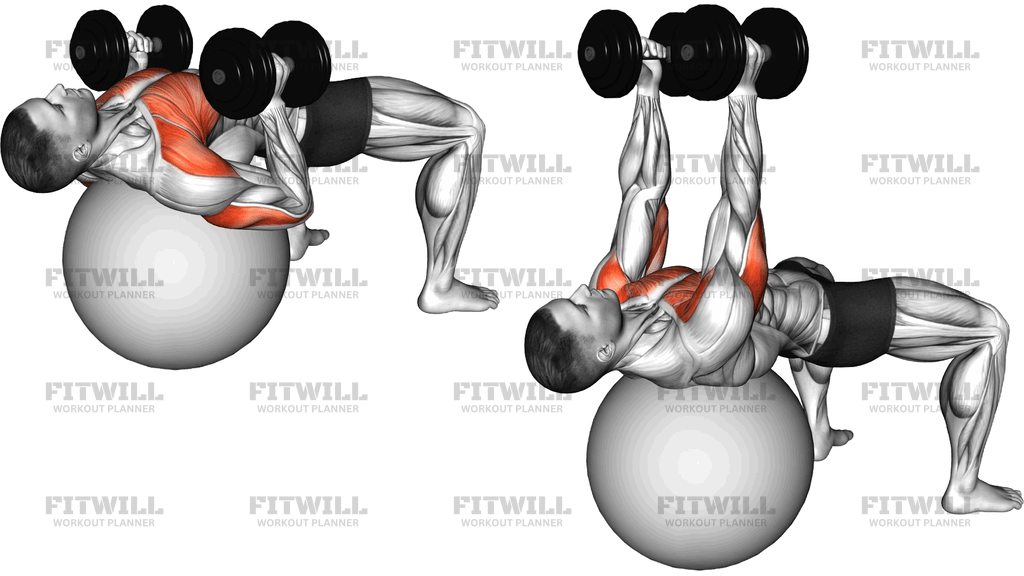
How is the Lying Top Grab Front Grab different from a dumbbell floor fly?
The movement pattern is similar, but the resistance comes from a partner pulling your wrists back rather than gravity pulling weights down. That gives constant tension through the whole arc and instant adjustability, though it is harder to measure precisely.
Is this exercise safe for cranky shoulders?
It is often well tolerated because the load is light and adjustable, but the setup matters; keep the upper arms at or slightly above shoulder level and shorten the range if pinching occurs. Anyone with a current shoulder issue should get clearance before training through it.