Hanging Tucked Front Lever Hold
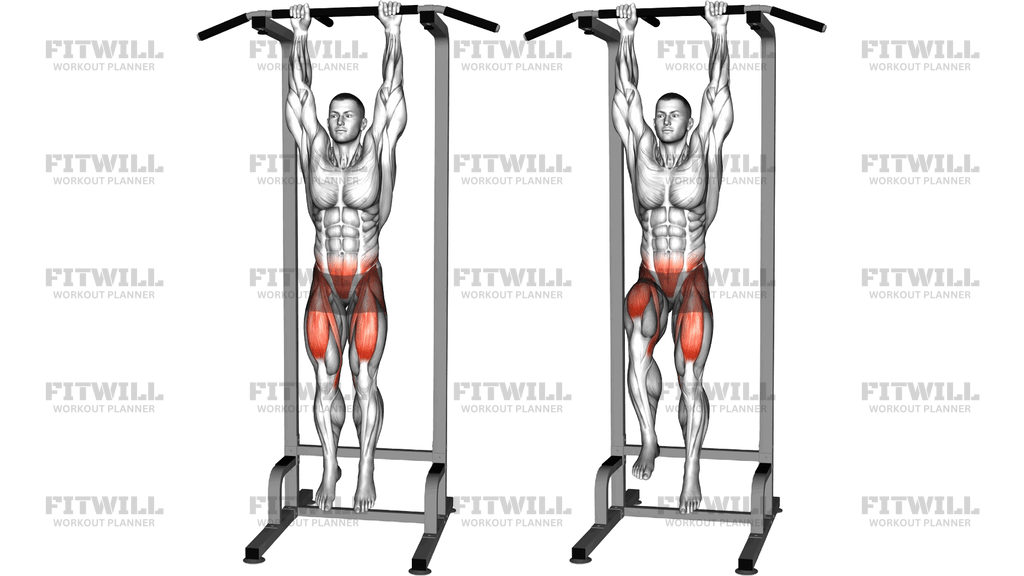
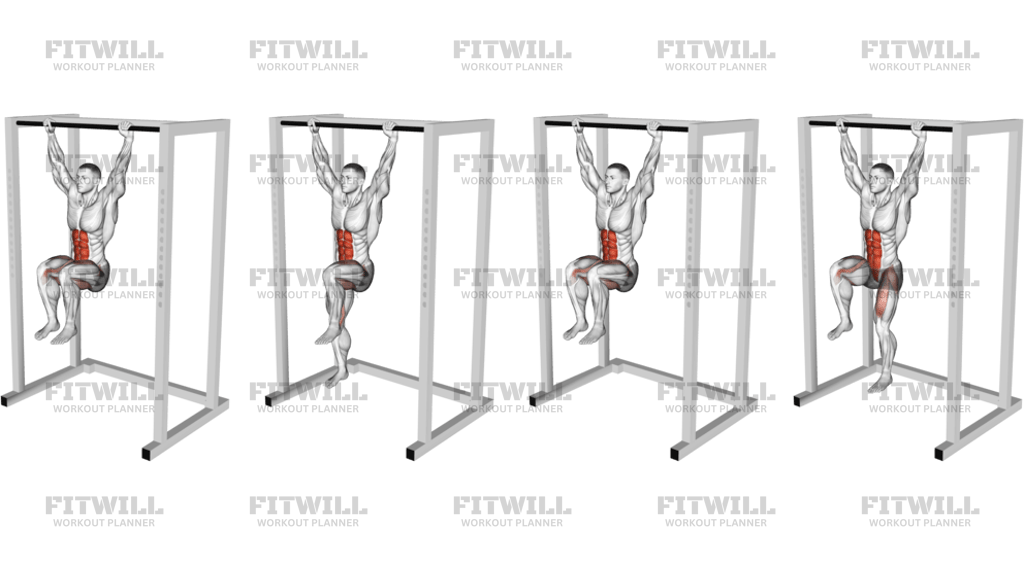
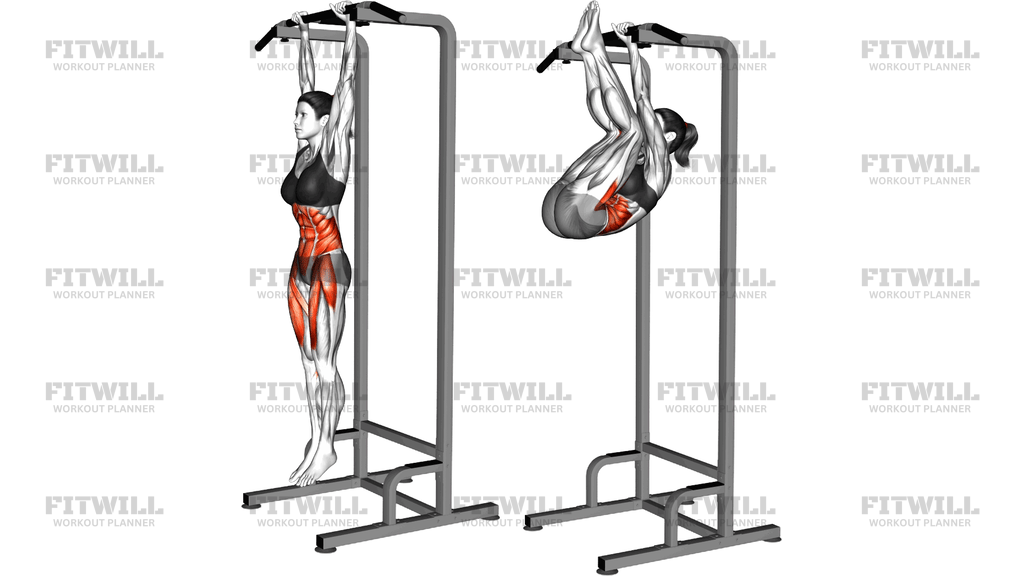
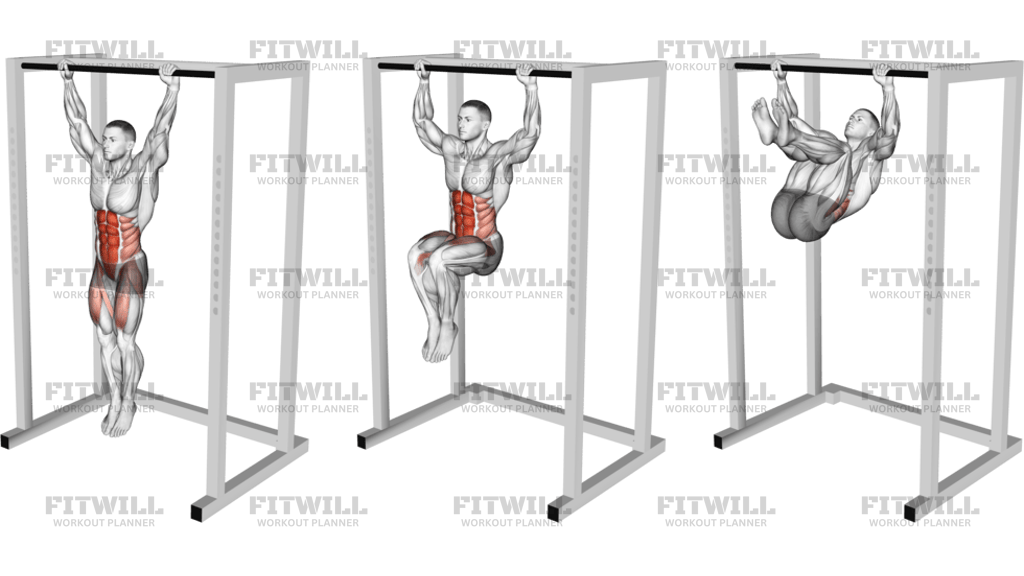
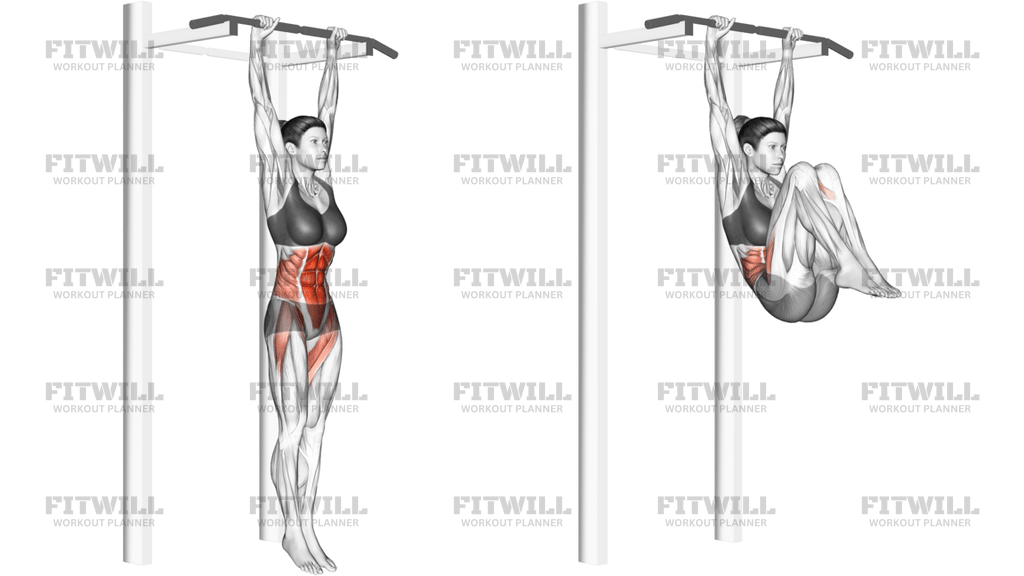
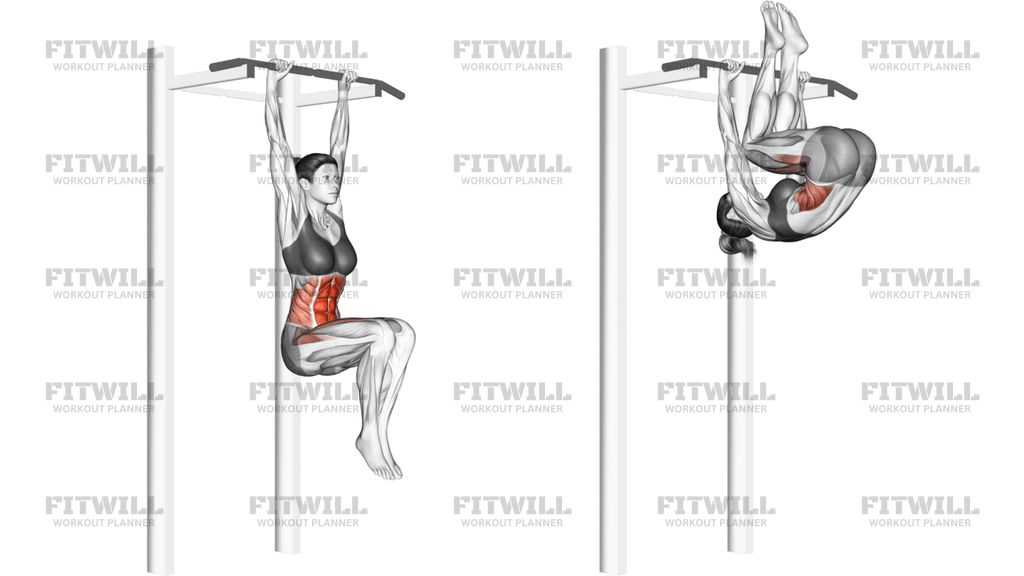
The Hanging Tucked Front Lever Hold is a static bodyweight hold performed from a pull-up bar. From a dead hang, you raise your legs and fold your hips and knees so your trunk rotates backward until your back is roughly parallel to the floor, with your knees pulled tightly toward your chest. You then hold that compact position while hanging under the bar. It is the entry-level variation of the full front lever and one of the most efficient ways to build the straight-arm pulling and core strength the skill demands.
This hold earns its place in a program because it loads the trunk as a rigid unit rather than in fragments. The abdominal wall, especially the lower portion, works hard to hold the pelvis closed toward the ribs, while the lats, rear shoulders, and upper back control the angle of your torso relative to the bar. Your grip and forearms are under continuous tension for the entire hold, and the hip flexors stay active to keep the knees tucked. Because every one of those areas has to fire together, the exercise transfers well to pull-ups, muscle-ups, toes-to-bar, and eventually harder front lever progressions.
The tucked position matters because shortening the lever dramatically reduces the torque your body must resist. Extending the legs turns the torso into a long lever arm that multiplies the load on the lats and midsection; keeping the knees drawn in compresses that same lever, letting most lifters hold the shape for several seconds before their strength catches up. That is exactly why this variation is the standard starting point for front lever training and why rushing out of it too early usually stalls progress.
Setup quality decides whether you actually train the front lever or just do a hanging knee raise. Grip the bar about shoulder width with a full overhand grip, start from a straight-arm hang with your shoulders active rather than loose, and only then begin the fold. If you initiate from a slack hang or let your shoulders shrug up to your ears once inverted, the tension leaks out of the system and the hold loses most of its value.
To execute well, pull the bar slightly toward your hips as you hinge at the hips and knees, curling your thighs toward your chest until your back angles down toward the floor. Keep the knees together, press the lower back into a rounded position rather than arching, and hold the compact ball for time. Descend by unfolding with control back to the dead hang instead of dropping, then reset your grip and brace before the next attempt.
Typical use cases include calisthenics skill work, gymnastics-style strength blocks, and straight-arm strength training for intermediate lifters. Use short, high-quality holds of five to fifteen seconds, rest fully between sets, and stop the set the moment your hips begin to drop or your lower back starts to sag. Practiced two to three times per week, this hold builds a dependable base for tuck front lever rows, advanced tuck holds, and eventually the full front lever.
[ Workout Log & Planner ]
Put your next workout in Fitwill
Keep your plan and training log ready when you are.


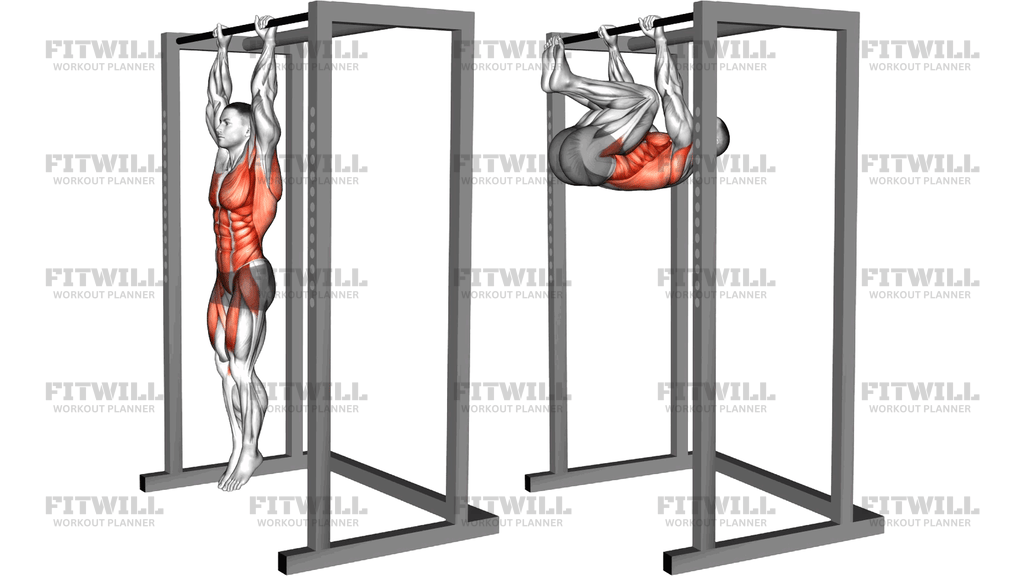
Instructions
- Set your hands on a pull-up bar about shoulder width apart using a full overhand grip, with thumbs wrapped around the bar.
- Hang with your arms fully straight, pull your shoulder blades down away from your ears, and squeeze your legs together so your body is quiet and stable under the bar.
- Brace your midsection and take a breath into your belly before you move.
- Pull the bar slightly down toward your hips as you hinge at the hips and knees, curling your thighs up toward your chest.
- Continue folding until your back is roughly parallel to the floor, with your knees drawn tight to your chest and your shins tucked under your thighs.
- Hold that compact position: knees together, hips fully flexed, lower back rounded rather than arched, and the bar kept pulled toward your body.
- Keep breathing in shallow, steady breaths through the hold instead of holding your breath for the entire set.
- When the position starts to break down, unfold with control, lowering your legs back to the straight dead hang instead of dropping.
- Reset your grip and shoulder position for a few seconds before starting the next hold.
Tips & Tricks
- The most common failure is letting the hips drop so the hold turns into a hanging knee tuck with a vertical torso. If you cannot keep your back angled toward the floor, shorten the hold and rebuild.
- Actively pull the bar toward your hips with straight arms throughout the hold. Letting the arms drift loose converts lat tension into dead weight on your grip.
- Round your lower back toward the ceiling rather than arching. An arched spine opens the hip angle and shifts stress away from the abs.
- Keep your knees glued to your chest. If the knees separate from the torso mid-hold, the lever lengthens and the position gets much harder without any benefit.
- Chalk your hands or use a bar with grip texture, because forearm fatigue usually ends the set before your core does.
- Count holds in seconds, not reps. Five solid seconds with the back parallel beats twenty seconds of sagging.
- If your grip gives out first, add dedicated hanging work, such as dead hangs or scapular pulls, on separate days.
- Avoid jumping straight into the tuck from a swing. Swinging inflates the difficulty artificially and makes the position inconsistent between sets.
- Film yourself from the side occasionally. From underneath, it is hard to judge whether your back is actually approaching parallel.
Frequently Asked Questions
What muscles does the Hanging Tucked Front Lever Hold work?
The primary work comes from the abs, particularly the lower portion, along with the hip flexors that hold the knees tucked. The lats, rear delts, upper back, lower back, forearms, and grip all work isometrically to keep you locked under the bar.
Is the Hanging Tucked Front Lever Hold suitable for beginners?
It is the most accessible front lever variation, but you should already be comfortable hanging from a bar for 30-45 seconds and performing controlled hanging knee raises. If the full tuck hold is too hard, start with a single knee tuck or a bent-arm version.
How is the Hanging Tucked Front Lever Hold different from a hanging knee raise?
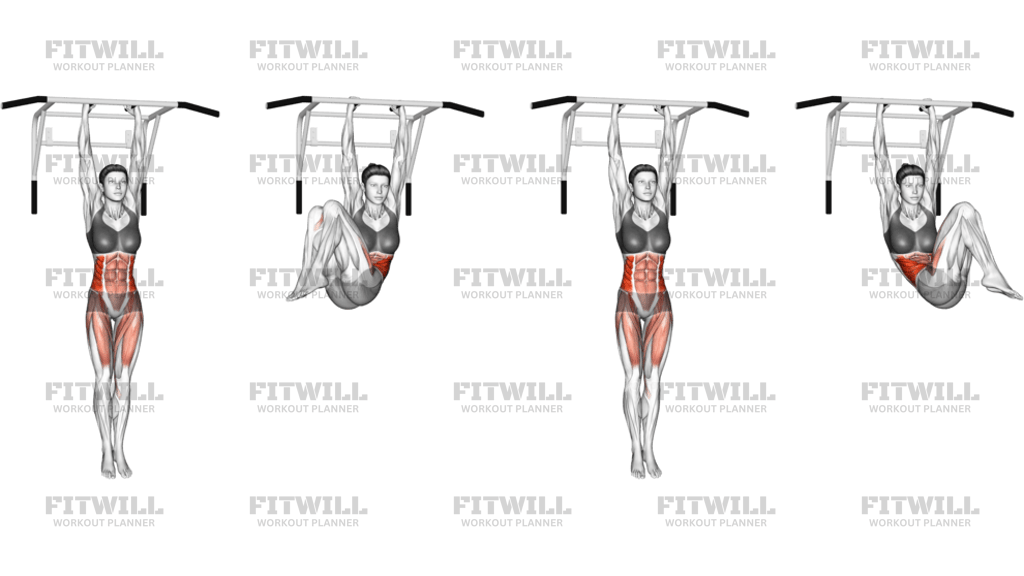
A knee raise moves the legs up and down with the torso hanging vertically. In the tucked front lever hold, you rotate the whole trunk backward until your back approaches parallel to the floor, and you hold that position statically.
How long should I hold the Hanging Tucked Front Lever Hold?
Aim for sets of 5-15 seconds with full rest between attempts, totaling 20-40 seconds of quality hold time per session. Stop the set as soon as your hips drop or your lower back starts to arch.
Why does my grip fail before my core during the hold?
Static holds tax the forearms continuously, and the tucked front lever gives you no chance to relax them. Add separate dead hang or grip work, use chalk, and make sure you are actively pulling the bar toward your hips rather than just squeezing it.
What should I do once the tucked hold feels easy?
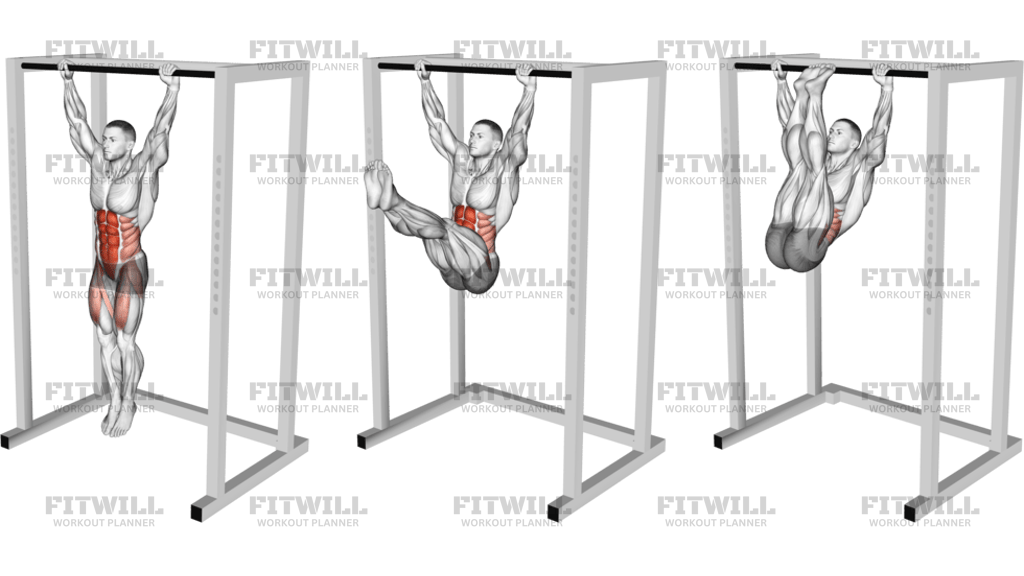
Progress to tuck front lever rows from the same position, then to the advanced tuck with the hips opened and knees raised toward the ceiling. Each step lengthens the lever and increases the demand on the lats and abs.
Should my shoulders stay pulled down during the hold?
Yes. Depressing the shoulder blades and pulling the bar toward your hips keeps the lats engaged and protects the shoulder joint while inverted. Letting the shoulders shrug up to your ears is a sign the hold has lost tension.
Can I train the Hanging Tucked Front Lever Hold every day?
Because it is a maximal isometric effort for the core and lats, two to three focused sessions per week with at least one rest day between them is a better approach. Light hangs on off days are fine, but keep the hard holds spaced out.